 Wiga Tap Manufacturer
Here is the complete, publish-ready HTML article:
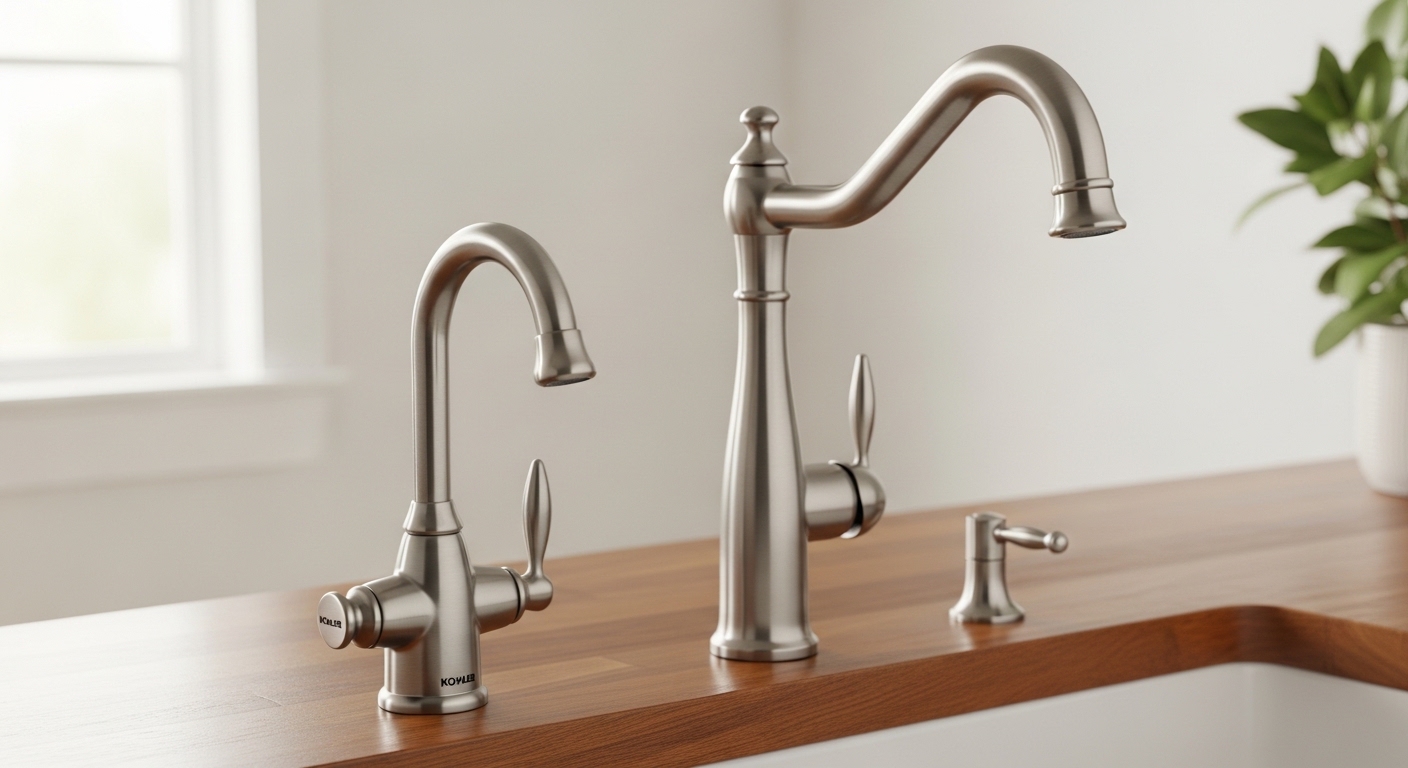
If you’ve been searching “wet bar faucet kohler” and getting lost in a sea of nearly identical-looking spouts, you’re not alone. A wet bar faucet looks like a shrunken kitchen faucet, but the sizing, hole configuration, and flow rate are different enough that grabbing the wrong one means a spout that overshoots a tiny basin or a base that won’t cover your sink’s pre-drilled holes. This guide breaks down exactly which Kohler bar faucets are worth it, how to size them, what finishes hold up, and how they stack up against the competition — in plain English, with real specs.
We sell and install bar and prep faucets every week at wigafaucet.com, so the advice here comes from what actually shows up in return requests and warranty claims — not marketing copy.
What exactly is a wet bar faucet, and how is it different from a kitchen faucet?
A wet bar faucet is a smaller-scale faucet built for a bar or prep sink — typically a single-handle unit with a lower spout, a tighter footprint, and a flow rate around 1.5 GPM (versus 1.75–2.2 GPM for a full kitchen faucet). It’s designed for rinsing glasses, filling a cocktail shaker, or washing a cutting board’s worth of vegetables, not for scrubbing a stockpot.
The practical differences that matter when you shop:
- Spout reach and height. Bar faucets usually reach 6–9 inches and stand 10–14 inches tall. A kitchen faucet often reaches 8–10 inches and stands 15–18 inches — too big for a 15-inch bar basin, where a tall gooseneck causes splashing.
- Mounting holes. Most bar sinks are drilled with a single hole (1 3/8 inch, standard). Some have 2 or 3 holes on 4-inch centers. Kohler sells both single-hole and widespread bar options, so you must match your sink.
- Flow rate. A lower 1.5 GPM aerator is fine for a bar. You don’t need — and often don’t want — a high-flow kitchen aerator over a shallow bar basin.
- Sprayer. Some Kohler bar faucets add a pull-down or side spray; many are fixed-spout for a cleaner look.
If you’re still nailing down whether your basin is truly a “bar” sink or a small prep sink, our guide on how to find a bar faucet that actually fits your prep sink walks through measuring the hole spacing and basin depth before you buy anything.
Which Kohler wet bar faucet is best for a small home bar under $250?
For a small home bar under $250, the Kohler Purist single-handle bar faucet (K-7509) is the sweet spot — it’s a clean, low-profile design with a ceramic disc valve, an ADA-compliant lever handle, and a 1.5 GPM flow rate, and it regularly lands in the $180–$240 range depending on finish. If you want something a touch more traditional, the Kohler Artifacts bar faucet hits a similar price with more decorative detailing.
Here’s why the Purist tends to win for compact bars: its spout reach is a manageable ~8 inches and it swivels a full 360 degrees, so you can push it out of the way when you’re not using it. The lever handle takes a light touch — good for wet, soapy hands — and the ceramic disc cartridge is the same style of valve Kohler uses across its premium kitchen line, which is what you want for a faucet you’ll use daily for a decade.
A few Kohler wet bar faucet models worth putting on your shortlist:
- Kohler Purist (K-7509) — modern, minimalist, single-hole, ~8″ reach. Best all-rounder.
- Kohler Artifacts (K-24016 / K-99271) — transitional-to-traditional styling, gooseneck options.
- Kohler Sensate or Malleco bar/prep versions — when you want a pull-down sprayer at the bar.
- Kohler Elliston / Bellera bar faucets — budget-friendlier, still ceramic disc, great for a basement bar you don’t want to overspend on.
Single-hole or widespread: which configuration fits my bar sink?
Count the holes in your sink or countertop first — that decides it, not your taste. If you have one hole, buy a single-hole faucet (or a single-hole faucet with an optional escutcheon/deck plate to cover a 3-hole setup). If you have three holes on 4-inch centers and want the handles separate from the spout, buy a widespread bar faucet.
The most common mistake we see: someone buys a beautiful single-hole Purist for a sink that’s already drilled with three holes. The fix is easy — Kohler sells a matching deck plate (escutcheon) that covers the extra holes so a single-hole faucet mounts cleanly on a 3-hole sink. Just confirm the deck plate finish matches the faucet exactly (a “Vibrant Brushed Nickel” plate should pair with a “Vibrant Brushed Nickel” faucet, not a generic brushed nickel).
| Your sink/counter drilling | Best Kohler faucet type | What you need |
|---|---|---|
| 1 hole (1 3/8″) | Single-hole bar faucet (Purist, Artifacts) | Nothing extra — direct fit |
| 3 holes, 4″ centers | Single-hole faucet + deck plate, OR widespread | Matching escutcheon if going single-hole |
| 3 holes, 8″ centers | Widespread bar/kitchen faucet | Confirm spread matches |
| No holes yet (new counter) | Your choice — single-hole is cleanest | Drill to faucet’s spec |
If your handle or connections end up awkward against the wall after mounting, a tap valve extender can buy you the clearance you need without re-drilling.
What finish holds up best on a Kohler bar faucet — and does it matter?
It matters more at a bar than almost anywhere else, because bar faucets get splashed with citrus, sticky mixers, and hard-water spots constantly. The most durable, lowest-maintenance choice is Kohler’s Vibrant Brushed Nickel — its PVD (physical vapor deposition) coating resists corrosion and fingerprints and hides water spotting far better than polished chrome. Matte Black is the second-most forgiving on spots but shows dried mineral residue if you have hard water.
Kohler’s “Vibrant” finishes are all PVD-applied, which bonds the color at a molecular level rather than plating it on — that’s why Kohler backs the finish against tarnishing and flaking under the same limited lifetime warranty as the faucet body. Here’s how the popular options actually behave at a bar:
| Finish | Fingerprints / spots | Hard-water friendliness | Best for |
|---|---|---|---|
| Vibrant Brushed Nickel | Hides well | Excellent | Most bars, most kitchens |
| Matte Black | Hides well | Good (shows mineral residue) | Modern / contrast looks |
| Vibrant Brushed Bronze / Moderne Brass | Moderate | Good | Warm, transitional bars |
| Polished Chrome | Shows spots | Fair (needs wiping) | Classic, budget-friendly |
| Polished Nickel | Shows spots | Fair | Elegant, higher upkeep |
One practical tip: match your bar faucet finish to your kitchen faucet and cabinet hardware, not to the sink. If your kitchen runs Vibrant Brushed Nickel, a matching bar faucet reads as intentional; a random chrome bar faucet three feet away reads as an afterthought.
How do I install a Kohler wet bar faucet myself without calling a plumber?
You can absolutely install a single-hole Kohler bar faucet yourself in about 45–60 minutes with basic tools — the connections are the same 3/8-inch compression supply lines used on most bathroom and bar faucets. The only genuinely fiddly part is tightening the mounting nut underneath a cramped bar cabinet, where a basin wrench earns its keep.
- Shut off the supply. Close the hot and cold stops under the sink, then open the old faucet to relieve pressure.
- Remove the old faucet. Disconnect the supply lines, loosen the mounting nut, and lift it out. Clean the deck.
- Drop in the new Kohler faucet. Feed the supply lines and mounting shank through the hole. If you’re covering a 3-hole sink, set the deck plate and gasket first.
- Secure from below. Thread and tighten the mounting nut. A basin wrench makes this painless in a tight cabinet.
- Connect the supply lines. Hand-tighten, then a quarter turn with a wrench. Don’t overtighten — you’ll crush the washer and cause a slow drip.
- Test. Open the stops, run hot and cold, and check every joint for leaks. Feel the connections with a dry paper towel — it shows moisture you can’t see.
The mechanics are nearly identical to mounting other Kohler deck faucets, and if you’re the wall-mount type, our walkthrough on how to install a Kohler wall mount faucet yourself covers the same brand’s tolerances and cartridge quirks in more depth.
Is Kohler actually better than Moen or Delta for a bar faucet?
For a bar faucet specifically, Kohler edges out Moen and Delta on finish quality and design range, but all three make reliable ceramic-disc bar faucets, and Delta/Moen often win on price and parts availability. If your priority is a premium look and a finish that resists spotting, Kohler is worth the extra $40–$80. If your priority is the cheapest reliable faucet with the easiest big-box replacement parts, Delta or Moen are smart picks.
| Brand | Valve type | Warranty | Finish strength | Typical bar faucet price |
|---|---|---|---|---|
| Kohler | Ceramic disc | Limited lifetime | Excellent (Vibrant PVD) | $160–$300 |
| Moen | Ceramic disc (1255 cartridge) | Limited lifetime | Very good (Spot Resist) | $120–$260 |
| Delta | Ceramic disc / DIAMOND Seal | Limited lifetime | Good | $110–$240 |
Where Kohler genuinely pulls ahead is the “Vibrant” finish warranty and the breadth of design families — if you already have a Purist or Artifacts kitchen faucet, matching the bar is effortless. For a full brand-by-brand breakdown on the bathroom side, our comparison of Moen vs Kohler bathroom faucets applies the same logic to valves, finishes, and parts support.
What flow rate and features actually matter for a bar faucet?
For a bar, aim for a 1.5 GPM aerated flow, a swivel spout, and a ceramic disc valve — those three cover 95% of what you’ll ever need. High-flow sprayers, touchless activation, and filtration are nice-to-haves, not essentials, at a bar sink.
Quick reality check on features people over-buy:
- Pull-down sprayer: useful if you rinse tall pitchers or ice buckets; unnecessary for glasses and cocktail prep. Adds cost and a hose that can wear.
- Touchless/motion: genuinely handy when your hands are covered in lime and salt, but it needs power (batteries or an outlet under the cabinet).
- Higher GPM: a shallow bar basin plus high flow equals splashing. Lower flow is a feature here, not a compromise.
- Filtered water tap: only worth it if the bar doubles as a beverage station.
If you ever notice weak output after install, that’s usually a clogged aerator or a kinked supply line, not a faulty faucet — our fix-it guide on low flow out of a kitchen faucet applies directly to bar faucets too, since the aerator and cartridge behave the same way.
A quick word on quality, testing, and warranty
Kohler faucets sold in North America are certified to ASME A112.18.1/CSA B125.1 and meet NSF/ANSI 61 and 372 (“lead-free”) standards, and their flow rates comply with EPA WaterSense and California/Colorado low-flow rules. The valves are cycle-tested — Kohler rates its ceramic disc cartridges for hundreds of thousands of open/close cycles — and the whole faucet, including the Vibrant finish, carries a limited lifetime warranty to the original consumer. That’s the paperwork that separates a $200 faucet you install once from a $45 no-name unit you’ll be re-sealing in two years. We’ve made this point before in our piece on why you should never buy cheap bathroom fixtures — bar faucets are a small purchase where cheaping out reliably backfires.
FAQ
What size is a standard wet bar faucet hole?
The standard single mounting hole for a bar or prep faucet is 1 3/8 inches (about 35 mm) in diameter. Kohler single-hole bar faucets fit that spec. If your sink has three holes on 4-inch centers, you can still use a single-hole faucet by adding a matching deck plate to cover the outer two holes.
Can I use a bathroom faucet as a wet bar faucet?
You can, and many small bar sinks are drilled to accept a standard 4-inch centerset bathroom faucet, but check the spout reach and height — bathroom faucets are built for a shallow, close basin and may not clear a deeper bar sink. A purpose-built bar faucet with a taller, swiveling spout is usually the better fit for rinsing glasses and filling pitchers.
What’s the difference between a bar faucet and a prep faucet?
Practically none — the terms are used interchangeably. A “bar faucet” implies a beverage station (rinsing glasses, filling ice buckets), while a “prep faucet” implies a secondary food-prep sink. Both are the same compact, single-handle, lower-flow category, and the same Kohler models serve either role.
Does Kohler make a bar faucet with a pull-down sprayer?
Yes. Kohler offers bar/prep versions with pull-down or pull-out sprayers in families like Malleco, Sensate, and Simplice. They cost more and add a spray hose that can eventually wear, so only choose one if you genuinely rinse tall or bulky items at the bar.
How much does a Kohler wet bar faucet cost to install?
If you DIY a single-hole Kohler bar faucet, your only cost is the faucet ($160–$300) plus maybe a $15 basin wrench and new supply lines. If you hire a plumber, expect roughly $100–$250 in labor depending on your area and whether the old faucet comes out cleanly — similar to the ranges we break down for a plumber installing a bathroom faucet.
Are Kohler bar faucets ADA compliant?
Many are, including the Purist and Artifacts single-lever models. ADA compliance for faucets mainly means the handle can be operated with one hand without tight grasping, pinching, or twisting of the wrist — a single lever handle qualifies. Check the specific model’s spec sheet for the ADA notation before you buy if compliance is required.
About the author: This guide was written by the product team at wigafaucet.com, who specialize in faucets and bathroom fixtures and handle real customer sizing, installation, and warranty questions daily. We test-fit and install bar, prep, and kitchen faucets across major brands — Kohler, Moen, Delta, Pfister, and more — and base our recommendations on what holds up in real homes, not spec-sheet claims. Always confirm your sink’s hole configuration and your local plumbing code before purchasing.