 Wiga Tap Manufacturer
The user wants the HTML article output directly, not written to a file. Here is the complete publish-ready article:
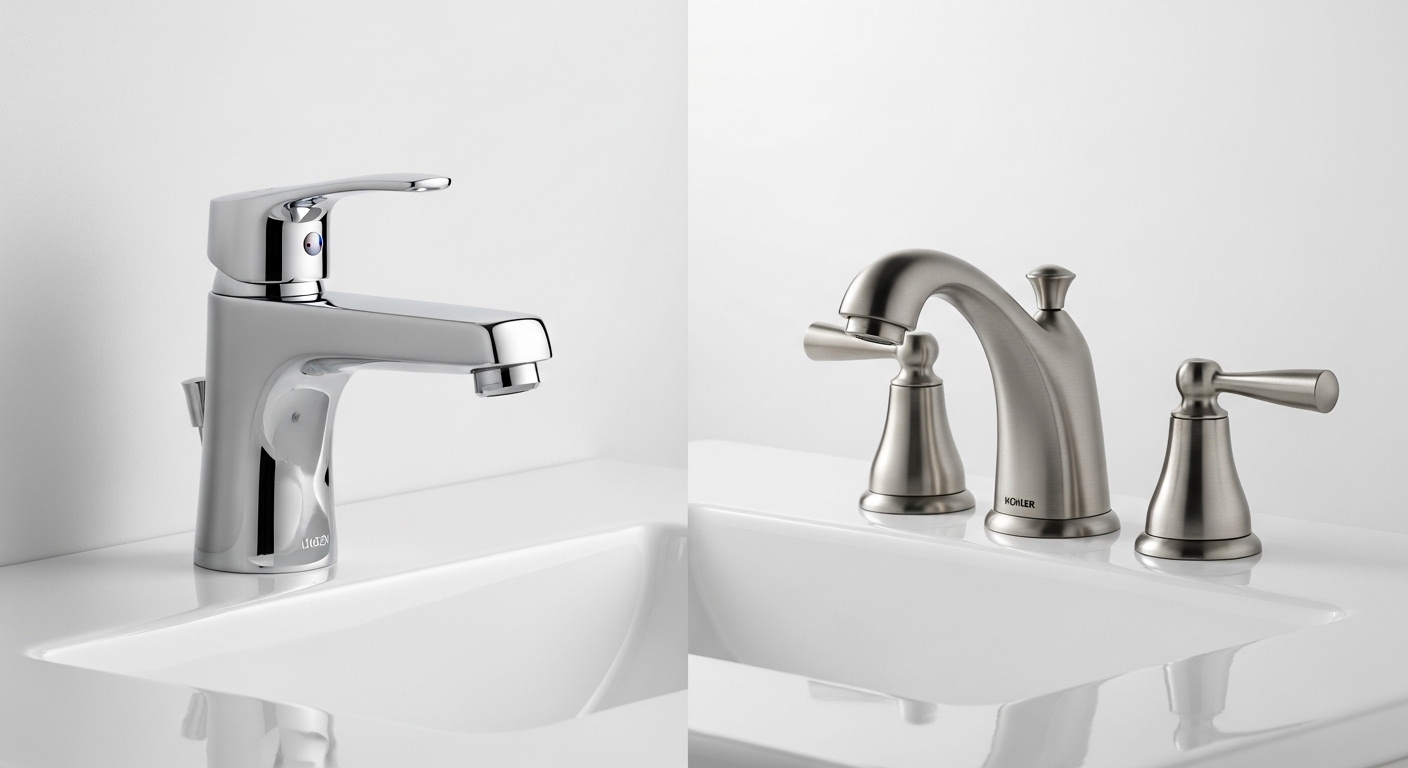
If you’ve been comparing moen vs kohler bathroom faucets for a vanity remodel, here’s the honest version most product pages won’t give you: both brands make genuinely good faucets that will outlast a cheap big-box no-name by a decade, so you’re not choosing between “good” and “bad.” You’re choosing between two different philosophies. Moen optimizes for serviceability and homeowner-friendliness — replaceable cartridges, a deep parts ecosystem, and a no-questions lifetime warranty. Kohler optimizes for material heft and design — more solid-brass bodies, a wider catalog of finishes and statement shapes, and a more “showroom” feel in the hand.
I’ve installed and repaired both for years, and below I’ll walk you through exactly how they differ on the things that actually matter at the sink: drip-free valves, finish durability, real-world price, parts availability when something fails in year seven, and which one fits your specific bathroom and budget. Let’s get into it.
Moen vs Kohler bathroom faucets: what’s the actual difference?
The core difference comes down to valve design and body material. Moen builds most of its bathroom faucets around a replaceable 1255 / Duralast cartridge system that’s cheap (often $15–$25) and swappable in 20 minutes, while Kohler leans on ceramic-disc valves housed in heavier solid-brass bodies that feel more substantial but are pricier and slightly fussier to service.
In plain terms: a Moen is the faucet you can keep alive forever with a $20 part from any hardware store. A Kohler is the faucet that feels like it weighs twice as much when you turn the handle, looks a notch more luxurious on the vanity, and tends to have a more refined finish — but when it eventually needs a valve, you’re more likely to order the part online and wait a few days.
Both brands meet the same baseline plumbing standards (more on that below), so the disagreement isn’t about safety or compliance — it’s about how the faucet feels, how it ages, and how painless it is to fix.
Is Moen or Kohler easier to install yourself?
Moen is generally easier for a first-time DIY installer. Its mounting hardware uses a tool-friendly system (many models include a simple plastic wrench and a “duralock” quick-connect for the supply lines), the instructions are famously clear, and single-hole and centerset models drop in with minimal fuss.
Kohler faucets are completely installable by a homeowner too, but their widespread and some solid-brass models are heavier and have a few more connection points, so you’ll want a basin wrench and a bit more patience. If this is your first faucet swap, that weight difference matters more than you’d think when you’re lying under a vanity. Either way, if you want a step-by-step walkthrough before you start, our guide on how to install a bathroom vanity faucet yourself in under 2 hours covers the supply-line and mounting steps that trip people up regardless of brand.
Which lasts longer — a Moen or a Kohler bathroom faucet?
Both are built to last 15–20+ years, but they fail differently. A Moen rarely “dies” — it develops a drip, you replace the $20 cartridge, and it’s good for another decade. A Kohler’s ceramic-disc valve is extremely durable and may never drip, but if its valve or finish does fail, the repair is costlier and the part is harder to find locally.
Here’s the nuance most people miss: longevity isn’t just about the valve, it’s about whether you can get parts. Moen’s parts ubiquity is a genuine durability advantage in real homes — a faucet you can fix is a faucet that lasts. Kohler’s advantage is the body: more solid brass means fewer zinc/plastic components to crack at the threads or warp over time. If you have hard water, ceramic-disc valves (Kohler) and Moen’s cartridge system both handle mineral buildup well, but you’ll periodically want to clean the aerator on either — that’s universal, not brand-specific.
How do the finishes hold up — does chrome, brushed nickel, or matte black scratch?
Both brands use durable PVD (physical vapor deposition) coatings on their better finishes, which resist scratching and tarnishing far better than cheap electroplated finishes. Chrome and brushed/spot-resist nickel are the most forgiving for daily use; matte black and brushed gold look stunning but show water spots and require a bit more wiping.
Moen’s “Spot Resist” brushed nickel is genuinely good at hiding fingerprints and water spots — a real selling point in a busy family bathroom. Kohler’s “Vibrant” PVD finishes are equally tough and, to many eyes, come in richer, more nuanced tones (their brushed bronze and polished nickel are standouts). If you’re drawn to a warmer metal, it’s worth reading our take on whether a brushed gold faucet for the bathroom is actually worth it before you commit — the finish you pick affects cleaning routine more than the brand does.
- Lowest maintenance: Spot-resist brushed nickel (Moen) or Vibrant brushed nickel (Kohler).
- Most modern but highest upkeep: Matte black — gorgeous, shows every droplet.
- Most timeless: Polished chrome — cheapest to replace and never dates.
- Most luxurious: Kohler Vibrant brushed bronze or polished nickel.
Moen vs Kohler bathroom faucets: full comparison table
Here’s the head-to-head at a glance. Prices are typical 2026 U.S. retail ranges for mid-tier single-handle and widespread bathroom models, not the top luxury lines.
| Factor | Moen | Kohler |
|---|---|---|
| Typical price range | $90–$280 | $130–$400+ |
| Core valve | 1255 / Duralast replaceable cartridge | Ceramic-disc valve |
| Body material | Brass + some zinc on lower lines | More solid brass overall |
| Weight / feel | Lighter, lever feels smooth | Heavier, more “premium” turn |
| DIY installation | Very easy (quick-connect supply) | Easy–moderate (heavier units) |
| Parts availability | Excellent — any hardware store | Good — often order online |
| Signature finish tech | Spot Resist | Vibrant PVD |
| Warranty (residential) | Limited lifetime | Limited lifetime |
| Best for | DIYers, busy families, easy repair | Design-led remodels, premium feel |
Which is better value under $200?
Under $200, Moen usually wins on value because you get a lifetime-serviceable faucet with cheap, everywhere-available parts — the total cost of ownership over 15 years is hard to beat. In that same budget, Kohler gives you a heavier, often better-looking faucet, but you may be choosing between a basic Kohler and a feature-rich Moen.
If your budget is firm at $150–$200 and you want the lowest lifetime hassle, lean Moen. If you found a Kohler widespread you love within budget and you care more about how it looks and feels than about quick repairs, the Kohler is a perfectly smart buy — it’s not going to fail you. For a deeper dollar-for-dollar breakdown against another premium brand, our Delta vs Kohler sink faucet comparison uses the same value lens and is worth a read if Delta is also on your shortlist.
What about widespread vs single-hole — does that change the Moen/Kohler decision?
Yes, configuration can tip the decision. Kohler’s widespread (three-hole, 8-inch-spread) bathroom faucets are a particular strength — the heavier solid-brass spouts and separate handle bases feel especially substantial in that layout. Moen’s single-handle and centerset models are where its quick-install advantage shines brightest.
So a useful shortcut: if you’re doing a widespread vanity and want that high-end split-handle look, give Kohler a hard look. If you’re doing a single-hole or 4-inch centerset and want the fastest, most fool-proof install, Moen is the easy call. Not sure which layout your sink even needs? Our explainer on what a widespread faucet layout is and whether it’s right for your bathroom walks through the hole-spacing math so you don’t order the wrong configuration.
Which brand is better for hard water?
Both handle hard water well, but for slightly different reasons. Ceramic-disc valves (Kohler) are very resistant to mineral wear, and Moen’s cartridge is cheap to swap if scale eventually causes a drip — so neither is a bad hard-water choice. The real hard-water enemy is the aerator, which clogs with mineral deposits on any faucet and just needs an occasional soak in vinegar.
If you’re on well water or notoriously hard municipal water, the deciding factor is repairability: when scale eventually gets into the valve, a $20 Moen cartridge from the hardware store beats waiting on a shipped Kohler part. That tilts hard-water homes slightly toward Moen for pure practicality.
When does it make more sense to skip both and buy a mixer-style faucet?
If your priority is a clean, European-style look or a specific configuration neither big brand nails, a dedicated basin mixer can be the smarter buy. Moen and Kohler dominate the American single-handle and widespread market, but they’re not the only good option — especially if you want a particular spout height, a matte color both brands skip, or a wall-mounted setup.
For minimalist bathrooms, a single-lever basin mixer often delivers the modern look people are actually chasing when they shop Kohler’s design lines — frequently at a friendlier price. And if your vanity is plumbed for it, a wall mount faucet mixer frees up counter space and creates a high-end hotel feel that neither standard Moen nor Kohler deck-mount models replicate. The point isn’t that Moen and Kohler are wrong — it’s that “Moen vs Kohler” isn’t the only question worth asking before you buy.
So which should you actually buy?
Buy Moen if you value easy DIY installation, dirt-cheap and everywhere-available repair parts, spot-resist finishes for a busy family bathroom, and the lowest total cost of ownership over 15+ years. It’s the practical, no-regrets choice.
Buy Kohler if you want a heavier solid-brass faucet, more design-forward finishes and shapes (especially in widespread layouts), and a more luxurious feel at the handle — and you’re comfortable paying a bit more and occasionally ordering parts online.
For most readers asking about moen vs kohler bathroom faucets, the tie-breaker is honest self-assessment: Are you optimizing for fix-it-yourself longevity (Moen) or showroom feel and design (Kohler)? Both will serve you well for many years. Whatever you pick, buy from an authorized seller so your lifetime warranty actually stands.
FAQ
Are Moen and Kohler bathroom faucets made in the USA?
Both are American companies (Moen in Ohio, Kohler in Wisconsin) with U.S. design and engineering, but like virtually all major faucet brands, much of their manufacturing and component sourcing is global. Kohler maintains some U.S. production lines and markets certain models as assembled in the USA; Moen produces across global facilities. For warranty and authenticity, what matters more is buying from an authorized dealer than the country of assembly.
Do Moen and Kohler bathroom faucets have a lifetime warranty?
Yes — both offer a limited lifetime warranty against leaks, drips, and finish defects for residential use, covering the original consumer. Commercial use typically carries a shorter term (often 5 years). Keep your proof of purchase and register the product; warranties generally require purchase from an authorized retailer to be valid.
Why is my Moen or Kohler faucet dripping, and is it worth fixing?
A drip is almost always a worn cartridge or valve seal, not a dead faucet — and yes, it’s absolutely worth fixing. On a Moen, swap the 1255/Duralast cartridge (about $15–$25, 20 minutes). On a Kohler, replace the ceramic-disc valve or seals per the model’s part number. Because both carry lifetime warranties on residential use, the replacement cartridge may even be free if you contact the brand.
Which is quieter and has better water flow?
Both meet the federal 1.2–1.5 GPM bathroom faucet flow standard, so max flow is similar by law. Perceived flow comes down to the aerator design, and both brands engineer theirs to feel full at low flow. Neither is meaningfully louder; any noise usually traces to water pressure or a clogged aerator, not the brand. If you want stronger feel, clean or upgrade the aerator rather than switching brands.
Can I use Moen parts on a Kohler faucet or vice versa?
No — cartridges, valves, and aerator threads are brand- and model-specific and are not cross-compatible. Always match the exact model number when ordering parts. This is one practical reason Moen’s wide retail parts availability is a real advantage: you can usually find the right Moen cartridge on a shelf locally, whereas Kohler parts are more often ordered online by model number.
Author note: This guide was written by the wigafaucet fixture team, who install, bench-test, and repair residential and commercial faucets daily. As a manufacturer and supplier of bathroom and kitchen fixtures, wigafaucet evaluates valves, finishes, and flow performance against ASME/ANSI A112.18.1 and NSF/ANSI 61 plumbing standards, and our recommendations reflect real installation and warranty experience — not just spec sheets. Always confirm current model specs and warranty terms with the manufacturer before purchase.