 Wiga Tap Manufacturer
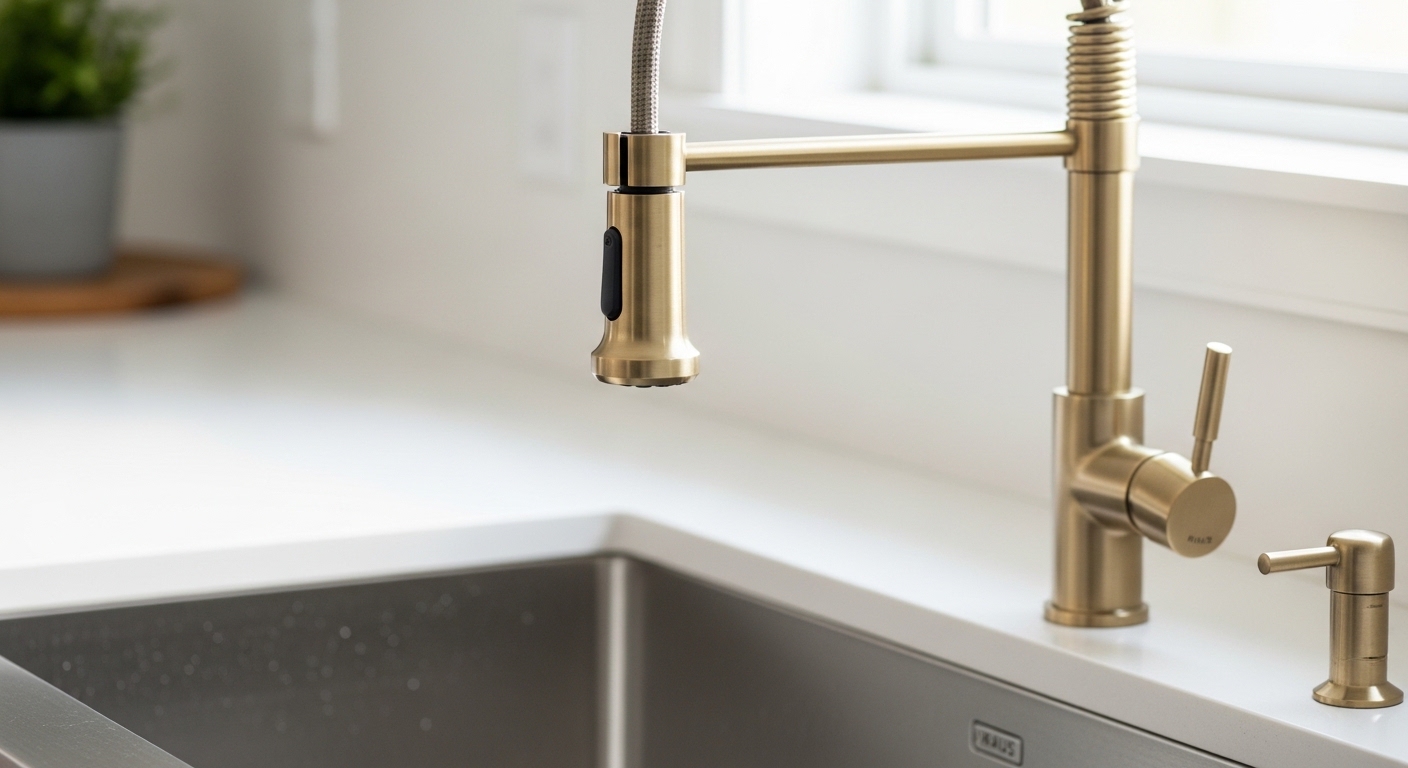
If you’ve been asking yourself is Kraus a good brand for faucets before you drop a couple hundred dollars on a new kitchen pull-down, the short answer is a confident “yes, with a couple of caveats.” Kraus (often styled KRAUS USA) built its reputation on stainless-steel sinks and commercial-style spring faucets, and over the last decade it’s become one of the most-recommended value picks on Reddit, Houzz, and Amazon’s faucet listings. Below, I’ll break down exactly where Kraus shines, where it falls short of the big legacy names, and which kind of buyer should — and shouldn’t — pick one.
Is Kraus actually a good brand, or just cheap and popular?
Kraus is a legitimately good brand — not a rebadged import with a fancy label. The company designs its own faucets, uses lead-free brass and SUS304 stainless where it counts, fits real ceramic-disc cartridges (many sourced from established European cartridge makers), and backs the whole thing with a limited lifetime warranty. “Cheap” isn’t the right word; “value” is. You’re getting roughly 80% of a premium faucet’s build and feature set for around 50–60% of the price.
Founded in 2007 and headquartered in New York, Kraus scaled fast by nailing one thing: the commercial-style, coil-spring kitchen faucet that looks like it belongs in a restaurant line. That single category is where the brand earns most of its five-star reviews. The trade-off is that Kraus is younger and leaner than century-old names, so its plumber service network and replacement-part logistics aren’t as deep as Moen’s or Delta’s. For a homeowner buying online and installing themselves, that rarely matters. For a contractor who needs a cartridge overnighted to three job sites, it can.
What do real owners say after a few years?
Most long-term Kraus owners report the same thing: the faucet still works fine after 3–5 years, the finish holds up, and the sprayer keeps its “snap-back” retraction. The most common complaint isn’t failure — it’s the pull-down hose occasionally needing the weight re-clipped, or a spray head that develops a slow drip and needs a $10 aerator swap. Those are normal wear items on any brand. Catastrophic failures (cracked bodies, cartridge blowouts) are rare in the reviews, which is the real signal of a dependable mid-tier brand.
How does Kraus compare to Moen, Kohler, and Delta?
Kraus beats the big three on price and modern commercial styling, but trails them on service network, bathroom-faucet selection, and finish variety. If you want a bold pull-down kitchen faucet and you’re comfortable installing it yourself, Kraus is the value winner. If you want a matching whole-house suite, deep dealer support, or a huge palette of finishes, a legacy brand still edges ahead.
Here’s how they stack up on the factors that actually affect your purchase:
| Factor | Kraus | Moen | Kohler | Delta |
|---|---|---|---|---|
| Typical kitchen faucet price | $150–$350 | $180–$450 | $200–$600 | $150–$400 |
| Core strength | Commercial-style pull-downs & sinks | Reliability & service network | Design & premium finishes | Innovation (Touch2O, MagnaTite) |
| Cartridge type | Ceramic disc | Ceramic / 1255 duralast | Ceramic | Ceramic / DIAMOND Seal |
| Warranty | Limited lifetime | Limited lifetime | Limited lifetime | Limited lifetime |
| Bathroom range | Modest | Very broad | Very broad | Broad |
| Best for | Value-focused DIY kitchen buyers | “Buy once, easy service” | Design-led whole-house suites | Tech features on a budget |
The pattern is clear: Kraus is the specialist. It’s outstanding in the kitchen and merely fine in the bathroom. If you’re weighing legacy brands against each other for the bath, our deep dives on Moen vs Kohler bathroom faucets and the Delta vs Kohler sink faucet comparison will get you further than a Kraus listing will.
Which Kraus faucet is best for a kitchen under $250?
Under $250, the Kraus Bolden and Kraus Oletto pull-downs are the sweet spot. Both give you a dual-function sprayer, a ceramic cartridge, a spot-free finish option, and an all-metal build — the exact feature list you’d pay $400+ for from a premium brand. The Bolden is the commercial-coil look; the Oletto is the sleeker high-arc gooseneck.
Here’s a quick decision guide for the popular models:
- Kraus Bolden (~$180–$220): Commercial spring style, super-tall clearance, best for filling big pots and washing sheet pans. The coil looks industrial-chic.
- Kraus Oletto (~$130–$190): Smooth high-arc gooseneck, quieter aesthetic, great for a modern minimalist kitchen. Often the best pure value.
- Kraus Sellette / Nolen (~$200–$280): Pull-down with a more refined spout and premium finishes like brushed gold or matte black.
- Kraus Britt / Artec Pro (~$250–$350): Beefier commercial builds with industrial detailing for serious home cooks.
Whichever you pick, verify your deck setup first — single-hole vs. three-hole. Most Kraus pull-downs are single-hole but ship with an optional deck plate (escutcheon) to cover a standard 8-inch three-hole configuration. If you’re moving from a widespread layout to a single tall faucet, that deck plate is what saves you from staring at two empty holes.
What about hard water and finish durability?
For hard water, choose a Kraus with the “Spot-Free” stainless or a PVD finish (brushed gold, matte black, brushed brass), and pick a spray head with silicone nozzles you can wipe clean. PVD finishes resist scaling and corrosion far better than cheap electroplating, and the rubber spray nozzles let you rub off mineral buildup with your thumb instead of soaking the whole head in vinegar. Kraus’s better finishes are genuinely PVD, which is why they hold up in real kitchens.
If your water is aggressively hard, the faucet finish is only half the battle — flow and aeration matter too. A clogged aerator will kill pressure on any brand, and it’s the first thing to check before you blame the faucet. Our guide on removing a kitchen faucet flow restrictor for stronger pressure walks through it in plain English.
Where is Kraus made, and does that affect quality?
Kraus is a U.S.-based company (New York) that manufactures overseas, primarily in China and Taiwan — the same reality as Moen, Kohler, Delta, and virtually every mid-priced faucet brand sold in North America. Country of assembly matters far less than the material spec and quality control, and Kraus’s spec sheets are honest: lead-free brass bodies, SUS304 stainless, and certified ceramic cartridges.
The thing to look at isn’t the flag on the box — it’s the certifications. A trustworthy faucet carries cUPC (or UPC) listing for plumbing code compliance, NSF/ANSI 61 for drinking-water safety, and NSF/ANSI 372 for lead-free compliance. Kraus faucets carry these. That’s the same third-party testing standard the premium brands meet, which is why “made overseas” isn’t the quality knock some shoppers assume it is. A no-name Amazon faucet with no cUPC listing is the real risk — not a certified Kraus.
Is Kraus worth it for the bathroom, or only the kitchen?
Kraus is worth it in the kitchen first and the bathroom second. The brand’s bathroom vanity faucets, vessel-sink taps, and bath accessories are perfectly competent and well-priced, but the selection is thinner and the design language less varied than Moen’s or Kohler’s deep bathroom catalogs. If you’re outfitting a whole bathroom suite and want everything — faucet, shower trim, towel bars — to match perfectly, a legacy brand makes that easier.
That said, if you just need one clean, modern vessel or single-hole vanity faucet and you already like a Kraus look, there’s nothing wrong with buying it. Just don’t expect the same 40-finish, 200-model bathroom universe the century-old brands offer. And if you’re planning a DIY vanity swap regardless of brand, the process is the same — our step-by-step on installing a bathroom vanity faucet in under two hours covers it start to finish.
How long does a Kraus faucet last, and how’s the warranty?
A well-installed Kraus faucet typically lasts 10–15 years, and the ceramic cartridge — the part that actually controls the water — is rated for hundreds of thousands of on/off cycles. Kraus backs the faucet with a limited lifetime warranty on the finish and function to the original consumer, plus a limited window on electronic/sensor components where applicable.
To keep the warranty valid, register your product and keep the receipt, because the lifetime coverage applies to the original owner. In practice, the parts most likely to need attention over that lifespan are the aerator (a $5–$15 wear item), the pull-down hose weight, and eventually the cartridge — all user-replaceable with basic tools. That serviceability is a big reason Kraus scores well on long-term value.
Who should buy Kraus — and who should skip it?
Buy Kraus if you want a bold, commercial-style kitchen faucet with premium features at a mid-tier price and you’re comfortable installing it yourself or hiring any plumber to do it. Skip Kraus if your top priority is a matching whole-house fixture suite, the deepest possible dealer/service network, or a rare boutique finish — in those cases a legacy or high-design brand fits better.
Quick gut-check by buyer type:
- DIY kitchen remodeler on a budget: Kraus is close to ideal — high feature-to-price ratio, easy single-hole install.
- Serious home cook wanting restaurant looks: The Bolden/Artec Pro line is built for you.
- Landlord or flipper: Reliable, certified, affordable — a safe spec.
- Whole-house design purist: Consider Kohler or Moen for suite consistency.
- Commercial or heavy-duty use: Look at true commercial pre-rinse units instead; see our commercial kitchen faucet buyer’s guide.
If you’re still exploring the broader kitchen category and comparing spout styles before you commit to a brand, our overview on choosing the perfect kitchen mixer is a helpful next read.
The bottom line: is Kraus a good brand for faucets in 2026?
Yes. In 2026, Kraus remains one of the best value-to-quality kitchen faucet brands you can buy — certified, well-built, backed by a lifetime warranty, and priced below the legacy giants. Its weak spots (thinner bathroom range, leaner service network) simply don’t matter for the buyer it’s built for: someone who wants a great-looking, dependable pull-down kitchen faucet without overpaying. For that person, Kraus isn’t just “good enough” — it’s a genuinely smart pick.
Whatever brand you land on, remember that the difference between a faucet you love and one you regret is rarely the logo — it’s buying a properly certified, all-metal build with a serviceable cartridge, and installing it correctly. On those fundamentals, Kraus delivers.
FAQ
Is Kraus a good brand for faucets compared to no-name Amazon brands?
Absolutely. The core difference is certification and materials. Kraus faucets are cUPC-listed and NSF/ANSI 61 and 372 compliant with lead-free brass and ceramic cartridges. Many ultra-cheap Amazon faucets skip those certifications and use zinc-alloy bodies that corrode. Kraus costs a bit more for a real, code-compliant, warrantied product.
Are Kraus faucets easy to install yourself?
Yes — most Kraus kitchen faucets are single-hole designs with a simple mounting nut and pre-attached supply lines, so a confident DIYer can install one in about an hour with basin wrench, plumber’s tape, and a bucket. The included deck plate lets you cover an old three-hole setup without extra parts.
Does Kraus offer replacement cartridges and parts?
Yes. Kraus sells replacement cartridges, aerators, spray heads, and hoses, and its limited lifetime warranty covers defects for the original owner. The cartridge and aerator are user-replaceable with basic tools, which keeps a Kraus faucet serviceable for well over a decade.
What finishes does Kraus offer, and do they hold up?
Kraus offers spot-free stainless, chrome, matte black, brushed gold, and brushed brass. The premium finishes use PVD coating, which resists scratching, corrosion, and hard-water scaling far better than standard electroplating — so yes, the better Kraus finishes hold up well in daily use.
Is Kraus better for kitchens or bathrooms?
Kitchens, clearly. Kraus made its name on commercial-style stainless sinks and pull-down kitchen faucets, and that’s where its selection, value, and reviews are strongest. Its bathroom range is competent but smaller, so for a full bathroom suite the legacy brands offer more matching options.
How much should I expect to pay for a good Kraus kitchen faucet?
Plan on $150–$350 for a quality Kraus pull-down. The Oletto often lands near $150, the Bolden around $200, and premium commercial models like the Artec Pro closer to $350. That range typically buys you an all-metal build, ceramic cartridge, dual-function sprayer, and PVD finish.
Author note: This guide was written by the Wigafaucet editorial team — plumbing-fixture specialists who install, pressure-test, and disassemble faucets to inspect cartridges and internal builds firsthand. As a dedicated faucet and bathroom-fixture retailer, Wigafaucet evaluates brands on materials, third-party certification (cUPC, NSF/ANSI 61/372), warranty terms, and real long-term owner feedback — not marketing claims. Always confirm a faucet’s current certifications and warranty registration before purchase.