 Wiga Tap Manufacturer
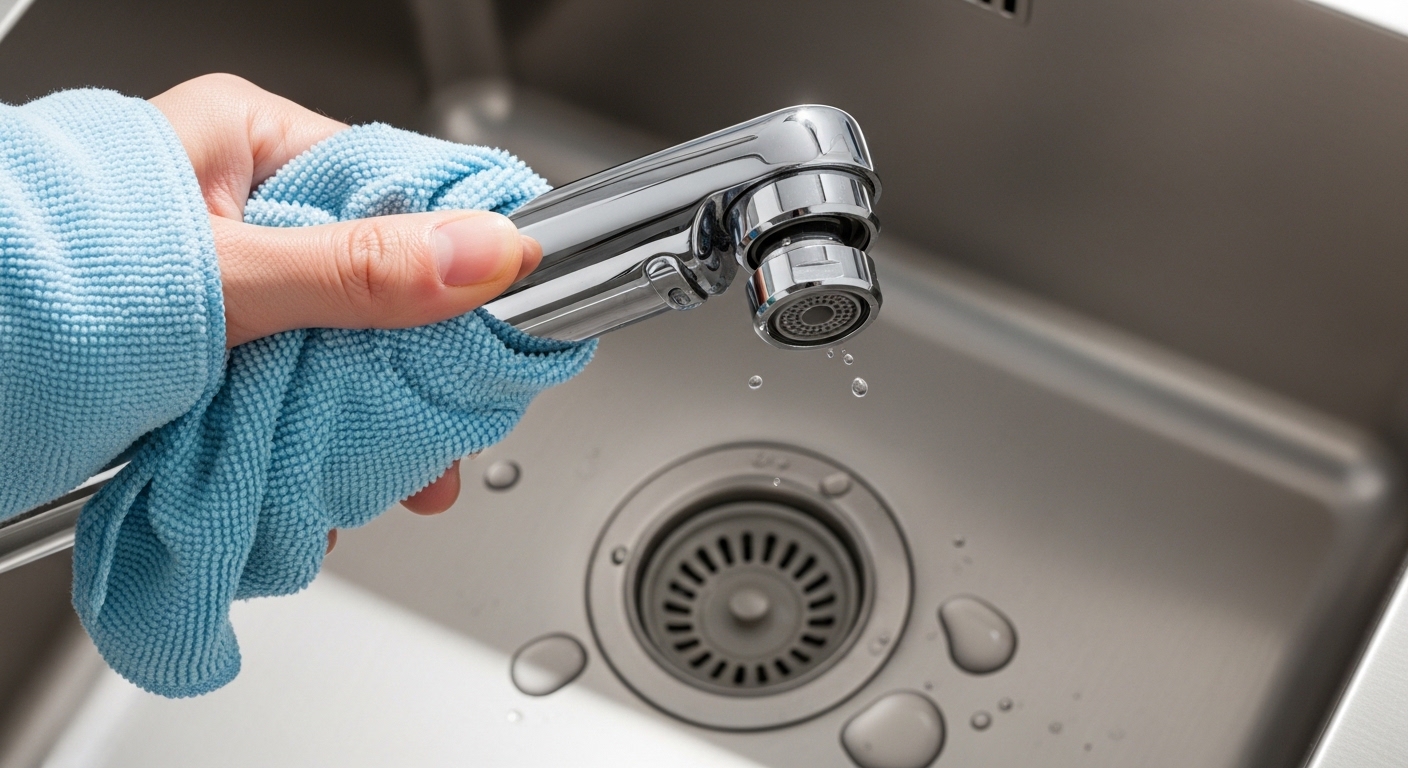
If you’ve been searching for how to remove kitchen faucet flow restrictor because your stream feels weaker than a hotel shower, you’re in the right place. A flow restrictor is the small plastic or rubber disc inside the aerator that caps your faucet at 1.5–2.2 gallons per minute (GPM) to meet U.S. EPA WaterSense and DOE standards. Removing it is legal for personal use in most states (California, Colorado, Washington, and a few others restrict it on rentals and resale units — more on that below), and on faucets that have been gunked up by hard water, taking it out often restores 30–60% of the original flow.
This guide walks you through the exact procedure for every common faucet type — pull-down, pull-out, single-handle, two-handle, and hidden-cache aerators — plus when removal actually helps, when it doesn’t, and how to put everything back the way it was if your local code or rental contract requires it.
What exactly is a flow restrictor and why is it inside my kitchen faucet?
A flow restrictor is a small disc — usually a thin rubber gasket with a star-shaped or pinhole center, or a plastic ring with calibrated openings — that sits inside the aerator at the tip of your faucet spout. Its only job is to limit the maximum water volume your faucet can pass per minute, regardless of how high you crank the handle.
The U.S. federal maximum for kitchen faucets has been 2.2 GPM at 60 psi since 1994 (Energy Policy Act). WaterSense-labeled fixtures voluntarily cap at 1.5 GPM, and California, Colorado, Hawaii, New York, Vermont, and Washington require 1.8 GPM or lower on new kitchen faucets sold in-state. The restrictor is what enforces that ceiling. The aerator (the mesh screen surrounding it) is a separate component — it mixes air into the stream to reduce splash and feel “softer.” You can keep the aerator and remove only the restrictor.
Why would I want to remove the kitchen faucet flow restrictor in the first place?
There are three honest reasons to pull a restrictor out, and a couple of bad ones. The honest ones:
- Your incoming water pressure is genuinely low (under 40 psi at the meter). A restrictor designed for 60 psi will choke a 35 psi house down to a dribble. Removing it gets you back to “normal,” not “high.”
- Hard water has clogged the restrictor with calcium scale and you’d rather get rid of it than clean it every six months. Common across the Southwest, Texas, and the Midwest where water hardness exceeds 10 grains per gallon.
- You’re filling large pots — stockpots, canning jars, pet bowls, a kettle for pasta. A 1.5 GPM restrictor takes 80 seconds to fill a gallon; an unrestricted 2.5 GPM faucet does it in 48.
The bad reasons: trying to fix a faucet that “feels weak” when the real culprit is a partially-closed angle stop under the sink, a clogged supply line, a worn cartridge, or sediment in the pull-down hose. Removing the restrictor on those won’t help — diagnose first.
How do I remove the kitchen faucet flow restrictor step by step?
The whole job takes about 5 minutes and needs no tools beyond what’s already in your junk drawer. Here’s the universal procedure — variations for hidden aerators are in the next section.
- Shut the faucet off and plug the drain. Drop a rag into the sink basin. Tiny springs and rubber discs love to disappear down drains.
- Identify your aerator type. Look up at the tip of the spout. If you see a hex ring or knurled edge sticking out, it’s a standard aerator. If the tip is smooth and flush, it’s a “cache” or recessed aerator (hidden inside the spout) and needs a key — covered below.
- Unscrew the aerator counter-clockwise (lefty-loosey from your viewpoint looking up). Use a rubber jar-opener pad, a soft cloth, or your bare hand. Avoid pliers — they leave permanent scars on the finish. If it won’t budge, wrap it in a vinegar-soaked paper towel and a plastic bag for 30 minutes; the calcium will dissolve.
- Lay the parts out in the order they came apart. A typical aerator is a 4-piece stack: outer housing → flow restrictor (usually a colored disc — green = 1.5 GPM, blue = 1.8, white = 2.2, red = 2.5) → mixer screen → rubber washer.
- Pry the restrictor out. A straightened paperclip, a sewing pin, or the corner of a flat-head precision screwdriver under the edge of the disc is enough. Don’t pierce the mesh screen behind it — you want to reuse that.
- Reassemble in reverse order, minus the restrictor. Keep the rubber washer (prevents leaks) and the mesh screen (prevents splash). Hand-tighten only — a quarter turn past finger-tight is plenty.
- Test. Run hot and cold separately, then together. Look for leaks where the aerator meets the spout. If it drips, the washer is misaligned — unscrew, reseat, retry.
What if my faucet has a hidden (cache) aerator with no visible threads?
Modern faucets from brands like Delta, Moen, Kohler, Hansgrohe, Grohe, and Wiga increasingly use cache aerators that sit flush inside the spout for a cleaner look. You can’t grip them with your hand — they need a small toothed plastic key, usually included in the box with your faucet and almost always lost within a year.
Replacement keys are standardized by aerator diameter (most common: 16.5mm, 18.5mm, 21.5mm, 24mm). Match the key to your faucet brand, insert it flush into the spout tip, and turn counter-clockwise. If you’ve lost the key, a thin-bladed needle-nose plier carefully spread into two opposing notches works in a pinch — but expect to mar the finish slightly. For a complete walkthrough including how to identify your specific cache style and a list of universal keys, see our companion guide on faucet aerator key removal.
Which faucet types make restrictor removal easiest (and which are a pain)?
Not every faucet plays nicely. Here’s a quick comparison of the most common kitchen faucet styles in 2026 and what to expect when you go after the restrictor.
| Faucet Type | Restrictor Location | Tools Needed | Difficulty | Typical Time |
|---|---|---|---|---|
| Standard single-handle | Spout tip aerator | Rag or hand | Easy | 3 min |
| Pull-down sprayer | Inside spray head, behind nozzle face | Coin or aerator key | Easy–Medium | 5 min |
| Pull-out sprayer | Inside the sprayer body, sometimes 2 of them | Small screwdriver | Medium | 10 min |
| Cache / recessed aerator | Flush inside spout | Plastic aerator key | Medium | 5 min |
| Two-handle bridge faucet | Spout tip aerator (sometimes 2 restrictors) | Adjustable wrench + cloth | Easy | 5 min |
| Commercial pre-rinse | Pre-rinse spray valve outlet | Often non-removable by design | Hard / not recommended | — |
| Touchless / smart faucet | Aerator tip; solenoid valve may also limit | Standard tools, but flow won’t increase much | Easy but low-reward | 5 min |
Pull-down sprayers from Moen, Kohler, and Wiga generally come apart with a simple twist of the spray nozzle face — look for a coin slot or two small dimples on the underside. The restrictor is the colored disc directly behind the spray plate. If you have a pull-out kitchen mixer faucet, the wand body itself may contain two restrictors — one for stream mode, one for spray — and you’ll need to remove both for the change to feel meaningful.
Is it legal to remove the flow restrictor from my kitchen faucet?
For personal use in your own home, removing the restrictor from a faucet you already own is legal under federal law. Federal regulations (EPAct 1992 and DOE rules) apply to manufacturers and sellers, not end-users. You are allowed to modify your own plumbing fixtures.
Two exceptions to know:
- State law in CA, CO, WA, NY, HI, VT, and a handful of municipalities requires that fixtures installed in homes — including remodels and rentals — meet state flow caps. If you remove a restrictor and then sell or rent the home, you may technically need to reinstall it before transfer. Inspectors rarely check faucet aerators on resale, but it’s worth knowing.
- Rental units: your landlord usually owns the fixture. Removing the restrictor without permission could violate your lease and, in drought-restricted areas, expose you to fines. Ask first or just clean it instead.
Warranty-wise, most major manufacturers (Wiga, Moen, Delta, Kohler) do not void the faucet warranty for restrictor removal — the restrictor is considered a user-serviceable consumable, like an aerator screen. Always keep the disc in a labeled baggie inside the cabinet under your sink in case you need it back.
How much flow will I actually gain, and is it worth doing?
Realistic expectations matter. Here’s what to expect based on real-world measurements at typical residential pressures of 50–65 psi:
- 1.5 GPM restrictor removed → 2.2–2.6 GPM actual flow (47–73% gain). Very noticeable.
- 1.8 GPM restrictor removed → 2.4–2.8 GPM (33–55% gain). Clearly noticeable.
- 2.2 GPM restrictor removed → 2.5–3.0 GPM (14–36% gain). Mildly noticeable.
If your faucet is connected through 3/8″ supply lines (standard for U.S. kitchens), you’ll plateau around 2.8–3.2 GPM regardless — the supply line itself becomes the bottleneck. Connecting to 1/2″ lines can push you to 4+ GPM, but that’s a re-plumb, not a 5-minute job.
Pot-filling test: a 1.5-gallon stockpot at 1.5 GPM takes 60 seconds. With the restrictor out and flow at 2.5 GPM, it’s 36 seconds. Across a year of weekly pasta nights you’ll save about 20 minutes of standing-at-the-sink time. Whether that justifies an extra 100–200 gallons of monthly water use is your call.
What should I do instead if my low water pressure isn’t actually the restrictor’s fault?
Before you yank the disc, spend two minutes ruling out the more common culprits. Removing a restrictor on a faucet whose real problem is a clogged supply line is like changing your tires when the brake pads are worn — you’re attacking the wrong part.
Run through this in order:
- Check the angle stops under the sink. Both hot and cold valves should be fully counter-clockwise (open). A half-closed stop is the single most common cause of “weak faucet.”
- Disconnect the supply hose from the faucet tailpiece and run it into a bucket. If flow is strong there, the problem is in the faucet (cartridge, hose, or aerator). If it’s weak, it’s upstream (supply line, shutoff, or municipal pressure).
- Pull the pull-down hose off the weight and check for kinks. Coiled spray hoses behind a tight cabinet are a classic flow killer.
- Inspect the cartridge. Older Moen 1225 and Delta RP19804 cartridges develop scale that chokes flow at the mix point. A $15 replacement often beats restrictor removal.
- Last, deal with the aerator/restrictor. Clean it in vinegar overnight first. If that doesn’t restore flow, then remove the restrictor.
For broader installation troubleshooting on the bathroom side of the house, our walkthrough on how to install a bathroom vanity faucet covers many of the same diagnostic steps for supply lines, shutoffs, and cartridges.
How do I clean a flow restrictor instead of removing it (the better long-term fix)?
Nine times out of ten, the restrictor isn’t the villain — the calcium scale on it is. If you live somewhere with hard water (over 7 grains per gallon — most of the U.S. west of the Mississippi), the restrictor’s pinholes clog within 6–18 months. Cleaning gets you 80% of the way back to original flow without touching legal compliance.
- Remove the aerator and restrictor as described above.
- Soak everything in a small bowl of distilled white vinegar (not cleaning vinegar — too acidic) for 30 minutes to 4 hours. CLR Calcium & Lime Remover works in 5 minutes if you’re impatient.
- Scrub the pinholes with an old toothbrush.
- Rinse thoroughly with cold water — vinegar residue can corrode brass over months.
- Reassemble.
If you do this every 6 months, you’ll likely never need to remove the restrictor at all. Pair it with an annual cleaning of your pull-down sprayer head — same vinegar soak — and your faucet will outlive its warranty.
How does removing the restrictor affect different faucet finishes and brands?
The restrictor itself doesn’t interact with the finish, but the process of unscrewing the aerator can. Living finishes like unlacquered brass and oil-rubbed bronze scratch easily — always use a soft cloth, never pliers, and never a wrench with metal jaws directly on the spout. For specifics on bronze faucet care, the 8-inch widespread faucet oil-rubbed bronze guide walks through finish-safe maintenance practices that apply equally to kitchen spouts.
PVD finishes (champagne bronze, matte black, brushed gold) are more scratch-resistant but can still show wear from repeated tool contact. Chrome and stainless are the most forgiving. If you have a touchless or smart faucet, removing the restrictor will increase flow when the solenoid is open, but the solenoid itself may cap maximum output — check your manual.
FAQ
Will removing the flow restrictor void my faucet warranty?
No, in almost all cases. Major manufacturers including Wiga, Moen, Delta, Kohler, Hansgrohe, and Grohe classify the restrictor as a user-serviceable consumable, similar to the aerator screen. Damage caused while removing it (a stripped aerator thread, a cracked spout from over-tightening with pliers) is not covered. Save the restrictor disc in a labeled bag so you can reinstall it if you ever need warranty service.
Can I remove the flow restrictor on a pull-down spray faucet?
Yes. On a pull-down, the restrictor lives inside the sprayer head, not at the spout base. Unscrew the spray nozzle face (usually a coin slot or twist-off), lift out the colored disc behind the spray plate, and reassemble. Some pull-down heads have two restrictors — one for the stream mode and one for the spray mode — and you’ll need to remove both to feel a difference in both modes.
How much will my water bill go up if I remove the restrictor?
For an average U.S. household using the kitchen faucet about 8 minutes per day, removing a 1.5 GPM restrictor and gaining roughly 1 GPM of flow adds about 240 gallons per month, or roughly $1.20–$3.60 on most municipal bills depending on local rates. Negligible for most households, meaningful if you’re on a well with an electric pump.
What’s the difference between an aerator and a flow restrictor?
The aerator is the mesh screen at the spout tip that mixes air into the water stream to reduce splashing and give the water a fuller “feel.” The flow restrictor is a separate disc, usually behind the aerator, that physically caps maximum gallons per minute. You can remove the restrictor while keeping the aerator — and you usually should, because the aerator prevents your stream from hitting the sink like a fire hose.
Why is my faucet still weak after I removed the restrictor?
The restrictor wasn’t the bottleneck. The most common remaining causes are a partially closed angle stop under the sink, a clogged supply hose, a sediment-blocked cartridge, or low incoming pressure from the municipal supply. Test by removing the supply hose at the faucet tailpiece and running it into a bucket — if flow is weak there, the issue is upstream of the faucet entirely.
Are commercial kitchen faucets restricted the same way?
No. Commercial pre-rinse faucets used in restaurants are regulated separately and typically run 1.15–1.6 GPM under EPAct, with restrictors integrated into the spray valve itself in a way that’s not user-serviceable. If you need higher flow for a commercial kitchen, you select a higher-rated valve rather than modify an existing one — see our commercial kitchen faucet buyer’s guide for compliant high-flow options.
Can I put the restrictor back in if I don’t like the new flow?
Absolutely, and it takes about 90 seconds. The restrictor and rubber washer slide right back into the aerator housing in the exact order they came out. This is why we recommend keeping the parts in a labeled bag in the cabinet under your sink — you may want it back when you realize splashing has tripled and you’re soaking your shirt every time you rinse a tomato.
About the author
This guide was written by the Wiga Faucet technical team, drawing on more than 18 years of faucet engineering, in-house flow testing per ASME A112.18.1 / CSA B125.1 standards, and field-service data from over 400,000 kitchen faucet installations across North America, Europe, and Australia. Every Wiga kitchen faucet ships with a clearly labeled, removable flow restrictor, a 5-year limited warranty on cartridges and finish, and lead-free brass construction certified to NSF/ANSI 372. Our products are independently tested by IAPMO and bear the cUPC mark required for U.S. and Canadian plumbing code compliance. For questions on a specific model, contact support@wigafaucet.com.