 Wiga Tap Manufacturer
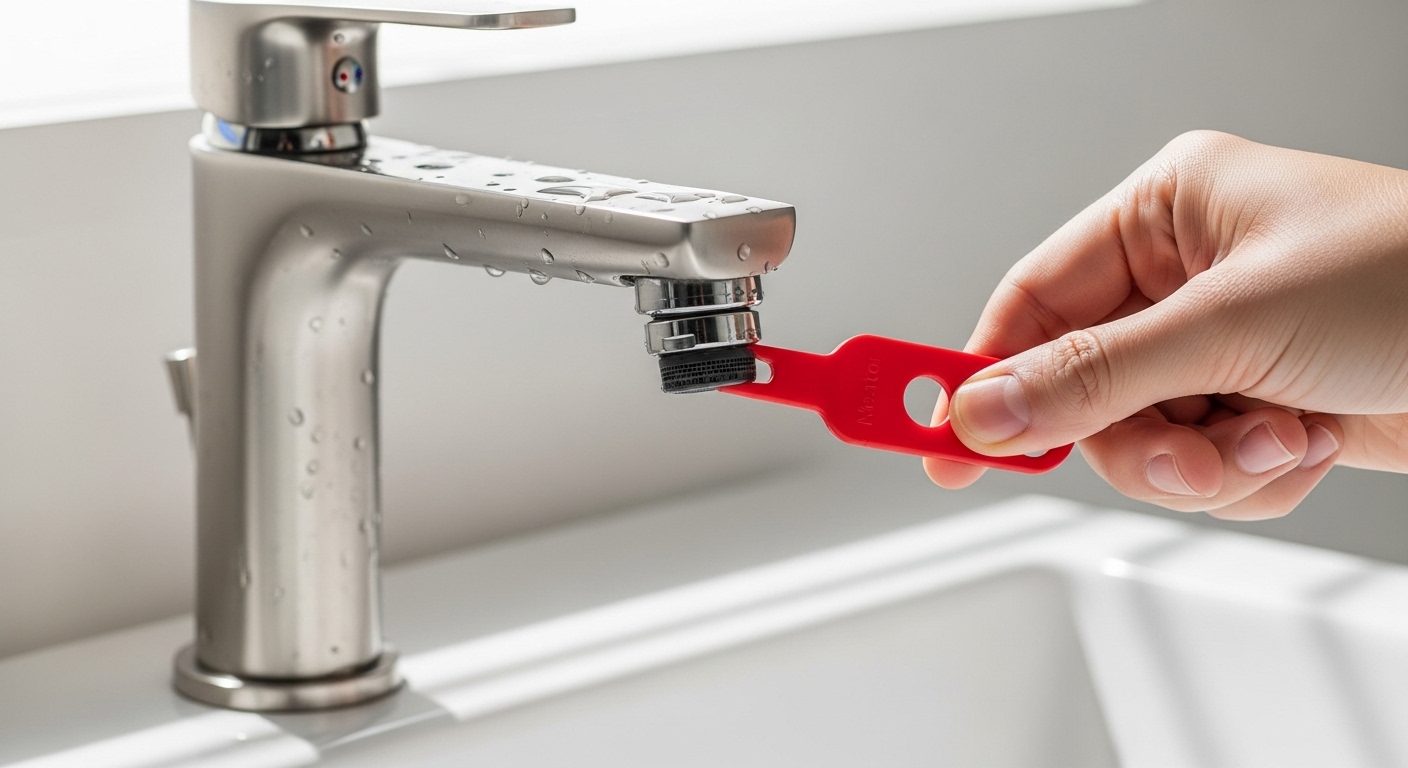
If your spout has no visible flats to grab with pliers, you almost certainly need a tool for proper faucet aerator key removal. Recessed — or “cache” — aerators sit flush inside the tip of the faucet, and the only way to back them out cleanly is with a matching aerator key (sometimes called a cache aerator wrench). In this guide we’ll explain how these keys work, how to identify the right one, and how to remove a stuck aerator without gouging your finish or rounding off the teeth.
Whether you’re descaling a slow-flowing bathroom tap or swapping in a higher-flow insert for a kitchen sprayer, getting the key right is the difference between a two-minute job and a scratched, leaking spout. Let’s get you the correct tool and the correct technique.
What Is a Faucet Aerator Key and When Is It Needed for Removal?
A faucet aerator key is a small tool — usually molded plastic, sometimes brass or zinc — with teeth, splines, or tabs on its end that mesh with matching notches on a recessed aerator. Because cache aerators are designed to sit hidden inside the spout for a clean, modern look, they have no external flats. Pliers simply can’t grab them. The key transfers your turning force directly to the aerator’s internal geometry so you can unscrew it.
You need a key for faucet aerator key removal in these common situations:
- Low or uneven water flow: Mineral scale and grit clog the mesh screen, and the aerator must come out to be cleaned or replaced.
- Hard-water buildup: Calcium deposits weld the threads, making a proper-fitting key essential to avoid stripping.
- Flow-rate changes: Switching to a water-saving 1.0–1.5 GPM insert, or to a higher-flow insert for filling pots quickly.
- Spray-pattern upgrades: Moving from an aerated stream to a laminar (clear, non-splashing) stream.
- New-faucet installs: Many spouts ship with the aerator hand-tight; the key lets you snug it correctly.
If your aerator does have visible flats or knurling on the outside, you likely don’t need a key at all — a strip of tape and pliers, or a standard aerator wrench, will do. Keys are specifically for the hidden, recessed style now common on contemporary basin mixers and pull-down kitchen faucets.
How to Identify the Right Aerator Key Before You Start Removal
The single biggest mistake people make with faucet aerator key removal is buying or grabbing the wrong size. Cache aerators are not universal — they vary by diameter, tooth count, and tooth profile. Force the wrong key in and you’ll shear the teeth on either the key or the aerator.
Measure the Diameter
Look up into the spout and measure the diameter of the recessed aerator face in millimeters. The most common sizes you’ll encounter are 16.5 mm, 18.5 mm, 21.5 mm, 22.5 mm, 23.5 mm, and 24.5 mm. Manufacturers like Neoperl and Honeycomb use color-coded keys for these, but a multi-size key set covers most household faucets in one purchase.
Count and Match the Teeth
Two aerators with the same diameter can still have different tooth counts (for example, 16 vs. 18 teeth). Hold the key up to the aerator and confirm the splines line up before you apply any torque. A correctly matched key seats fully and turns with no wobble.
Check the Style: Slotted vs. Splined vs. Tabbed
Some cache aerators use two simple slots that accept a flat-blade key; others use a full ring of fine splines; a few premium models use a keyless push-and-twist collar. Knowing your style up front saves a trip to the hardware store. When in doubt, photograph the aerator face and compare against the manufacturer’s chart.
Aerator Key Types Compared
Not every key is built the same. The table below compares the main styles you’ll see so you can pick the right one for your faucet aerator key removal job.
| Key Type | Best For | Material | Reusable | Typical Fit |
|---|---|---|---|---|
| Single-size molded key | One specific faucet model | ABS plastic | Yes | Exact match only |
| Double-ended key | Two common sizes in one tool | ABS / nylon | Yes | 2 sizes |
| Multi-size key set | Households with mixed faucets | Reinforced nylon | Yes | 6–10 sizes |
| Universal cache wrench | Pros & rentals | Glass-filled polymer / metal | Yes | Wide range |
| Brass/zinc keyed wrench | Seized, hard-water aerators | Metal | Yes | Heavy-duty, exact match |
For most homeowners, a multi-size set is the smart buy: it handles the basin mixer in the bathroom and the pull-down sprayer in the kitchen with one tool. If you’ve inherited a stubborn, scale-locked aerator, a metal keyed wrench gives you the extra torque plastic can’t safely provide. If you’re shopping for a new tap entirely, our overview of modern designs in the latest faucet innovations covers which models ship with keyed cache aerators.
Step-by-Step Faucet Aerator Key Removal
With the right key in hand, removal is quick. Follow these steps and you’ll protect both the finish and the threads.
- Close the drain. Plug the sink or lay a cloth over it so the tiny rubber washer and screen don’t disappear down the pipe.
- Wipe the spout dry. A dry tip gives you a better grip and lets you see the aerator face clearly.
- Seat the key. Push the matching end of the key straight up into the aerator until the teeth fully engage. You should feel it click into the splines with no gap.
- Turn counter-clockwise. Looking up at the spout, rotate the key to the left (lefty-loosey). Apply steady, even pressure — never jerk it.
- Back it out by hand. Once it breaks free, the aerator threads out easily. Catch the housing, screen, and washer as they come down.
- Inspect and clean. Separate the parts, soak the screen in white vinegar for 20–30 minutes to dissolve scale, then rinse and reassemble in the same order.
- Reinstall snug, not gorilla-tight. Thread the aerator back in by hand, then give it a gentle final turn with the key. Hand-snug plus a quarter-turn is plenty.
If the aerator won’t budge, do not crank harder on a plastic key. Instead, see the troubleshooting section below. Over-torquing is the number-one cause of sheared teeth and cracked spout tips.
Removing a Stuck or Seized Aerator
Hard water is the enemy of easy faucet aerator key removal. When calcium bridges the threads, the aerator can feel welded in place. Work through these escalating fixes before reaching for force:
- Dissolve the scale first. Soak a paper towel in white vinegar, wrap it around the spout tip, secure with a rubber band, and leave it 30–60 minutes. The acid softens the deposits binding the threads.
- Apply gentle heat. A few seconds with a hair dryer expands the brass spout slightly and can break a scale bond. Keep heat away from any plastic or finish-sensitive components.
- Improve your grip. Make sure the key is bone-dry and fully seated. A wobbling key strips teeth.
- Step up to a metal key. If a plastic key flexes under load, a brass or zinc keyed wrench transfers torque without deforming.
- Use penetrating lubricant sparingly. A drop of plumber-safe penetrant at the thread line, given time to wick in, often frees the worst cases.
If after all of this the aerator still won’t move, it may be cross-threaded or corroded beyond a clean removal. At that point, replacing the whole aerator assembly — or consulting the faucet’s warranty — is wiser than risking the spout. Quality fixtures, like the bathroom taps covered in our guide to the essential basin faucet, use corrosion-resistant brass that resists this kind of seizing in the first place.
Cleaning, Replacing, and Upgrading Your Aerator
Once the aerator is out, you have a chance to do more than just clean it. The aerator is the cheapest, highest-impact upgrade on any faucet.
Clean It Right
Disassemble the stack — housing, flow restrictor, mixer disc, and mesh screen — and note the order. Soak metal and plastic parts in a 1:1 vinegar-water solution, scrub the screen with an old toothbrush, and clear individual holes with a toothpick. Reassemble in reverse. Skipping a part or reversing the screen will ruin the spray pattern.
Choose the Right Replacement Flow Rate
Aerators are rated in gallons per minute (GPM). Bathroom basin taps run efficiently at 0.5–1.2 GPM, while kitchen faucets typically use 1.5–2.2 GPM so you can fill pots without waiting. If your local code targets water conservation, a 1.0 GPM bathroom insert can cut usage dramatically with no noticeable drop in comfort.
Pick a Spray Style
Aerated streams mix air into the water for a soft, splash-free flow — ideal for everyday bathroom use. Laminar streams produce a clear, solid column that resists splashing and doesn’t aerosolize, which some prefer in the kitchen. Spray or needle inserts give a wide rinse pattern. The aerator you choose shapes the whole feel of the faucet, which is why we treat it as part of the buying decision in our complete rundown on choosing kitchen faucets. For finishing touches and organizers around the sink, our guide to functional bathroom accessories pairs nicely with a freshly serviced tap.
Tools and Supplies Checklist
Have these on hand before you begin, and faucet aerator key removal becomes a stress-free five-minute task:
- Correctly sized aerator key (or a multi-size set)
- White vinegar for descaling
- Old toothbrush and toothpicks
- Soft cloth to protect the finish
- Replacement aerator and rubber washer (optional but smart)
- Plumber’s tape for any threaded reinstall, if specified by the maker
- Small dish to hold the tiny parts
Common Mistakes That Damage the Spout
Even with the right key, a few avoidable errors can turn a simple service into a repair. Watch out for these:
- Turning the wrong way. Remember you’re looking up at the aerator, so counter-clockwise from your viewpoint loosens it.
- Forcing a near-fit key. “Close enough” strips teeth. Confirm the exact size first.
- Skipping the drain plug. The washer and screen are easy to lose.
- Reassembling out of order. Photograph the stack as it comes apart.
- Over-tightening on reinstall. Hand-snug plus a slight key turn prevents cracked threads and makes the next removal easy.
Why Trust This Guide — Wigafaucet Expertise, Testing, and Warranty
About Wigafaucet: Wigafaucet is a dedicated manufacturer and retailer of faucets and bathroom fixtures, supplying kitchen mixers, basin taps, shower systems, and the matching aerator components that go with them. Because we make the spouts and the inserts, our team has hands-on familiarity with the exact recessed-aerator geometries customers ask about every day.
Testing & standards: Wigafaucet aerators are produced to recognized lead-free wetted-surface requirements and flow-rate standards, and each batch is pressure- and flow-tested before shipping so the insert you receive matches its rated GPM. Our brass spout bodies undergo salt-spray corrosion checks, which is why our cache aerators tend to come out cleanly years later instead of seizing.
Warranty: Genuine Wigafaucet replacement aerators and keys are covered under our standard fixture warranty when used with the matching faucet, and our support team can confirm the exact key size for your model if you send a photo and the product code.
Author’s note: This guide was written by the Wigafaucet product content team in consultation with our in-house bathroom-fixtures specialists, who service and bench-test recessed aerators as part of our quality process. The step-by-step method above is the same one we recommend to customers who call in about slow flow or a stuck cache aerator.
FAQ
What is a faucet aerator key actually used for?
It’s a small toothed tool that grips the internal splines of a recessed (cache) aerator so you can unscrew it. Because these aerators sit flush inside the spout with no external flats, a key is the only way to perform clean faucet aerator key removal without scratching the finish or rounding off the housing.
How do I know which size aerator key I need?
Measure the diameter of the aerator face in millimeters (common sizes run 16.5–24.5 mm) and count the teeth. The key must match both the diameter and the tooth count to seat fully. When unsure, a multi-size key set covers nearly every household faucet, or you can send Wigafaucet a photo for an exact match.
Can I remove a recessed aerator without a key?
Rarely, and not safely. Truly recessed aerators have no external grip surface, so pliers either slip or crack the spout tip. In a pinch a strip of strong tape may grab a slightly proud aerator, but for any genuinely flush cache aerator, the correct key is the right tool.
What do I do if the aerator is stuck and won’t turn?
Soak the spout tip in white vinegar for 30–60 minutes to dissolve hard-water scale, apply gentle heat from a hair dryer to expand the brass, make sure your key is dry and fully seated, and if needed step up from a plastic key to a metal one for more torque. Never force a plastic key — it will shear before the scale lets go.
Which way do I turn the key to remove the aerator?
Counter-clockwise as you look up at the spout (lefty-loosey). When you reinstall, turn clockwise and stop at hand-snug plus a small final turn so it seals without cracking the threads.
Does removing the aerator affect my faucet’s warranty?
Routine cleaning and aerator replacement with the correct key is normal maintenance and does not void a Wigafaucet warranty. Damage from forcing the wrong-size key or over-tightening, however, is avoidable wear — which is exactly why matching the key correctly matters.