 Wiga Tap Manufacturer
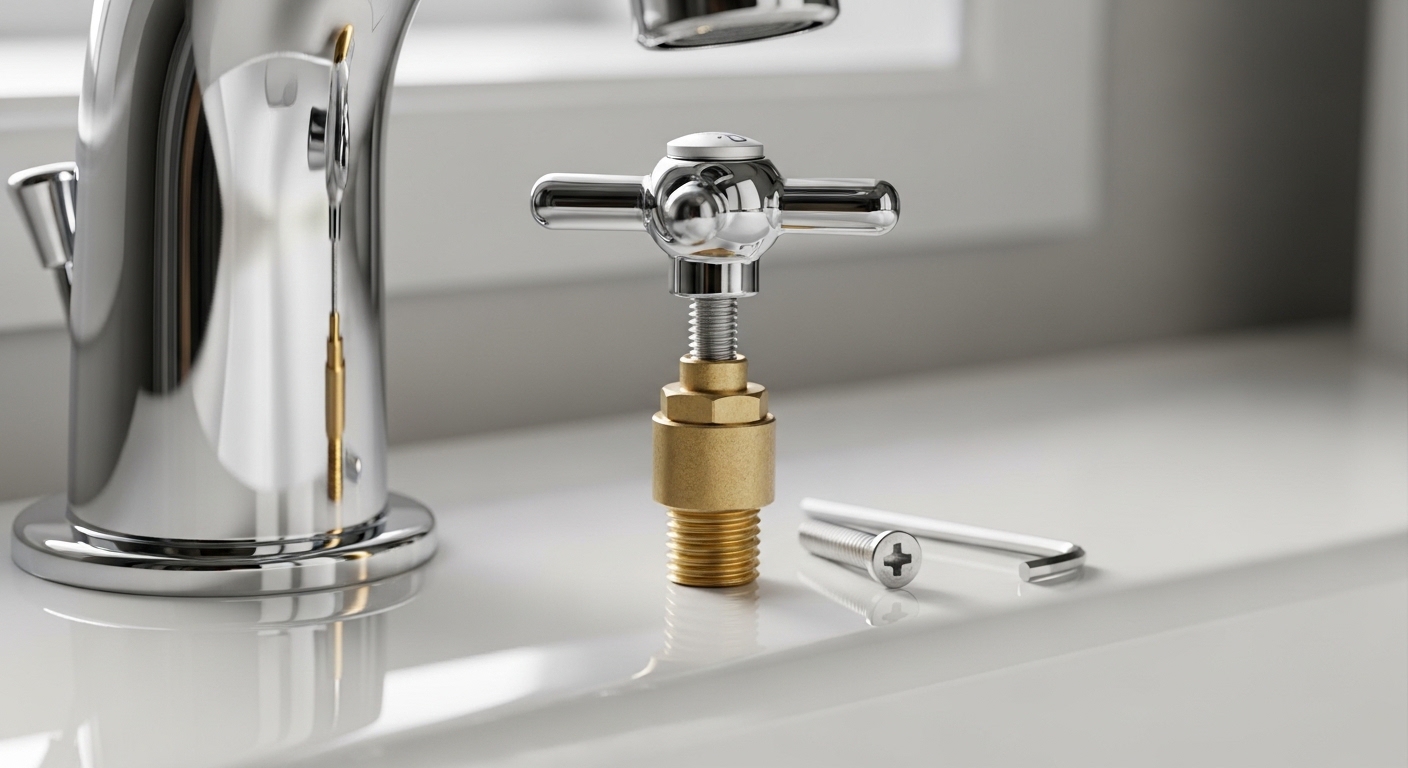
If your handle spins loosely, cracked, corroded, or just looks tired, a bathroom faucet knob replacement is almost always the fix — and it’s one of the few plumbing jobs where you genuinely don’t need a plumber, special skills, or an expensive service call. The knob (also called the handle) is just the part you grip; it clips onto a splined valve stem underneath. Swap the knob and you restore a clean turn without touching the water lines. This guide walks you through exactly how to identify the right knob, remove the old one, and install the new one — plus how to tell when the knob is the real problem versus the cartridge underneath.
How do I know if I need to replace the knob or the whole faucet?
You only need to replace the knob — not the whole faucet — if the problem is limited to the part you grip: a cracked handle, a stripped knob that spins without turning the water, a loose knob that wobbles, or a corroded finish you want to refresh. If the faucet drips from the spout, leaks around the base, or the water won’t shut off fully, the knob is likely fine and the real culprit is the cartridge or stem underneath.
Here’s the quick diagnostic. Turn the knob. If it feels stripped or slips, look at the connection: a knob whose splined hole (the broach) is worn round won’t grip the stem anymore — that’s a knob replacement. But if the knob turns solidly and water still drips, the cartridge inside is worn, and swapping the knob won’t stop the drip. In that case, a single handle faucet cartridge replacement is the right repair, not a new knob.
A leak specifically at the base of the handle usually means a worn O-ring or packing, not a broken knob. If water seeps out around the handle every time you turn it on, read our walkthrough on a leaking bathroom sink faucet handle before you buy a new knob — you may only need a 50-cent seal.
What tools and parts do I need for a bathroom faucet knob replacement?
You need almost nothing: a hex (Allen) key set, a flathead screwdriver, a Phillips screwdriver, and possibly needle-nose pliers or a small handle puller. Parts-wise, you need one thing — a replacement knob that matches your faucet’s valve stem broach and mounting style. Total cost is usually $8 to $40 depending on brand and finish.
- Hex/Allen key set — most modern knobs are held by a tiny recessed set screw.
- Flathead screwdriver — to pry off the decorative index cap (the hot/cold button) on top.
- Phillips screwdriver — for center-screw handles hidden under the cap.
- Penetrating oil — if the knob is corroded onto the stem.
- Handle puller — a $10 tool only needed if the knob is seized and won’t slide off.
- The matching replacement knob — brand-specific or a universal knob with the correct broach.
How do I remove a stuck or corroded faucet knob?
To remove a stuck faucet knob, first loosen the set screw fully (or remove the center screw), then apply penetrating oil around the base of the knob and wait 10–15 minutes. Wiggle the knob straight up while rocking gently side to side — never yank at an angle, which can bend the stem. If it still won’t budge, use an inexpensive handle puller that grips the knob and levers it off the stem evenly.
Corrosion is the usual reason a knob feels welded on. Hard water leaves mineral buildup between the knob’s broach and the stem’s splines, effectively gluing them together. A soak of white vinegar or penetrating oil breaks that bond. Resist the urge to hammer or pry hard with a screwdriver against the escutcheon — you’ll scratch the finish or crack the valve body. Patience and the right puller beat brute force every time.
Before you touch any screws, turn off the water at the shut-off valves under the sink and open the faucet to relieve pressure. You technically don’t have to shut off the water to change just the knob — the valve stays closed — but it’s cheap insurance against a slip.
Step-by-step: how do you actually swap the knob?
The whole job is five steps and takes 20–30 minutes even for a first-timer. Here’s the exact sequence for a standard bathroom faucet:
- Shut off the water and plug the drain so no small screws disappear down the pipe.
- Find and remove the fastener. For a set-screw knob, find the tiny hole at the base or back of the knob and back out the hex screw. For a capped knob, pop the index cap off the top with a flathead and remove the Phillips or slotted screw underneath.
- Pull the old knob straight up off the valve stem. Rock gently if needed; apply penetrating oil if it resists.
- Inspect the stem. Note the splined broach shape and count the splines if you can — this is what your new knob must match. Clean off any mineral crust with vinegar and an old toothbrush.
- Slide the new knob on, align it (usually pointing down or to the side in the “off” position), and secure the screw. Reattach the index cap, turn the water back on, and test.
That’s it. If the new knob wobbles after tightening, the broach doesn’t match the stem — you have the wrong knob, not a bad install. This is the single most common mistake, which is why matching comes first.
How do I match the right replacement knob to my faucet?
Match the knob by identifying three things: your faucet brand, the valve stem broach (the splined pattern on the stem), and the mounting style (set screw versus center screw). Brand-specific knobs are the safest match; universal knobs work only if the broach lines up. When in doubt, take the old knob to the store or photograph the stem end-on.
The broach is the make-or-break detail. Different brands cut different spline counts and patterns — a Delta stem is not a Moen stem is not a Kohler stem. A knob with a 16-point broach won’t grip a 20-point stem, no matter how nice it looks. If you’re swapping cartridge and stem together, matching becomes easier because the new stem and knob ship as a set; see our guide to Delta faucet cartridge replacement parts for how brand kits bundle the stem, knob, and seals.
| Knob type | How it’s held on | Best for | Typical cost |
|---|---|---|---|
| Brand-specific replacement (Delta, Moen, Kohler, Pfister) | Set screw or center screw, brand broach | Exact-match repairs, guaranteed fit | $15–$40 |
| Universal cross/lever knob | Set screw, multi-broach adapter or fixed broach | Older or generic faucets, finish upgrades | $8–$25 |
| Metal lever handle | Recessed hex set screw | Modern single- or two-handle faucets | $12–$30 |
| Porcelain / acrylic cross knob | Center screw under index cap | Traditional and vintage-style baths | $10–$28 |
Can I upgrade the finish or style while I’m at it?
Yes — a knob swap is the cheapest way to refresh a bathroom faucet’s look without replacing the whole fixture. As long as the new knob’s broach matches your stem, you can move from a dated chrome cross to a matte black lever, brushed nickel, or brushed gold in under 30 minutes. Just confirm the finish is genuinely matched to your spout, because “chrome” and “polished nickel” look different in daylight.
One honest caveat: mixing brands for looks is risky. A gorgeous universal lever won’t help if it can’t grip your stem. If your goal is a full aesthetic change and the broach won’t cooperate, it’s often smarter to replace the cartridge-and-stem assembly as a set so the new knob is guaranteed to fit. If the faucet itself is old and you’re weighing repair versus replacement, our breakdown of how much a plumber charges to install a bathroom faucet helps you decide whether a $20 knob or a new faucet is the better spend.
What if the knob spins but the water still won’t shut off?
If the knob turns freely but water keeps flowing or dripping, the knob is not your problem — the cartridge or stem valve inside has failed, and no new knob will stop the leak. A fresh knob only restores your grip; the actual water shut-off happens deep inside the valve body. Replace the cartridge to fix a persistent drip.
Think of it this way: the knob is a steering wheel and the cartridge is the transmission. A cracked steering wheel is annoying but doesn’t affect whether the car moves; a worn transmission does. If you tighten a brand-new knob and still get a drip, open the valve and inspect the cartridge — worn rubber seals inside are the classic cause. Swapping a cartridge is a slightly deeper job but still firmly DIY, and it uses many of the same tools you just used on the knob.
Author’s note and why you can trust this guide
This guide was written by the wigafaucet product team — the same people who spec, test, and warranty the faucets and repair parts we sell at wigafaucet.com. Our knobs and cartridges are tested against standard low-lead (NSF/ANSI 372) and durability cycle benchmarks, and our replacement handles are backed by a limited warranty so a fit issue is our problem, not yours. We’ve handled thousands of customer repair questions, and “my knob is stripped or cracked” is one of the most common — which is exactly why we wrote a walkthrough that matches how real people actually search for and do this fix. When we say a broach mismatch is the #1 failure point, that’s from real returns data, not guesswork.
FAQ
Do I have to turn off the water to replace a bathroom faucet knob?
Technically no, because the valve stays closed while you swap the knob, and the knob sits outside the water path. But we still recommend shutting off the under-sink stop valves and plugging the drain — it costs 30 seconds and protects you if the stem gets bumped or a small screw drops.
Are bathroom faucet knobs universal?
No, they are not truly universal. The splined broach that grips the valve stem varies by brand and model — Delta, Moen, Kohler, and Pfister all use different patterns. Some “universal” knobs include multiple adapters, but you must still match the broach to your stem, so identify your faucet brand or bring the old knob when shopping.
How much does a bathroom faucet knob replacement cost?
The knob itself runs $8–$40 depending on brand and finish, and the job is free if you do it yourself with basic tools you likely already own. If you hire a plumber for such a small task, expect a minimum service charge that often exceeds the part cost — which is why this is one of the best beginner DIY plumbing repairs.
Why does my new faucet knob still feel loose after I tighten it?
A loose feel after tightening almost always means the knob’s broach doesn’t match the valve stem — the splines aren’t fully engaging, so it slips. Double-check that you bought the correct brand-specific or correctly-broached knob. Occasionally the set screw simply isn’t seated on the flat of the stem, so reposition and retighten before assuming the knob is wrong.
Can I replace just one knob if only the hot or cold side is broken?
Yes — on a two-handle faucet you can replace a single knob as long as the replacement matches the finish and broach of the working side. For a cohesive look, many people replace both knobs at once so the finish and wear match, but functionally there’s no requirement to touch the good side.
What’s the difference between a knob and a cartridge?
The knob (handle) is the part you grip and turn; the cartridge is the internal valve that actually controls and shuts off the water flow. A knob problem shows as a cracked, loose, or stripped handle. A cartridge problem shows as dripping, low flow, or water that won’t fully shut off — different symptom, different part.