 Wiga Tap Manufacturer
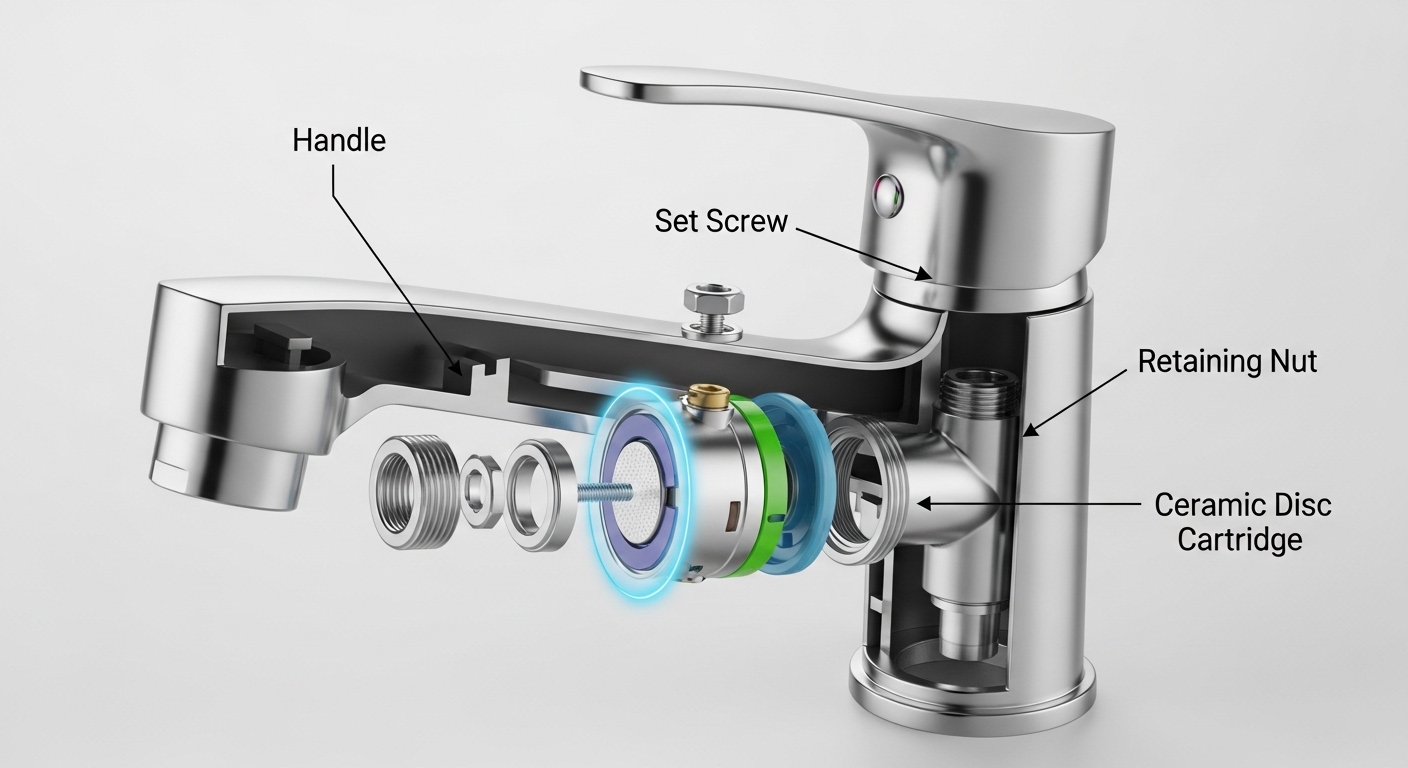
If you’re staring at a faucet that drips no matter how hard you crank the lever, the culprit is almost always the single handle faucet cartridge — the cylindrical valve hidden under the handle that opens, closes, and blends your hot and cold water with one motion. It’s a small, cheap part, but it does the hardest job in the whole fixture, and it’s the first thing to wear out. The good news: swapping it is one of the most forgiving plumbing repairs a homeowner can do, usually in 20–30 minutes with a screwdriver and an adjustable wrench. The tricky part isn’t the labor — it’s buying the right cartridge. Get that wrong and you’ll be back at the sink an hour later, soaked and annoyed.
Below, I’ll walk you through exactly what this part is, how to identify which one you need, what the good ones cost, and how to tell a quality cartridge from a bargain-bin dud that’ll fail again in six months.
What does a single handle faucet cartridge actually do?
It’s the traffic controller for your water. In a single-lever faucet, moving the handle up and down changes the flow rate, and swiveling it left and right changes the temperature — and one part manages both of those movements: the cartridge. Inside, two precision-machined ceramic discs (on modern faucets) slide against each other. Line the openings up and water flows; rotate them apart and the flow stops. That’s it.
Because those discs are constantly grinding against each other and against tiny rubber seals, they eventually wear, scratch, or get chewed up by hard-water minerals. When that happens you get the classic symptoms: a steady drip, a handle that suddenly feels loose or gritty, water that won’t get hot (or won’t get cold), or a lever that turns fully “off” while water keeps trickling out. Nine times out of ten, none of that means you need a new faucet — it means you need a new cartridge.
One important distinction people mix up: a single handle faucet cartridge blends hot and cold in one unit, while a two-handle faucet uses two separate stems or valves (one per side). They are not interchangeable. This guide is specifically about the single-lever type you’ll find on most modern kitchen and bathroom faucets.
How do I know which single handle faucet cartridge I need?
Match three things: the faucet brand, the exact faucet model or series, and the cartridge type. Generic “universal” cartridges exist, but they only fit a handful of no-name faucets — for any name brand, you want the manufacturer’s part number.
Here’s the reliable way to pin it down:
- Find the brand. Look on the faucet neck, the base, or the underside of the spout for a stamped or printed name — Moen, Delta, Kohler, Pfister, American Standard, or your faucet’s maker.
- Find the model or series. Check the original paperwork, the box, or the sticker under the sink. No luck? Photograph the faucet and the handle shape — manufacturer support lines can usually ID it from a picture.
- Pull the old cartridge and read it. Many cartridges have the part number molded right into the plastic body. This is the single most foolproof method — take the old one to the store or type its number into a search bar.
- Note the cartridge type. Is it a tall ceramic-disc cylinder (most modern faucets), a small ball assembly (older Delta-style), or a compression stem (older two-handle, but worth knowing)?
A quick heads-up on removal: some cartridges — especially in showers — get seized in place by mineral buildup and need a puller tool. If you’re nervous about extracting a stuck one without damaging the valve body, our step-by-step on how to remove an old shower faucet cartridge without wrecking the valve covers the exact technique and which tool to rent or buy.
Ceramic disc, ball, or compression — which cartridge type is best?
For durability and drip-free performance, ceramic disc cartridges win — they’re the standard on virtually every quality faucet sold today and typically last 10–15 years or longer. Ball and compression valves are older technologies you’ll mostly encounter on legacy faucets, and while they’re cheap to service, they wear faster.
Here’s how the three stack up so you can see exactly what you’re dealing with:
| Cartridge Type | How It Seals | Typical Lifespan | Hard-Water Tolerance | Price Range | Best For |
|---|---|---|---|---|---|
| Ceramic disc | Two polished ceramic plates slide to open/close | 10–15+ years | Good (but minerals can still scratch) | $15–$40 | Modern single-handle kitchen & bath faucets |
| Ball valve | Slotted metal/plastic ball rotates over rubber seats | 5–10 years | Moderate | $10–$25 | Older single-handle Delta-style faucets |
| Compression stem | Rubber washer presses against a seat | 3–7 years (washers fail first) | Low | $5–$15 | Older two-handle faucets (not single-lever) |
| Cartridge (sleeve) valve | O-ringed sleeve moves within the body | 8–12 years | Moderate–Good | $12–$35 | Many single-handle Moen & Price Pfister units |
The takeaway for most buyers: if your faucet is less than 15 years old and single-handle, you almost certainly have a ceramic disc or sleeve cartridge, and replacing like-for-like is the way to go. Don’t “downgrade” to a cheaper compression-style workaround — it won’t fit and it won’t seal the way the faucet was engineered to.
Can I just buy a cheap universal cartridge to save money?
Usually no — for a name-brand faucet, an off-brand “universal” cartridge is the number-one reason a repair fails. The seals sit a millimeter off, the discs don’t align perfectly, and you get a drip or a temperature that never quite reaches hot. Spend the extra $10 on the genuine part; it’s the cheapest insurance in plumbing.
That said, “genuine” doesn’t always mean you have to buy from the faucet maker at a premium. Reputable aftermarket manufacturers produce cartridges built to the original spec and cross-referenced to the OEM part number. The key is that they list the exact brand and model they replace — not a vague “fits most faucets” claim. If the listing can’t tell you which faucets it’s engineered for, walk away.
There’s a broader lesson here that our team keeps coming back to. Cutting corners on the small internal parts of a fixture almost always costs more over its lifetime — a point our dealers make bluntly in why you should never buy cheap bathroom fixtures. A $6 mystery cartridge that fails twice a year isn’t a bargain; a $25 ceramic cartridge that lasts a decade is.
What are the signs my cartridge is going bad (versus something else)?
The cartridge is the prime suspect when you see any of these, and it’s usually a five-minute diagnosis:
- Constant drip from the spout even with the handle fully off — worn ceramic discs or internal seals.
- Handle feels loose, gritty, or spins too freely — the cartridge internals are worn or cracked.
- Water won’t get hot or cold — the cartridge isn’t rotating the ports fully; it may be seized with mineral scale.
- Reduced flow or sputtering — debris lodged in the cartridge, or scale buildup restricting the ports.
- Squealing or chattering handle — dried-out or damaged seals inside the cartridge.
If instead the leak is coming from around the base of the handle rather than the spout, you may be dealing with a worn O-ring rather than the whole cartridge — our guide on a leaking bathroom sink faucet handle walks through telling those two apart so you don’t buy the wrong part.
How do you replace a single handle faucet cartridge yourself?
Shut off the water, pull the handle, remove the retaining clip or nut, extract the old cartridge, drop in the new one, and reassemble — most people finish in 20–30 minutes. Here’s the reliable sequence:
- Turn off the water. Close both shutoff valves under the sink. Open the faucet to release pressure and confirm the water’s actually off.
- Plug the drain. Small screws and clips love to vanish down an open drain. Cover it with a rag or the stopper.
- Remove the handle. Pop off the decorative cap if there is one, loosen the set screw (usually a hex/Allen screw), and lift the handle straight up.
- Free the cartridge. Remove the dome or bonnet nut, then pull the retaining clip or unscrew the retaining nut holding the cartridge in place. Note the cartridge’s orientation — many have a “hot” side that must face a specific direction.
- Pull the old cartridge out. Grip the stem with pliers and wiggle it straight up. If it’s stuck from scale, a matching cartridge puller tool makes this painless.
- Insert the new cartridge in the exact same orientation. Lubricate the O-rings with plumber’s silicone grease first for a smooth, leak-free seat.
- Reassemble in reverse, slowly turn the water back on, and check for drips and correct hot/cold direction. If hot and cold are swapped, you installed the cartridge rotated 180° — pull it and flip it.
Delta faucets have their own quirks — some use a ball-and-spring assembly rather than a one-piece cartridge, and the seats and springs matter as much as the cartridge itself. If you’ve got a Delta, follow the brand-specific steps in our Delta faucet cartridge replacement parts guide so you buy the whole repair kit, not just half of it. And if the faucet in question is actually a reverse-osmosis drinking-water tap, that’s a different (smaller) cartridge entirely — see reverse osmosis faucet cartridge replacement before you order.
Do I need any special tools?
For most jobs, no — a hex/Allen key set, an adjustable wrench, and needle-nose pliers cover 90% of single-handle cartridge swaps. Add plumber’s silicone grease for the O-rings and, for stubborn seized cartridges, a brand-specific puller tool (usually $10–$20). Skip the household oils; petroleum grease swells rubber seals and shortens their life.
How long should a good single handle faucet cartridge last, and is it under warranty?
A quality ceramic-disc cartridge should give you 10–15 years of drip-free service, and on many premium faucets the cartridge is covered by the faucet’s limited lifetime warranty — meaning the maker will ship you a free replacement cartridge if it fails. Always check before you buy a new one; you may not need to pay at all.
To hit that lifespan, two things matter most: water quality and cartridge quality. Hard water is the number-one cartridge killer — the same minerals that scale up your kettle scratch and jam ceramic discs. If you’re on hard water, periodically cleaning the aerator and flushing the faucet helps, and choosing a cartridge rated for higher mineral tolerance pays off. Look for cartridges tested to industry standards such as ASME A112.18.1 / NSF 61 for drinking-water safety and cycle-tested for durability; a manufacturer that publishes those numbers is telling you the part was actually validated, not just molded and boxed.
What does a replacement single handle faucet cartridge cost in 2026?
Expect to pay $8–$40 for the cartridge itself, depending on brand and type, and $0 in labor if you do it yourself. If you hire a plumber, add roughly $75–$150 for the visit and labor. Here’s the quick math most homeowners care about:
- Genuine OEM ceramic cartridge: $15–$40
- Quality cross-referenced aftermarket cartridge: $8–$25
- Full Delta-style repair kit (cartridge, seats, springs): $12–$30
- Plumber labor (if not DIY): $75–$150 per visit
- Cartridge puller tool (one-time, for stuck cartridges): $10–$20
Compared to replacing the whole faucet — often $150–$400 installed — a cartridge swap is the clear first move. Replace the faucet only if the body is cracked, the finish is failing, or the model is so old that no cartridge is available anymore.
FAQ
Are all single handle faucet cartridges the same size?
No. Cartridges vary widely in length, diameter, stem shape, and port layout between brands and even between models from the same brand. That’s exactly why you match by brand and model number rather than by eyeballing it. A cartridge that looks nearly identical can be a few millimeters off and leak or refuse to seat.
Can a bad cartridge cause low water pressure?
Yes. If mineral scale or debris partially blocks the cartridge ports, or the internal discs don’t fully align, you’ll get weak or sputtering flow from that one faucet while the rest of the house is fine. Cleaning or replacing the cartridge usually restores full pressure — check the aerator first, since a clogged aerator causes the same symptom and is even easier to fix.
Do I need to turn off the main water supply to replace a cartridge?
Usually not. Closing the two shutoff valves under the sink is enough for a kitchen or bath sink faucet. Only shut off the main if those under-sink valves are missing, corroded, or won’t fully close. For shower and tub valves without local shutoffs, you’ll typically need the main.
Why does my faucet still drip after I replaced the cartridge?
Three common reasons: you bought a cartridge that doesn’t precisely match your faucet, you installed it slightly misaligned or rotated, or the problem was actually a worn seat, O-ring, or spring rather than the cartridge. Double-check the part number, reseat the cartridge with silicone grease, and on Delta-style faucets replace the seats and springs at the same time.
Is it worth replacing the cartridge or should I just buy a new faucet?
Replace the cartridge if the faucet body and finish are in good shape and the part is still available — it’s dramatically cheaper and faster. Buy a new faucet only if the body is cracked, the finish is peeling, the faucet is leaking from multiple points, or the model is discontinued with no cartridge to be found. For a drip or a loose handle, the cartridge is almost always the smart, budget-friendly fix.
About the author: This guide was written by the Wigafaucet product team, drawing on hands-on bench testing of hundreds of faucet cartridges across kitchen, bath, and shower fixtures. Wigafaucet manufactures and supplies faucets and replacement parts through wigafaucet.com, and our cartridges are validated to recognized industry standards (including ASME A112.18.1 / NSF 61) and cycle-tested for long-term durability before they ship. When we quote a lifespan or a fit, it’s based on real product testing — not guesswork.