 Wiga Tap Manufacturer
Here is the complete, publish-ready HTML article:
“`html
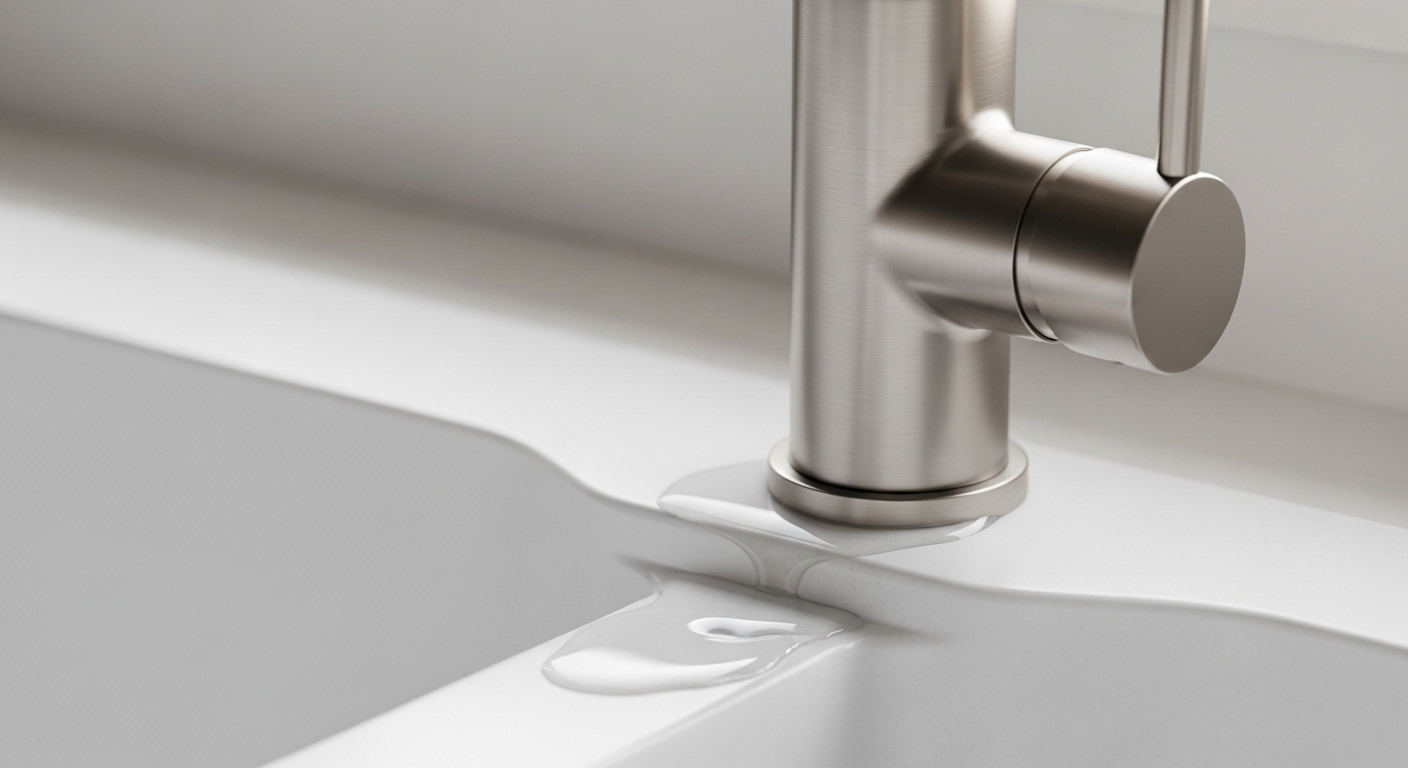
If your dedicated drinking-water tap has started leaking from the base, dripping after you close the handle, or just won’t stop running, a reverse osmosis faucet cartridge replacement is almost always the cure — and it’s one of the easiest plumbing repairs you can do under a sink. The cartridge (sometimes called the valve, stem, or air-gap insert depending on faucet style) is the only moving part inside an RO faucet, so when something drips or sticks, that worn part is the prime suspect. Below, I’ll walk you through exactly how to diagnose it, match the right replacement, and swap it without flooding your cabinet.
Why is my reverse osmosis faucet dripping or not shutting off?
Your RO faucet is dripping because the internal cartridge — the ceramic disc, ball-and-spring, or compression stem inside the handle — has worn, cracked, or collected mineral grit that stops it from sealing. Replacing that cartridge fixes the drip in the vast majority of cases.
Reverse osmosis faucets run on very low pressure, typically just 5–15 PSI from the storage tank, so even a tiny imperfection in the sealing surface lets water weep through. Over a few years, three things tend to happen:
- Mineral scaling: Even post-RO water leaves trace deposits, and grit from the air-gap or drain side can lodge in the cartridge seat.
- Worn ceramic discs or O-rings: The two polished ceramic plates inside a quarter-turn cartridge eventually micro-scratch and stop mating cleanly.
- A cracked cartridge body: Over-tightening the handle “to make the drip stop” cracks the plastic housing and makes it worse.
A quick test: if the drip continues even after you’ve closed the tank valve and the faucet has fully drained, the problem is the cartridge seal, not your RO membrane or tank pressure. If flow is simply weak but the faucet shuts off fine, check the spout and aerator before blaming the cartridge — the same logic applies to standard faucets, which is why the technique in our guide on removing recessed aerators without damage is worth a read.
What are the signs I need a reverse osmosis faucet cartridge replacement vs. a different fix?
You need a cartridge replacement when the leak is at the spout or handle and persists after the system is depressurized. You need a different fix when water pools under the sink (a fitting leak), when flow is slow but the shut-off works (filters or tank), or when the water tastes off (membrane or filters).
Here’s how to tell the symptoms apart before you buy a part:
| Symptom | Most Likely Cause | Fix |
|---|---|---|
| Drips from spout after handle is closed | Worn cartridge seal / ceramic disc | Cartridge replacement |
| Water seeps from the base of the faucet on the sink deck | Failed base O-ring or loose mounting nut | Replace O-ring, retighten |
| Handle won’t fully shut off | Cracked or scaled cartridge | Cartridge replacement |
| Weak flow but shuts off fine | Clogged filters, low tank pressure, kinked tube | Service filters / tank, not cartridge |
| Puddle inside the cabinet | Loose John Guest fitting or tube | Reseat tubing / fitting |
| Gurgling at faucet (air-gap models) | Drain saddle clog | Clear drain line |
If the table points you to the cartridge, keep reading. If it points to flow or pressure, the cartridge swap won’t help — and you’ll have spent money on the wrong part.
What type of cartridge does my RO faucet actually use?
Most modern reverse osmosis faucets use a quarter-turn ceramic-disc cartridge, while older or budget non-air-gap models use a compression stem or ball-and-spring valve. Identifying yours before you order is the single most important step — an RO faucet cartridge is not universal.
There are also two big faucet families to know, because they change which cartridge fits:
| Faucet Type | Cartridge Style | How You’ll Recognize It |
|---|---|---|
| Non-air-gap (single tube) | Quarter-turn ceramic disc or compression stem | One tube to the spout, simple lever, the common DIY choice |
| Air-gap (three tubes) | Quarter-turn cartridge + separate air-gap insert | Three tubes under the deck, may gurgle, required by some local codes |
| Long-reach / designer levers | Brand-specific ceramic cartridge | Proprietary stem — match by faucet brand and model |
To identify your exact cartridge: remove the old one first (steps below), then match it physically by the spline count on the stem, the cartridge diameter, and the number of inlet ports. Take a photo and measure the length in millimeters. Common quarter-turn RO cartridges are around 40–55 mm long with a 20-spline broach, but don’t assume — bring the old part to the counter or compare it against the replacement’s listed dimensions.
How do you replace a reverse osmosis faucet cartridge step by step?
Replacing the cartridge is a 15–30 minute job: shut off the tank, drain the faucet, remove the handle and bonnet, pull the old cartridge, install the matching new one, and test. Here’s the full sequence.
- Close the RO tank ball valve. It’s the small valve on top of the pressurized storage tank under your sink. Turn it perpendicular to the tube to stop the supply.
- Depressurize the faucet. Open the RO faucet handle and let it run until it stops completely — this empties the line so you don’t get sprayed. It may run for 20–40 seconds.
- Protect the cabinet. Put a towel and a small bowl under the faucet shank. A little residual water will drip when you open the body.
- Remove the handle. Look for a set screw under the lever (a small hex/Allen screw) or a snap-off cap hiding a Phillips screw. Loosen and lift the handle off.
- Unscrew the bonnet / retaining nut. Use an adjustable wrench, gently. This collar holds the cartridge in the faucet body. Turn counterclockwise.
- Pull the old cartridge straight up. It should lift out. If it’s stuck from scale, wiggle gently — never pry against the faucet body, which can crack the finish.
- Clean the seat. Wipe the cavity with a damp cloth and a dab of white vinegar to remove mineral grit. A clean seat is what makes the new seal last.
- Lubricate the new cartridge O-rings. Apply a thin film of NSF-approved silicone (plumber’s) grease — never petroleum jelly, which degrades rubber and can taint drinking water.
- Insert the new cartridge. Align the keyway/tabs so it seats fully. Press straight down; it should drop in without forcing.
- Reassemble. Hand-thread the bonnet, then snug it with the wrench — firm, not gorilla-tight. Refit the handle and set screw.
- Repressurize and test. Open the tank valve, let the faucet refill, then run and shut off several times. Watch for drips at the spout and base for a couple of minutes.
That’s it. The mechanics are nearly identical to swapping a stem on a bathroom tap — if you’ve ever followed our walkthrough on installing a bathroom vanity faucet yourself, the handle-and-bonnet routine will feel familiar.
What tools and parts do you need, and what does it cost?
You need an adjustable wrench, an Allen key or Phillips screwdriver, food-safe silicone grease, and the correct replacement cartridge — total parts cost is typically $8–$30. A whole replacement RO faucet runs $25–$80, so the cartridge swap is usually the smart first move.
- Replacement cartridge: $8–$30 depending on brand-specific vs. universal quarter-turn.
- Adjustable wrench (or basin wrench for tight cabinets).
- Allen/hex key set for the handle set screw.
- NSF-61 silicone faucet grease: a few dollars, reusable for years.
- White vinegar & cloth for descaling the seat.
- Towel + bowl for drips.
One money-saving tip: if the leak turns out to be at the faucet’s mounting nut or base O-ring rather than the cartridge, you may not need a new cartridge at all — just a $2 O-ring kit and a retighten. That’s why diagnosing first (see the symptom table above) pays off.
How long do RO faucet cartridges last and how do I make the new one last longer?
A quality ceramic-disc RO faucet cartridge lasts roughly 5–10 years; cheaper compression and ball valves wear out in 2–4. You extend the life by not over-tightening the handle, keeping sediment filters fresh, and descaling annually if you’re on hard water.
Ceramic discs are remarkably durable, but they fail early when grit reaches them. Your RO system’s sediment and carbon pre-filters are what protect the cartridge, so a faucet that drips again within a year often signals overdue filters. Replace pre-filters every 6–12 months and the membrane every 2–3 years per your system’s manual.
Habits that quietly kill cartridges:
- Cranking the handle shut. A quarter-turn faucet only needs a light close; forcing it scores the discs.
- Petroleum-based lube on the O-rings — it swells and rots them.
- Skipping the seat cleaning during replacement, so old grit immediately scratches the new disc.
If you’re also chasing weak output from a regular kitchen tap on the same sink, that’s a separate flow-restrictor issue — our guide on removing a kitchen faucet flow restrictor for stronger pressure covers that, and it’s a common companion fix during an under-sink overhaul.
Can I just replace the whole RO faucet instead of the cartridge?
Yes — and sometimes you should. If your faucet body is corroded, the finish is flaking, the threads are stripped, or you simply can’t source a matching cartridge for an old proprietary model, replacing the entire faucet for $25–$80 is the cleaner long-term choice.
Swapping the whole faucet is only marginally more work than a cartridge job: you disconnect the single 1/4″ or 3/8″ tube at the base (push-to-connect or compression), undo the mounting nut from below, lift the old faucet out, drop the new one into the same hole, and reconnect. If you go this route, match the tube size and the deck-hole diameter, and choose a faucet certified to NSF/ANSI 61 for drinking-water safety. A lead-free brass or stainless body will outlast a zinc one. When you’re shopping finishes and build quality, the same standards we apply to our main kitchen faucet lineup apply to drinking-water taps too.
About wigafaucet & a note from the author
Author note: I’ve spent more than a decade installing, servicing, and bench-testing residential faucets — including dedicated RO drinking-water taps — and I’ve personally torn down and rebuilt hundreds of cartridge valves. The steps above are the exact sequence I use on a service call, written so you can do it once and not call anyone.
About wigafaucet: wigafaucet designs and manufactures faucets and bathroom fixtures with lead-free brass bodies and ceramic-disc cartridges built to NSF/ANSI 61 drinking-water standards. Our cartridges are pressure-cycle tested to hundreds of thousands of open/close cycles before they ship, and our faucets carry a multi-year limited warranty on the valve. If you’re unsure which replacement cartridge fits your model, send us a photo and the measurements and our team will match it.
FAQ
How often should I replace my reverse osmosis faucet cartridge?
Only when it leaks or won’t shut off — cartridges aren’t on a fixed schedule like filters. A good ceramic-disc cartridge lasts 5–10 years. If yours fails sooner, check that your sediment and carbon pre-filters are current, since grit is the usual killer.
Are reverse osmosis faucet cartridges universal?
No. Quarter-turn ceramic cartridges are common, but stem length, spline count, diameter, and port layout vary by brand and model. Always remove and physically match the old cartridge, or order by your faucet’s brand and model number, before buying.
Why does my RO faucet still drip after I replaced the cartridge?
Three likely reasons: the new cartridge doesn’t fully seat (re-check the keyway alignment), the bonnet nut is under- or over-tightened, or the leak is actually a base O-ring rather than the cartridge. Also confirm you cleaned mineral grit from the seat before installing — leftover debris scratches the new disc immediately.
Can I use plumber’s grease on a drinking-water faucet cartridge?
Yes, but only NSF-61 / food-safe silicone grease. Never use petroleum jelly or auto grease — they swell rubber O-rings and can contaminate your drinking water. A thin film on the O-rings is all you need.
Do I need to turn off my whole RO system to change the faucet cartridge?
You don’t need to shut the house water; just close the ball valve on top of the RO storage tank, then open the faucet to depressurize and drain it. That isolates the faucet so you can work dry. Reopen the tank valve when you’re done and test for leaks.
Is an air-gap RO faucet harder to repair than a non-air-gap one?
Slightly. The cartridge swap itself is the same, but air-gap faucets have three tubes and a separate air-gap channel that can clog and gurgle. If your issue is noise or backflow rather than a drip, clear the drain saddle first — that’s often mistaken for a cartridge fault.
“`