 Wiga Tap Manufacturer
If you’re hunting for delta faucet cartridge replacement parts because your faucet drips, spits, won’t shut off, or the handle got stiff, the good news is this is one of the most fixable problems in your whole house. Delta engineered their valves to be serviced, not thrown away — and unlike a lot of brands, they publish real part numbers and back many of them with a lifetime warranty. The trick is knowing which cartridge or valve kit your specific faucet actually takes, because Delta uses several completely different internal designs, and the wrong part simply won’t fit. Below, we’ll walk through how to identify the right part, what each one costs, and exactly how to swap it.
How do I know which Delta cartridge I actually need?
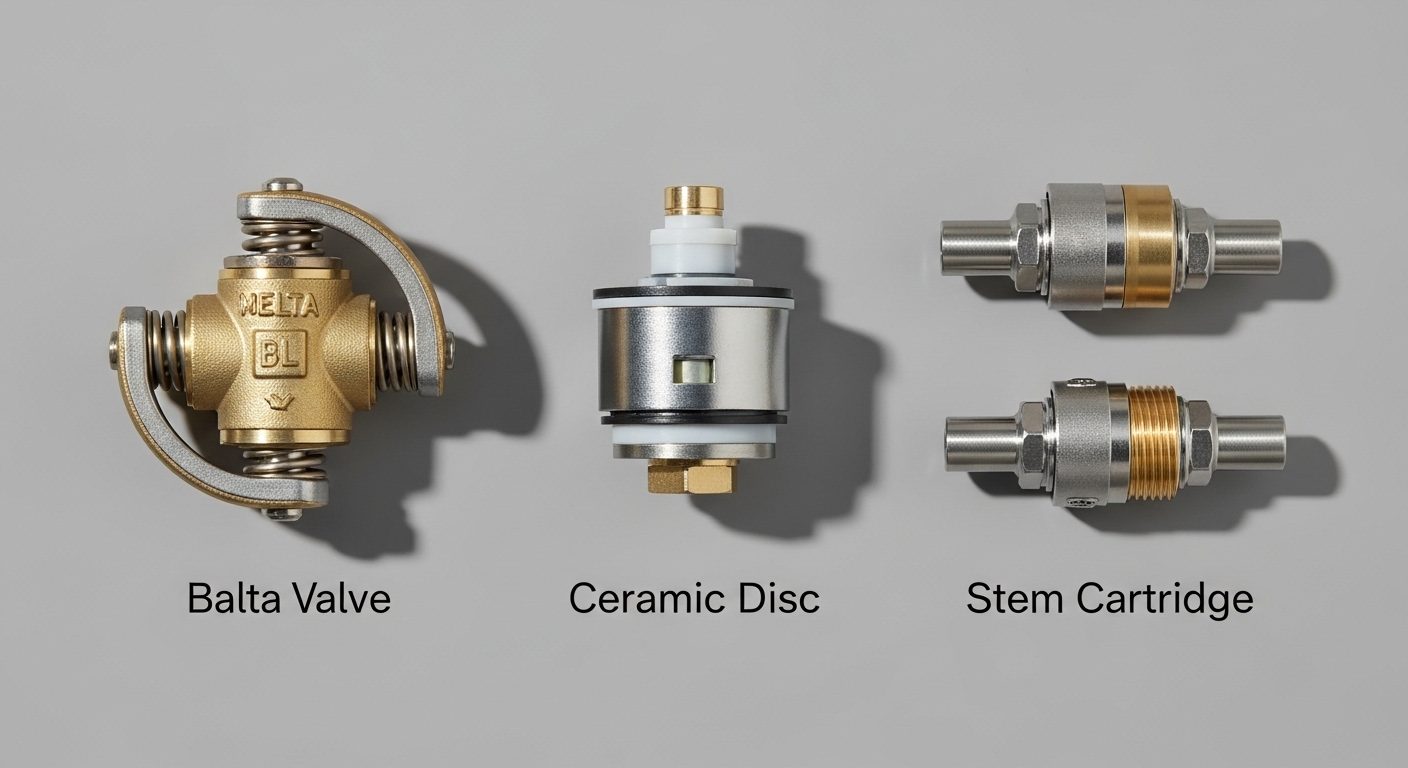
Identify your faucet by its handle count and valve type first, because that determines the part more than anything else. Delta faucets fall into three mechanical families, and each uses a totally different replacement part. Get this step right and everything after it is easy.
Here’s how to tell them apart in about 30 seconds:
- Single handle that moves in a rounded, ball-in-socket motion (older Delta and Peerless kitchen and lavatory faucets) → this is a ball valve, and you want the RP19804 repair kit (ball, cam, seats, and springs).
- Single handle with a crisp lever action (most Delta faucets made in the last 15 years, including many pull-down kitchen models) → this is a ceramic disc cartridge, usually the RP46074 or the newer RP47201.
- Two separate handles (hot and cold), common on widespread and centerset bathroom faucets → these take a pair of stem cartridges, most often the RP25513 (which includes both hot and cold), or older style washer stems.
The single most reliable way to confirm the exact part is to find your faucet’s model number. On Delta faucets it’s often stamped or laser-etched underneath the spout, on the underside of the sink where the faucet mounts, or printed on the original installation card. Once you have that model number, you can look it up on Delta’s own parts finder and it will list every serviceable component. If you can’t find a model number, the handle-type method above will get you to the right family, and then you match by physical shape.
What’s the difference between a Delta ball valve, a ceramic cartridge, and a stem?
They control water in three different mechanical ways, and that changes how they wear out and what you replace. Understanding this saves you from buying the wrong “cartridge” when your faucet doesn’t even use one.
| Valve type | Typical Delta part | Found on | Common symptom | Typical price |
|---|---|---|---|---|
| Ball valve | RP19804 (kit) | Older single-handle kitchen/bath, Peerless | Drip at spout, leak at base of handle | $10–$18 |
| Ceramic disc cartridge | RP46074 / RP47201 | Modern single-handle lever faucets | Drip, stiff handle, temperature drift | $18–$35 |
| Two-handle stem cartridge | RP25513 (pair) | Widespread & centerset 2-handle | One side drips or won’t shut off | $15–$28 |
| Diverter (pull-out spray) | RP50587 / RP61708 | Kitchen faucets with spray head | Weak flow, spray/stream won’t switch | $8–$15 |
The ball valve is Delta’s original 1954 design — a slotted brass or plastic ball rotates over two spring-loaded rubber seats. When it drips, it’s almost always the seats and springs that have flattened, which is exactly why the RP19804 kit includes new ones. The ceramic disc cartridge uses two polished ceramic plates that slide over each other; ceramic barely wears, so when these fail it’s usually mineral buildup or a cracked disc, and you replace the whole cartridge. The stem cartridge in two-handle faucets is the simplest — turn the handle, the stem rises and falls to open and close flow.
My Delta faucet is dripping from the spout — which part fixes that?
A steady drip from the spout end almost always means worn seats and springs (ball faucets) or a failed cartridge (lever faucets) — not the aerator or the supply lines. Start with the cheapest likely culprit for your valve type and you’ll fix it the first try in the large majority of cases.
On a ball-type Delta, a spout drip is the textbook symptom of flattened rubber seats. Buy the RP19804 kit, and while you’re in there, replace the two cam O-rings too since they’re included. On a ceramic lever faucet, a spout drip that survives a good cleaning means the cartridge’s ceramic seal is compromised — swap in the RP46074 or RP47201. If instead the water is leaking from around the base of the handle rather than the spout, that’s usually the O-rings or the cam assembly, not the cartridge core — though most kits include those O-rings anyway, so a full kit still solves it.
One thing worth knowing before you spend anything: hard water is the number-one killer of Delta cartridges. If you’re on well water or a hard-water municipal supply, mineral scale locks up the ceramic discs and chews through rubber seats years early. It’s the same failure mode we cover in our guide to reverse osmosis faucet cartridge replacement — different faucet, identical enemy. A whole-house or under-sink softening setup will roughly double how long each cartridge lasts.
How do I replace a Delta cartridge myself, step by step?
You can do it with a few basic tools in 20–30 minutes, no plumber required. The core process is the same across all three valve types: kill the water, take off the handle, pull the old part, drop in the new one, reassemble. Here’s the full sequence.
- Shut off the water. Turn the two supply valves under the sink clockwise until they stop. No under-sink shutoffs? Turn off the main. Then open the faucet to release pressure and confirm the water’s actually off.
- Plug the drain. Drop in the stopper or lay a rag over the opening so a dropped screw or spring can’t vanish down the pipe.
- Remove the handle. Most Delta handles have a small hex set screw under a decorative button or at the base. A 3/32″ or 1/8″ Allen (hex) wrench loosens it; then the handle lifts straight off.
- Take off the retaining nut or bonnet. Under the handle you’ll find a dome cap or a hex nut. Unscrew it (channel-lock pliers padded with a rag prevent scratches on finished parts). On ball faucets, remove the plastic cam and gasket to expose the ball.
- Pull the old cartridge or ball. Ceramic cartridges usually lift straight up — some have a small notch or key that must line up. If it’s stuck from mineral scale, a Delta cartridge puller tool or gentle rocking with pliers frees it. On ball faucets, lift out the ball, then use the tool in the kit to pry out the old seats and springs.
- Clean the valve body. Wipe out grit and scale with a rag; a splash of white vinegar dissolves stubborn mineral crust. A clean bore is what makes the new seal actually seat.
- Install the new part. Line up the tabs or keyway and press the new cartridge fully home — orientation matters or your hot and cold will swap. On ball faucets, seat the new springs (narrow end down) and rubber seats first, then the ball, cam, and gasket.
- Reassemble and test. Hand-tighten the retaining nut, then snug it a bit more, reattach the handle, and turn the supply valves back on slowly. Run the faucet and check for leaks at the handle and spout.
If you get to step 5 and the whole faucet body is corroded or the threads are stripped, that’s your signal it may be time for a new faucet rather than a new cartridge — the same call we walk through in our Delta Foundations kitchen faucet installation guide, which is a genuinely beginner-friendly swap.
Are cheaper aftermarket Delta cartridges as good as genuine Delta parts?
For occasional-use faucets they’re usually fine, but for your main kitchen faucet, genuine Delta parts are worth the few extra dollars — and here’s the real reason: warranty. Delta’s lifetime limited warranty covers the original faucet and its functional parts, and Delta will often send you replacement cartridges free of charge if you contact them with your model number. If you install a third-party cartridge, you’ve spent money you didn’t have to, and you can void that free-parts benefit.
That said, aftermarket cartridges have gotten much better, and quality ceramic-disc replacements from reputable makers hold up well. The failures we see are usually the bargain-bin, unbranded parts where the ceramic tolerances are loose — those leak within a year. The pattern is the same one we lay out in why buying cheap bathroom fixtures backfires: a $6 part that fails in eight months costs more than a $20 part that lasts a decade, once you count your own time crawling under the sink twice.
Our honest recommendation: call Delta first with your model number and ask for the free warranty part. If you’d rather not wait for shipping, buy the genuine RP-numbered part locally. Only go aftermarket if the genuine part is discontinued for a very old faucet.
What tools and parts should I have on hand before I start?
You need surprisingly little — most Delta cartridge jobs use four or five common tools plus the correct part. Gathering everything first means you won’t be stuck mid-repair with the water off and a hardware store run ahead of you.
- Hex/Allen wrench set (for the handle set screw — usually 3/32″ or 1/8″)
- Channel-lock or slip-joint pliers (wrap the jaws in a rag to protect finishes)
- Phillips screwdriver
- The correct replacement part (RP19804, RP46074, RP47201, or RP25513 — matched to your faucet)
- Delta cartridge puller (cheap insurance if your cartridge is scaled in)
- White vinegar and a rag (to clean mineral scale from the valve bore)
- Plumber’s silicone grease (a light film on the new O-rings makes reassembly smooth and helps them seal)
Don’t use petroleum jelly on the O-rings — it degrades the rubber over time. Use silicone-based plumber’s grease, which is what Delta specs. And when you turn the water back on, do it slowly; a sudden pressure surge can unseat a fresh cartridge before it’s fully torqued down.
FAQ
Does Delta really replace cartridges for free?
Yes, in most cases. Delta’s lifetime limited warranty covers the original consumer purchaser, and their customer service will frequently ship you a replacement cartridge or repair kit at no cost once you provide your faucet’s model number and describe the problem. It’s genuinely one of the best warranties in the faucet business, so it’s always worth a call or online request before you buy anything.
How long does a Delta faucet cartridge last?
Ceramic disc cartridges commonly last 10–15 years or more on soft or treated water. On hard water, expect 3–7 years before scale degrades the seal. Rubber seats and springs in ball-type faucets wear faster — often 3–5 years — which is why they come in an inexpensive replaceable kit rather than being a lifetime part.
My Delta cartridge is stuck and won’t come out — what do I do?
Mineral scale is almost always the cause. Soak the exposed valve area with white vinegar for 10–15 minutes to dissolve the crust, then use a Delta cartridge puller tool, which grips the cartridge and pulls it straight up without you having to yank on the plastic and snap it. Gentle side-to-side rocking with padded pliers also works. Avoid excessive force that could crack the brass valve body.
Can I just replace the O-rings instead of the whole cartridge?
Sometimes. If your leak is coming from around the base of the spout or handle rather than dripping out the spout end, worn O-rings are often the culprit and a cheap O-ring kit fixes it. But if water is dripping from the spout itself, the sealing surface inside the cartridge (or the seats and springs on a ball faucet) has failed, and O-rings alone won’t stop it — you need the cartridge or repair kit.
How do I know if my Delta faucet uses a ball valve or a cartridge?
Feel the handle motion. A ball valve moves in a smooth, rounded, joystick-like arc and the handle sits on a domed cap; a ceramic cartridge faucet has a crisper, more mechanical lever feel. When in doubt, remove the handle: a ball valve reveals a rounded slotted ball under a plastic cam, while a cartridge faucet shows a cylindrical cartridge held by a retaining nut or clip.
Is replacing a Delta cartridge cheaper than calling a plumber?
Dramatically. The part itself runs $10–$35, and often it’s free under warranty. A plumber’s minimum service call for the same job typically starts around $125–$250 depending on your area — you can see how those labor rates break down in our guide to what a plumber charges for faucet work. Since a cartridge swap is genuinely a 20–30 minute DIY job, doing it yourself saves the entire labor cost.
About the author: This guide was written by the wigafaucet fixtures team, drawing on hands-on servicing of Delta, Peerless, Moen, and Kohler valves across kitchen and bathroom installations. At wigafaucet.com we specialize in faucets and bathroom fixtures — from replacement cartridges to complete pull-down kitchen faucets — and we test repair procedures on real hardware before we publish them.
A note on standards & warranty: Delta faucets and their serviceable cartridges are built to meet NSF/ANSI 61 and 372 (lead-free) drinking-water standards and ASME A112.18.1 fixture requirements, and genuine Delta cartridges are covered under Delta’s lifetime limited warranty to the original purchaser. Always confirm your specific model’s warranty terms and use parts matched to your faucet’s model number for a guaranteed fit.