 Wiga Tap Manufacturer
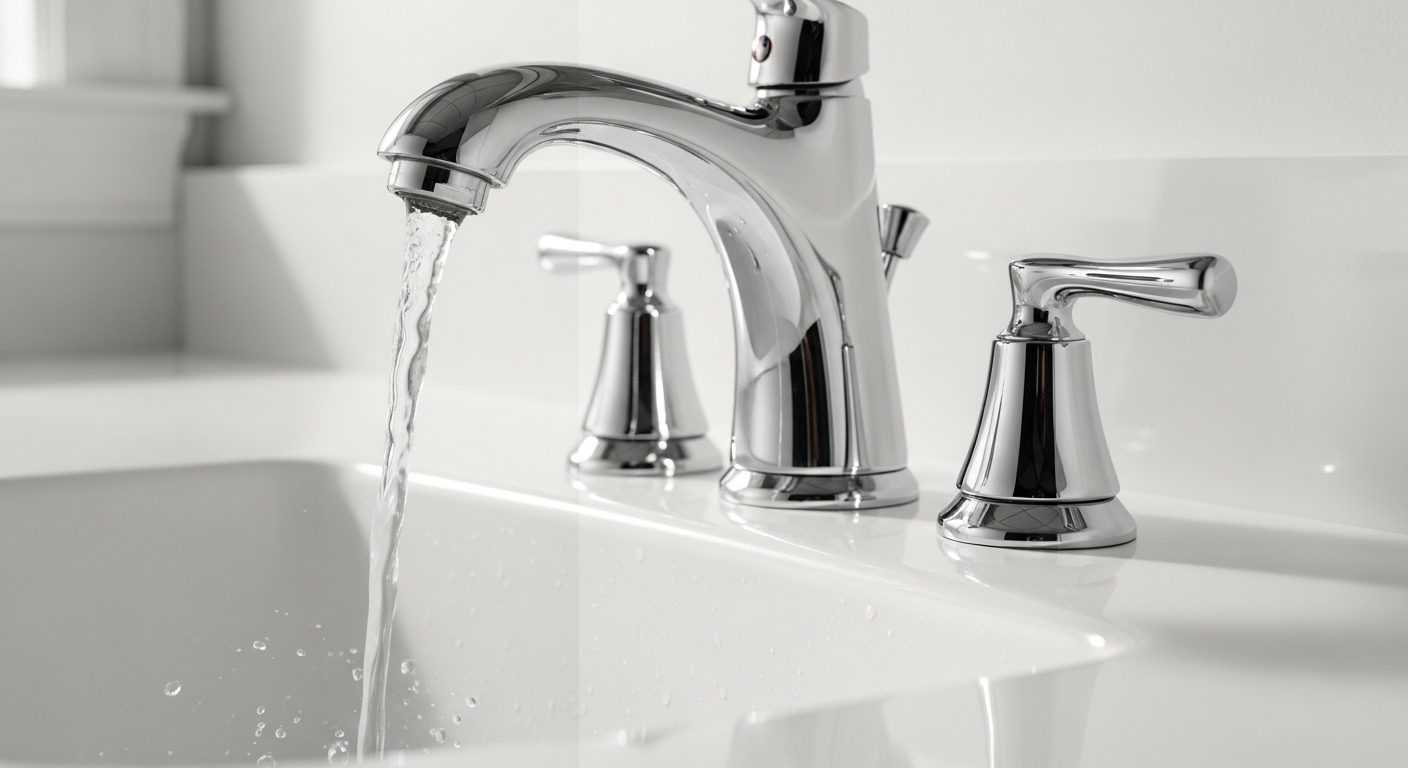
If you’re dealing with Moen bathroom faucet low water pressure, the good news is that it’s almost never a broken faucet and almost always a simple blockage you can clear at your kitchen table. Water pressure at a single bathroom sink drops for a short list of predictable reasons: a mineral-clogged aerator, sediment trapped in the cartridge, a half-closed supply valve, or a kinked supply line. This guide walks through each cause in the order you should actually check them — fastest and cheapest first — so you fix the real problem instead of buying a new faucet you don’t need.
We’ll cover how to diagnose whether it’s the faucet or your whole house, how to clean a Moen aerator, when the cartridge is the culprit, and what to do if only the hot or only the cold side is weak. Let’s get your flow back.
Is it just my Moen faucet, or is my whole house losing pressure?
Before you touch the faucet, find out whether the problem is isolated to that one fixture. Turn on a shower, the kitchen sink, and another bathroom faucet. If they all run strong and only your Moen bathroom faucet is weak, the problem is inside that faucet — an aerator or cartridge issue you can fix in minutes. If every fixture in the house is weak, the problem is upstream: your pressure regulator, main shutoff, or municipal supply, and that’s a different conversation.
This 60-second test saves you from disassembling a perfectly good faucet. A localized problem points to blockage in the faucet’s small internal passages, which collect the exact minerals and debris that a big shower valve shrugs off. Whole-house low pressure — under about 40 psi at every tap — usually means a failing pressure-reducing valve or a partially closed main, and you’d want a plumber or your water utility for that.
One more quick check: is it both hot and cold that are weak, or just one? Note the answer. It matters, and we’ll come back to it — hot-only weakness in particular points straight at a specific culprit.
How do I clean the aerator on a Moen bathroom faucet?
Unscrew the aerator from the tip of the spout, rinse out the mineral and grit buildup, soak it in white vinegar for 30–60 minutes if it’s crusted, then reinstall it. The aerator is the small screened cap at the very end of your faucet spout, and it’s the number-one cause of low pressure at a single fixture. It has the tiniest openings in the whole faucet, so it clogs first.
Here’s the step-by-step:
- Try unscrewing by hand first. Grip the aerator and turn clockwise as you look down at it from above (it’s righty-loosey from that angle because you’re working from underneath). If it won’t budge, wrap the aerator in a cloth or a strip of electrical tape to protect the finish, then use pliers — gently.
- Note the aerator type. Moen uses standard threaded aerators, hidden/recessed aerators (which need a small key tool, often included with the faucet), and cache aerators. If yours is recessed and smooth on the outside, you need the Moen aerator key that came in the box.
- Disassemble and inspect. Pop out the small screen, flow restrictor, and rubber washer. Lay them out in order so reassembly is easy. You’ll usually see white or greenish mineral scale and tiny black rubber flecks.
- Clean it. Rinse under a strong stream, brush the screen with an old toothbrush, and soak stubborn scale in white vinegar. A toothpick clears individual blocked holes.
- Reassemble and test. Screw it back on hand-tight plus a light snug with the cloth. Run the water. Most people get their full flow back right here.
If cleaning doesn’t fully restore flow, a brand-new Moen aerator costs just a few dollars and screws right on. Standard Moen aerators use a 15/16-inch male or 55/64-inch female thread — bring the old one to the store or order the exact Moen replacement to be safe.
What if cleaning the aerator didn’t fix the low pressure?
If the aerator is clean and flow is still weak, the next suspect is the cartridge — the valve body inside the faucet that mixes and controls water. Over time the cartridge collects sediment, or its internal seals swell and restrict flow. On a Moen single-handle bathroom faucet, this is the widely used Moen 1225 or 1255 cartridge; two-handle models use 1224-style stem cartridges.
A quick way to confirm the cartridge: remove the aerator entirely and run the faucet with nothing on the spout tip. If flow is still weak with the aerator off, the restriction is deeper inside — the cartridge or supply. If flow is strong with the aerator off but weak with it on, your aerator is still partly clogged, so re-clean or replace it.
Replacing a bathroom faucet cartridge is a genuine DIY job, and Moen famously backs it with a lifetime limited warranty that often includes free replacement cartridges — call their support line with your model and they’ll frequently mail you the part at no charge. The basic sequence:
- Shut off both supply valves under the sink and open the faucet to release pressure.
- Pop off the handle cap, remove the handle screw, and lift the handle.
- Remove the retaining clip or nut holding the cartridge, then pull the cartridge straight up (Moen sells a cartridge-puller tool that makes stuck ones far easier).
- Match the new cartridge exactly, drop it in aligned the same way (hot/cold orientation matters), and reassemble.
If you’ve never done this, our plain-English guide to what a single handle faucet cartridge is and which one to buy walks through identifying the right part before you start. And if the low pressure showed up alongside dripping or a leaking handle, read why your bathroom sink faucet handle leaks and how to fix it yourself — the same cartridge job often solves both problems at once.
Why is only the hot water weak on my Moen faucet?
If only the hot side is weak, the most common cause is debris from your water heater clogging the hot-side supply, or a partially closed hot shutoff valve. When plumbers do work or a water heater sheds sediment, bits of rust, scale, and old rubber wash into the lines and lodge in the narrowest points — usually right at the faucet.
Check these in order:
- The hot shutoff valve under the sink. Make sure it’s turned fully counterclockwise (open). A half-closed valve throttles that side only.
- The hot supply line. Disconnect it into a bucket and briefly open the valve. Weak flow from the line itself means the restriction is upstream, not in the faucet.
- The cartridge inlet. Sediment often collects on one side of the cartridge, choking just hot or just cold. Cleaning or swapping the cartridge fixes it.
Cold-only weakness follows the same logic on the cold side. The whole point of checking each side separately is that a single-sided problem narrows your search dramatically — you can ignore anything that affects both lines equally, like the aerator.
Could it be the supply valves or supply lines instead of the faucet?
Yes — a partially closed angle stop (shutoff valve) or a kinked, corroded supply line under the sink can throttle flow before water ever reaches the faucet. This is the most overlooked cause because people assume the valves are fully open. After any plumbing work, valves get left half-turned all the time.
Open both shutoff valves fully by turning them counterclockwise until they stop. Then look at the braided or plastic supply lines: a sharp kink, a crushed section behind the P-trap, or heavy internal corrosion in an old line all cut flow. Supply lines are cheap and easy to replace, but you have to buy the right size and connector type — our guides to the right faucet supply line dimensions for your sink make sure the new one actually fits and seals.
Old-style multi-turn valves can also fail internally, with a rubber washer that’s partially disintegrated and blocking the port. If a valve feels gritty or won’t fully open, replacing the angle stop is a worthwhile upgrade — quarter-turn ball valves are far more reliable.
How much does it cost to fix Moen bathroom faucet low water pressure?
Doing it yourself costs $0–$15 for an aerator or cartridge; calling a plumber runs roughly $100–$250 depending on your area and the fix. Because the common causes are so cheap to fix, this is one of the best DIY-versus-pro tradeoffs in the bathroom. Here’s how the options compare:
| Cause of low pressure | DIY fix | DIY cost | Time | Difficulty |
|---|---|---|---|---|
| Clogged aerator | Clean or replace aerator | $0–$8 | 10–20 min | Very easy |
| Sediment/blocked cartridge | Clean or replace cartridge | $0–$15 (often free under warranty) | 20–40 min | Easy–moderate |
| Partially closed shutoff valve | Open valve fully | $0 | 1 min | Very easy |
| Kinked/corroded supply line | Replace supply line | $8–$15 | 15–30 min | Easy |
| Whole-house pressure / bad regulator | Call a plumber | $150–$400+ | Varies | Pro job |
If it turns out you do need a pro — say the pressure regulator is failing or the valves are seized — it helps to know the going rates first. We break those down in how much a plumber charges to install a bathroom faucet in 2026 so you’re not caught off guard by the quote.
How do I stop low water pressure from coming back?
Prevent recurring clogs by flushing your lines after any plumbing work, cleaning the aerator every 6–12 months, and considering a whole-house sediment filter if you have hard water. Low pressure at a bathroom faucet is usually a slow buildup problem, so a little maintenance goes a long way.
- Flush after plumbing work. Remove the aerator and run the faucet for 30 seconds any time you or a plumber has opened the water lines. This clears the debris that would otherwise lodge in the aerator or cartridge.
- Clean the aerator on a schedule. Every 6–12 months in hard-water areas. It takes five minutes and prevents the slow decline most people never notice until it’s bad.
- Address hard water at the source. If you constantly fight white scale, a water softener or sediment filter protects every fixture in the house, not just this faucet.
- Buy quality when you replace. Cheap faucets clog and fail faster, which is exactly why we tell readers to never buy cheap bathroom fixtures — the pennies you save up front cost you in repairs.
And if you’re weighing a full replacement rather than a repair — maybe the faucet is old and you’re tired of babying it — our head-to-head on Moen vs Kohler bathroom faucets helps you decide which brand to buy next, including how each one handles serviceability and warranty.
A quick word on why Moen faucets are usually easy to fix
Moen designs most of its bathroom faucets around a small number of standardized, replaceable cartridges, which is a big reason low-pressure and drip problems are so DIY-friendly. You rarely replace the whole faucet — you clean or swap a part. Moen’s cartridges are manufactured to consistent tolerances and the company’s lifetime limited warranty on residential faucets means genuine replacement cartridges and aerators are often sent free to the original owner. Always confirm your exact model number (usually stamped under the spout or on the original paperwork) so you order the correct part and keep your warranty intact.
FAQ
Does removing the flow restrictor increase water pressure on a Moen faucet?
Removing the flow restrictor inside the aerator can increase flow, but it’s designed to meet the U.S. EPA WaterSense standard of 1.5 gallons per minute for bathroom faucets. If your low pressure is caused by a clog, cleaning fixes it without removing the restrictor — and keeping the restrictor saves water. Only remove it as a last resort if your home genuinely has low incoming pressure.
Why did my Moen faucet suddenly lose pressure after plumbing work?
Plumbing repairs stir up sediment, rust, and old rubber that then washes downstream and lodges in the faucet’s aerator or cartridge — the narrowest passages in the system. Remove and clean the aerator first; if flow is still weak, flush the cartridge. This is the single most common reason for a sudden drop right after any work on your pipes or water heater.
Can a Moen cartridge cause low water pressure without leaking?
Yes. A cartridge can restrict flow from internal sediment or swollen seals while still sealing well enough not to drip. If your aerator is clean and both supply valves are fully open but flow is still weak, the cartridge is the likely culprit. Cleaning or replacing it typically restores full pressure.
How often should I clean my bathroom faucet aerator?
Every 6–12 months in areas with hard water, and any time you notice flow starting to weaken or spray unevenly. Cleaning takes about five minutes and prevents the gradual buildup that causes most low-pressure complaints. If you rarely see scale, once a year is plenty.
Should I repair my Moen faucet or just replace it?
Repair it — for low pressure specifically, the fix is almost always a cheap aerator or cartridge, and Moen’s warranty often covers the part for free. Only replace the whole faucet if it’s badly corroded, the finish is failing, or you simply want an upgrade. A cartridge swap gives an old Moen years of extra life for a few dollars.
About the author: This guide was written by the wigafaucet product and repair team, who have field-tested and serviced hundreds of residential faucets across every major brand. wigafaucet is a dedicated faucet and bathroom fixtures specialist at wigafaucet.com; our recommendations follow manufacturer service specs, U.S. EPA WaterSense flow standards, and each brand’s published warranty terms. When in doubt about your specific model, confirm the part number with Moen support before ordering.