 Wiga Tap Manufacturer
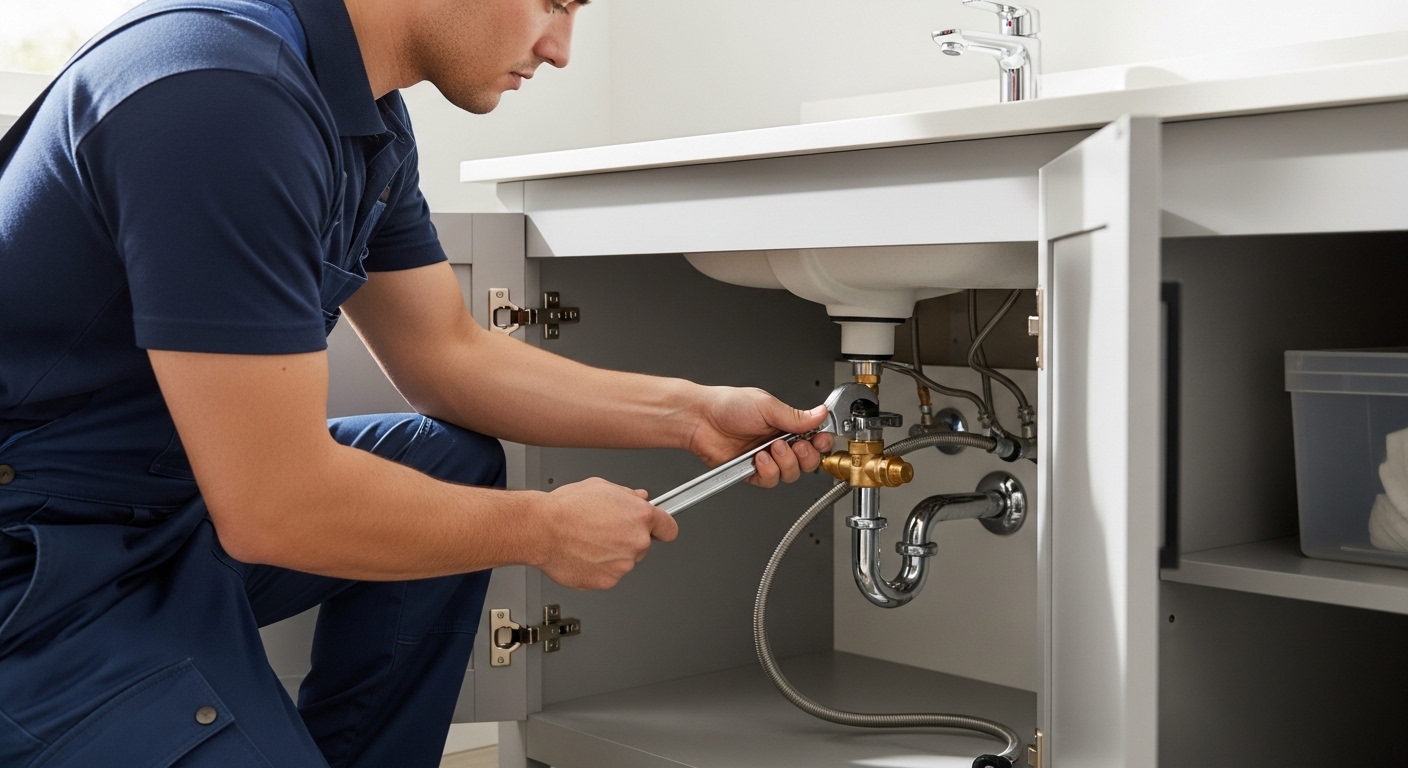
If you’ve been wondering how much for a plumber to install a bathroom faucet, the honest answer is that it depends far less on the faucet and far more on what’s hiding under your sink. A clean, modern vanity with working shutoff valves and flexible supply lines is a 45-minute job most licensed plumbers will quote at their minimum service call — roughly $120 to $200. But a 20-year-old faucet seized onto rusted mounting nuts, with crumbling valves and rigid copper lines, can push labor toward $300 or more. Below, we break down every cost driver in plain English so you know exactly what a fair quote looks like before anyone shows up.
What’s the average cost for a plumber to install a bathroom faucet?
The average cost for a plumber to install a bathroom faucet is $150 to $200 in labor, not counting the faucet itself. That figure assumes a like-for-like replacement — you’re pulling out an existing faucet and dropping in a new one of the same configuration (single-hole for single-hole, or widespread for widespread).
Here’s the thing most cost guides skip: plumbers rarely bill “per faucet.” They bill either a flat rate for a common job or an hourly rate against a minimum. Nationally, plumber hourly rates run $70 to $150 per hour, and many shops enforce a one-hour or two-hour minimum plus a trip/service-call fee of $50 to $100. So even a 30-minute swap often costs $120–$180 because you’re paying for the minimum, not the actual minutes.
A faucet installation almost always fits inside that minimum window, which is why the price band is fairly tight. Where it blows past the average is when the plumber discovers extra work once the cabinet doors open — and that’s where the real money is.
What does the price actually include — and what pushes it higher?
A basic faucet install quote covers removing the old faucet, setting and sealing the new one, connecting supply lines, and testing for leaks. What pushes it higher is anything beyond that clean swap — corroded valves, new lines, added holes, or hauling away the old unit.
Use this table to see how a “simple” $150 job can climb:
| Scenario | Typical labor add-on | Why it costs more |
|---|---|---|
| Like-for-like swap, good valves | $0 (base $120–$200) | Nothing extra — the ideal case |
| Replace both shutoff (angle stop) valves | +$50–$150 | Valves are soldered or seized; may require shutting off the main |
| New braided supply lines | +$15–$40 | Cheap parts, but often necessary if old lines are rigid or leaking |
| Single-hole → widespread (3-hole) | +$75–$200 | May need drilling or a different sink/countertop |
| Removing a seized/corroded old faucet | +$40–$100 | Rusted mounting nuts fight back; extra labor time |
| Haul-away + cleanup | +$0–$30 | Some shops include it, some don’t |
| Emergency / weekend / after-hours | +50%–100% | Premium rate multipliers apply |
The two line items that surprise people most are shutoff valve replacement and supply lines. If your under-sink valves are the old multi-turn type that hasn’t been touched in a decade, there’s a real chance they’ll weep or refuse to fully close once disturbed. A good plumber will flag this before starting. If you want to understand exactly what parts connect your faucet to those valves, our guide to faucet supply line dimensions walks through the sizing so you can sanity-check what’s being quoted.
Is it cheaper to install a bathroom faucet yourself?
Yes — doing it yourself saves the entire $120–$300 labor charge, and a standard bathroom faucet swap is genuinely one of the most DIY-friendly plumbing jobs there is. If your shutoff valves work and your supply lines are the flexible braided type, most homeowners can finish in 45 to 90 minutes with basic tools.
You’ll need:
- A basin wrench (the one tool that makes or breaks this job — it reaches the mounting nuts you can’t grab by hand)
- An adjustable wrench and channel-lock pliers
- Plumber’s putty or silicone (many modern faucets include a gasket instead)
- A bucket, towel, and flashlight
- New braided supply lines (buy them anyway — they’re $10–$20 and cheap insurance)
The realistic DIY risks are seized mounting nuts, a shutoff valve that won’t fully close, and cross-threading the supply connections. If you hit any of those and don’t feel confident, that’s the moment to call a pro rather than turn a $0 job into a flooded vanity. For a full walkthrough, our step-by-step on how to install a bathroom vanity faucet yourself in under 2 hours covers the exact sequence, including how to break loose stubborn nuts without damaging the sink.
When is DIY not worth it? If you’re switching faucet configurations (single-hole to widespread), your sink needs new holes drilled, or your valves are soldered copper stubs with no shutoffs at all. Those cross into “call a plumber” territory fast, and a botched attempt can cost more to fix than the original install would have. If you’re weighing a layout change, read up on the widespread faucet layout first so you know whether your countertop can even accommodate it.
How much does a plumber charge just for labor vs. supplying the faucet?
Plumbers almost always separate labor from parts. Labor for a bathroom faucet install runs $120–$300; the faucet itself is billed separately, and if you ask the plumber to supply it, expect a 10%–25% markup over retail plus their sourcing time.
You’ll generally get a better deal buying the faucet yourself and having the plumber install it — but there’s a trade-off. When you supply the faucet, the warranty and any defect headaches are on you, not the installer. Some plumbers even offer a small labor warranty (30–90 days) only on faucets they supply, because they trust the quality and know the parts.
This is exactly why fixture quality matters more than people assume. A $25 big-box faucet with a plastic cartridge can start dripping within a year, meaning you pay for a second install. A solid brass-body faucet with a ceramic-disc cartridge from a reputable brand can last 15–20 years. We make the full case in why you should never buy cheap bathroom fixtures — the short version is that the install labor is the same whether the faucet lasts two years or twenty, so the fixture is where you should spend.
Which type of bathroom faucet is cheapest (and most expensive) to install?
Single-hole and centerset faucets are the cheapest to install because they drop into an existing sink with minimal fuss. Widespread and wall-mount faucets are the most expensive because they involve more connections, more holes, or in-wall plumbing.
| Faucet type | Relative install cost | What’s involved |
|---|---|---|
| Single-hole | $ (lowest) | One hole, one body, quickest swap |
| Centerset (4″) | $ | Pre-joined handles + spout on one base plate |
| Widespread (8″, 3-hole) | $$ | Separate spout + two handles, more connections |
| Wall-mount | $$$ (highest) | In-wall valves, often needs open wall access |
| Vessel / tall | $$ | Extra height, sometimes longer supply reach |
If you’re replacing like-for-like within any single category, cost stays near the base labor rate. The expense comes from changing categories — going from a centerset to a widespread means new holes and more plumbing time. Wall-mount is the priciest because if there’s no existing rough-in, the plumber may need to open drywall, which turns a one-hour job into a multi-hour project. Choosing a well-built faucet in the first place saves you from paying that labor twice; our Moen vs Kohler bathroom faucets comparison is a good starting point if you’re picking between the two most-installed brands.
How long does it take a plumber to install a bathroom faucet?
A professional plumber installs a standard bathroom faucet in 30 to 60 minutes when conditions are good. Add 30–60 minutes if valves or supply lines need replacing, or if the old faucet is corroded in place.
Here’s the typical timeline a plumber follows:
- Shut off water at the under-sink valves and open the faucet to relieve pressure (2 min)
- Disconnect supply lines and remove the old faucet’s mounting nuts (5–15 min, longer if seized)
- Clean the sink deck of old putty, gunk, and mineral buildup (5 min)
- Set the new faucet, seal with putty or gasket, and tighten mounting hardware (10 min)
- Connect supply lines to the valves (5–10 min)
- Turn water back on and test for leaks at every joint, run hot and cold (5–10 min)
The leak test is the step you should never let a plumber skip — and if you DIY, run the faucet for a full two minutes while watching every connection under the sink with a flashlight. A slow weep at a supply nut is easy to miss and turns into a warped vanity floor over weeks.
How do you get a fair quote and avoid overpaying?
Get at least two quotes, describe your under-sink condition honestly, and ask specifically whether the price includes valves, supply lines, and haul-away. The single biggest source of “surprise” bills is an install that quietly turned into a valve replacement.
Smart questions to ask before booking:
- “Is this a flat rate or hourly, and is there a minimum or trip fee?”
- “Does the quote assume my shutoff valves work? What’s the cost if they don’t?”
- “Are new braided supply lines included?”
- “Do you warranty the labor, and for how long?”
- “Will you haul away the old faucet?”
A trustworthy plumber will happily answer all five without hedging. If someone gives you a suspiciously low over-the-phone number and then triples it on arrival, that’s a red flag. And send a quick photo of your under-sink area when you request the quote — it lets the plumber spot old valves or rigid lines in advance and quote accurately, which protects both of you.
FAQ
Is $200 too much to install a bathroom faucet?
No — $200 is right in the normal range for a professional bathroom faucet install, especially if it includes new supply lines or minor valve work. It’s only “too much” if it’s a bare like-for-like swap with no extras and no trip fee justification. In high cost-of-living cities, $200–$250 for a clean swap is common.
Do plumbers charge more if I supply my own faucet?
Usually not for labor, but you lose the convenience and the plumber’s parts warranty. Most will happily install a faucet you bought, though some add a small “customer-supplied material” note declining responsibility for faucet defects. Buying it yourself typically saves you the 10%–25% markup a plumber adds when sourcing it.
How much does it cost to replace shutoff valves under the sink?
Expect $50–$150 in added labor per valve pair when done alongside a faucet install, plus a few dollars for the valves themselves. If the plumber has to shut off your home’s main water line and drain it to swap soldered valves, it lands at the higher end. Doing it during the faucet install is far cheaper than a separate service call later.
Can I install a bathroom faucet without turning off the main water?
Yes, in almost every case — you just close the two shutoff (angle stop) valves directly under the sink, which isolates only that faucet. You only need the main shutoff if those under-sink valves are missing, broken, or won’t fully close. Always open the faucet after shutting the valves to relieve residual pressure before disconnecting anything.
How often should a bathroom faucet be replaced?
A quality brass-body faucet with a ceramic-disc cartridge lasts 15–20 years; a cheap plastic-body unit may need replacing in 2–5 years. Replace sooner if you get persistent drips a cartridge swap won’t fix, visible corrosion, or low flow that cleaning the aerator doesn’t cure. Spending more on the fixture upfront means you pay install labor far less often.
Will a plumber fix a faucet the same day they quote it?
Often yes — a standard faucet swap is short enough that many plumbers carry common parts and do it on the spot after quoting. The exceptions are configuration changes (needing a specific widespread set) or discovering seized valves that require a part they don’t have on the truck. Confirm same-day availability when you book if timing matters.
Author note: This guide was written by the wigafaucet fixtures team, drawing on hands-on installation testing across single-hole, centerset, and widespread bathroom faucets, plus real quotes gathered from licensed plumbers across several U.S. regions. About wigafaucet: wigafaucet designs and supplies bathroom and kitchen faucets built with solid brass bodies and ceramic-disc cartridges, tested to meet ANSI/NSF 61 and ASME A112.18.1 standards for drinking-water safety and durability. Our residential bathroom faucets ship with a limited lifetime warranty on finish and function, because a faucet you install once should last as long as the labor you paid for.