 Wiga Tap Manufacturer
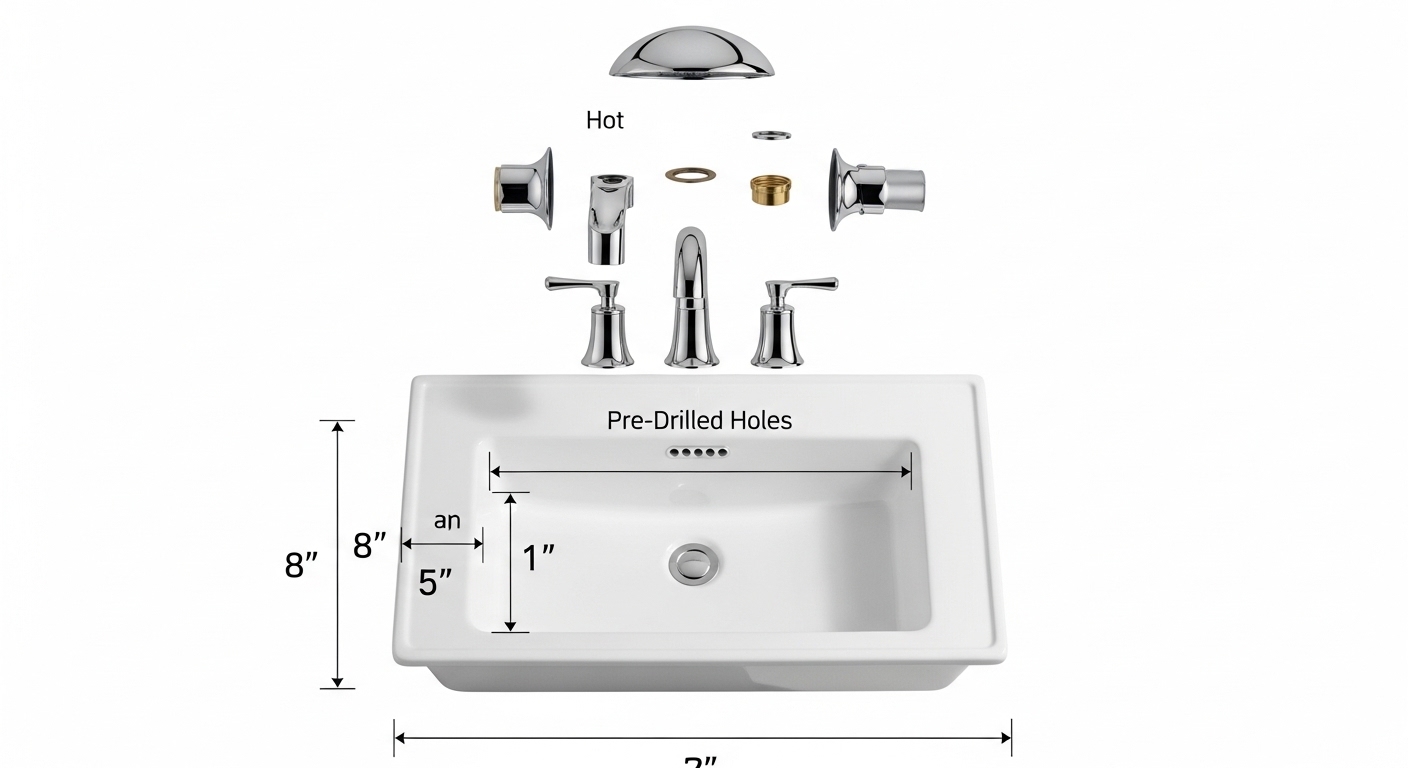
If you’ve been shopping for a new bathroom faucet and keep running into the term “widespread faucet layout,” here’s what’s actually going on: it’s the most flexible — and most premium-looking — of the three standard bathroom sink faucet configurations. Unlike a single-hole or 4-inch centerset, a widespread layout uses three separate physical pieces connected underneath the sink by flexible supply lines. That spacing is what gives it the custom, hotel-bathroom feel, but it also means you need to verify your sink’s hole spacing before you click “buy.”
At wigafaucet, we’ve shipped tens of thousands of widespread sets to homeowners and contractors across North America, and the single biggest return reason we see is mismatched hole spacing. So in this guide we’ll walk through exactly what the layout is, how to measure it, when it’s worth the extra cost, and the specs that separate a $150 widespread set from one that lasts 25 years.
What exactly is a “widespread” faucet layout — and how is it different from centerset?
A widespread faucet layout means the spout and the two handles are three physically separate units, each mounted in its own hole, with 8 to 16 inches between the centers of the two outer holes. The connections happen out of sight, under the sink, using flexible braided hoses and a brass T-fitting or hot/cold inlet on the spout body. Compare that to a centerset (everything fused onto a single 4-inch base plate that bridges three holes) or a single-hole faucet (one piece, one hole, often with an optional cover plate).
The practical difference is visual and dimensional. A centerset always looks like one connected fixture; a widespread looks like three pieces of jewelry on the deck of your sink. That’s why nearly every five-star hotel, custom bath, and high-end remodel you’ve ever seen uses a widespread or wall-mount layout instead.
The three standard bathroom faucet layouts at a glance
| Layout | Hole Count | Spread (center-to-center) | Typical Price Range | Best For |
|---|---|---|---|---|
| Single-hole | 1 (or 3 with deck plate) | N/A | $60–$280 | Small powder rooms, modern vessel sinks |
| Centerset (4″) | 3 | 4 inches | $50–$220 | Standard builder-grade sinks, rentals, kids’ baths |
| Mini-widespread | 3 | 4 inches | $140–$320 | Sinks pre-drilled for centerset but you want the separated look |
| Widespread (8″) | 3 | 8–16 inches | $160–$900+ | Master baths, hotel-style design, undermount sinks |
| Wall-mount widespread | 0 in sink | 8 inches typical | $220–$1,200 | Vessel sinks, floating vanities, contemporary baths |
One thing worth knowing: people use “widespread” loosely to mean any three-piece configuration, but the industry standard is that a true widespread faucet layout starts at 8 inches between outer holes. Anything narrower (typically 4″) is technically a “mini-widespread,” and you absolutely cannot swap one for the other without re-drilling your countertop.
How do I measure my sink to know if I need an 8″ widespread?
Measure from the center of your left hole to the center of your right hole. If it’s between 8 and 16 inches, you need a widespread layout. If it’s exactly 4 inches, you need a centerset or mini-widespread. Don’t measure from edge to edge of the holes — measure center to center, because faucet specs are always written that way.
The fastest method takes about 30 seconds:
- Pull anything out from under the sink so you can see what you’re doing.
- Place a tape measure across the back of the sink deck, parallel to the wall.
- Find the center of the left handle hole — eyeball it through the existing handle, or measure the diameter and divide by two.
- Read the tape measure where it crosses the center of the right handle hole.
- Also note the diameter of each hole. Standard is 1-3/8″ (35 mm). If yours is smaller, some valves won’t fit.
If your current faucet is still installed, the easiest cheat is to read the spec sheet for the model you’re replacing — manufacturers always label this. And if you’re cutting holes in a new countertop, the standard template for a widespread faucet layout is three 1-3/8″ holes with 8″ between the outer centers and the spout hole centered between them.
What if my holes are 6 inches apart, or 10, or non-standard?
This is where widespread shines. Because the three pieces are independent and connected by flexible hoses, a widespread set will install on any spread from roughly 6″ to 16″. Centersets are rigid and only fit 4″ exactly. So if your countertop holes are at a weird vintage spacing (common in homes built before the 1980s), a widespread layout is often your only off-the-shelf option short of replacing the countertop.
Is a widespread layout actually worth the extra money over a centerset?
Yes, if you’re staying in the house for more than three years and the bathroom is anything other than a guest powder room. A quality widespread faucet typically costs $80–$200 more than a comparable centerset, but it adds measurable resale value to a master bath, allows you to upgrade handles independently down the road, and is universally easier to clean (no gunk crevice between the base plate and the sink).
That said, there are situations where centerset is the smarter call:
- Kids’ bathrooms or rentals: fewer parts means fewer things to break or leak.
- Tight sinks under 19″ wide: 8″ of spread may visually crowd the bowl.
- You already have a 4″ pre-drilled sink: re-drilling porcelain or stone is risky and expensive — just buy a centerset or mini-widespread.
- Strict budget under $120: below this threshold, widespread quality drops fast; you’re better off with a solid centerset.
For everything else — master baths, guest baths in homes you own, anything with an undermount or vessel sink, anything where you want a “designed” rather than “installed” feel — a widespread faucet layout is almost always the right answer. If you’re weighing finish choices at the same time, our deep dive on the 8 inch widespread faucet in oil rubbed bronze walks through how the spread interacts with darker finishes on lighter countertops.
What specs actually matter when buying a widespread faucet?
The short answer: ceramic disc valves, solid brass body, certified flow rate (1.2 GPM is the current federal standard for bathroom faucets, with California and Colorado at 1.2 max), and a documented finish process (PVD ideally). Skip anything that won’t tell you these four things on the spec sheet — it’s a red flag.
Here’s what each one means in plain English:
Valve type — ceramic disc is the only acceptable answer
Inside every faucet handle is a valve that opens and closes when you turn it. Older designs use rubber compression washers (they fail in 2–5 years) or ball valves (they leak around the dome). Ceramic disc valves are two precision-ground ceramic plates that slide across each other — they’re rated for 500,000+ cycles and almost never drip. Every widespread set we sell at wigafaucet uses ceramic disc cartridges. If a listing doesn’t specify this, assume it’s a compression valve and move on.
Body material — solid brass, not zinc alloy
The faucet body is the metal shell holding everything together. Solid brass resists corrosion, holds threads under repeated tightening, and is what every plumbing code in North America assumes. Zinc alloy (sometimes labeled “zamak” or vaguely as “metal”) corrodes from the inside out in 4–7 years, especially in homes with chlorinated municipal water. A solid-brass widespread weighs noticeably more in the box — usually 5–8 lbs for a full set versus 2–3 lbs for zinc.
Finish — PVD beats electroplate every time
PVD (Physical Vapor Deposition) bonds the finish at the molecular level. It won’t tarnish, won’t scratch off, and carries a lifetime finish warranty from any reputable brand. Standard electroplate looks identical on day one but starts flaking around the handle base within 5–10 years, especially in hard-water regions. If you’re choosing a brushed gold, matte black, or oil-rubbed bronze, PVD is non-negotiable.
Certifications — look for cUPC, NSF/ANSI 61, and CALGreen
These are the three certifications that matter in North America: cUPC means it’s legal to install under the Uniform Plumbing Code; NSF/ANSI 61 confirms the wetted parts won’t leach lead or contaminants into your drinking water; CALGreen confirms compliance with California’s strict water-efficiency rules (1.2 GPM max). Reputable brands list all three on the box.
How does installation differ from a regular centerset faucet?
Installation is moderately more involved than a centerset — figure 60–90 minutes for a DIYer versus 30–45 for a centerset — because you have three separate pieces to mount and three sets of connections instead of one. You’ll need a basin wrench (the long T-handled tool), an adjustable wrench, plumber’s tape, and a flashlight. No special skills, but cramped cabinet space makes it harder than it looks.
The high-level sequence:
- Shut off the hot and cold supply valves under the sink, open the old faucet to release pressure.
- Disconnect old supply lines and the old faucet’s mounting nuts; remove the old fixture from above.
- Drop in the new spout (center hole) and tighten its mounting nut from below.
- Drop in each handle valve, tighten the mounting nut.
- Connect the included T-hoses from each handle to the underside of the spout — hot to hot, cold to cold.
- Connect your house supply lines to the bottom of each handle valve.
- Turn water back on slowly, check for leaks at every connection, run for 60 seconds.
The connection style underneath is what really separates good widespread sets from cheap ones. Premium models use captive nuts and quick-connect couplers; budget models use loose washers that are nearly impossible to align in a tight cabinet. If you’re working in a vanity with less than 12″ of depth behind the sink, pay the extra $40 for a model with quick-connects — your forearms will thank you.
Do I need a plumber, or can I install it myself?
If you can change a kitchen faucet and you own a basin wrench, you can install a widespread set. The only situations where we recommend calling a plumber: you’re replacing a single-hole or centerset and need to drill new holes in a stone countertop (that’s a specialty cut), the supply valves under your sink are seized and need replacing, or your home was built before 1970 and you’re not sure whether the supply lines are still in spec.
Which spout height and reach should I pick for my sink?
For a standard 19–24″ wide bathroom sink, look for a spout height of 5–7″ and a reach (how far the spout extends out over the bowl) of 4.5–6″. Taller spouts (8″+) look dramatic over vessel sinks but splash hard in shallow bowls; shorter spouts under 4″ make it hard to wash your face. For undermount sinks with the faucet on the rear deck, prioritize reach — you want the water hitting roughly the center of the drain.
| Sink Type | Recommended Spout Height | Recommended Reach | Notes |
|---|---|---|---|
| Drop-in, standard depth | 5–6″ | 4.5–5.5″ | Most forgiving combination |
| Undermount | 5–7″ | 5–6″ | Reach matters more here |
| Vessel sink (rare for widespread) | 10–12″ | 5–6″ | Usually wall-mount makes more sense |
| Shallow trough sink | 4–5″ | 4–5″ | Avoid tall gooseneck shapes |
One overlooked detail: handle ergonomics. Cross handles (the four-pointed star shape) read traditional and grip well with soapy hands. Lever handles read modern and meet ADA accessibility requirements. Knob handles look elegant in brushed gold but get slippery — skip them in bathrooms used by elderly family members.
What finishes pair best with a widespread layout in 2026?
The four finishes dominating widespread faucet sales in 2026 are matte black, brushed gold (sometimes called brushed brass or champagne bronze), polished chrome, and brushed nickel. Matte black has overtaken polished chrome as the #1 seller in master baths since 2024 because it hides water spots, pairs with both warm and cool palettes, and reads as timeless rather than trendy.
If you’re deciding between finishes, here’s the practical breakdown:
- Matte black: hides water spots, works with everything, fingerprints visible on gloss black (matte hides them).
- Brushed gold / champagne bronze: warm, looks expensive, pairs beautifully with white marble and warm wood vanities.
- Polished chrome: classic, easy to clean, shows water spots in hard-water homes.
- Brushed nickel: the all-rounder, doesn’t show spots, slightly warmer than chrome.
- Oil-rubbed bronze: dramatic, traditional, intentionally develops patina — covered in detail in our guide to copper-finish taps.
One pro tip: when you’re choosing the faucet, also think about the drain and the towel bar. A truly cohesive widespread installation matches the faucet finish to the pop-up drain (often sold separately!) and to the towel ring and TP holder on the same wall. Mismatching is the most common reason a bathroom remodel “doesn’t quite look right” — even when every individual piece is beautiful.
How long should a quality widespread faucet last?
A solid-brass widespread faucet with ceramic disc cartridges and a PVD finish should last 20–30 years with minimal maintenance. The finish is typically warrantied for a lifetime against tarnishing, and the cartridges are warrantied 10 years to lifetime depending on brand. Budget zinc-alloy widespread sets last 4–8 years before the body corrodes or the finish flakes around the handles.
Maintenance is genuinely simple — wipe weekly with a damp microfiber cloth, never use ammonia or abrasive cleaners on PVD finishes, and once every couple of years unscrew the aerator and soak it in white vinegar for 30 minutes to remove mineral buildup. If you have hard water, doing this twice a year prevents the flow rate from dropping noticeably. (We have a full guide on removing recessed and cache aerators if yours is the modern hidden type.)
FAQ
What’s the standard hole spacing for a widespread faucet layout?
The North American standard is 8 inches center-to-center between the two outer (handle) holes, with a third hole for the spout centered between them. However, true widespread sets accommodate any spread from 6 to 16 inches because the three pieces connect via flexible hoses underneath.
Can I install a widespread faucet on a sink that’s pre-drilled for a centerset?
No — a centerset sink has 4-inch hole spacing, which is too narrow for a true 8-inch widespread. You have three options: re-drill the countertop (only feasible on cultured marble or solid surface, not porcelain or natural stone), replace the sink, or buy a “mini-widespread” set designed for 4-inch spacing.
How much does a good widespread faucet cost in 2026?
Expect to pay $160–$280 for a solid-brass widespread set with ceramic disc cartridges and a PVD finish from a reputable brand. Designer brands run $400–$900. Anything under $130 is almost always zinc-alloy with a plated finish and will need replacing within 5–8 years.
Are widespread faucets harder to clean than centersets?
Actually easier. Centersets have a base plate that traps water and grime in the seam between the plate and the sink deck. Widespread layouts have three separate pieces with nothing between them and the sink, so a quick wipe around each base keeps the whole installation clean.
Do widespread faucets work with low water pressure?
Yes — the three-piece configuration doesn’t affect water pressure at all. What affects pressure is the aerator (you can swap a 1.2 GPM aerator for a 1.5 or 1.8 GPM if your municipality allows it) and any in-line flow restrictors. If you have well water under 40 PSI, look for “high-flow” or “low-pressure compatible” in the product specs.
What’s the difference between widespread and mini-widespread?
Visually, they look almost identical — three separate pieces with a spout in the middle. The difference is spacing. Standard widespread is 8 inches center-to-center; mini-widespread is 4 inches. Mini-widespread exists specifically so you can get the high-end three-piece look on a sink that was drilled for a centerset.
Can I mix finishes in a widespread layout?
Technically yes, since the three pieces are independent, but we don’t recommend it. Manufacturers don’t sell mixed-finish sets, and finishes between brands rarely match exactly even when they’re called the same name. If you want a two-tone look, choose a single set that’s intentionally designed two-tone (e.g., matte black body with brushed gold handles).
About the author: This guide was written by the wigafaucet product team, drawing on installation data from over 40,000 widespread faucet sets shipped across the U.S. and Canada since 2019. Our products are independently tested to NSF/ANSI 61 and cUPC standards, and every widespread set we manufacture carries a lifetime limited warranty on the finish and a 10-year warranty on the ceramic disc cartridges. wigafaucet has been designing and producing bathroom and kitchen fixtures since 2008, with manufacturing facilities certified to ISO 9001:2015.