 Wiga Tap Manufacturer
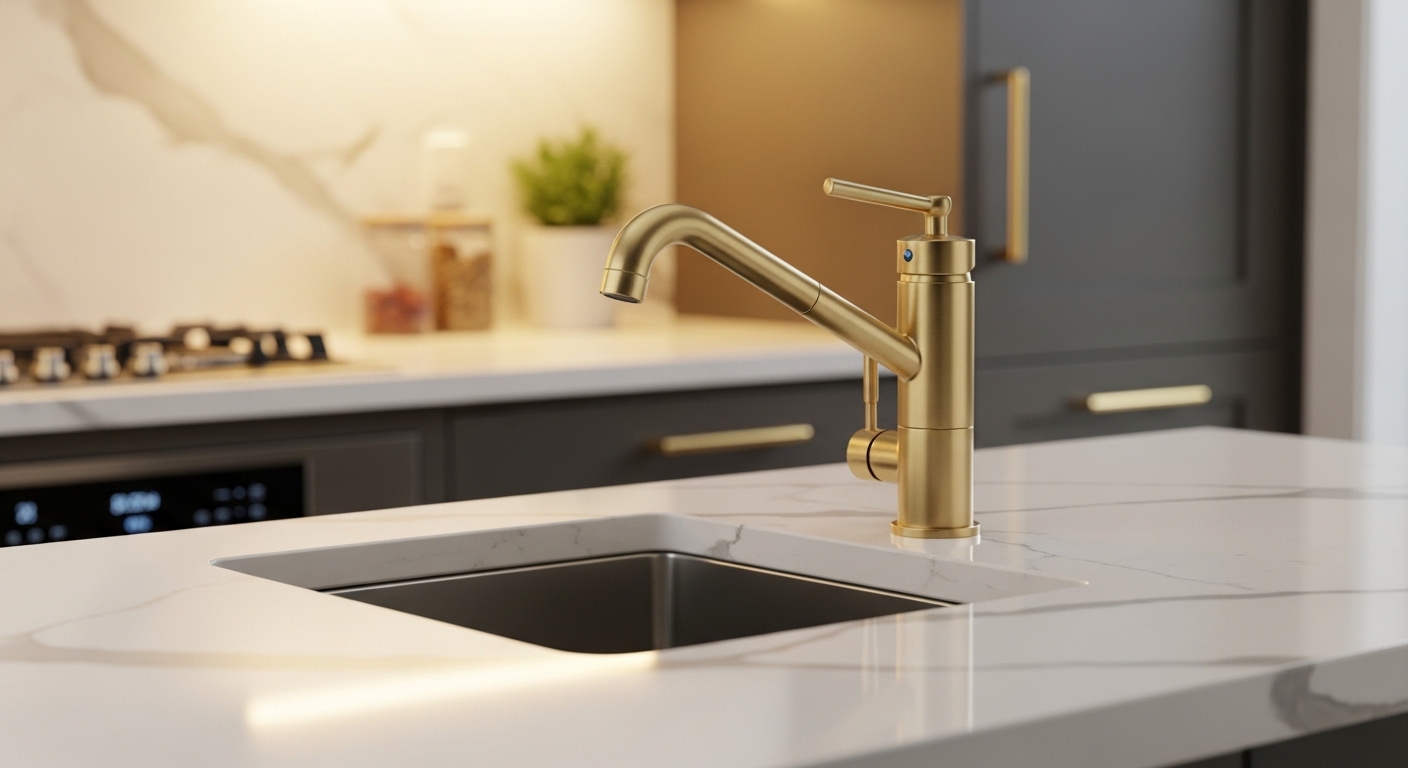
If you’ve been typing “bar faucet nearby” into your phone hoping something in stock matches your little prep sink, here’s the honest situation: local availability and the right faucet rarely line up. A bar faucet is a small, compact single-handle faucet — usually a single-hole deck mount with a low or high-arc spout — built for a bar sink or prep sink that’s roughly 9 to 15 inches wide. The problem is that most nearby stores stock two or three generic models, and the one on the shelf may not match your hole size, your countertop thickness, or the finish on the rest of your kitchen. This guide walks you through where to actually find one close by, what specs to verify before you drive over, and when buying online is the smarter move.
What exactly is a bar faucet, and how is it different from a kitchen faucet?
A bar faucet is a scaled-down kitchen faucet made for a small secondary sink — a bar sink, prep sink, or island wet bar. It’s narrower, shorter, and usually single-handle, designed for rinsing glasses, filling pitchers, prepping produce, and washing hands, not for scrubbing stockpots. That’s the core difference: a bar faucet prioritizes a small footprint and clean look over the big flow and long reach of a primary kitchen faucet.
The practical distinctions matter when you shop nearby, because a salesperson may point you at a “small kitchen faucet” that won’t actually suit a bar sink:
- Spout height and reach: Bar faucets typically run 10–14 inches tall with a shorter reach so they clear the shallow bar sink without splashing.
- Flow rate: Most are 1.5–1.8 GPM, versus 1.8–2.2 GPM on a full kitchen faucet — plenty for a prep sink.
- Mounting: The vast majority are single-hole deck mount, so they drop into one 1⅜-inch (35 mm) hole.
- Handle style: Almost always a single lever for one-hand temperature control while your other hand holds a glass.
If you want a deeper breakdown of what separates a durable unit from a throwaway one, our guide on what actually makes the best kitchen faucet quality in 2026 applies directly — the same ceramic-cartridge and solid-brass rules hold for bar faucets.
Where can I find a bar faucet nearby that’s actually in stock today?
To find a bar faucet nearby that’s genuinely in stock, check four places in this order: big-box home centers, plumbing supply houses, kitchen-and-bath showrooms, and your local hardware store — then confirm availability by phone or the store’s website before you drive over. Each source has a different trade-off between price, selection, and expert help.
Here’s how the common nearby options stack up so you don’t waste a trip:
| Where to buy | Typical selection | Price range | Expert help | Best for |
|---|---|---|---|---|
| Big-box home center | 3–8 stocked models, limited finishes | $$ | Low | Grab-and-go same day |
| Plumbing supply house | Wide, pro-grade catalog (some special-order) | $$–$$$ | High | Exact specs, matching a brand |
| Kitchen & bath showroom | Curated premium/designer lines | $$$ | High | Seeing finishes in person |
| Local hardware store | 1–3 basic models | $–$$ | Medium | Emergency replacement |
| Online specialist (ship/pickup) | Full range of finishes & specs | $$ | High (specs + support) | Getting the exact right one |
One tip that saves a wasted drive: call and ask the store to confirm the model is a single-hole bar faucet with the finish you want, and ask for the SKU. Shelf tags and websites often lump bar faucets in with “kitchen faucets,” and the associate may not know the difference. If they can’t confirm the hole configuration and spout height, treat it as “maybe in stock,” not “yes.”
Should I buy a bar faucet locally or order it online?
Buy locally when you need it today and any decent single-hole model will do; order online when you care about a specific finish, want documented specs and warranty, or your rest-of-kitchen faucet is a particular color you need to match. For most planned projects, online wins — a nearby store might carry chrome and stainless, but if your other fixtures are matte black or brushed gold, you’ll be stuck.
Think of it as an emergency-versus-planned decision:
- Emergency (old bar faucet failed, water off): Go nearby. Grab a code-compliant single-hole model in whatever finish is closest, install it, move on.
- Planned upgrade or new build: Order the exact model. You control the finish, spout height, GPM, and you get the full warranty paperwork instead of a mystery box off a clearance shelf.
The finish-matching point is the one people regret most. If your main faucet is brushed gold and the nearby store only has chrome, a mismatched bar faucet in the same sightline looks like a leftover. It’s worth reading up on how a finish behaves over time — our take on whether a brushed gold faucet is actually worth it in 2026 covers durability and cleaning that apply to bar faucets too.
What size and specs do I need to check before I buy a bar faucet?
Before you buy any bar faucet, measure four things: the mounting hole diameter, the number of holes in your sink or countertop, your counter/deck thickness, and the clearance between the sink and any cabinet or window above it. Get those wrong and even a great faucet won’t fit.
Here’s the short checklist most people skip and then return the faucet over:
- Hole diameter: Standard is 1⅜ inch (35 mm). Some sinks are drilled to 1½ inch (38 mm) — a base plate or deck plate covers the gap.
- Number of holes: Single-hole faucets need one hole. If your bar sink has three holes (common on older prep sinks), you’ll need an escutcheon/deck plate to cover the extra two.
- Spout height & reach: Confirm the spout clears your sink rim but doesn’t crash into an upper cabinet or a window behind an island bar.
- Deck thickness: Most faucets fit counters up to 1½–2 inches thick. Thick stone or a built-up island edge can exceed the mounting bolt length.
- Supply connections: Bar faucets almost always use ⅜-inch compression supply lines. Verify your shutoff valves match, or grab an adapter.
If your supply lines or connectors are a question mark, our plain-English faucet supply line dimensions sizing guide tells you exactly what length and fitting to buy so the install goes smoothly the first time.
How do I install a bar faucet myself once I’ve got one?
You can install most single-hole bar faucets yourself in 30–45 minutes with a basin wrench, an adjustable wrench, plumber’s tape, and a bucket — no plumber required. Because bar faucets are single-hole and lightweight, they’re one of the easiest faucets to swap. Here’s the core sequence:
- Shut off the water at the under-sink stop valves and open the old faucet to release pressure.
- Disconnect the supply lines from the old faucet with an adjustable wrench; keep the bucket underneath for drips.
- Remove the old faucet by loosening the mounting nut under the deck with a basin wrench, then lift it out.
- Drop in the new faucet through the hole (use the deck plate if you’re covering extra holes), and tighten the mounting nut from below.
- Reconnect the supply lines, wrapping male threads with plumber’s tape; hand-tighten plus a quarter turn — don’t overtighten.
- Turn the water back on slowly, remove the aerator, and run the faucet 30 seconds to flush debris before checking for leaks under the sink.
The single trickiest part is the basin wrench in tight island cabinets — bar sinks are often boxed into small cabinets with little elbow room. Go slow and use a flashlight. The install steps mirror a standard kitchen faucet swap, so our walkthrough on how to install a kitchen faucet yourself without calling a plumber is a useful companion if you want a fuller step-by-step with photos.
What’s the best type of bar faucet for a small island or wet bar?
For most small islands and wet bars, a single-hole, single-handle bar faucet with a gooseneck (high-arc) spout is the best all-around choice — it gives you tall clearance for filling pitchers and a small deck footprint. But the “best” type depends on your sink and how you use it. Here’s how the common styles compare:
| Bar faucet type | Spout style | Best use case | Watch-out |
|---|---|---|---|
| High-arc single handle | Tall gooseneck | Filling pitchers, coffee carafes, tall glasses | Needs vertical clearance under cabinets |
| Low-arc single handle | Short curved spout | Under-cabinet or window-behind installs | Less room for tall containers |
| Pull-down bar faucet | Spray head pulls out | Rinsing produce, cleaning the sink itself | Slightly larger, pricier |
| Cold-water-only bar tap | Compact spout | Dedicated drinking-water or beverage station | No hot water — single supply only |
| Commercial-style spring faucet | Coil spring gooseneck | Heavy prep, restaurant-look kitchens | Tall — confirm ceiling/cabinet clearance |
If you love the pro look of a tall coil-spring spout, note that bar and commercial faucets share a lot of engineering. Our deep dive on the best commercial sink faucet one-hole setup explains the single-hole spring-spout design that many bar faucets borrow, so it’s worth a read before you commit to that style on a home island.
How much should a good bar faucet cost, and what makes one worth it?
A solid, long-lasting bar faucet costs roughly $80–$200; below about $60 you’re usually getting thin zinc-alloy bodies and rubber-seal valves that drip within a year or two. What you’re paying for above that line is a ceramic-disc cartridge and a solid-brass body — the two parts that decide whether a faucet lasts 10+ years or starts leaking by next spring.
Here’s where your money actually goes:
- Ceramic-disc cartridge: Wears far slower than rubber washers and won’t drip when the handle’s off. Non-negotiable for longevity.
- Solid-brass body: Resists corrosion and holds threads; zinc “pot metal” bodies crack and pit over time.
- PVD or quality finish: Physical-vapor-deposition finishes resist scratching and tarnish — important on the higher-touch surfaces of a bar faucet.
- Lead-free certification: Look for NSF/ANSI 61 and 372 compliance so it’s safe for drinking water.
- Real warranty: A lifetime finish-and-function warranty is a strong signal the maker trusts the parts.
The temptation nearby is the $39 clearance faucet. We’ve seen how that story ends — our dealers’ candid piece on why you should never buy cheap bathroom fixtures lays out the real cost of replacing a bargain faucet twice instead of buying once.
FAQ
Is a bar faucet the same size as a kitchen faucet?
No. A bar faucet is smaller — typically 10–14 inches tall with a shorter spout reach and a 1.5–1.8 GPM flow, versus a full kitchen faucet’s larger body, longer reach, and higher flow. Both usually drop into a standard 1⅜-inch (35 mm) single hole, but the bar version is scaled for a small prep or bar sink.
Can I use a bar faucet in my main kitchen sink?
You can, but it’s usually a poor fit. A bar faucet’s shorter reach and lower flow make filling large pots and washing big cookware awkward. Use a bar faucet for its intended small prep or bar sink, and choose a full-size kitchen faucet for the main basin.
What size hole does a bar faucet need?
Nearly all single-hole bar faucets fit a standard 1⅜-inch (35 mm) mounting hole. Some sinks are drilled to 1½ inch (38 mm), which most faucets still fit. If your bar sink has three holes, add a deck plate (escutcheon) to cover the two you won’t use.
Do bar faucets come with hot and cold water?
Most single-handle bar faucets are full hot-and-cold mixers with two supply lines, just like a kitchen faucet. The exception is a dedicated cold-water-only “bar tap” for a filtered drinking or beverage station, which connects to a single cold supply.
Is it cheaper to buy a bar faucet nearby or online?
Prices are often similar, but online usually gives you more finishes and documented specs for the same money, while a nearby store saves you shipping time in an emergency. For a planned upgrade where you want a specific finish and full warranty, ordering the exact model — from a specialist like wigafaucet.com — typically delivers better value than settling for shelf stock.
About the author: This guide was written by the wigafaucet product team, faucet specialists who spec, test, and install kitchen and bar fixtures for both homeowners and trade pros. We’ve fielded thousands of “will this fit my sink?” questions and built this article around the ones people actually ask.
Why trust wigafaucet: wigafaucet designs and supplies faucets and bathroom fixtures built to modern standards. Our bar faucets use ceramic-disc cartridges and solid-brass bodies, are certified lead-free to NSF/ANSI 61 and 372, are pressure-tested before shipping, and are backed by a limited lifetime warranty on finish and function. Every product page lists the real specs — hole size, spout height, reach, and GPM — so you can confirm fit before you buy.