 Wiga Tap Manufacturer
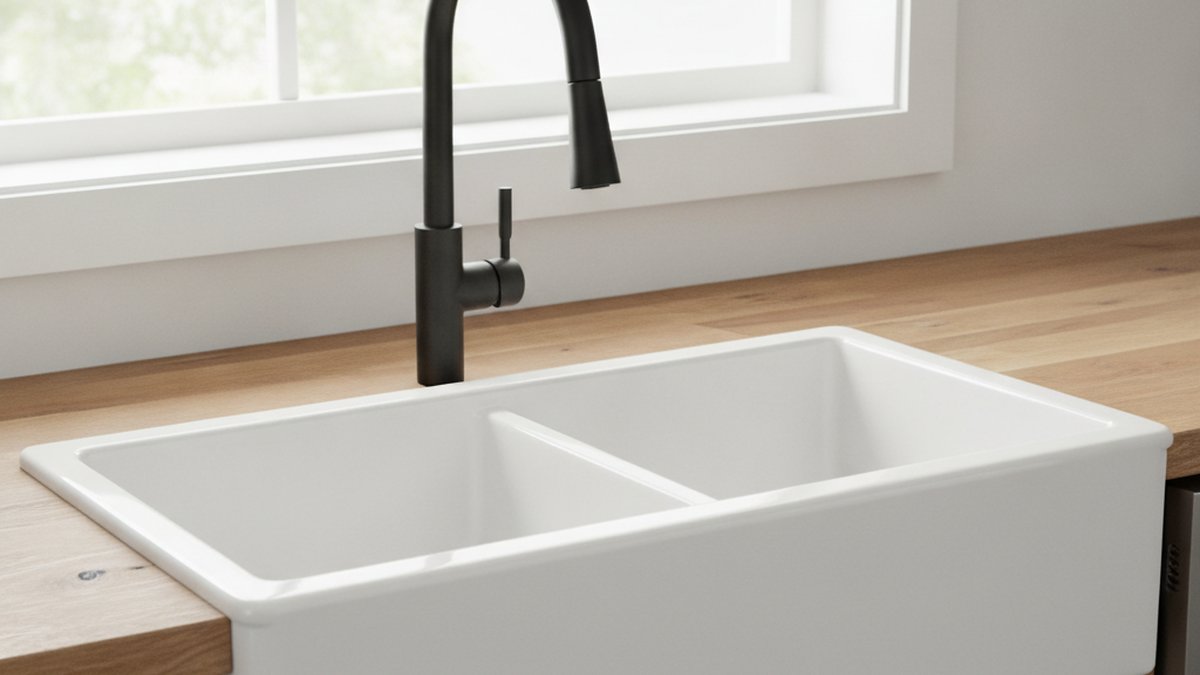
If you’ve just installed (or fallen in love with) an apron-front sink, the next question is almost always the same: which Moen farmhouse kitchen sink faucet actually works with that deep, front-facing basin without splashing, without looking undersized, and without fighting your countertop for space? The short version is that farmhouse sinks change the math on faucet height, reach, and hole count — so you can’t just grab any faucet off the shelf. Below I’ll walk you through exactly what to look for, which Moen lines fit, how the finishes hold up, and what real owners run into after a year of daily use.
What makes a faucet a good match for a farmhouse sink specifically?
A good farmhouse faucet needs three things: enough spout height to clear a deep apron basin, enough spout reach to land water near the center of the bowl (not the back wall), and the right hole configuration for how your sink and counter are drilled. Farmhouse sinks are usually deeper (9–10 inches) and wider than a standard drop-in, so a short bathroom-style faucet looks lost and sprays the backsplash.
Here’s the practical rule: aim for a spout height of roughly 15 to 17 inches and a reach of 8 to 9 inches. That gets the water stream into the middle of the bowl instead of the drain corner, and gives you room to wash a stockpot or a sheet pan under it. Moen’s high-arc “Spot Resist” pull-downs — Arbor, Align, Sleek, Kaden — all land in this zone, which is why they show up over apron sinks so often.
One thing farmhouse buyers forget: your faucet sits behind the sink, not on it. Almost all apron-front sinks have no faucet deck, so the faucet mounts into the countertop behind the basin. That means your counter’s hole count — not the sink — decides what fits. If you’re swapping out an older three-hole setup, our guide on replacing a kitchen faucet with 3 holes without buying the wrong one walks through the deck plate trick that makes a single-hole Moen work over an old three-hole drilling.
Single-hole or three-hole: which Moen setup fits a farmhouse counter?
Go single-hole for a clean modern farmhouse look, and use Moen’s included escutcheon (deck plate) to cover extra holes if your counter is drilled for three. Nearly every Moen pull-down farmhouse-friendly faucet ships as a single-hole design but includes an optional deck plate, so you can adapt to a 1-hole or 3-hole countertop without buying anything extra.
- 1 hole in the counter: Install the faucet directly, skip the deck plate. Cleanest look, best for modern and transitional farmhouse kitchens.
- 3 holes in the counter: Use the deck plate to cover the outer two holes, or fill them with a soap dispenser and a filtered-water tap.
- Want a classic look: A two-handle bridge faucet (Moen Weymouth) reads more traditional farmhouse, but needs 8-inch widespread drilling and more counter depth behind the sink.
If you’d rather use those spare holes for function instead of hiding them, a side sprayer or an accessory tap is a smart move — the same logic behind a pot filler faucet with sprayer setup, where the extra deck holes earn their keep instead of getting capped.
Which Moen farmhouse kitchen faucet lines are worth comparing?
The best all-around pick for most farmhouse kitchens is the Moen Arbor — it’s the tall, high-arc pull-down that balances price, spray power, and finish options. But the right one depends on your budget and style. Here’s how the main contenders stack up.
| Moen line | Style | Approx. spout height | Best for | Typical price (2026) |
|---|---|---|---|---|
| Arbor | High-arc pull-down, curvy | ~16.6 in | Classic + modern farmhouse, best all-rounder | $220–$320 |
| Align | High-arc pull-down, minimalist | ~16 in | Modern/industrial farmhouse, matte black | $180–$280 |
| Sleek | Slim high-arc pull-down | ~16 in | Scandi/modern, MotionSense touchless option | $250–$380 |
| Kaden | Value high-arc pull-down | ~15.5 in | Budget farmhouse builds | $150–$210 |
| Weymouth | Two-handle / bridge, traditional | ~15 in | Classic farmhouse, needs widespread holes | $400–$700 |
Is the Moen Arbor a good choice for a farmhouse sink?
Yes — the Arbor is the safest single pick for a farmhouse sink because its tall, sweeping arc clears a deep apron basin and its reach lands water mid-bowl. It comes in Chrome, Spot Resist Stainless, Matte Black, and often Champagne Bronze, so it works with both white fireclay and stainless apron sinks. The docking is magnetic (Moen’s “Power Boost” and “Reflex” system on many versions), so the pull-down head snaps back into place instead of sagging after a year — one of the most common complaints on cheaper faucets.
What about touchless — is the Moen Sleek with MotionSense worth it?
Touchless is worth it in a farmhouse kitchen if you cook a lot with messy hands (raw chicken, sticky dough), because you wave the water on without smearing the handle. The Moen Sleek and MotionSense-equipped models use a hands-free wave sensor plus a manual handle, so you keep normal control. The trade-off: it needs batteries or an under-sink transformer, and the sensor adds $60–$120 over the manual version. If you want to understand the tech before paying for it, here’s how a touchless faucet sensor actually works and which ones are worth the money.
Which Moen finish holds up best over a farmhouse sink?
For daily durability and low maintenance, Moen’s Spot Resist Stainless is the most forgiving finish, followed by Chrome; Matte Black looks the best over a white farmhouse sink but shows hard-water spots and needs gentler cleaning. Finish is where a lot of farmhouse buyers regret their choice six months in, so match it to your water and your cleaning habits, not just the photo.
- Spot Resist Stainless: Moen’s coating that resists fingerprints and water spots. Best if you have hard water or kids. Wipes clean with a damp cloth.
- Chrome: Cheapest, toughest, easiest to clean, but very “builder standard” in look.
- Matte Black: Stunning over white fireclay; shows white mineral spots in hard-water areas. Never use abrasive or acidic cleaners.
- Champagne Bronze / Gold: Warm, on-trend, hides water spots well, but the PVD finish must be cleaned gently — no scouring pads.
Whatever warm or dark finish you choose, cleaning technique matters more than the brand. The finish-care rules are basically identical across brands — the same care that keeps a brushed-gold faucet looking new applies here, as we cover in how to clean brushed gold faucets without wrecking the finish: mild soap, soft cloth, no vinegar soaks, no abrasive pads.
Is a Moen farmhouse kitchen faucet safe for drinking water?
Yes — current Moen kitchen faucets are certified lead-free and meet the U.S. federal Safe Drinking Water Act limit (0.25% weighted lead content) and NSF/ANSI 61 and 372 standards. If you’re on well water or just health-conscious, that certification is the number to look for on the box or spec sheet. Any faucet legally sold for kitchen use in the U.S. since 2014 has to meet this, but it’s still worth confirming, especially with imported off-brand faucets.
If drinking-water safety is a priority in your build, it’s worth understanding the whole picture — what the certifications mean and how to verify them — in our explainer on what a lead free faucet kitchen setup actually requires in 2026.
How hard is it to install a Moen faucet on a farmhouse sink yourself?
Installing a Moen pull-down faucet on a farmhouse sink is a genuine DIY job for most people — plan on 45 to 90 minutes with basic tools, since apron sinks mount the faucet into the countertop rather than the sink deck. Moen’s “Duralock” quick-connect system snaps the supply hose into place without a wrench, which is the part that used to eat up the most time.
Here’s the realistic sequence:
- Shut off the water at the under-sink stops and open the old faucet to release pressure.
- Disconnect the old faucet — this is often the worst part if the mounting nut is corroded.
- Clean the counter surface where the new base or deck plate will sit.
- Drop the new faucet through the counter hole, add the deck plate if needed, and tighten the mounting nut from below.
- Connect the supply lines to the shutoff valves and snap in the pull-down hose weight.
- Turn the water back on slowly, remove the aerator, and flush for 15 seconds to clear debris before checking for leaks.
The single biggest hangup is almost never the new faucet — it’s getting the old one off. A stuck, rusted mounting nut in the cramped space behind a farmhouse sink can turn a 45-minute job into an afternoon. If you hit that wall, our step-by-step on removing an old faucet nut that’s rusted and stuck will save you a trip to the hardware store.
What do owners complain about after a year?
The two most common long-term complaints on any pull-down farmhouse faucet — Moen included — are a spray head that stops docking firmly and reduced water pressure from mineral buildup in the aerator. Both are fixable and both are covered on Moen’s better lines. Moen’s magnetic docking (Reflex) is specifically designed to fix the sagging-head problem that plagues cheaper faucets, and the aerator unscrews for a quick vinegar soak to restore flow.
Two more things worth knowing before you buy:
- Hose length: Farmhouse sinks are wide, so confirm the pull-down hose reaches both corners of the basin. Moen’s high-arc pull-downs generally give 20+ inches of hose travel, which is plenty.
- Weight rattle: The counterweight on the hose can occasionally tap the cabinet or garbage disposal. Reposition it higher on the hose if you hear a knock.
How much should you spend on a Moen farmhouse faucet?
For a farmhouse sink, budget $180–$330 for a quality Moen pull-down that will last — under $150 usually means a lighter finish and no magnetic docking, and over $400 buys you traditional bridge styling or touchless tech, not necessarily better durability. The sweet spot for most kitchens is the $200–$280 range, which gets you a high-arc pull-down in Spot Resist Stainless or Matte Black with the good docking system and a lifetime warranty.
Speaking of which: Moen backs most residential kitchen faucets with a Limited Lifetime Warranty on the faucet and finish for the original homeowner. That warranty is a real part of the value — a $60 unknown-brand faucet with a 1-year warranty is not actually cheaper if you’re replacing it in three years.
FAQ
Does Moen make a faucet specifically for farmhouse sinks?
Moen doesn’t label faucets “farmhouse,” but its high-arc single-hole pull-down lines (Arbor, Align, Sleek, Kaden) are the ones designed with the height and reach an apron-front sink needs. Because farmhouse sinks have no faucet deck, you mount any of these into the countertop behind the sink using the included deck plate if required.
What spout height do I need for a deep apron sink?
Aim for a spout height of about 15 to 17 inches and a reach of 8 to 9 inches. That clears a typical 9–10 inch deep farmhouse basin, lets you fit tall pots underneath, and puts the water stream near the center of the bowl instead of splashing the back wall or the front apron.
Can I put a single-hole Moen faucet on a counter drilled for three holes?
Yes. Nearly every single-hole Moen pull-down includes an escutcheon (deck plate) that covers a standard three-hole, 8-inch drilling. Alternatively, use the outer holes for a soap dispenser and a filtered-water tap so they serve a purpose instead of being hidden.
Is matte black hard to keep clean over a white farmhouse sink?
It looks fantastic but does show white hard-water spots, especially in areas with mineral-heavy water. Wipe it dry after heavy use, clean with mild soap and a soft cloth, and never use vinegar soaks, acidic descalers, or abrasive pads on the matte finish, or you’ll dull it permanently.
Are Moen kitchen faucets lead-free and safe for drinking water?
Yes. Current Moen kitchen faucets meet the U.S. lead-free standard (≤0.25% weighted lead content) and are certified to NSF/ANSI 61 and 372. Look for that certification on the spec sheet, particularly if you’re on well water or replacing a very old faucet.
How long does it take to install a Moen farmhouse faucet myself?
Plan on 45 to 90 minutes if the old faucet comes off cleanly. Moen’s Duralock quick-connect supply lines speed up the hookup, so most of the time is spent removing the old faucet — a corroded mounting nut is the usual culprit if it takes longer.
About the author: This guide was written by the WigaFaucet product team, drawing on hands-on testing and installation of pull-down kitchen faucets across dozens of sink types, including fireclay and stainless apron-front (farmhouse) sinks. About WigaFaucet: WigaFaucet is a specialist retailer of kitchen and bathroom faucets and fixtures. We evaluate faucets on real spout-height and reach measurements, finish durability, docking mechanisms, and warranty terms — and we cross-check every safety claim against published NSF/ANSI and Safe Drinking Water Act standards before we recommend a product. Specifications and prices are current as of 2026 and vary by finish and retailer; always confirm the spec sheet for your exact model.