 Wiga Tap Manufacturer
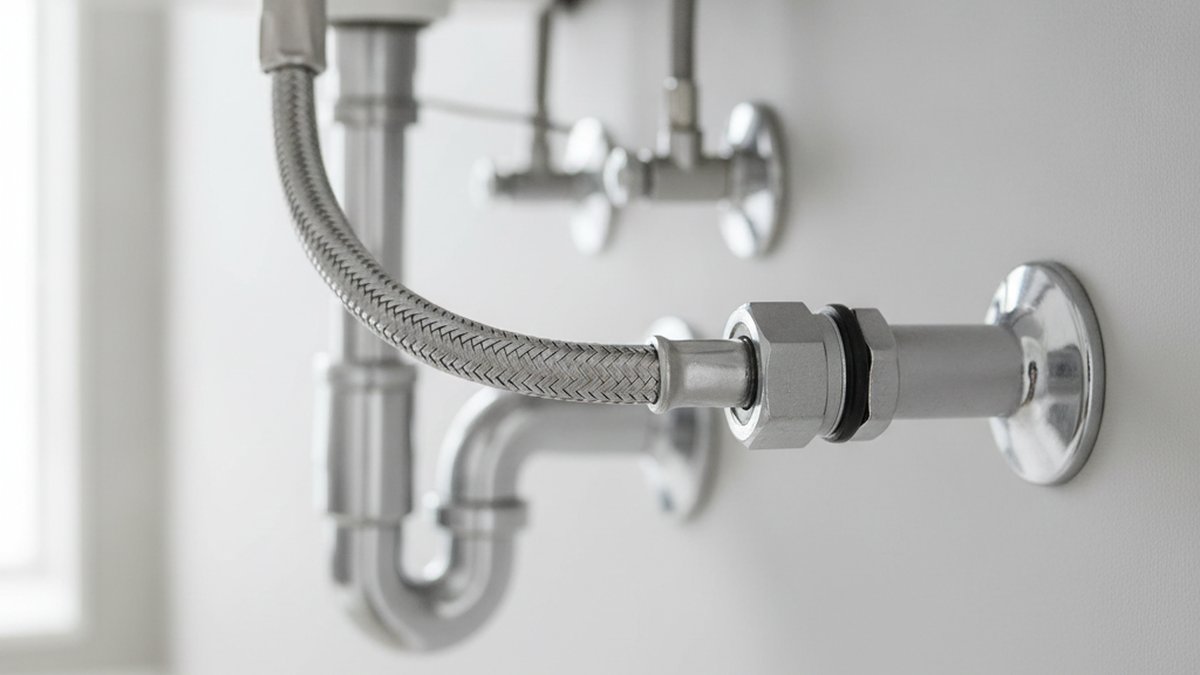
The common bathroom faucet supply line size trips up more DIYers than any other part of a faucet swap, because “size” actually means three different measurements at once: the fitting on the valve, the fitting on the faucet, and the length of the hose in between. Get any one of those wrong and you’re back at the hardware store with water shut off and a half-installed faucet on the counter. The good news is that residential bathrooms are remarkably standardized, so once you know what to look for, you can buy the right line the first time.
Below I’ll walk you through the exact sizes, why they’re the “standard,” how to measure yours in two minutes, and the handful of exceptions that catch people off guard.
What size is a standard bathroom faucet supply line?
A standard bathroom faucet supply line is 3/8″ OD compression on the valve side and 1/2″ FIP (female iron pipe) on the faucet side. That single combination — usually written on the packaging as “3/8″ comp × 1/2″ FIP” — covers the overwhelming majority of bathroom lavatory faucets sold in North America.
Here’s why those two numbers keep showing up. The shutoff valve (the little “angle stop” you turn to cut water to the faucet) almost always has a 3/8″ compression outlet in residential homes. Meanwhile, the older-style faucet inlet shanks were threaded to accept a 1/2″ FIP connector. So the classic supply line bridges those two: a 3/8″ compression nut on one end, a 1/2″ female threaded coupling on the other.
That said, faucet design has shifted. Many modern bathroom faucets — especially single-hole and widespread models — now come with pre-attached flexible supply tubes that already terminate in a 3/8″ compression nut. In that case you don’t buy a separate faucet-end fitting at all; you just connect the faucet’s own line straight to the 3/8″ valve. If you’re choosing between mounting styles, our guide to what “widespread faucet spread” actually means explains how the faucet configuration changes what’s already attached underneath.
What do “3/8 compression” and “1/2 FIP” actually mean?
They’re two totally different ways of connecting, which is exactly why people mix them up. Compression is a tube size — 3/8″ refers to the outside diameter (OD) of the little tube the fitting slides onto, and it seals with a brass ferrite ring, no threads on the tube itself. FIP is a threaded pipe size — 1/2″ FIP is a female thread that screws onto a matching 1/2″ male shank.
A quick way to keep them straight:
- Compression fitting: smooth tube + a nut that squeezes a metal ring to seal. Common on shutoff valves.
- FIP / IPS fitting: tapered pipe threads you screw together, usually with the seal built into the connector’s rubber cone washer. Common on older faucet inlets.
- The “3/8” in compression and the “3/8″ in a 3/8” FIP fitting are not the same diameter — one is tube OD, the other is a thread standard. This is the single biggest source of wrong purchases.
If any of the nuts under your sink are rusted or seized before you even get to the supply line, it’s worth reading how to remove an old faucet nut that’s rusted and stuck first, so you don’t round off a fitting mid-project.
How do I measure my existing supply line before I buy a new one?
Measure the fitting on each end, then the length. You want the connection type at the valve, the connection type at the faucet, and the total length you need to reach comfortably — with a little slack, never stretched tight.
Here’s the two-minute check, in order:
- Shut off the water at the two angle stops under the sink (turn clockwise until they stop). Open the faucet to release pressure.
- Look at the valve outlet. If it has a small nut over a smooth 3/8″ tube going up to the faucet, that’s a 3/8″ compression outlet — the standard. If it’s threaded, note whether it’s 1/2″ or 3/8″ threads.
- Look at the faucet end. Is there a separate connector screwing onto a threaded shank (usually 1/2″ FIP)? Or does a flexible tube come pre-attached out of the faucet body ending in a compression nut? Pre-attached lines mean you match the valve end only.
- Measure length from the valve outlet to where it meets the faucet, then add 1–2 inches of slack. Round up to the nearest common size: 12″, 16″, or 20″.
A handy trick if you’re unsure of thread size: a 3/8″ compression nut is roughly 9/16″ across the flats, and a 1/2″ FIP coupling opening is noticeably larger — about the width of a pencil plus a bit. When in doubt, take the old line to the store and match it physically.
Which supply line length should I buy — 12, 16, or 20 inches?
Buy the length that reaches with gentle slack — for most bathroom vanities that’s 16 inches. A 12″ line works for shallow vanities where the valve sits close under the faucet; 20″ is for deep cabinets, floor-mounted valves, or vessel sinks where the faucet body sits higher.
The rule that matters more than the exact number: never install a supply line pulled tight or kinked. A tight line stresses the fittings, and a kinked braided hose can fail at the crimp. Too long is safer than too short — a gentle curve is fine, a hard bend is not. If your valves sit low and your faucet sits high (common with single-hole chrome bathroom faucets and tall vessel styles), size up to 20″.
What are the different bathroom faucet supply line sizes and connections?
Here’s how the common combinations line up so you can match yours at a glance. The valve end is almost always 3/8″ compression in modern U.S. homes; the faucet end is what varies.
| Connection (Valve × Faucet) | Where you’ll see it | Typical length | Notes |
|---|---|---|---|
| 3/8″ compression × 1/2″ FIP | Most common — standard lavatory faucets with a threaded shank | 12″–20″ | The default “safe bet” for a bathroom faucet swap |
| 3/8″ compression × 3/8″ compression | Faucets with a 3/8″ tube inlet instead of a threaded shank | 12″–20″ | Double-check the faucet end isn’t threaded |
| 3/8″ compression × faucet-attached tube | Modern single-hole / widespread faucets with pre-installed lines | Line is built in | You only buy/match the valve connection |
| 1/2″ FIP × 1/2″ FIP | Older or threaded-outlet valves | 12″–20″ | Less common in newer homes |
| 1/2″ compression × 3/8″ comp | Valve fed by 1/2″ copper stub without an angle stop | Varies | Usually needs an adapter or a proper stop valve |
If your valve and faucet threads genuinely don’t match any standard line, an adapter is the clean fix — our explainer on the faucet adapters shoppers actually need to fit a hose or filter covers how thread adapters work without introducing leaks.
Should I use braided stainless steel or plastic (PEX/poly) supply lines?
Use braided stainless steel for a bathroom faucet in almost every case. Braided lines resist bursting, flex easily around tight cabinet corners, and carry the best failure ratings. Rigid plastic and old chrome-plated copper lines are cheaper but far less forgiving of small mistakes.
- Braided stainless steel: flexible, burst-resistant, forgiving on alignment. The default recommendation. Look for a burst rating and a warranty.
- PEX / poly flexible: inexpensive and fine for temporary or budget jobs, but check the connection quality.
- Rigid chrome-plated copper: looks tidy on exposed installs but must be bent precisely; unforgiving and easy to kink.
Whatever you choose, buy from a line that meets recognized plumbing standards (more on that below) — a $4 supply line failure can flood a vanity overnight.
Why does my new supply line still leak even though the size is right?
A correctly sized line usually leaks because of over-tightening, a missing or misaligned washer, or cross-threaded fittings — not because the size is wrong. Sizing gets you a connection; technique gets you a seal.
The most common culprits, in the order I’d check them:
- Over-tightening. Hand-tight plus a quarter to half turn with a wrench is enough. Cranking down harder crushes washers and cracks nuts — it causes leaks, it doesn’t cure them.
- Cross-threaded FIP connection. If the threaded end went on crooked, it won’t seal no matter how hard you tighten. Back it off and start the threads by hand.
- Missing or doubled cone washer. FIP-style connectors seal with a rubber cone washer inside the coupling — make sure there’s exactly one, seated correctly.
- Worn compression ferrule at the valve. Reusing an old ferrule on a compression joint often weeps. A fresh line with its own nut and ferrule usually solves it.
If the drip is coming from the faucet body rather than the supply connection, that’s a different repair — a leaking brand-name faucet like the ones covered in why a leaking American Standard bathroom faucet drips and how to fix it usually points to a worn cartridge or O-ring, not the supply line.
What if I just tiled and my valves are now recessed?
If new tile left your shutoff valves sitting deep in the wall, you don’t need a longer supply line — you need a valve extender or a repositioned stop. Trying to solve a recessed valve with an extra-long braided line usually creates a messy, kink-prone connection.
Fresh tile and thicker vanity backs are one of the sneaky reasons a “standard” supply setup suddenly won’t reach cleanly. The proper fix is often a small extension of the valve stem or a re-seated stop, which we walk through in what a faucet valve extender is and when you need one after you tile. Match your supply line to the new valve position after that, not the old one.
Do bathroom and kitchen faucet supply lines use the same size?
Mostly yes on the valve end, but not always on the faucet end. Both bathroom and kitchen residential valves typically use 3/8″ compression outlets. The difference is at the faucet: kitchen faucets more often come with pre-attached lines or larger inlets to feed a pull-down sprayer, while bathroom faucets more commonly use the 1/2″ FIP threaded shank.
So the short version: a 3/8″ compression valve connection is the near-universal constant in both rooms; the faucet-side fitting is where you have to check the spec sheet for your specific model. Kitchen setups also tend to run longer lines because of deeper base cabinets — the 20″ length shows up more often there than in a vanity.
A quick buyer’s checklist
Before you check out, confirm all four of these for a bathroom faucet supply line:
- Valve end: 3/8″ compression (standard) — verify yours isn’t threaded.
- Faucet end: 1/2″ FIP (most common) OR 3/8″ compression OR “not needed” if your faucet has attached lines.
- Length: 16″ for a typical vanity; size up to 20″ for tall or vessel faucets; 12″ only for shallow cabinets.
- Material: braided stainless steel with a stated burst rating and warranty.
Nail those four and you’ll have the right common bathroom faucet supply line size on the first trip — and a leak-free connection when you turn the water back on.
FAQ
Is 3/8 inch the standard bathroom faucet supply line size?
Yes — 3/8″ compression is the standard size at the shutoff-valve end for virtually all U.S. residential bathroom faucets. The faucet end is where it varies, most often 1/2″ FIP or a pre-attached 3/8″ compression tube.
What length supply line do I need for a bathroom faucet?
16 inches fits most standard vanities. Use 12″ for shallow cabinets where the valve sits just below the faucet, and 20″ for tall faucets, vessel sinks, or floor-mounted valves. Always leave a little slack — never install a line pulled tight.
Can I use a kitchen faucet supply line on a bathroom faucet?
Often yes on the valve end, since both usually use 3/8″ compression. But check the faucet-end fitting and length — kitchen lines are frequently longer and may have a different faucet connection or a pre-attached tube meant for a specific faucet.
Why is my supply line leaking if the size is correct?
Right size, wrong technique. The usual causes are over-tightening, a cross-threaded FIP connection, a missing or doubled cone washer, or a reused compression ferrule. Hand-tighten, then add only a quarter to half turn with a wrench.
What does FIP mean on a supply line?
FIP stands for Female Iron Pipe — a threaded fitting that screws onto a matching male pipe shank. On bathroom faucets, 1/2″ FIP is the common thread on the faucet-inlet end, sealed with a built-in rubber cone washer rather than a compression ring.
About the author: This guide was written by the wigafaucet fixtures team, drawing on hands-on installation of residential and light-commercial bathroom faucets. At wigafaucet, we design and pressure-test faucet supply connections to recognized plumbing standards (such as ASME/ANSI and NSF/ANSI-listed lead-free requirements), and back our fixtures with a manufacturer warranty. When you’re choosing a supply line, we always recommend a braided stainless line with a published burst rating over the cheapest option on the shelf — it’s the least expensive insurance in your bathroom.