 Wiga Tap Manufacturer
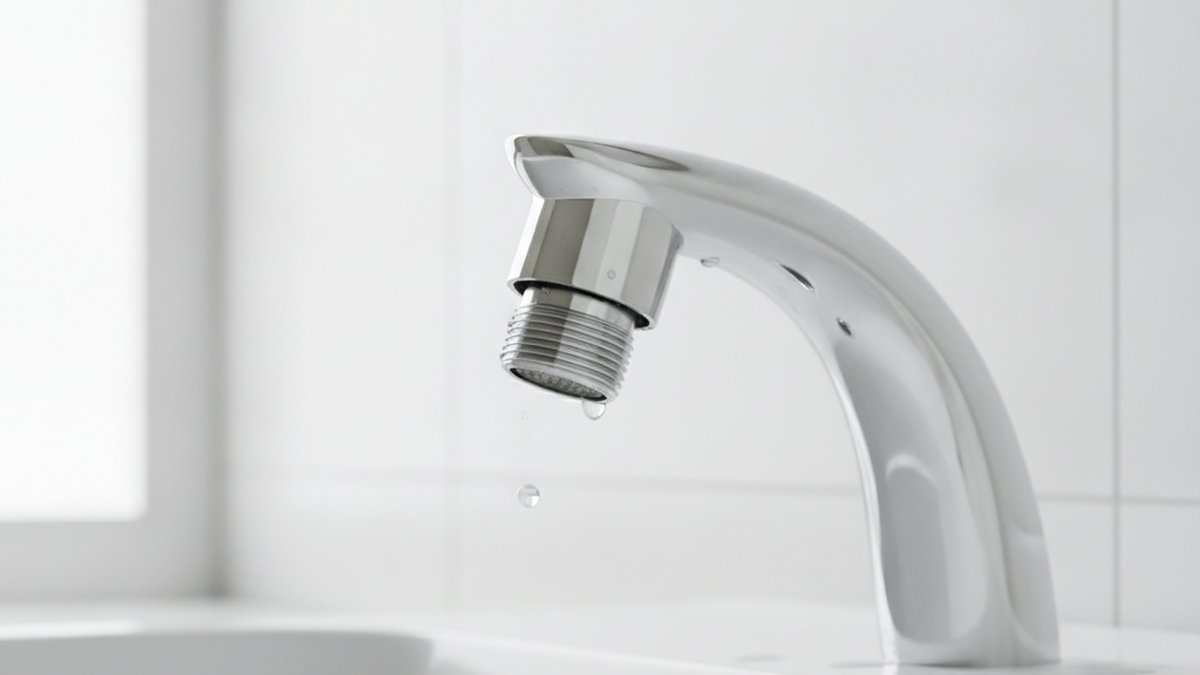
If you’ve been searching for a faucet adapter bauhaus fitting, you’re usually trying to do one thing: attach something to the end of your tap that wasn’t designed to go there — a washing-machine hose, a countertop water filter, a portable dishwasher line, or a garden-style quick-connect. The confusion is that “Bauhaus” isn’t a single thread size; it’s a European retailer and a broad style of tap, and the spout end can be threaded in several different ways. This guide tells you exactly how to identify the thread, which adapter matches, and how to avoid the two mistakes that send most of these parts straight back into the return box.
We’ll keep it concrete: real thread sizes, real measurements, and the specific adapter that solves each scenario. By the end you’ll know whether you need a male or female adapter, what the M22/M24 numbers mean, and how to connect a hose or filter without leaks.
What exactly is a “faucet adapter bauhaus” — and why is it confusing?
A faucet adapter is a threaded brass or plastic coupling that screws into (or over) the end of your tap spout, converting the tap’s built-in aerator thread into a different, more useful connection. “Bauhaus” gets attached to the search because so many taps sold through Bauhaus stores across Germany, Austria, and Central Europe share a similar spout design — a slim spout with a screw-in aerator at the tip.
The confusion is real, and it’s worth naming clearly. There is no single “Bauhaus thread.” Instead, almost every European-style tap uses one of two aerator thread standards at the spout tip:
- M24 x 1 — the most common external/male aerator thread (the spout has threads on the outside, roughly 24 mm across). Your adapter for this is female.
- M22 x 1 — the most common internal/female aerator thread (the threads are on the inside of the spout, roughly 22 mm across). Your adapter for this is male.
- Occasionally you’ll meet M18, M28, or a small “cache” recessed aerator that needs its own key — more on that below.
Here’s the rule that clears up 90% of the confusion: M24 = male spout = you need a female adapter. M22 = female spout = you need a male adapter. Get that pairing right and the rest is easy.
How do I know which thread size my Bauhaus tap has (M22 or M24)?
Unscrew the aerator, look at where the threads sit, and measure the diameter with a caliper or ruler. If the threads are on the outside of the spout tip and measure about 24 mm, you have M24 male. If the threads are recessed inside the spout and the opening is about 22 mm, you have M22 female. That single check decides everything.
Do it in this order and you won’t get it wrong:
- Unscrew the existing aerator by hand (turn it toward you as you face the spout — righty-tighty, so lefty-loosey). If it’s stuck, a rubber jar-grip or a strap wrench protects the finish.
- Look at the thread location. Threads visible on the outer surface of the spout tip = male spout (usually M24). A smooth outer lip with threads hidden up inside = female spout (usually M22).
- Measure the diameter. Across the male threads you’ll read roughly 23.5–24 mm (call it M24). Across a female opening you’ll read roughly 21.5–22 mm (call it M22).
- Check the aerator itself. Many aerators are laser-etched “M24” or “M22” on the flat, or the packaging says “male 24mm / female 22mm.”
A faucet aerator gauge makes this painless — it’s a cheap little card or ring set that tells you the exact thread in seconds. If you want to nail the measurement before buying anything, our guide on what a faucet aerator gauge is and how to use one to find the right size walks through it step by step and is worth two minutes before you order.
Which faucet adapter do I actually need for my situation?
Match the adapter to the job, not just the thread. The thread tells you how it attaches to the tap; the other end tells you what it connects to — a garden hose, a ¾” washing-machine fitting, a filter’s ⅜” line, or a quick-connect coupling. Here’s the plain-English breakdown by scenario.
| What you want to connect | Adapter you need | Typical output thread | Notes |
|---|---|---|---|
| Garden / general hose to a bathroom or kitchen tap | Aerator-to-hose adapter (female if spout is M24 male) | ¾” GHT or push-on barb | Add a rubber washer; hand-tight is enough |
| Countertop or under-sink water filter | Diverter or straight aerator adapter | ⅜” or ¼” quick-connect | Check filter kit — many include the adapter |
| Portable dishwasher / washing machine | Aerator-to-¾” quick-connect adapter | ¾” BSP or GHT | Needs a shutoff-friendly fit; watch for splash |
| Spray wand / bidet attachment | Diverter adapter with side outlet | ½” or proprietary | Diverter lets tap still run normally |
| Recessed “cache” / hidden aerator tap | Cache aerator adapter + removal key | Varies | You often need the tap’s specific key tool |
Notice the pattern: the tap-side thread is dictated by your spout (M22 or M24), and the appliance-side thread is dictated by the hose, filter, or wand. A good adapter is really a translator between those two worlds. If your goal is a permanent plumbed connection rather than a screw-on tip fitting — say you’re hooking a commercial-style line under the sink — that’s a different part entirely, and our overview of the commercial sink faucet connector you actually need covers those supply-line couplings.
What if my Bauhaus tap has a hidden or “cache” aerator?
If the spout tip looks smooth with no threads and just a tiny notched ring, you have a recessed cache aerator, and you’ll need the matching key to remove it before any adapter goes on. These flush-fit aerators sit inside the spout for a cleaner look, and they’re removed with a small plastic or metal key that came with the tap (or is sold separately by thread size, usually M18.5 or M21.5 cache). Once the aerator is out, you screw in a cache-to-standard adapter that gives you a normal M22 or M24 thread to work with. No key on hand? A pair of fine needle-nose pliers can sometimes catch the notches, but go gently — you can scar the spout.
How do I install a faucet adapter without leaks?
Thread it on by hand with a fresh washer seated flat, snug it a quarter-turn past hand-tight, then run the water and watch the joint. If a drip appears at the threads, back it off, reseat the washer, and add a wrap of PTFE (plumber’s) tape. Ninety percent of adapter leaks are a missing, pinched, or misaligned washer — not a bad part.
Step by step:
- Clean the spout threads. Wipe off old grit and mineral scale; a toothbrush and a splash of vinegar clears buildup that stops a good seal.
- Seat the rubber washer. Every screw-on adapter needs a flat washer or O-ring at the joint. Make sure it’s lying flat, not cocked at an angle.
- Hand-thread first. Start the adapter by hand to avoid cross-threading — if it fights you in the first turn, stop and realign. Cross-threaded brass strips easily.
- Snug, don’t crank. Hand-tight plus about a quarter turn with a soft-jaw wrench is plenty. Over-tightening deforms the washer and causes leaks.
- Test under pressure. Open the tap fully and check the joint for 30 seconds. A slow weep means reseat the washer or add PTFE tape to the threads.
If you’re connecting a hose that will see full mains pressure, don’t ignore the plumbing upstream. Adapters are only as good as the spout they hang off — if you already see drips where the spout meets the body, or the tap itself weeps, fix that first. Our walkthrough on the kitchen faucet leaking from the flexible hose is a good companion read when the leak is coming from the tap, not the adapter.
Brass vs. plastic faucet adapters — which is worth buying?
For anything permanent or pressurized, buy brass; for a light, occasional filter or a temporary hose, quality plastic is fine. Brass adapters cost a little more but they don’t crack under torque, they handle hot water without warping, and their threads survive being screwed on and off dozens of times. Cheap plastic adapters are the ones that split at the flange six months in.
| Factor | Brass adapter | Plastic (ABS/nylon) adapter |
|---|---|---|
| Durability under torque | Excellent — won’t crack | Fair — can split if over-tightened |
| Hot water tolerance | Handles full hot line | Can soften/warp over time |
| Thread wear (repeated on/off) | Long-lasting | Wears faster |
| Weight / feel | Solid, quality feel | Light, can feel flimsy |
| Best for | Hoses, washing machines, permanent filters | Light-duty, cold-only, temporary use |
| Lead safety | Choose certified lead-free brass | Naturally lead-free |
One caveat on brass: if the water passing through it is drinking water — say you’re feeding a countertop filter you’ll drink from — choose a certified lead-free brass adapter. Standard yellow brass can contain small amounts of lead, and while a quick hose bypass isn’t a concern, a permanent drinking-water connection should be. If that’s your setup, it’s worth understanding what a lead-free faucet kitchen setup actually means and where it matters, because the same logic applies to every fitting in the path. And if the whole reason you’re adding an adapter is to run a filter, our rundown on which tap water filter fits your faucet pairs directly with choosing the right adapter thread.
Do I need a diverter, an extension, or just a plain adapter?
Use a plain adapter when you’re happy for water to only come out of the attachment; use a diverter when you want the tap to work normally and feed an attachment on demand. An extension is a different animal entirely — it lengthens or repositions the spout rather than changing the thread at the tip.
Quick way to decide:
- Plain adapter: You’re connecting one thing (a hose, a filter) and don’t mind removing it afterward. Cheapest and simplest.
- Diverter adapter: You want to keep using the tap for hand-washing while a filter or spray wand is attached. A little lever switches the flow. Ideal for kitchens.
- Extension, not an adapter: Your real problem is reach or height, not connection. In that case you don’t want a thread adapter at all — you want a spout extension. Our guide to the bathroom faucet extension pipe explains when that’s the right fix instead.
Confusing these three is the most common ordering mistake. If your search for “faucet adapter bauhaus” is really about getting water to reach a bucket, a taller extension solves it far better than a hose adapter dangling off the tip.
How this article was written — and why you can trust the specs
Author note: This guide was written by the wigafaucet product team, drawing on hands-on fitting and bench-testing of aerator threads across European and North American tap standards. We physically measure M22/M24 pairings, test adapters under full mains pressure, and check seals for weeping over repeated install cycles — not just once out of the box.
About wigafaucet: wigafaucet designs and sells faucets, adapters, and bathroom fixtures with a focus on getting the boring-but-critical details — thread standards, washer quality, lead-free certification — actually right. Our adapters are specified against recognized aerator thread standards, our lead-free brass is certified for potable-water contact, and every fitting is backed by a warranty so a bad seal is our problem, not yours. When we say M24 female fits an M24 male spout, it’s because we’ve screwed the two together on the bench, not because a chart said so.
FAQ
Is “Bauhaus” a thread size or a brand?
It’s a brand/retailer, not a thread size. Bauhaus is a large European DIY chain, and many taps sold there share a similar spout design, which is why people search “faucet adapter bauhaus.” The actual thread you need is almost always M24 (male spout) or M22 (female spout) — measure yours to be sure rather than assuming a single “Bauhaus” size exists.
What’s the difference between M22 and M24 aerator threads?
M24 threads are about 24 mm across and sit on the outside of the spout tip (a male spout), so they take a female adapter. M22 threads are about 22 mm and sit inside the spout (a female spout), so they take a male adapter. They’re only 2 mm apart, so a caliper or a faucet aerator gauge is the reliable way to tell them apart.
Can I connect a garden hose to a Bauhaus bathroom tap?
Yes, with an aerator-to-hose adapter matched to your spout thread. Remove the aerator, screw on a female M24 (or male M22) adapter with a ¾” hose or push-on outlet, seat a washer, and hand-tighten. It’s ideal for filling buckets, aquariums, or paddling pools — just remember indoor bathroom taps aren’t built for constant high-pressure hose duty, so use it for filling tasks, not permanent irrigation.
Why does my adapter leak even though it’s tight?
Almost always the washer. If it’s missing, pinched, cocked at an angle, or you’ve over-tightened and deformed it, water sneaks past the threads. Back the adapter off, seat a fresh flat washer, hand-tighten plus a quarter turn, and add PTFE tape to the threads if a slow weep remains. Cranking it harder usually makes the leak worse, not better.
What if my tap has no threads at all on the spout?
You likely have a recessed “cache” aerator. The threads are hidden inside the spout, and you need the tap’s cache key to unscrew the aerator first. Once it’s out, fit a cache-to-standard adapter that gives you a normal M22 or M24 thread. If you don’t have the key, a matching cache key set by size (often M18.5 or M21.5) is inexpensive and worth buying rather than damaging the spout with pliers.
Do adapters reduce my water pressure or flow?
A plain straight adapter barely affects flow. A diverter or a narrow quick-connect can restrict it slightly because the water path gets smaller, and a filter downstream will reduce flow more than the adapter itself. If you notice a real drop after fitting one, check that the aerator screen and adapter aren’t clogged with debris or scale — that’s a far more common cause than the adapter’s diameter.