 Wiga Tap Manufacturer
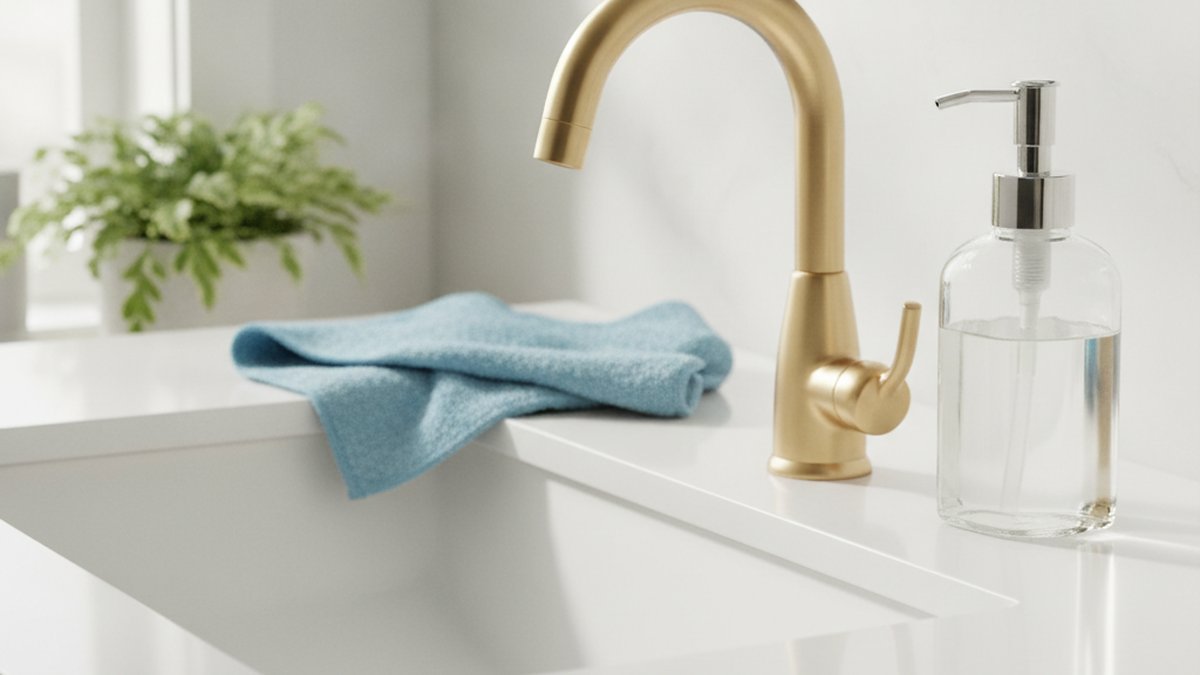
If you just installed a gorgeous warm-gold fixture and typed “how to clean kohler brushed gold faucets” into Google or asked your phone out loud, you’re asking exactly the right question — because the wrong cleaner can permanently haze that finish in a single wipe. The short version: brushed gold is a delicate-looking finish protected by a surprisingly tough factory coating, but that coating hates acid and abrasion. Treat it like a phone screen, not a pot, and it’ll look brand new for years. Below I’ll walk you through the exact routine, what to keep out of the cabinet, how to handle hard-water spots and toothpaste splatter, and when to worry that a “stain” is actually damage.
What exactly is Kohler’s brushed gold finish — and why does that change how you clean it?
Kohler’s brushed gold (marketed as Vibrant Brushed Moderne Brass and similar Vibrant tones) is not paint and it’s not solid gold — it’s a PVD finish, meaning “physical vapor deposition.” A microscopically thin layer of metal is bonded to the faucet in a vacuum chamber, which makes it far more scratch- and tarnish-resistant than old lacquered brass. That’s the good news: Kohler backs its Vibrant finishes with a lifetime limited warranty against tarnishing, corrosion, and discoloration under normal residential use.
The catch is that PVD is thin and it has a matte, “brushed” texture with tiny directional grooves. Acids (vinegar, lemon, CLR, many “descaling” sprays) can etch it, and abrasives (baking soda paste, Magic Eraser, scouring pads, gritty “polishing” creams) physically wear the top layer and leave shiny scuff marks that never blend back in. So your whole cleaning strategy is built around one rule: gentle and non-acidic, always. If you understand the finish, the routine is easy.
What’s the safest everyday way to clean a brushed gold faucet?
The safest everyday method is warm water and a soft microfiber cloth — that’s genuinely it for most days. Wipe the faucet down, then dry it with a second dry cloth so no water sits on the surface. Ninety percent of “my faucet looks dull” complaints are just dried water spots, not damage, and daily drying prevents them entirely.
Here’s the simple daily-to-weekly routine I recommend to customers:
- Daily (10 seconds): after the last use, wipe the faucet and handle with a dry or barely damp microfiber cloth to remove water and toothpaste splash.
- Weekly: add one drop of pH-neutral dish soap to warm water, dip the cloth, wipe the whole fixture including the base and handle joints, then rinse the cloth and wipe again with clean water.
- Always finish by drying. Buff dry with a clean, dry microfiber cloth. This is the single most important step for keeping the sheen even.
- Detail the tight spots: use a soft toothbrush (not stiff) or a cotton swab to lift grime from around the handle base and spout collar.
That’s the entire maintenance program for a Kohler brushed gold faucet. If someone’s selling you a “brushed gold restorer,” you almost certainly don’t need it — and it may do harm.
Which cleaners will ruin brushed gold — and which are safe? (the do/don’t table)
The fastest way to protect your faucet is to memorize what stays out of reach of it. Anything acidic, abrasive, or ammonia/bleach-based is off the table. Anything pH-neutral and non-scratching is fine. Here’s the cheat sheet:
| Product / method | Safe on brushed gold? | Why |
|---|---|---|
| Warm water + microfiber cloth | ✅ Yes — daily | No chemicals, no abrasion; removes most residue |
| Drop of pH-neutral dish soap in water | ✅ Yes — weekly | Cuts grease and soap scum without etching |
| Isopropyl alcohol (small spot, diluted) | ⚠️ Occasionally | OK for stubborn smudges; test first, rinse and dry after |
| White vinegar / lemon juice | ❌ Never | Acid etches and dulls PVD; leaves permanent cloudy patches |
| CLR, Lime-A-Way, descalers | ❌ Never | Strong acids strip the finish fast |
| Baking soda paste | ❌ Never | Mildly abrasive — micro-scratches the brushed texture |
| Magic Eraser / melamine pad | ❌ Never | Acts like ultra-fine sandpaper; burnishes shiny scuffs |
| Bleach / ammonia / glass cleaner (Windex) | ❌ Never | Harsh chemicals can discolor and cloud the coating |
| Metal polish / brass polish / Barkeepers Friend | ❌ Never | Designed to abrade — wrong for a factory-coated matte finish |
Notice the pattern: everything in the “yes” column is boring and cheap, and everything in the “never” column is something marketed as a powerful cleaner. With brushed gold, powerful is the problem. If you’ve dealt with corroded fixtures before, you know how ugly it gets — our guide on how to fix rusty bath taps covers what to do when a finish is already compromised, but the whole point here is to never reach that stage.
How do you get hard-water spots and mineral buildup off without using vinegar?
For hard-water spots, skip the vinegar and instead do a longer soak with soapy warm water and gentle wiping — and if that’s not enough, lay a warm, wet, soapy cloth over the spot for 10–15 minutes to soften the minerals, then wipe. The reason people reach for vinegar is that acid dissolves calcium fast, but on brushed gold you’re trading a water spot for a permanent dull patch. Patience beats acid here.
Step by step for stubborn mineral spots:
- Soak a microfiber cloth in warm water with a drop of dish soap and drape it over the crusty area for 10–15 minutes so the minerals soften.
- Wipe gently in the direction of the brushed grain — never scrub in circles.
- For spots right at the aerator tip, unscrew the aerator and soak the aerator only (usually plastic or a different, more durable metal) separately; you can be more aggressive with that removable part.
- Rinse with clean water and buff completely dry.
The real fix for recurring buildup is prevention: dry the faucet after use and, if your home has genuinely hard water, consider a whole-home or point-of-use softener. Hard water is also what shortens the life of internal parts, so it’s not just cosmetic — mineral scaling is a common culprit behind drips and stiff handles, which we cover in our step-by-step guide to fixing a kitchen faucet leak.
How do you clean a brushed gold kitchen faucet vs. a bathroom faucet?
The finish care is identical, but a kitchen faucet gets grease and food residue while a bathroom faucet gets toothpaste, soap scum, and skincare products — so the difference is what you’re dissolving, not how. In the kitchen, a drop more dish soap handles cooking grease; in the bathroom, warm water usually lifts toothpaste and hand-soap film as long as you don’t let it dry on.
A few faucet-specific pointers:
- Pull-down spray heads: wipe the hose and spray head too — dried water on a gold spray head is the most visible spot in the whole kitchen. Don’t let the coiled hose drag against grit in the cabinet.
- Bathroom handle bases: hair products and hairspray overspray build a sticky film; a soapy cloth and a soft toothbrush around the base handles it.
- Spray nozzles/rubber jets: on shower and spray heads, you can gently rub the rubber nozzle tips with a fingertip to dislodge scale — that rubber is not coated, so it’s forgiving.
If you’re weighing a brushed gold finish against something lower-maintenance for a heavy-use kitchen, it’s worth comparing finishes honestly. Our breakdown of the brushed nickel tap mixer is a good read — brushed nickel hides water spots a bit more forgivingly, though brushed gold’s warmth is hard to beat.
What about brushed gold vs. other finishes — is gold really harder to maintain?
Brushed gold is not meaningfully harder to maintain than any other modern PVD finish — brushed nickel, matte black, and chrome all follow the same “no acid, no abrasive, dry after use” rule. The myth that gold is high-maintenance comes from old lacquered or plated brass that tarnished; today’s Vibrant PVD gold doesn’t tarnish. What differs is how visibly each finish shows spots and fingerprints.
| Finish | Shows water spots | Shows fingerprints | Care rules |
|---|---|---|---|
| Brushed gold (Vibrant) | Moderate | Low (matte hides them) | No acid/abrasive; dry after use |
| Polished chrome | High | High | No abrasive; dries spotty |
| Brushed nickel | Low | Low | No acid/abrasive; very forgiving |
| Matte black | High (white spots) | Low | No acid/abrasive; dry after use |
So the honest answer: brushed gold sits in the easy-to-moderate range. Its matte texture actually hides fingerprints better than shiny chrome. If you’re still deciding on a fixture, our comparison of a chrome bathroom faucet in a one-hole setup shows how much more forgiving matte finishes are about smudges than polished ones.
Can you fix a brushed gold faucet that’s already dull, cloudy, or scratched?
If the dullness is water-spot film or soap scum, yes — a proper soapy soak and dry will bring the shine back. But if the finish is etched from acid or scuffed from an abrasive pad, no — that’s physical damage to the PVD layer and there is no home “polish” that restores it, because polishing removes coating rather than adding it. This is the hard truth that saves people from making it worse.
How to tell which you’ve got: wet the area and look. If it looks normal when wet and dull when dry, it’s mineral/soap film — cleanable. If it looks dull or hazy even when wet, or you can see directional shiny streaks, the coating itself is damaged. For finish damage, your options are living with it, or replacement — and if it happened under normal use within warranty, contact Kohler, because Vibrant finishes carry a lifetime limited warranty against wear-through under normal residential conditions. Keep your proof of purchase; warranty claims almost always require it.
What tools and supplies should you keep on hand?
You need almost nothing, which is the whole appeal. Here’s the complete kit:
- 2–3 clean microfiber cloths (one wet-work, one for drying/buffing)
- A pH-neutral dish soap (plain, non-abrasive, no citrus “power” additives)
- A soft-bristle toothbrush for handle joints and the spout collar
- Cotton swabs for tight seams
- Optional: a small amount of isopropyl alcohol for the occasional stubborn smudge (test first)
What should not be in that kit: any spray with “lime,” “calcium,” “rust,” or “power” on the label, any scouring pad, any metal or brass polish, and any glass cleaner. Keep those on the other side of the house.
FAQ
Can I use vinegar to clean my Kohler brushed gold faucet?
No. Vinegar is acidic and will etch and dull the PVD brushed gold finish, often permanently and unevenly. Use warm water and a drop of pH-neutral dish soap instead, and dry the faucet afterward. If you have hard-water buildup on the removable aerator, you can soak that part alone since it’s usually not gold-coated.
How do I remove toothpaste and water spots from a brushed gold bathroom faucet?
Wipe with a warm, damp microfiber cloth as soon as you notice them; for dried-on spots, drape a warm soapy cloth over the area for 10 minutes to soften it, then wipe with the grain and buff dry. Daily drying after use prevents almost all spotting in the first place.
Will fingerprints show on brushed gold faucets?
Less than you’d think. The matte “brushed” texture scatters light, so it hides fingerprints far better than polished chrome or polished gold. A quick dry-cloth wipe removes any that do appear — no cleaner needed.
Is it safe to use a Magic Eraser or Barkeepers Friend on brushed gold?
No. Melamine “erasers” and cleansers like Barkeepers Friend are mild abrasives. On a matte PVD finish they burnish shiny scuff streaks into the surface that can’t be blended back. Stick to a soft microfiber cloth and gentle soap only.
Does cleaning the wrong way void the Kohler finish warranty?
Kohler’s Vibrant finishes carry a lifetime limited warranty against tarnish and corrosion under normal residential use, but damage caused by harsh or abrasive cleaners is considered misuse and typically isn’t covered. Following the gentle routine here both protects the finish and keeps you within warranty terms — and always keep your receipt.
How often should I actually clean it?
A 10-second dry wipe after daily use plus one gentle soapy cleaning per week is plenty for most homes. If you have hard water or a busy household, drying the faucet after each use matters more than cleaning it more often.
The bottom line, and a note on where to buy
Cleaning Kohler brushed gold faucets comes down to one habit and one rule: dry it after use, and never touch it with anything acidic or abrasive. Do that and the finish outlasts most of the room. If you’re shopping for a brushed gold fixture and worried about durability, look for genuine PVD-coated finishes with a published finish warranty — the coating quality is what separates a faucet that stays beautiful from one that hazes in a year. Not sure a coated brass or zinc body is right for your setup? Our comparison of zinc alloy vs. stainless steel faucet bodies explains what’s underneath the finish and how it affects longevity.
About the author & brand: This guide was written by the Wigafaucet product team, who spec, pressure-test, and finish-test faucets to industry standards (including lead-free compliance and PVD finish durability testing) before they reach customers. Wigafaucet (wigafaucet.com) has helped thousands of homeowners choose and care for faucets and bathroom fixtures, and every product we sell is backed by manufacturer warranty support and real human help when you need it. When in doubt about your specific model, check your Kohler care card or reach out — a two-minute question beats a ruined finish.