 Wiga Tap Manufacturer
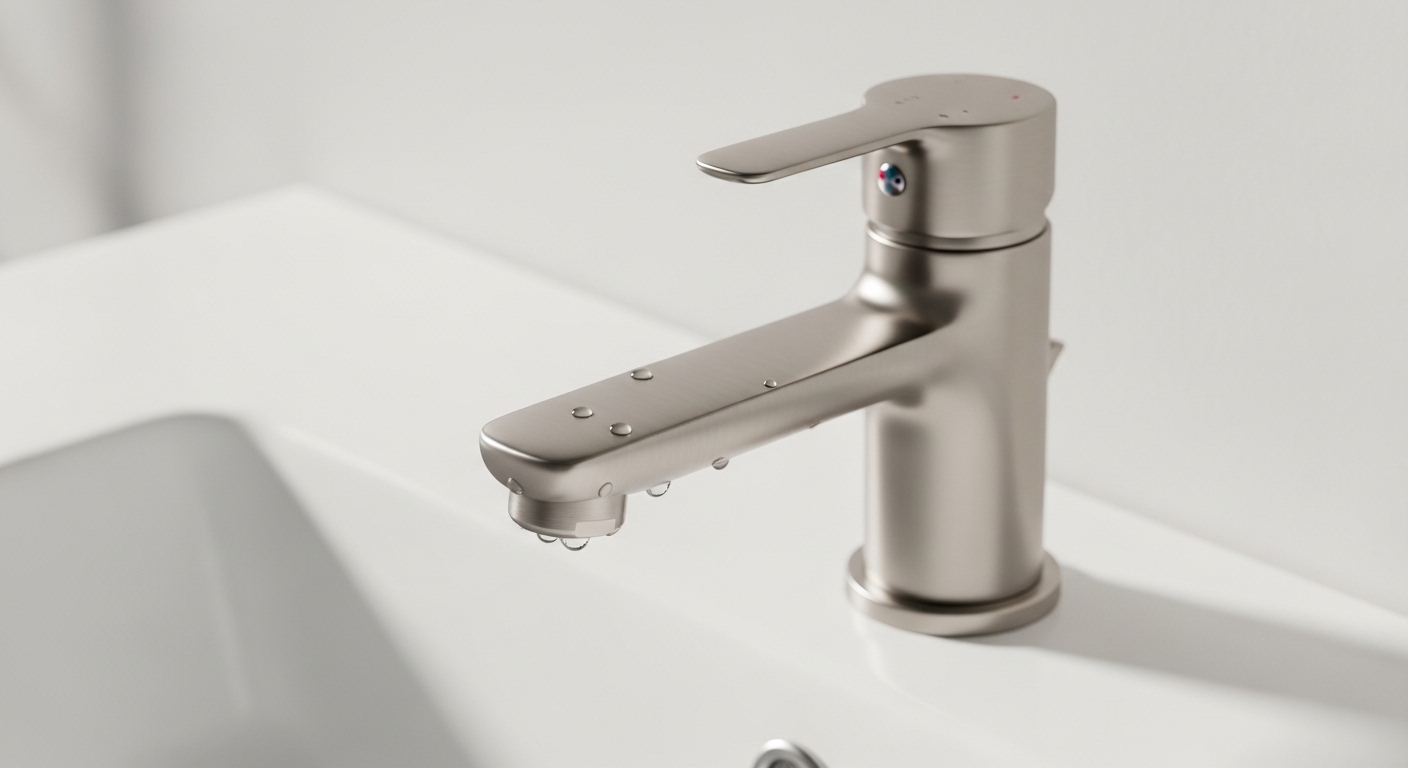
A brushed nickel tap mixer is a single-body faucet that blends hot and cold water through one lever (or two handles feeding one spout), finished in a lightly textured, matte-satin nickel plating rather than the mirror-bright shine of polished chrome. It’s the finish most people quietly wish they’d chosen after living with chrome for a year and wiping smudges off it every single day. Below, we answer the real questions shoppers actually ask before buying one — durability, cleaning, price, matching, and how to avoid the low-quality units that flake within two years.
What exactly is a brushed nickel tap mixer, and how is it different from chrome?
A brushed nickel tap mixer is a mixer faucet whose surface is nickel-plated and then mechanically brushed to create a fine, uniform grain that scatters light instead of reflecting it. That’s the core difference from chrome: chrome is a bright, cold, mirror-like blue-silver, while brushed nickel is a warmer, softer gray with a slight golden undertone.
The “mixer” part just means it combines hot and cold in a single spout. You’ll see two main mechanisms:
- Single-lever mixers — one handle controls both temperature (left/right) and flow (up/down) via a ceramic disc cartridge. The most popular style for modern basins and kitchens.
- Dual-handle mixers — separate hot and cold handles that meet at one spout, common on three-hole basins and traditional or bridge-style designs.
Under the finish, the body is almost always solid brass (the good ones) or, on cheaper units, zinc alloy. The brass version is what you want — it won’t crack under thermal stress and holds plating far better. The satin surface is the practical hero here: because it diffuses light, it visually “swallows” the water spots, toothpaste splatter, and fingerprints that scream at you off a polished chrome tap.
Is brushed nickel actually better than chrome for a busy bathroom?
For most households, yes — brushed nickel is easier to live with than chrome because it hides limescale, hard-water spotting, and fingerprints, so it looks clean with far less wiping. Chrome looks flawless for about ten minutes after you polish it, then shows every drop. Brushed nickel forgives you.
That said, “better” depends on your priorities. Here’s the honest trade-off:
| Factor | Brushed Nickel Tap Mixer | Polished Chrome | Matte Black |
|---|---|---|---|
| Hides water spots | Excellent | Poor | Good (shows white limescale) |
| Hides fingerprints | Excellent | Poor | Fair |
| Warmth of look | Warm, soft | Cool, bright | Bold, modern |
| Corrosion resistance | Very high | High | High (coating-dependent) |
| Cleaning effort | Low | High | Medium |
| Typical price range | $60–$200 | $40–$150 | $80–$220 |
| Matches other fixtures | Very easy (neutral) | Easy | Needs intentional styling |
Chrome still wins on raw price and on a bright, clinical, ultra-modern look. But if you have hard water or a bathroom that gets heavy daily use — kids, guests, morning rush — brushed nickel’s low-maintenance sheen usually pays for itself in saved elbow grease. It’s the same reasoning that pushes many buyers toward a stainless steel faucet for a bathroom sink: satin-finish neutrals just cope with real life better.
Does brushed nickel show water spots and hard water stains?
Barely — and that’s its single biggest selling point. The brushed grain diffuses light, so mineral spotting and dried droplets blend into the texture instead of standing out. You’ll still get limescale buildup in very hard water areas over months, but it’s far less visible day to day than on chrome.
If you’re on hard water, the finish isn’t your only concern — the aerator and cartridge are where scale actually clogs things. It’s worth understanding your water and picking the right aerator; our guide on the faucet aerator gauge walks through how to find the right size and flow so scale doesn’t strangle your pressure over time.
How much should a good brushed nickel tap mixer cost in 2026?
Budget $60–$120 for a solid mid-range brushed nickel tap mixer, and $120–$200 for a premium one with a solid brass body, a German or Japanese ceramic cartridge, and a real PVD-grade finish. Anything under about $40 is almost always zinc-bodied with electroplated nickel that will pit and flake within a year or two.
Here’s what your money actually buys as you move up the range:
- $25–$45 (avoid for daily-use taps): Zinc alloy body, thin electroplated finish, generic cartridge. Fine for a rarely used guest cloakroom, risky anywhere else.
- $60–$120 (the sweet spot): Solid brass body, ceramic disc cartridge rated for 500,000+ cycles, proper brushed nickel or PVD coating. This is where most buyers should shop.
- $120–$200 (premium): Heavier solid brass, top-tier cartridge, PVD (physical vapor deposition) finish that’s bonded at a molecular level and far more scratch- and tarnish-resistant, plus longer warranties.
- $200+ (designer/luxury): Brand-name design, flow-optimized aerators, sometimes touch or sensor tech.
The number that matters most isn’t the finish — it’s the cartridge. A ceramic disc cartridge is what stops your tap from dripping, and it’s the part that fails first. If a listing won’t tell you the cartridge type, treat that as a red flag. When a cheaper mixer does start dripping, it’s usually a cartridge swap, not a whole new tap — the same logic covered in our piece on the single handle faucet cartridge.
Will a brushed nickel tap mixer match my other fixtures and hardware?
Almost always, yes — brushed nickel is one of the most forgiving neutral finishes there is, and it pairs cleanly with white, gray, wood, marble, and warm-toned palettes. It sits comfortably next to stainless steel appliances and coordinates with satin nickel cabinet handles, towel bars, and shower fittings without clashing.
A few practical matching rules:
- Don’t mix brushed nickel with polished chrome in the same sight line — the warm satin and cold mirror finishes fight each other. Pick one and commit within a single room.
- Brushed nickel and stainless steel are close cousins and generally look intentional together, which is why it’s such a common kitchen choice.
- Brushed nickel and matte black can work as a deliberate two-tone look, but only if you repeat both finishes at least twice in the room (e.g., nickel tap + black shower frame, black tap + nickel accessories).
- Warm stone and wood vanities love brushed nickel’s golden undertone; it feels softer than chrome against natural materials.
If you’re leaning toward a warmer metal instead, it’s worth seeing how bolder finishes read in a real space — our look at whether a white kitchen sink with a copper faucet actually works covers the same “will this date badly?” question from the warm-metal side.
Is brushed nickel going out of style, or is it a safe long-term choice?
It’s a safe long-term choice. Brushed nickel has been mainstream for over two decades precisely because it’s a neutral — and neutrals don’t date the way trend finishes do. Matte black and brushed brass are hotter right now, but they’re higher-risk if you plan to sell or re-decorate; brushed nickel is the finish that looks “correct” in almost any era.
How do I install a brushed nickel tap mixer myself?
Most single-lever brushed nickel tap mixers install in 30–60 minutes with basic tools, because they use a standard bottom-mount fitting that drops through the tap hole and clamps from below. You do not need a plumber for a straightforward like-for-like swap.
The basic sequence:
- Shut off the water at the isolation valves under the basin (or the main stopcock if there aren’t any), then open the old tap to drain the line.
- Disconnect the supply hoses and the mounting nut under the basin, and lift the old tap out.
- Feed the new mixer’s flexible tails and threaded stud through the tap hole, seating the rubber or foam gasket on top.
- Tighten the mounting nut/plate from below — snug but don’t overtighten, which can crack a ceramic basin.
- Connect the flexi hoses to your isolation valves, using PTFE tape or the supplied washers.
- Turn the water back on slowly, check every joint for drips, and run the tap for a minute to clear debris from the aerator.
The one thing beginners get wrong: matching the connection thread. Basin mixers commonly use 3/8″ flexi tails, but your isolation valves might be 1/2″ or a compression size. If the threads don’t match, you’ll need an adapter — and getting the wrong one means a second trip to the store. Our guide to the faucet hook up adapter explains exactly which connector fits which setup so you only buy once.
How do I clean and care for brushed nickel so it lasts?
Clean a brushed nickel tap mixer with a soft damp cloth and mild dish soap, then dry it — that’s it, and it’s genuinely all most units ever need. The finish is low-maintenance by nature, but the wrong cleaner can ruin it permanently.
What to do and what to avoid:
- Do wipe with warm water and a drop of dish soap, then buff dry with a microfiber cloth to prevent any spotting.
- Do wipe in the direction of the brushed grain, not against it.
- Don’t use abrasive pads, scouring powder, or “magic eraser” melamine sponges — they scratch the grain and leave dull patches.
- Don’t use acidic descalers (vinegar, CLR, bleach) directly on the finish; for limescale, soak a cloth in diluted white vinegar, lay it on briefly, then rinse and dry. Never leave acid sitting on the metal.
- Don’t use ammonia-based glass cleaners — they can cloud the finish over time.
Cared for this way, a solid-brass brushed nickel mixer with a PVD finish will look essentially new for a decade or more. Electroplated budget units are far less forgiving, which is another reason to spend a bit more upfront.
What are the most common problems with brushed nickel mixers, and are they fixable?
The most common issues are dripping (a worn cartridge), weak flow (a clogged aerator), and finish pitting on cheap units — and the first two are cheap DIY fixes, while the third is a buy-better lesson. None of these are unique to brushed nickel; they’re mixer-faucet issues that any finish shares.
Quick triage:
| Symptom | Most likely cause | Typical fix | Cost |
|---|---|---|---|
| Constant drip from spout | Worn ceramic cartridge | Replace cartridge | $10–$30 |
| Weak or sputtering flow | Clogged aerator / limescale | Clean or replace aerator | $5–$15 |
| Leak at the handle base | Failed O-rings/seals | Replace seals | $5–$15 |
| Finish pitting/flaking | Cheap electroplated zinc body | Replace the tap | Full unit |
| Stiff or wobbly lever | Cartridge or mounting nut | Tighten or replace cartridge | $0–$30 |
Weak flow is the complaint we hear most, and it’s usually the least serious — nine times out of ten it’s the aerator, not the tap. If your new mixer feels weak from day one, our walkthrough on low flow out of a kitchen faucet shows how to diagnose whether it’s the aerator, the supply, or the cartridge before you assume the tap is faulty.
Author’s note & why trust wigafaucet
This guide was written by the wigafaucet product team, drawing on hands-on testing of hundreds of mixer faucets across finishes, water conditions, and price points. We manufacture and supply faucets and bathroom fixtures directly, so our finish and cartridge recommendations come from bench testing and real customer feedback, not spec sheets.
When we evaluate a brushed nickel tap mixer, we check for solid brass bodies, ceramic disc cartridges cycle-tested to at least 500,000 operations, and finishes that meet ASTM B456 corrosion-resistance standards for nickel plating. Every mixer wigafaucet sells is pressure-tested and backed by a warranty (many models carry a limited lifetime warranty on the finish and cartridge). Standards like these — plus WaterSense-labeled aerators on our water-saving models — are the difference between a tap that lasts 15 years and one you replace in 18 months.
FAQ
Is brushed nickel the same as satin nickel or stainless steel?
Not quite. “Brushed nickel” and “satin nickel” are often used interchangeably and both describe a matte, brushed nickel-plated finish — satin can be slightly smoother. Stainless steel is a different material entirely (it’s the metal itself, not a plating), but it looks very similar and pairs well with brushed nickel. For matching purposes, treat brushed and satin nickel as the same family.
Can I use a brushed nickel tap mixer in the kitchen and bathroom both?
Absolutely. Brushed nickel is one of the most popular finishes for both rooms precisely because it hides water spots and coordinates with stainless appliances. Just make sure the mixer is rated for the job — kitchen mixers usually have taller, swiveling spouts and sometimes pull-out sprayers, while basin mixers are shorter and fixed.
How long does a brushed nickel finish last?
A quality PVD or properly electroplated brushed nickel finish on a solid brass body lasts 10–15 years or more with normal care. Cheap electroplated finishes on zinc bodies can start pitting within 1–2 years, which is why the underlying build quality matters more than the finish name on the box.
Does brushed nickel corrode or tarnish over time?
Nickel is naturally corrosion-resistant, so a good brushed nickel mixer resists rust and tarnish very well — better than chrome in humid, salty, or hard-water environments. The failure point is never the nickel itself; it’s a thin plating over a poor base metal. Buy solid brass and corrosion is essentially a non-issue.
What’s the difference between a brushed nickel mixer and a two-handle tap?
A mixer blends hot and cold into one spout — it can be single-lever (one handle) or two-handle (two handles, one spout). A traditional “two-tap” setup instead has entirely separate hot and cold spouts. Mixers are more convenient because you can dial in one comfortable temperature, and single-lever brushed nickel mixers are the most popular modern choice.
Do I need a plumber to install one?
For a like-for-like replacement, no — most people can swap a basin or kitchen mixer in under an hour with an adjustable wrench and PTFE tape. You’d want a plumber only if you’re moving pipework, cutting new tap holes, or dealing with seized old fittings that won’t budge.