 Wiga Tap Manufacturer
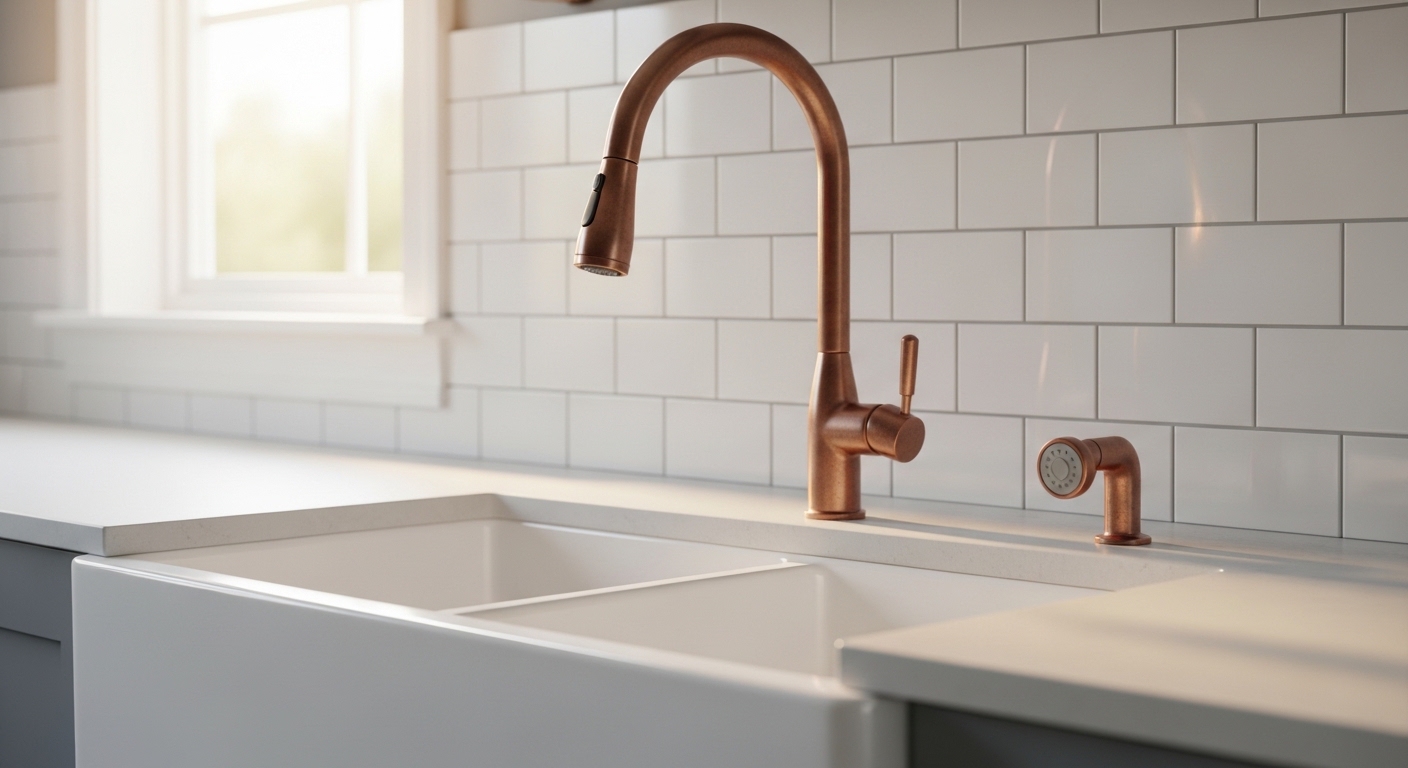
A white kitchen sink with copper faucet is the combination people keep pinning, screenshotting, and asking about — because it hits a sweet spot that stainless-on-stainless never will: the crisp, clean neutrality of a white basin against the warm, almost jewelry-like glow of copper or copper-tone metal. It reads farmhouse and modern-industrial at the same time, which is exactly why it refuses to go out of style. But there’s a real question hiding under the Pinterest gloss: does it hold up in a working kitchen, and will it look intentional or accidental? This guide answers that straight, from someone who sells and installs this exact pairing every week.
Will a copper faucet actually match a white sink, or clash with it?
It matches beautifully — but only if you match undertones first. White sinks aren’t all the same “white.” A fireclay or enameled cast-iron sink tends to run warm (a soft, slightly creamy white), while acrylic and some quartz composite sinks run cooler and brighter. Copper is a warm metal, full stop. Pair warm copper with a warm white and the whole thing feels cohesive and expensive. Pair bright, blue-white against orange-toned raw copper and the contrast can read a little jarring if the rest of your kitchen is cool-toned.
The fix is simple: bring the faucet finish and a sink sample into the same daylight and look at them together for 30 seconds. If your white leans cool, lean toward a more muted, brushed or “aged” copper rather than a bright polished penny finish. If your white is warm and creamy, you can get away with brighter, more literal copper. This is the same undertone logic that separates a cohesive kitchen from a mismatched one — and it’s the single most common thing people skip.
What kind of white kitchen sink pairs best with copper — fireclay, cast iron, or composite?
For a copper faucet, fireclay and enameled cast iron are the two strongest partners, with white quartz/granite composite a close third. Here’s why: fireclay and cast iron both have that heavier, slightly warm, glossy enamel surface that mirrors a little of the copper’s glow, so the two metals-and-ceramic read as a designed pair. Composite is more matte and modern, which works — it just leans the look toward contemporary rather than farmhouse.
| White Sink Type | Undertone | Best Copper Match | Durability | Typical Price |
|---|---|---|---|---|
| Fireclay (apron/farmhouse) | Warm, creamy | Brushed or living copper | Very high (chip-resistant enamel) | $300–$900 |
| Enameled cast iron | Warm, glossy | Polished or aged copper | High (can chip on impact) | $300–$700 |
| Quartz/granite composite | Cool to neutral | Muted/matte copper or copper-bronze | Very high (scratch/heat resistant) | $250–$550 |
| Acrylic | Bright, cool | Sealed muted copper only | Moderate (scratches, stains) | $120–$300 |
One practical note most blog posts skip: a heavy sink needs adequate cabinet support, and a copper pull-down faucet with a tall gooseneck needs enough backsplash clearance to swing and dock. Measure your window sill height before you fall in love with an 18-inch-tall faucet. If you want a deeper dive into what actually separates a durable faucet body from a cheap one, our guide on what makes the best kitchen faucet quality walks through the internals — valve, weight, and finish — that matter here.
Is “copper” a solid copper faucet or just a copper-colored finish?
Most “copper” kitchen faucets you’ll see under $600 are actually a brass body with a copper-tone PVD or electroplated finish — not solid, hammered copper. That’s not a downgrade; it’s usually the smarter buy. True solid or hammered copper faucets are gorgeous but pricey ($500–$1,500+), and they patina aggressively unless sealed. A quality copper-finish brass faucet gives you the exact look with better corrosion resistance and a stable color.
Here’s the vocabulary that clears up the shopping confusion:
- Living / unlacquered copper: real copper with no sealer. It changes color over time — warm orange to deep brown to blue-green highlights. Beautiful if you want it; frustrating if you expected it to stay shiny.
- Sealed / lacquered copper: real copper with a clear protective coat that locks the current color. Low maintenance, but the coating can eventually wear at high-touch spots.
- Copper PVD finish (on brass): a physical-vapor-deposited copper-tone layer bonded to a brass faucet. The most durable option — highly scratch- and tarnish-resistant, color-stable for years. This is what we recommend for most busy kitchens.
- Oil-rubbed / copper-bronze: a darker, browner cousin of copper that hides water spots and reads more traditional.
Will a copper faucet tarnish or turn green over a white sink?
Only if it’s real, unsealed copper — and even then, “tarnish” is the whole point of that finish, not a defect. A copper PVD or sealed copper faucet will not turn green in normal kitchen use; PVD in particular is engineered to resist exactly that. Living (unlacquered) copper will patina, and the green (verdenko/verdigris) only appears with prolonged moisture in crevices — around the base, behind the handle — not across the whole faucet.
So the honest answer depends on which product you buy. If you want a faucet that looks identical in year five to the day you installed it, buy a copper PVD finish and wipe it dry now and then. If you want that lived-in, evolving antique glow against your crisp white sink, buy living copper and lean into it — a quick rub with a copper polish (or just lemon and salt) resets it to bright whenever you want. What you should not do is buy unlacquered copper expecting it to stay shiny with zero effort; that’s the number-one review complaint, and it’s a mismatch of expectation, not a bad product.
Water chemistry matters too. Hard water and high-mineral supplies speed up spotting and patina on any finish. If your area has hard water, a sealed finish and a good aerator help — and if you ever notice weakening pressure, that’s usually mineral buildup, which our walkthrough on why there’s low flow out of a kitchen faucet shows you how to clear in a few minutes.
What’s the best white kitchen sink with copper faucet setup on a real budget?
For most homeowners, the best-value setup lands around $400–$650 total: a white fireclay or composite sink ($250–$450) plus a copper-PVD pull-down faucet with a solid brass body and a ceramic-disc cartridge ($150–$300). That combination gets you the look, the durability, and a faucet that won’t drip in two years. Below that, you start trading away the cartridge quality and finish adhesion that make this pairing last.
Here’s how the tiers actually shake out in practice:
| Budget | What you get | Watch out for |
|---|---|---|
| Under $250 total | Acrylic white sink + copper-plated zinc faucet | Thin plating flakes; zinc bodies corrode; frequent drips |
| $400–$650 total | Fireclay/composite white sink + brass copper-PVD faucet, ceramic cartridge | The sweet spot — verify the faucet body is brass, not zinc |
| $800–$1,500 total | Premium fireclay + solid/hammered copper faucet | Higher maintenance if unlacquered; confirm sealer |
The single biggest predictor of regret is a zinc-alloy faucet body dressed up in a copper-look finish. It feels lighter in the hand, and the finish tends to lift at the spout base within a couple of years. Heft it before you buy: a real brass faucet is noticeably heavier. We’ve watched countless customers learn this the expensive way, which is exactly the argument our team makes in why you should never buy cheap bathroom fixtures — the finish is what you see, but the body is what fails.
Do brands like Kraus make a good white sink and copper faucet combo?
Yes — Kraus is one of the more reliable mid-range makers for exactly this pairing, offering white fireclay and quartz-composite sinks that coordinate with warm-metal faucets. They’re a sensible starting point if you want the look without going bespoke. If you’re weighing them specifically, we put the brand through a full workup in our honest verdict on whether Kraus is a good brand for faucets, including where they shine and where a step-up brand is worth it.
How do you install and care for a copper faucet on a white sink?
Installation is the same as any single-hole or three-hole kitchen faucet — the copper part changes nothing mechanically. The care is where copper differs, and it’s genuinely low-effort once you know the rules. Quick version below.
- Confirm your hole count. Farmhouse and modern white sinks are often single-hole; older drop-ins may have 3–4 holes. Buy a deck plate (escutcheon) in matching copper if you need to cover extra holes.
- Shut off the supply valves under the sink and open the faucet to relieve pressure before disconnecting anything.
- Mount the faucet through the deck, tighten the underside mounting nut, and connect the braided supply lines to the correct hot/cold valves.
- Seal the base with the included gasket or a thin bead of plumber’s silicone so water can’t seep under the copper base and start patina where you don’t want it.
- Care routine: for sealed/PVD copper, wipe with a soft damp cloth — no abrasive pads, no acidic cleaners on the finish. For living copper, either let it patina or polish periodically with a copper cleaner (or lemon + salt + baking soda). Always dry the base after heavy use in hard-water areas.
Avoid two things and your finish stays perfect: abrasive scrubbers (they micro-scratch both PVD and lacquer) and prolonged pooling water at the faucet base. That’s genuinely it.
Author note & why you can trust this guide
This guide was written by the wigafaucet product team — the same people who spec, pressure-test, and warranty the faucets we sell. We bench-test cartridges to industry cycle standards (a quality ceramic-disc cartridge is rated for 500,000+ open/close cycles), and we hold our copper-finish faucets to standard salt-spray corrosion and finish-adhesion testing before they ship. Reputable kitchen faucets should meet ASME A112.18.1 / CSA B125.1 and be NSF/ANSI 61 and 372 lead-free certified — check for those marks on any faucet you buy, ours or anyone else’s. Our copper-finish kitchen faucets carry a limited lifetime warranty on the finish and cartridge, which is the honest signal that a maker actually trusts the plating on the body underneath.
wigafaucet has been fitting real kitchens — not showrooms — for years, and the advice above reflects what we see come back for service and what doesn’t. When we tell you to heft the faucet for a brass body, it’s because we’ve replaced the zinc ones.
FAQ
Is a white sink with a copper faucet a passing trend?
No. Copper-and-white is a classic warm-metal-on-neutral pairing that predates the current farmhouse wave and will outlast it. Trends come and go in the intensity of the copper (bright vs. muted) and in the sink shape (apron vs. undermount), but the core combination stays evergreen. Choosing a muted or brushed copper keeps it feeling current for the longest.
Do copper faucets have real antimicrobial benefits in a kitchen?
Solid, uncoated copper surfaces do have documented antimicrobial properties — bacteria survive poorly on bare copper. That said, a sealed or PVD copper-finish faucet has a protective layer over the metal, so you shouldn’t buy one expecting a health benefit. Treat any antimicrobial effect as a nice-to-have on unlacquered copper, not a reason to skip normal cleaning.
Will hard water ruin a copper faucet over a white sink?
It won’t ruin it, but hard water speeds up spotting and patina and can clog the aerator, reducing flow. Wipe the faucet dry after heavy use, clean the aerator every few months, and consider a sealed finish if your water is very hard. White sinks show hard-water film too, so a quick daily wipe keeps the whole pairing looking crisp.
Can I put a copper faucet on an existing white acrylic or drop-in sink?
Absolutely — the faucet doesn’t care what the sink is made of, as long as the hole count and deck thickness match. Confirm how many mounting holes your sink has and buy a matching copper deck plate to cover any you don’t use. On a bright, cool-white acrylic sink, choose a slightly muted copper so the warm metal doesn’t fight the cool white.
How do I keep the copper from turning green around the base?
Green verdigris only forms where water sits for long periods, almost always at the faucet base. Seal the base at installation with the gasket or a thin silicone bead, dry any standing water after big cleanups, and the green never appears. If you have living copper and want zero patina at all, choose a sealed or PVD version instead.
What faucet body material should I insist on for a copper-finish kitchen faucet?
Solid brass. A brass body under the copper finish resists corrosion, holds plating far better than zinc alloy, and gives the faucet the reassuring weight that signals quality. If a listing won’t confirm “solid brass body” and the faucet feels light, treat that as a red flag regardless of how good the copper color looks.