 Wiga Tap Manufacturer
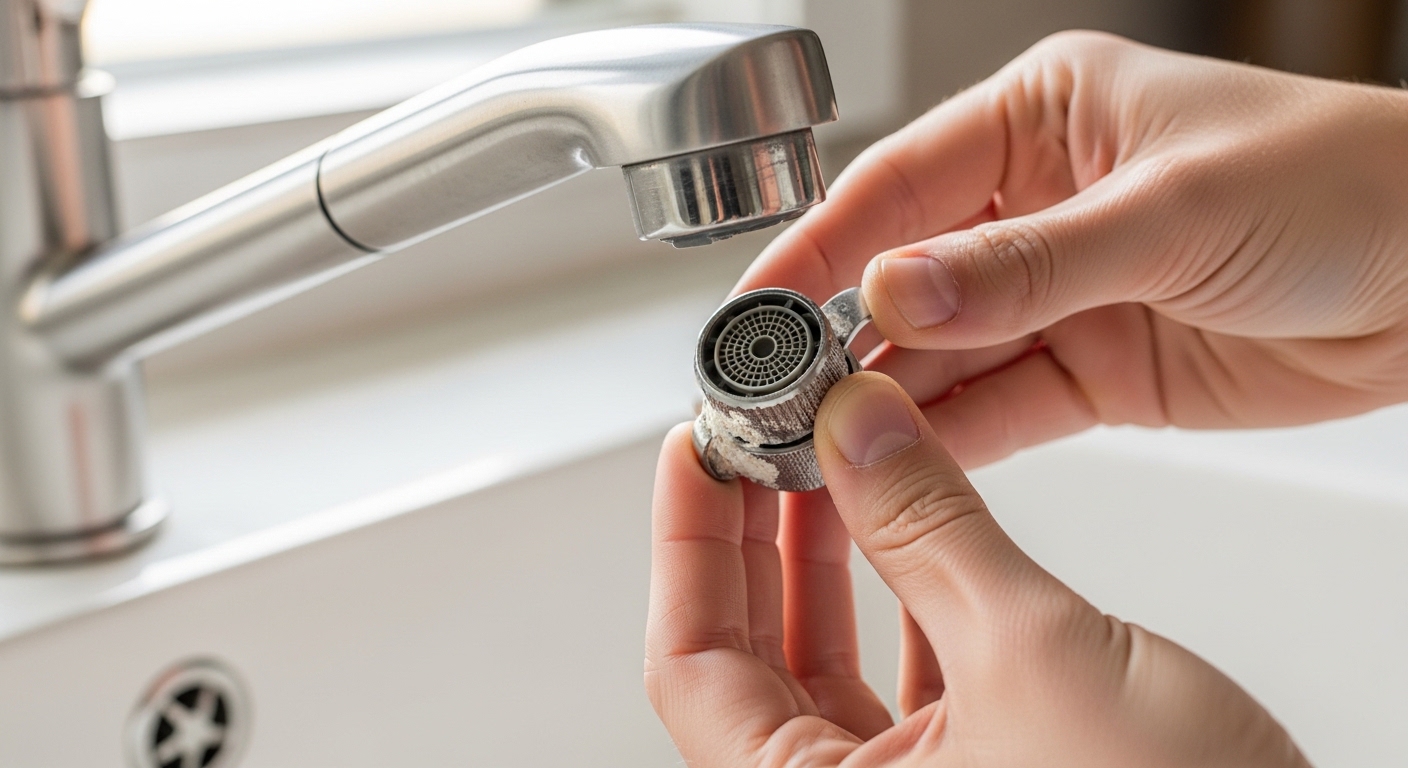
If you’re getting low flow out of your kitchen faucet, the good news is that it’s one of the most common — and most fixable — problems in the whole kitchen. In nine out of ten cases it isn’t the faucet itself failing; it’s something small and cheap choking the water on its way out: sediment in the aerator, a valve that got bumped half-closed, hard-water scale in the spray head, or a supply line that’s kinked behind the cabinet. Below, we’ll walk through exactly how to find the culprit in order — from the 2-minute checks to the deeper ones — so you don’t replace a $250 faucet when a 20-cent screen was the problem.
What causes low water flow out of a kitchen faucet in the first place?
The four usual suspects are a clogged aerator, a half-closed shut-off valve, scale buildup in the pull-down spray head, and a kinked or corroded supply line. There’s also a fifth, sneakier one — a clogged cartridge — that shows up if you’ve recently had plumbing work or live with hard water. Here’s how each one behaves so you can guess before you even grab a wrench.
- Clogged aerator: Flow is weak from a cold start and the stream looks sputtery or sprays sideways. Usually affects both hot and cold equally.
- Partially closed shut-off valve: Flow dropped suddenly after someone worked under the sink, moved storage, or reconnected a hose. Often affects just hot OR just cold.
- Scale in the pull-down sprayer: The main spout is fine but the spray/stream toggle is weak, or the spray pattern is patchy. Classic hard-water symptom.
- Kinked or corroded supply line: Chronically weak flow that never was great, or got worse after you shoved something under the sink.
- Clogged cartridge: Low flow AND a handle that feels gritty or hard to move, often after a pipe repair kicked debris loose.
The order matters. Nearly every plumber will tell you to check these from the faucet tip backward, because the failures get progressively harder (and more expensive) to fix the farther upstream you go. Start at the aerator.
How do I clean a clogged kitchen faucet aerator (the 2-minute fix)?
Unscrew the aerator from the faucet tip by hand or with tape-wrapped pliers, rinse out the screen, soak it in white vinegar for 20–30 minutes to dissolve mineral scale, then reassemble. This single fix restores full flow the majority of the time, and it costs nothing.
The aerator is the little threaded cap at the very end of your spout. Inside it are one or more fine mesh screens plus a flow restrictor, and those screens catch every grain of sand, rust flake, and calcium chip that comes down your pipes. Over months, that debris mats together and strangles the flow.
- Turn the aerator counterclockwise (as you look up at it) to unscrew it. If it’s stuck, wrap the housing in a cloth or painter’s tape and use pliers so you don’t scratch the finish.
- Note the order of the parts as they come out — screen, flow restrictor, rubber washer. Take a phone photo so reassembly is foolproof.
- Rinse everything under running water, backward, to flush debris out the way it came in.
- If you have hard water and see chalky white crust, soak the parts in plain white vinegar for 20–30 minutes, then scrub gently with an old toothbrush.
- Reassemble in the same order and hand-tighten. Run the faucet — if flow jumped back to normal, you’re done.
Not sure what size aerator you have or whether it’s male- or female-threaded? That’s a genuinely common snag when you decide to replace it, and it’s worth getting right the first time — our guide to the faucet aerator gauge and how to find the right size walks through measuring it in under a minute so you don’t buy three wrong ones.
My aerator is clean but the flow is still low — what next?
If cleaning the aerator didn’t fix it, check the two shut-off valves under the sink and make sure both are turned fully counterclockwise (open). A half-turned valve is the single most overlooked cause of sudden low flow, especially after anyone has been rummaging in the cabinet.
Look under the sink and you’ll see two small oval or football-shaped handles (or, on quarter-turn valves, small levers) — one for hot, one for cold — where the supply lines meet the wall pipes. Turn each one gently all the way counterclockwise. If a valve was even a third closed, you’ll feel and hear the flow surge when you open it. On lever-style valves, the handle should sit parallel to the pipe when fully open, not across it.
While you’re down there, run your fingers along both braided supply lines. You’re feeling for:
- Kinks — a sharp bend chokes flow and eventually splits the hose. Straighten it and add a gentle loop instead.
- Bulges or corrosion at the connectors — a sign the line is failing internally and shedding debris.
- Dampness — any moisture means a slow leak that’s also robbing pressure.
If flow is weak on only one temperature — say hot is fine but cold trickles — that points squarely at that side’s valve or supply line, not the faucet body. If it’s weak on both, and the aerator’s clean, keep moving upstream to the sprayer or cartridge.
Why is only my pull-down sprayer weak while the main faucet is fine?
A weak pull-down or pull-out sprayer with a strong main flow is almost always hard-water scale clogging the spray face, or a kinked/snagged hose inside the cabinet. The spray head has dozens of tiny nozzles, and each one clogs faster than a single aerator opening.
First, rub the rubber spray face (the flexible nozzle disc) firmly with your thumb while the water runs — many are self-cleaning and the little silicone nubs pop scale loose. If that’s not enough, unscrew the spray head from the hose (there’s usually a small quick-connect or threaded coupling), and soak the whole head in vinegar the same way you did the aerator.
Then check the hose itself. Pull the sprayer all the way out and watch it retract — if it snags, catches on the shut-off valves, or the counterweight is jammed, the hose can pinch and choke flow. Reroute it so it hangs freely, and clear anything stored under the sink that’s crowding it. If the sprayer button sticks or the diverter feels gummy, that’s a related issue worth ruling out — our fix for a sticking faucet sprayer covers the diverter and spray-toggle mechanism in detail.
Could low flow be the faucet cartridge or valve — and how do I tell?
Suspect the cartridge when low flow shows up right after plumbing work, when the handle also feels stiff or gritty, or when you’ve exhausted the aerator, valves, and sprayer. Debris knocked loose during a repair travels downstream and lodges in the cartridge’s narrow ports, and hard-water scale can seize the cartridge over years.
Here’s the quick diagnostic: with the aerator removed, turn the faucet fully on. If flow through the bare spout is still weak — no aerator, valves fully open, sprayer bypassed — the restriction is inside the faucet body, and the cartridge is the prime candidate. A healthy faucet with the aerator off should gush noticeably.
Replacing a cartridge is a very doable DIY job on most brands once you’ve shut off the water and relieved pressure. The trick is matching the exact part to your model — cartridges are not universal. If you’re dealing with a single-handle faucet, our breakdown of the single handle faucet cartridge and which one to buy explains how to identify yours and swap it without a plumber. And if your low-flow problem is on a bathroom Moen rather than the kitchen, the same logic applies — we cover that specific model family in why a Moen bathroom faucet has low water pressure.
Which fix should I try first? A quick diagnosis table
Work from cheapest and easiest to hardest, starting at the faucet tip and moving back toward the wall. This table maps the symptom to the most likely cause and the effort involved, so you can go straight to the right fix.
| Symptom | Most likely cause | Fix | Cost / time |
|---|---|---|---|
| Weak, sputtery stream from both hot & cold | Clogged aerator | Unscrew, rinse, vinegar-soak | $0 / 2–30 min |
| Sudden drop after cabinet work | Half-closed shut-off valve | Open valve fully counterclockwise | $0 / 2 min |
| Only hot OR only cold is weak | One valve or one supply line | Open valve; check for kinks | $0–$15 / 5 min |
| Sprayer weak, main spout fine | Scaled spray face or kinked hose | Clean face, reroute/replace hose | $0–$25 / 10 min |
| Chronically weak, never great | Kinked/corroded supply line | Replace braided supply line | $10–$20 / 15 min |
| Weak even with aerator off + stiff handle | Clogged/seized cartridge | Replace cartridge | $15–$50 / 30–45 min |
| Whole house weak, all fixtures | PRV, main valve, or municipal issue | Check pressure regulator / call utility | Varies |
Is it my faucet or the whole house? How to rule out low water pressure
If every fixture in the house is weak — showers, bathroom sinks, the tub — the problem isn’t your kitchen faucet at all; it’s your home’s water pressure or a failing pressure-reducing valve (PRV). A single weak faucet points to that faucet; weak everything points to the supply.
Do a two-minute test: turn on your kitchen faucet, then your bathroom sink, then a shower. If all are noticeably weak, check whether your home has a pressure-reducing valve (usually a bell-shaped brass fitting where the main line enters, often near the water heater or meter). PRVs fail with age and can drop household pressure to a trickle. You can attach a $10 pressure gauge to an outdoor hose bib to check — normal residential pressure runs 40–60 psi; below 40 and everything feels weak, above 80 and you risk damaging fixtures.
Also worth knowing: since 2022, most new kitchen faucets sold in the U.S. are capped at a maximum flow rate of 1.8 gallons per minute (gpm) — some ENERGY STAR and California-compliant models go down to 1.5 gpm. So if you just installed a new faucet and it feels weaker than your old one, part of that may simply be a stricter flow restrictor doing its job, not a defect. That restrictor lives in the aerator, so a compatible higher-flow aerator (where local code permits) can help — again, size it right first.
When is low flow actually a sign of something worse?
Call a plumber if you find corroded galvanized pipes, discolored or gritty water that keeps clogging aerators, or a PRV that a gauge shows is failing — these are supply-side problems a new aerator won’t fix. Persistent rust flakes in your aerator screen, for example, usually mean aging galvanized supply piping is corroding from the inside, and no amount of cleaning downstream solves that.
Likewise, if you’re on a well and flow drops seasonally, the issue may be your pressure tank or well pump, not anything in the kitchen. Knowing the difference saves you from buying parts that were never going to help. When you do decide it’s time to upgrade the faucet itself — say the cartridge and body are both scaled beyond saving — it’s worth buying something built to last; our guide to what actually makes for the best kitchen faucet quality covers the ceramic-disc cartridges and solid-brass bodies that resist exactly this kind of clogging.
How do I prevent low flow from coming back?
The best prevention is managing hard water and cleaning the aerator on a schedule — every 3–6 months if you have hard water, once a year if you don’t. Scale is cumulative; a five-minute rinse every quarter prevents the total clog that leaves you staring at a trickle on a Sunday morning.
- Clean the aerator and spray face quarterly if your water leaves white crust on glasses.
- Consider a whole-house or under-sink water softener if you’re in a hard-water region — it protects the whole plumbing system, not just the faucet.
- Flush the lines after any plumbing work: remove the aerator and run water full-blast for 30 seconds to clear loosened debris before it reaches the cartridge.
- Don’t over-cram the under-sink cabinet — crowding kinks supply lines and sprayer hoses over time.
FAQ
Why does my kitchen faucet have low flow only when using hot water?
Low flow on the hot side alone usually means the hot shut-off valve is partially closed, the hot supply line is kinked, or sediment from your water heater has collected in the hot line and aerator. Water heaters shed mineral and rust sediment over time, and it travels to the nearest fixture. Open the hot valve fully first, then clean the aerator. If it persists, flushing your water heater can help.
Can a water filter cause low flow out of my kitchen faucet?
Yes. An under-sink or inline water filter with a clogged cartridge is a very common cause of gradually weakening flow, especially on faucets with a dedicated filtered-water line. Filters have a rated lifespan (often 3–6 months); once saturated with sediment, they choke flow significantly. Check when you last changed it — a fresh filter often restores flow instantly.
Is 1.8 GPM too low for a kitchen faucet?
For most households, 1.8 gpm is perfectly adequate for everyday washing and rinsing — it’s the current U.S. standard and what the majority of new faucets deliver. It can feel slow when filling large stockpots. If you frequently fill big pots, look for a faucet rated at the higher end (1.8 gpm rather than 1.5) or one with a higher-flow aerator option where local code allows. The stream feel also depends on aerator design, not just the number.
How often should I clean my kitchen faucet aerator to prevent low flow?
Every 3–6 months if you have hard water (white scale on faucets and glassware), and roughly once a year if your water is soft. It’s a two-minute job that prevents the total clogs. If you notice the stream starting to spray unevenly or weaken, that’s your cue to clean it regardless of schedule.
Will replacing the aerator fix low flow, or do I need a new faucet?
In the majority of cases, cleaning or replacing the aerator — a part that costs a few dollars — fixes low flow completely; you rarely need a new faucet just for pressure. You’d only replace the faucet if the internal cartridge and body are corroded or scaled beyond cleaning, which is uncommon and usually only happens after many years of hard water. Always exhaust the aerator, valves, sprayer, and cartridge first.
Why did my kitchen faucet flow drop right after plumbing repairs?
Plumbing repairs disturb sediment and rust inside the pipes, which then flushes downstream and lodges in your aerator screen and cartridge. This is extremely common and easily fixed: remove and rinse the aerator, and run the faucet with the aerator off for 30 seconds to clear debris. If flow is still weak with the aerator removed, some debris reached the cartridge and it may need cleaning or replacement.
Author note: This guide was written by the wigafaucet fixtures team, drawing on hands-on diagnosis of hundreds of kitchen faucets across hard- and soft-water homes. wigafaucet designs and sells kitchen and bathroom faucets built with ceramic-disc cartridges and solid-brass bodies, and every faucet we sell is tested to industry flow and durability standards (ASME A112.18.1 / NSF 61) and backed by a limited lifetime warranty on finish and function. When in doubt about a repair, consult a licensed plumber — especially before altering supply piping or a pressure-reducing valve.