 Wiga Tap Manufacturer
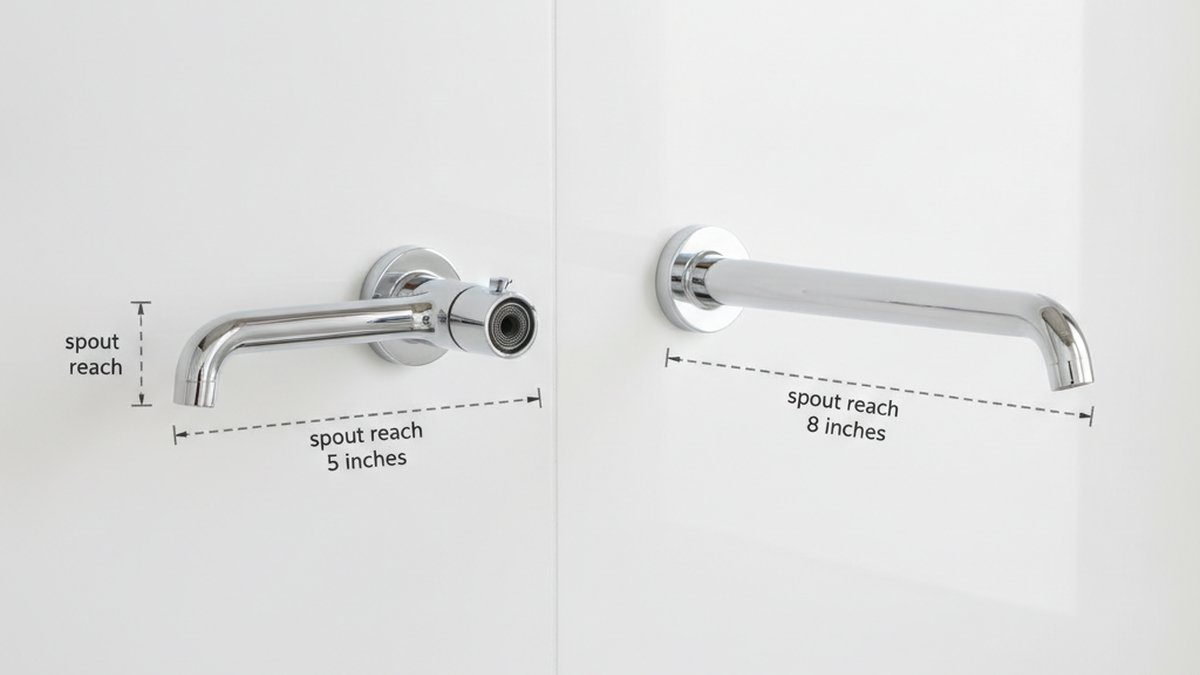
If you’ve been staring at a cramped powder room sink wondering why the water keeps hitting the back of the bowl or splashing over the front, a short spout reach wall mount faucet is very likely the fix. “Spout reach” is simply how far the water outlet sticks out horizontally from the wall, and on a wall-mounted faucet that measurement decides whether the stream lands in the drain or somewhere annoying. Short-reach wall mounts are built for tight, shallow, and design-forward sinks — the kind that a normal deck-mounted faucet with a long gooseneck would completely overwhelm. Below, we’ll answer the real questions people actually ask before buying one: how short is “short,” how to measure, when it’s the wrong call, and what it costs.
What counts as a “short” spout reach on a wall mount faucet?
Short means a spout reach of about 4 to 6 inches, measured from the finished wall to the center of the water stream. Anything 7 inches or more is considered standard or long reach. That two-to-three-inch difference sounds trivial, but on a small basin it’s the entire difference between a clean pour and a splashy mess.
Here’s why the number matters so much on a wall mount specifically: a deck-mounted faucet sits on the sink or counter, so it starts close to the bowl. A wall mount starts at the wall, which is typically a few inches behind the back rim of the sink. That means a wall mount “spends” some of its reach just getting over the edge of the basin before the water even starts heading toward the drain. If you buy a long-reach wall spout for a shallow sink, the water can sail clear over the front lip.
The target you’re aiming for is simple: the water should land roughly in the middle third of the basin, over or just behind the drain. To hit that, the spout reach needs to be a little less than half the front-to-back depth of your bowl, plus whatever gap exists between the wall and the back edge of the sink.
- 4–5 inches: ideal for small vessel bowls, narrow powder-room basins, and sinks mounted tight to the wall.
- 5–6 inches: the sweet spot for most compact undermount and drop-in bathroom sinks 14–16 inches deep.
- 7 inches or more: standard reach — save it for large or deep basins where the sink sits several inches off the wall.
How do I measure my sink to know if I need a short spout reach?
Grab a tape measure and take three numbers: the wall-to-back-rim gap, the front-to-back bowl depth, and your desired water landing point. Add the wall gap to roughly one-third of the bowl depth, and that sum is your ideal spout reach. If the answer is 6 inches or less, you want a short-reach model.
Let’s make it concrete. Say your vessel sink sits 3 inches in front of the wall, and the bowl is 12 inches front-to-back. You want the water to hit the center, so aim for about 3 inches (wall gap) plus 6 inches (halfway across a 12-inch bowl) minus a little margin — landing you around a 6-inch reach at most, and a 5-inch reach would be even safer. Buy an 8-inch spout for that setup and you’ll be mopping the counter daily.
Two extra measurements save real headaches:
- Spout height above the rim. On a vessel sink the bowl sits high, so you need clearance for your hands under the spout. Short reach + tall bowl means you want a spout that arcs high enough — check the “spout height” spec, not just reach.
- Valve rough-in spacing. Wall mount faucets are usually either single-hole or widespread (typically 8 inches between the hot and cold valves). Your wall plumbing has to match, and that’s decided before the tile goes up.
That last point is where a lot of DIY wall-mount projects go sideways. Because the valve body is buried inside the wall, the depth of your studs, backer board, and tile all affect whether the trim and spout end up flush. If your rough valve sits too deep after tiling, you may need a faucet valve extender to bring the controls back out to the finished surface — a cheap part that saves you from opening the wall back up.
When is a short spout reach the right call — and when is it a mistake?
A short spout reach wall mount faucet is the right call for small, shallow, or wall-hugging sinks, and a mistake for large, deep basins or farmhouse-style setups where you need clearance to fit a bucket or wash your face under running water. Match the reach to the basin, not to a trend.
The strongest use cases:
- Powder rooms and half-baths where every inch counts and the sink is petite.
- Vessel sinks that sit high and forward — a short reach keeps the stream inside the bowl instead of arcing past it.
- Floating or wall-hung vanities where the clean, hardware-free deck is the whole design point.
- Ensuites and tight guest baths where a long gooseneck would crowd the mirror or backsplash.
Where it’s the wrong tool:
- Deep utility or laundry basins — you want reach and height to fit tall items under the spout.
- Large double-bowl or trough sinks where a short spout leaves water landing near the back wall instead of centered.
- Setups where the sink sits 5+ inches off the wall — the reach gets eaten up before the water even clears the rim.
One honest caveat: short reach means the spout is close to the back of the bowl, so if your sink is very shallow front-to-back, hand-washing can feel cramped because your knuckles are near the wall. If that worries you, look at a single-hole deck faucet instead — our guide on whether a chrome bathroom faucet one-hole setup is right for your sink walks through that trade-off in detail.
Short reach vs. standard reach wall mount faucet: which fits my bathroom?
Short reach wins on tight and shallow sinks; standard reach wins on deep or wall-distant basins. The table below lines up the two so you can match the spec to your actual bathroom instead of guessing.
| Factor | Short Spout Reach (4–6 in) | Standard Reach (7–9 in) |
|---|---|---|
| Best sink depth (front-to-back) | 10–16 inches | 17 inches and up |
| Ideal room type | Powder room, ensuite, guest bath | Master bath, utility, large vanity |
| Vessel sink compatibility | Excellent — keeps stream in the bowl | Risky — can overshoot the front rim |
| Splash risk on small basins | Low | High |
| Hand clearance | Can feel tight if bowl is very shallow | Roomy |
| Typical price range | $70–$220 | $90–$300 |
Notice the price isn’t wildly different — reach doesn’t add much cost. What drives price on wall mounts is the valve quality (ceramic disc cartridges last far longer than rubber-washer designs), the finish, and whether the trim is solid brass or plated zinc. If you’re weighing materials, our breakdown of zinc alloy vs. stainless steel faucets explains what you’re really paying for under the finish.
How much does spout reach affect splashing, really?
A lot — reach is the single biggest cause of sink splashing after water pressure. Water leaving the spout follows an arc, and where it lands is set by reach and height together. Get the reach wrong on a small basin and you’ll splash whether the pressure is high or low.
Two forces are in play. First, the horizontal landing point: too much reach and water lands near the front rim, where the shallow slope kicks it back at you. Second, the height of the fall: a tall spout over a hard, flat basin bottom splashes more on impact. A short reach that centers the stream over the drain — where the bowl is deepest and curves inward — is the calmest, quietest setup you can get in a small sink.
If your splashing is paired with a weak, sputtering stream, the culprit might not be reach at all — it could be a clogged aerator or low supply pressure. That’s a separate fix worth ruling out; our guide on what causes faucet low hot water pressure and how to fix it fast covers the quick diagnostics before you blame the spout.
Can I install a short spout reach wall mount faucet myself?
Yes, if the in-wall valve and rough plumbing are already in place — swapping the trim and spout is a moderate DIY job. But if you’re routing new supply lines inside the wall, that’s a job to plan carefully (and often to hand to a plumber) because mistakes are buried behind tile.
For a trim-and-spout swap on existing rough-in, the sequence is straightforward:
- Shut off the water at the supply stops or the main.
- Remove the old handles, escutcheons, and spout.
- Check the valve depth against your new trim — add a bathroom faucet extension pipe or valve extender if the spout nipple sits too deep in the wall to reach flush.
- Wrap threaded connections in plumber’s tape, hand-tighten, then snug with a wrench — don’t overtighten and crack the fitting.
- Seal the escutcheon-to-wall joint with clear silicone to keep splash water out of the wall cavity.
- Turn the water back on slowly and check every joint for weeping before you call it done.
The most common wall-mount mistake is finish depth: because the valve is fixed in the wall, you can’t nudge the faucet forward the way you can with a deck model. Measure the distance from your finished tile to the valve stem before you buy, and confirm the faucet’s trim is rated for that depth. If your walls are unusually thick, or you tiled over existing drywall, that extension part isn’t optional.
What finish and valve should I look for so it lasts?
Look for a solid brass body, a ceramic disc cartridge, and a finish rated to a corrosion-resistance standard like ASME A112.18.1 / CSA B125.1. Those three things, not the brand logo, decide whether your faucet still looks and works great in ten years.
On finishes for a small bathroom: brushed nickel and matte black hide water spots and fingerprints far better than polished chrome, which is a real advantage on a wall mount where the escutcheon is at eye level. Chrome still wins on brightness and price and is the easiest to clean. If you want the low-profile, uncluttered look that pairs naturally with a short-reach wall spout, take a look at the bathroom faucet open-top design and whether it suits your setup.
Author note: This guide was written by the wigafaucet product team, who spec, bench-test, and install wall-mount and deck faucets across residential and light-commercial projects. We measure real spout-reach and splash behavior on the sink types shoppers actually own — powder-room basins, vessel bowls, and compact vanities — rather than repeating spec sheets. About wigafaucet: we design and sell bathroom and kitchen fixtures directly at wigafaucet.com, and every faucet we ship meets North American low-lead (NSF/ANSI 372) and flow-rate standards, backed by our limited lifetime warranty on the finish and valve cartridge. When you’re choosing spout reach, we’d rather you buy the size that fits — even if it’s our cheaper model — than return one that splashes.
FAQ
What is the standard spout reach for a wall mount bathroom faucet?
Standard spout reach for a wall mount bathroom faucet runs about 7 to 9 inches from the finished wall to the center of the water stream. A short spout reach model shortens that to roughly 4 to 6 inches, which suits small, shallow, and wall-hugging sinks where a standard reach would overshoot the bowl.
Will a short spout reach faucet work with a vessel sink?
Yes — vessel sinks are one of the best matches for a short spout reach wall mount faucet. Because vessel bowls sit high and forward on the counter, a short reach keeps the stream inside the basin instead of arcing past the front rim. Just confirm the spout height gives you comfortable hand clearance above the tall bowl.
How do I stop my wall mount faucet from splashing?
Match the spout reach to your basin so water lands over the drain, not the front rim; that’s the biggest fix. If the reach is already right, check the aerator — a clogged or missing aerator causes a hard, splashy stream. Lowering supply pressure slightly or adding a laminar-flow aerator also cuts splash on small sinks.
Can I replace a standard reach wall faucet with a short reach one?
Usually yes, as long as the in-wall valve spacing and rough-in match your new faucet. Single-hole valves swap for single-hole trim, and widespread (typically 8-inch) valves swap for widespread trim. Check the valve depth against the new trim first, and add an extension pipe or valve extender if the spout sits too deep in the wall to finish flush.
Is a short spout reach worth it for a small powder room?
For most small powder rooms, yes — it’s often the single best fix for chronic counter splashing and a cramped-looking sink. A 4-to-6-inch reach centers the water in a petite basin and keeps the wall-mounted trim from crowding the mirror or backsplash. The only time to skip it is if your sink is unusually deep front-to-back or sits several inches off the wall.
Does a short spout reach reduce water flow or pressure?
No. Spout reach only changes where the water lands, not how much comes out. Flow rate is set by the aerator (commonly 1.2 or 1.5 GPM on modern bathroom faucets) and your home’s supply pressure. A short-reach spout delivers the same flow as a long one — it just aims it into a smaller bowl.