 Wiga Tap Manufacturer
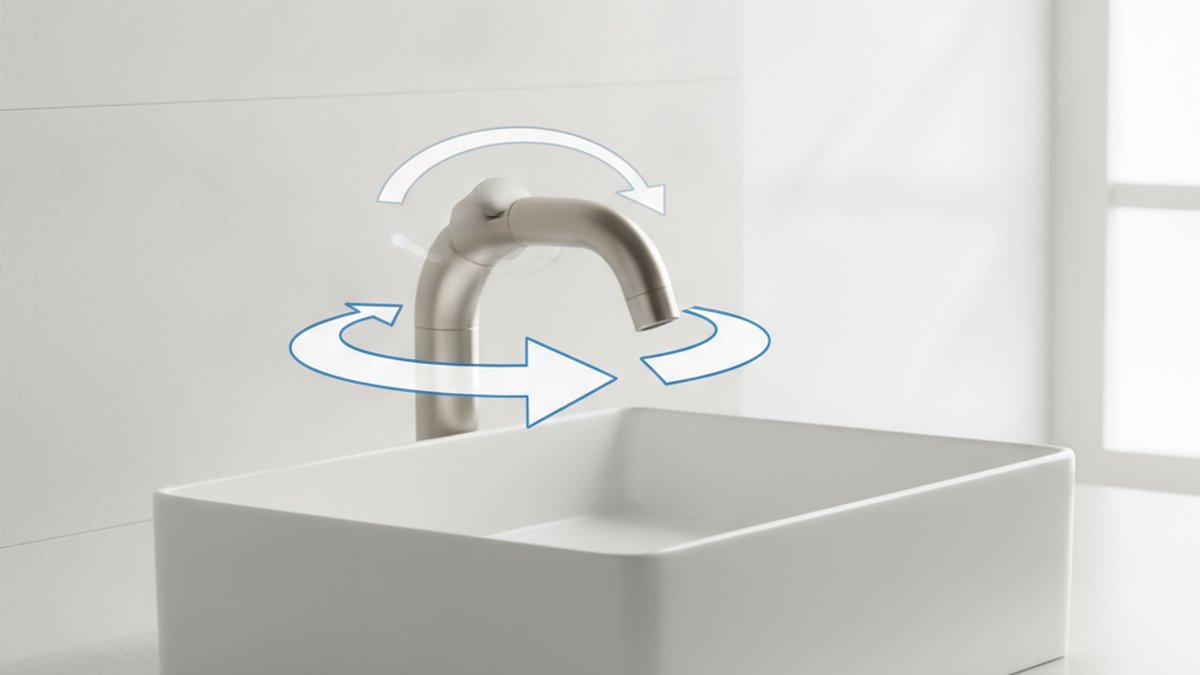
The phrase “bathroom faucet turns all the way around” gets typed and spoken by two very different people, so let’s sort that out first. If you’re shopping and you want a bathroom faucet that turns all the way around — a spout that rotates a full 360 degrees over the sink — you’re looking at a swivel-spout faucet, and this guide walks you through when it’s worth it, what to look for, and how to avoid the cheap ones that loosen up in a year. If your existing faucet’s handle suddenly spins all the way around and the water won’t shut off, jump to the troubleshooting section, because that’s a defect, not a design.
Either way, you’re in the right place. We’ll cover both, with real specs and numbers, so you can either pick the right swivel faucet with confidence or fix the spinning one you already have.
What does it actually mean when a bathroom faucet “turns all the way around”?
It means the spout pivots a full 360 degrees on its base, so you can swing the water outlet from directly over the sink all the way around to either side — or completely away from the bowl. This is a deliberate design feature called a swivel spout, and it’s the same mechanism you’ve probably used on a kitchen faucet for years, now built into a slimmer bathroom body.
Mechanically, the spout sits on a hollow post and rotates around a fixed inner tube. Water travels up through the center; two rubber O-rings (or a single wide seal) keep it from leaking out the rotating joint. A good faucet uses a brass or stainless collar at that joint. A cheap one uses plastic, and that’s the part that wears out and either leaks or starts flopping loosely within a couple of years.
Not every “swivel” faucet does a true 360. Read the spec sheet carefully — you’ll see three common ranges:
- Full 360-degree rotation — spins all the way around, no stop. Best for double vanities and bar/prep-style bathroom sinks where you fill things on both sides.
- 180-degree swivel — swings from one side to the other but stops at the back. This is actually the most common “swivel” bathroom faucet and covers 90% of real needs.
- Fixed spout — no rotation at all. Cheaper and one less part to fail, but you’re stuck with one pour position.
Is a 360-degree swivel bathroom faucet worth it, or is it a gimmick?
It’s worth it in specific situations and a mild gimmick everywhere else. Buy a full 360 swivel faucet if you have a double sink, a vessel bowl you fill with water for cleaning, a small powder room where you need the spout out of the way, or you simply hate wiping around a fixed spout. For a standard single vanity that only ever gets used for washing hands and brushing teeth, a fixed or 180 spout is plenty and gives you one less moving seal to eventually replace.
Here’s the honest math. A swivel joint is one more wear point. On a well-made faucet with a metal collar and Buna-N O-rings, that joint will outlast the rest of the faucet — 10 to 15 years of normal use. On a $25 no-name unit with a plastic collar, the joint is the first thing to go, often inside 18 months. So the feature isn’t the risk; the build quality is. Don’t judge swivel spouts by the worst examples of them.
The real everyday wins people report:
- Filling a cup, vase, or cleaning bucket without banging it on a fixed spout.
- Swinging the spout aside to wash your face or clean the basin.
- Sharing one faucet across a double-basin vanity.
- Wiping the entire sink surround without the spout in the way.
Swivel spout vs. fixed spout: which bathroom faucet should you actually buy?
Buy a swivel if you have a double or vessel sink or you value convenience; buy fixed if you have a simple single vanity and want maximum long-term reliability at the lowest price. Here’s how the two compare on the things that actually matter:
| Feature | 360° Swivel Spout | 180° Swivel Spout | Fixed Spout |
|---|---|---|---|
| Best for | Double sinks, vessel bowls, prep areas | Most standard vanities | Simple single-basin sinks |
| Moving seals to maintain | 1 swivel joint (2 O-rings) | 1 swivel joint (2 O-rings) | None |
| Typical price range | $60–$220 | $45–$180 | $35–$150 |
| Leak-risk point | Swivel collar O-rings | Swivel collar O-rings | Only the valve cartridge |
| Cleaning convenience | Excellent | Very good | Fair |
| Long-term reliability (quality build) | High | High | Highest |
Notice that a well-built swivel and a fixed spout land in nearly the same reliability tier. The gap only opens up when you compare a cheap swivel to a decent fixed one. That’s why material matters more than the rotation number. If you’re weighing body materials while you shop, our breakdown of zinc alloy vs. stainless steel faucets explains exactly which metals survive a swivel joint and which ones crack around it.
What should you look for so a swivel faucet doesn’t get loose or leak?
Look for three things: a metal (brass or stainless) swivel collar, NSF/ANSI-certified ceramic disc valves, and a replaceable O-ring at the spout base. Get those right and the “turns all the way around” feature becomes the most reliable part of the faucet instead of the weakest.
Walk the checklist before you buy:
- Swivel collar material. Brass or 304 stainless. If the listing doesn’t say — or says “alloy” without specifying — assume plastic and move on.
- Valve type. Ceramic disc cartridges last far longer than rubber-washer compression valves and are what keeps the handle from spinning loose. Look for a stated cartridge rating of 500,000 open/close cycles.
- O-ring accessibility. The best swivel faucets let you replace the base O-ring in ten minutes without pulling the whole faucet. Ask or check the parts diagram.
- Finish quality. A PVD (physical vapor deposition) finish resists scratching where the spout rubs the base as it turns. Cheaper electroplated finishes wear a bright ring at the swivel point over time.
- Certification. Look for cUPC and NSF/ANSI 61 & 372 (lead-free) marks. These aren’t decoration — they mean the wetted parts were lab-tested for safe drinking water and pressure.
One more practical tip: a swivel spout works best when it isn’t fighting the plumbing. If your supply lines are stiff or too short, the spout tugs against them and the joint wears unevenly. A flexible, correctly sized connector solves it — the same logic we cover in our guide to the right sink faucet connector, which applies just as much to a busy home bathroom as to a commercial one.
Why does my bathroom faucet handle turn all the way around and not shut off?
Because the valve cartridge inside the handle is stripped, cracked, or the retaining screw has come loose — so the handle spins freely instead of stopping at “off.” This is a defect, not a feature, and it means water either won’t fully shut off or won’t turn on. The fix is almost always replacing the cartridge, which is a 20–30 minute DIY job.
Here’s what’s happening. In a working faucet, the handle turns a splined stem on top of the cartridge, and the stem only rotates through a limited arc — maybe 90 to 120 degrees from off to full-on. When the handle suddenly spins all the way around with no resistance, one of these has failed:
- The cartridge stem stripped — the plastic or brass splines that the handle grips have worn round, so the handle turns but the valve doesn’t. Most common cause.
- The handle set screw loosened — the handle is spinning on the stem instead of turning it. Easiest fix; just re-tighten the tiny hex screw under or behind the handle.
- The cartridge cracked — internal ceramic disc broke, usually from a water hammer or a hard freeze.
Quick fix path: shut off the two supply valves under the sink, pop the handle cap, and check the set screw first — you might get lucky in 30 seconds. If the screw is tight and the handle still free-spins, the cartridge is the culprit and needs to come out. If you’re comfortable with a knob-and-cartridge swap, our step-by-step on handling a bathroom faucet knob replacement without a plumber covers the exact tools and sequence. And if the free-spinning handle showed up alongside weak flow, don’t miss our fix for low water pressure on a bathroom faucet — a failing cartridge often causes both at once.
How do I install a 360-degree swivel bathroom faucet myself?
You install it exactly like any single-hole or widespread bathroom faucet — the swivel is entirely inside the spout, so it adds zero steps. Shut off the water, drop the faucet through the sink hole, tighten the mounting nut from below, connect the supply lines, and test. Total time for most people is 30 to 45 minutes.
- Turn off the supply at both under-sink shutoff valves and open the old faucet to relieve pressure.
- Remove the old faucet (if replacing) by disconnecting the supply lines and loosening the mounting nut underneath.
- Set the new faucet through the hole with its gasket or plumber’s putty seal at the base.
- Tighten the mounting nut from below — snug, not gorilla-tight, or you’ll distort the base and the spout won’t swivel smoothly.
- Connect the flexible supply lines hand-tight plus a quarter turn with a wrench. Don’t overtighten.
- Turn the water back on slowly, check for leaks at every joint, then swivel the spout through its full range to confirm it moves freely and stays sealed.
The single most common install mistake with swivel faucets: cranking the base mounting nut so tight it pinches the spout, so it either won’t rotate or grinds. Snug is enough. The spout should turn with light finger pressure and stay wherever you leave it.
How much should you spend on a bathroom faucet that turns all the way around?
Plan on $60 to $150 for a quality swivel bathroom faucet that will last a decade. Below about $45 you’re gambling on plastic swivel collars; above $200 you’re mostly paying for designer styling and premium finishes, not better rotation. The sweet spot for durability-per-dollar sits right in that $60–$150 band with a brass body and ceramic disc valve.
| Budget | What you typically get | Swivel reliability |
|---|---|---|
| Under $45 | Zinc or plastic body, plastic swivel collar, rubber-washer valve | Risky — often loosens in 1–2 years |
| $60–$150 | Brass body, metal swivel collar, ceramic disc valve, PVD finish | Excellent — 10+ years |
| $200+ | Premium finishes, designer styling, sometimes touchless | Excellent, but you’re paying for looks |
If a stainless-steel look is what you’re after in that mid-range, it’s worth checking whether the whole body is actually steel or just steel-finished; we get into that in our piece on whether a stainless steel faucet for a bathroom sink is worth it.
Author note & why you can trust this guide
This guide was written by the wigafaucet product team — the same people who spec, pressure-test, and warranty the faucets we sell. Every swivel faucet in our catalog is cycle-tested to at least 500,000 open/close actions and full-rotation-tested at the spout joint before it ships, and our wetted parts meet NSF/ANSI 61 and 372 lead-free standards with cUPC certification. We’ve handled thousands of warranty questions, and “handle turns all the way around” is one of the most common ones we field — which is exactly why we wrote both halves of this article. Our faucets carry a limited lifetime warranty on the finish and mechanical function, so if a swivel joint ever fails on a unit we sold you, it’s covered.
wigafaucet designs and sells bathroom, kitchen, and shower fixtures direct to homeowners across the US, which lets us skip retail markup and put the savings into better internals — the brass collars and ceramic cartridges that make a swivel spout actually last.
FAQ
Is it normal for a bathroom faucet spout to turn all the way around?
Yes, if it’s a swivel-spout model — a 360-degree spout is a designed feature and perfectly normal. What is not normal is the handle spinning all the way around with no resistance; that indicates a stripped or broken valve cartridge that needs replacing.
Why did my faucet spout suddenly start spinning loosely?
The base O-ring or the swivel collar has worn out, so the spout has lost its friction fit. On a quality faucet you can replace the base O-ring in about ten minutes to restore a firm, controlled swivel. On a plastic-collar faucet, the collar itself may be worn and the faucet is near end of life.
Will a swivel spout leak more than a fixed spout?
Not if it’s built right. A swivel adds one sealed joint with O-rings, but on a brass-collar faucet that joint outlasts the rest of the faucet. Leaks only become likely on cheap plastic-collar models, so buy on material quality rather than avoiding the feature.
Can I make my swivel faucet stop turning if I don’t want it to move?
Not permanently without damaging it, but you can tighten the base slightly to add resistance so it stays put where you leave it rather than swinging on its own. If you truly never want rotation, a fixed-spout faucet is the simpler choice.
My faucet handle turns all the way around and water still runs — is that an emergency?
Shut off the under-sink supply valves right away to stop the flow, then it’s not an emergency — just a repair. The fix is almost always a new cartridge, a 20–30 minute DIY job. Check the handle set screw first, since a loose screw can mimic the same symptom and takes seconds to tighten.
How long should a 360-degree swivel bathroom faucet last?
A quality one with a brass body, metal swivel collar, and ceramic disc valve should last 10 to 15 years of normal use. Cheaper units with plastic swivel collars often start loosening or leaking within one to two years, which is why build material matters more than the rotation spec.