 Wiga Tap Manufacturer
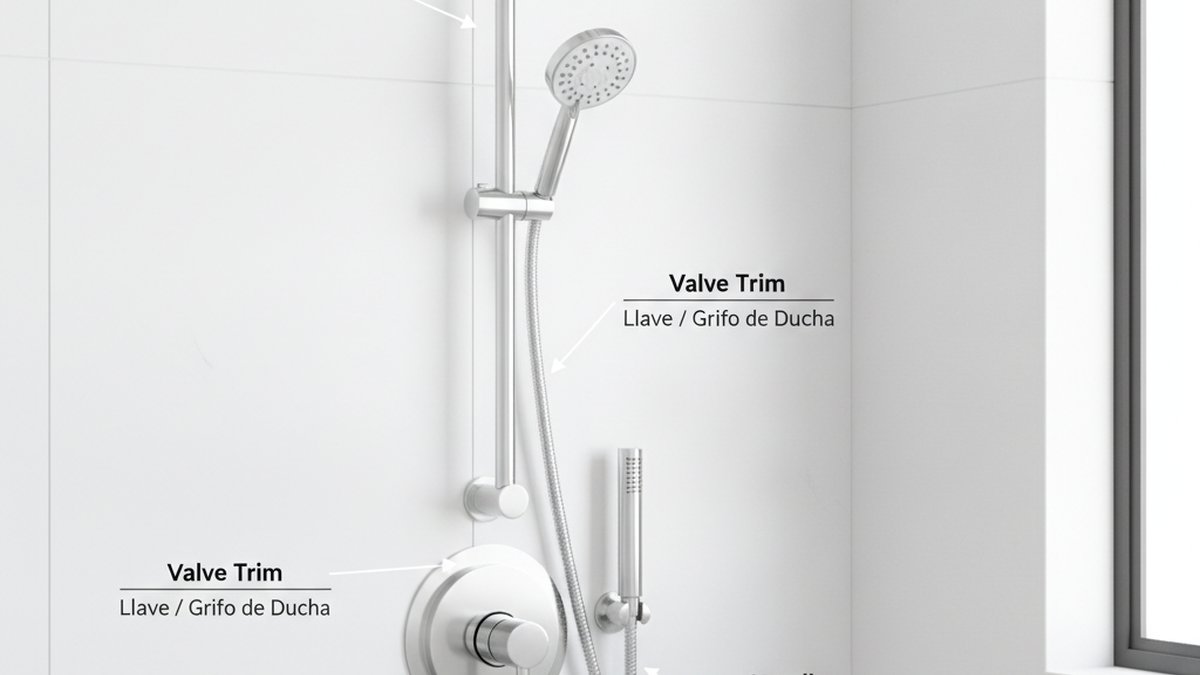
If you’ve searched “shower faucet in spanish,” you’re almost never just doing a vocabulary quiz — you’re trying to buy the right fixture, explain a problem to a Spanish-speaking plumber, or read a product label without ordering the wrong part. The tricky thing is that “shower faucet” doesn’t map to one single Spanish word. The correct term shifts depending on the country, and it changes depending on whether you mean the valve and handle you turn, the shower head water comes out of, or the whole shower system. Get the word wrong and you can easily end up with a spout when you wanted a diverter, or a head when you wanted a valve.
This guide gives you the exact words, by region, plus the terminology you’ll see on boxes and spec sheets so you can match a part number to what’s actually on your wall. We sell and test these fixtures every day at wigafaucet, so the goal here is practical: the right word, the right part, the right purchase.
How Do You Say “Shower Faucet” in Spanish — and Does the Word Change by Country?
Yes, it changes by country, and that’s the single biggest source of confusion. In Spain, a shower faucet in Spanish is almost always “grifo de ducha.” In Mexico and most of Latin America, people say “llave de ducha” or, very commonly, “llave de regadera” — because in Mexico the shower itself is often called la regadera, not la ducha.
So the same physical part has several correct names depending on where the person you’re talking to is from. Here’s the quick reference:
| English | Spain | Mexico | Argentina / Southern Cone |
|---|---|---|---|
| Shower faucet (valve + handle) | Grifo de ducha | Llave de regadera | Grifería de ducha / canilla de ducha |
| Shower head | Alcachofa / rociador | Regadera / cebolla | Flor de ducha / rociador |
| The shower (the room/fixture) | La ducha | La regadera | La ducha |
| Handle / lever | Maneta | Maneral / manija | Manija |
| Diverter (tub/shower) | Desviador / inversor | Desviador | Desviador |
The practical takeaway: if you don’t know where your listener or supplier is from, say “grifo o llave de ducha” and point. Nearly every Spanish speaker understands both, and adding the gesture removes all doubt about whether you mean the valve or the head.
What’s the Difference Between “Grifo de Ducha,” “Regadera,” and “Alcachofa”?
The difference is which piece of the shower you’re naming — and this is exactly where people order the wrong thing. “Grifo/llave de ducha” is the control: the valve body, cartridge, and handle you turn to start water and set temperature. “Regadera” (Mexico) or “alcachofa” (Spain) is the shower head — the perforated piece the water sprays out of. They are not interchangeable, and stores stock them as separate SKUs.
Think of it like a kitchen tap: the “faucet” in English can mean the whole thing, but when you order a replacement you need to know if you want the spout, the cartridge, or the head. Spanish is actually more precise here than English, which is helpful once you know the words:
- Grifo / llave de ducha — the water control (valve + trim + handle). This is what English speakers usually mean by “shower faucet.”
- Cartucho — the cartridge inside the valve. If your shower drips or won’t hold temperature, this is the part you ask for, not a whole new grifo.
- Regadera / alcachofa / rociador — the shower head. A rainfall head is a regadera tipo lluvia or rociador de lluvia.
- Brazo de ducha — the shower arm, the pipe that connects the head to the wall.
- Desviador / inversor — the diverter that switches flow between tub spout and shower head.
If you’re upgrading the spray rather than the controls, most of what you care about is the head, and the physics of pressure and flow matter more than the label. Our guide on whether you can really get a high-pressure rainfall shower head walks through exactly what a “regadera tipo lluvia” can and can’t do on residential water pressure.
Which Spanish Words Do I Need to Buy the Correct Shower Faucet Online?
To buy the right shower faucet, match three things in Spanish: the type of valve, the configuration (handles and functions), and the finish. Those three specs determine whether the part fits your plumbing and looks right, and every Spanish-language product page lists them.
Here’s how the key buying terms translate, so a Spanish spec sheet reads the same as an English one:
| English spec | Spanish spec | Why it matters when buying |
|---|---|---|
| Single-handle | Monomando / una manija | One lever controls temperature and flow together |
| Two-handle | Bimando / dos llaves | Separate hot and cold controls |
| Pressure-balance valve | Válvula de balance de presión | Prevents scalding when someone flushes a toilet |
| Thermostatic valve | Válvula termostática | Holds an exact set temperature |
| Rough-in valve | Válvula de empotrar / cuerpo empotrado | The in-wall body; must match the trim |
| Trim kit | Kit de acabado / embellecedor | The visible plate, handle, and escutcheon |
| Chrome / Brushed nickel / Matte black | Cromo / Níquel cepillado / Negro mate | Finish — must match your other fixtures |
| Diverter | Desviador | Needed if one valve feeds both tub and shower |
One warning that saves a lot of returns: in most brands the valve body (“válvula de empotrar”) and the trim kit (“kit de acabado”) are sold separately, and they have to be from a compatible line. If you only see the pretty handle on a listing, ask whether the cuerpo/válvula is included. This is the same trap people fall into with tub fillers — see our breakdown of the rough-in valve on a freestanding tub faucet for the full “why do I need two parts” explanation, which applies directly to showers too.
How Do I Tell a Spanish-Speaking Plumber Exactly What’s Wrong With My Shower?
Describe two things clearly: which part is failing (valve, cartridge, head, or diverter) and what it’s doing (dripping, no hot water, low pressure, or leaking behind the wall). Spanish has clean, direct phrases for each, and using the right one gets you the right repair the first time.
Copy-and-paste phrases that plumbers understand across regions:
- “La llave/el grifo de ducha gotea.” — The shower faucet is dripping. (Usually a worn cartucho.)
- “No sale agua caliente de la regadera.” — No hot water comes from the shower.
- “Sale poca presión / poca agua.” — There’s low pressure / weak flow.
- “El desviador no cambia entre tina y regadera.” — The diverter won’t switch between tub and shower.
- “Creo que hay una fuga dentro de la pared.” — I think there’s a leak inside the wall. (Urgent — get this looked at fast.)
- “Necesito cambiar el cartucho, no toda la llave.” — I need to replace the cartridge, not the whole faucet.
That last phrase matters because a dripping shower is usually a worn cartridge, not a dead faucet — replacing the cartucho is far cheaper than replacing the grifo. The diagnostic logic is the same regardless of language; our walkthrough on the leaking bathroom faucet shows how to trace a drip to the cartridge before you spend money on parts you don’t need. And if your weak shower is a pressure problem rather than a broken valve, the fixes in our guide to a shower head for low-pressure hot water will likely help more than a new valve.
What Does a Shower Faucet Cost, and What Are the Words on the Price Tag?
Expect roughly $40–$120 for a basic pressure-balance shower faucet (grifo de ducha monomando), $120–$300 for a thermostatic or multi-function set, and more for full rain-plus-handheld systems. On Spanish tags, the price line usually pairs the type with the finish, so knowing a handful of words tells you what you’re paying for.
Terms you’ll see near the price:
- Monomando empotrado — single-handle, in-wall (concealed) valve. Clean look, needs the wall opened.
- Grifo de ducha exterior / visto — exposed shower faucet, mounts on the wall surface. Easier to install, common in remodels.
- Sistema de ducha / columna de ducha — a full shower system or shower column (head + handheld + sometimes body jets).
- Termostática — thermostatic; costs more but holds temperature precisely and is a safety feature for kids and older adults.
- Ahorro de agua / eco — water-saving; look for the flow rate in litros por minuto (L/min) or gallons per minute (GPM).
A quick spec note that crosses the language barrier: in the U.S., shower heads are legally capped at 2.5 GPM (about 9.5 L/min); many “eco” models run 1.8 GPM. If a Spanish listing shows the flow in L/min, divide by 3.785 to get GPM. And whatever the label says, the finish should match the rest of your bathroom — a cromo (chrome) valve next to níquel cepillado (brushed nickel) accessories will look off.
Does the Shower Faucet Fit U.S. or Metric Plumbing — and How Do I Check?
Check the thread standard before you buy, because Spanish-language products sold for Latin America and Spain sometimes use metric (BSP) threads, while U.S. plumbing uses NPT. The shower-arm connection is almost universally 1/2 inch, but 1/2″ NPT and 1/2″ BSP are not the same and won’t seal properly together.
Here’s how to confirm compatibility in plain terms:
- Shower head to arm: The standard is 1/2″ — in Spanish, “rosca de 1/2 pulgada”. Most heads are interchangeable here regardless of region.
- Valve to supply lines: This is where NPT vs. BSP matters. Ask if the valve is “rosca NPT” (U.S.) or “rosca BSP / métrica”.
- If you need to adapt threads: a thread adapter — “adaptador de rosca” — solves most mismatches. Our guide on choosing a faucet adapter covers how to read thread sizes so you buy the right connector instead of forcing a fit.
When in doubt, take a clear photo of the existing connection and the back of the old part, and match it before ordering. A five-minute measurement (“medir la rosca”) prevents the classic problem of a beautiful new fixture that won’t thread onto your existing pipe.
A Note From Our Team (E-E-A-T)
Author: This guide was written by the wigafaucet product team, drawing on day-to-day work fitting, testing, and shipping shower valves and heads to customers across the U.S. and Latin America. Because a large share of our buyers shop and troubleshoot in both English and Spanish, we built this terminology reference from the actual questions customers and their plumbers ask us.
Brand credibility & standards: wigafaucet designs and pressure-tests its shower faucets to meet U.S. plumbing standards, including ASME A112.18.1 / CSA B125.1 for fittings and low-lead compliance under the Safe Drinking Water Act (NSF/ANSI 372). Our pressure-balance valves are cycle-tested for temperature stability, and shower faucets carry a limited lifetime warranty on the valve body and finish. Bilingual installation sheets ship with our shower systems so the terms in this article match what’s in the box.
FAQ
What is the most common way to say “shower faucet” in Spanish?
The two most common terms are “grifo de ducha” (Spain) and “llave de ducha” or “llave de regadera” (Mexico and much of Latin America). Both refer to the valve-and-handle assembly you turn to control the water. If you’re unsure of the region, say “grifo o llave de ducha” and you’ll be understood.
Is a “regadera” the shower head or the whole shower?
It depends on the country. In Mexico, “regadera” usually means the entire shower and is used for the shower head. In Spain, the shower head is an “alcachofa” or “rociador,” and the shower itself is “la ducha.” When buying a head specifically, “rociador” is the clearest cross-region word.
How do I say “shower cartridge” in Spanish when my faucet drips?
Ask for the “cartucho de la llave/grifo de ducha.” A dripping shower is almost always a worn cartridge, so you can tell a plumber “necesito cambiar el cartucho, no toda la llave” (“I need to change the cartridge, not the whole faucet”) to avoid an unnecessary full replacement.
Will a shower faucet labeled in Spanish fit my American plumbing?
Often yes for the shower head (the 1/2-inch arm thread is nearly universal), but check the valve threads. U.S. plumbing uses NPT; some products for Spain and Latin America use BSP/metric. Confirm whether the listing says “rosca NPT” or “rosca BSP,” and use an “adaptador de rosca” if they don’t match.
What’s the Spanish word for the diverter that switches between tub and shower?
It’s “desviador” (also “inversor” in Spain). If it’s stuck, you’d say “el desviador no cambia entre tina y regadera” — the diverter won’t switch between the tub and shower.
Do I need a thermostatic or a pressure-balance shower faucet?
For most homes a pressure-balance valve (válvula de balance de presión) is enough — it prevents scalding when water is drawn elsewhere and costs less. Choose thermostatic (termostática) if you want to lock in an exact temperature every time, which is especially worth it for households with kids or older adults.