 Wiga Tap Manufacturer
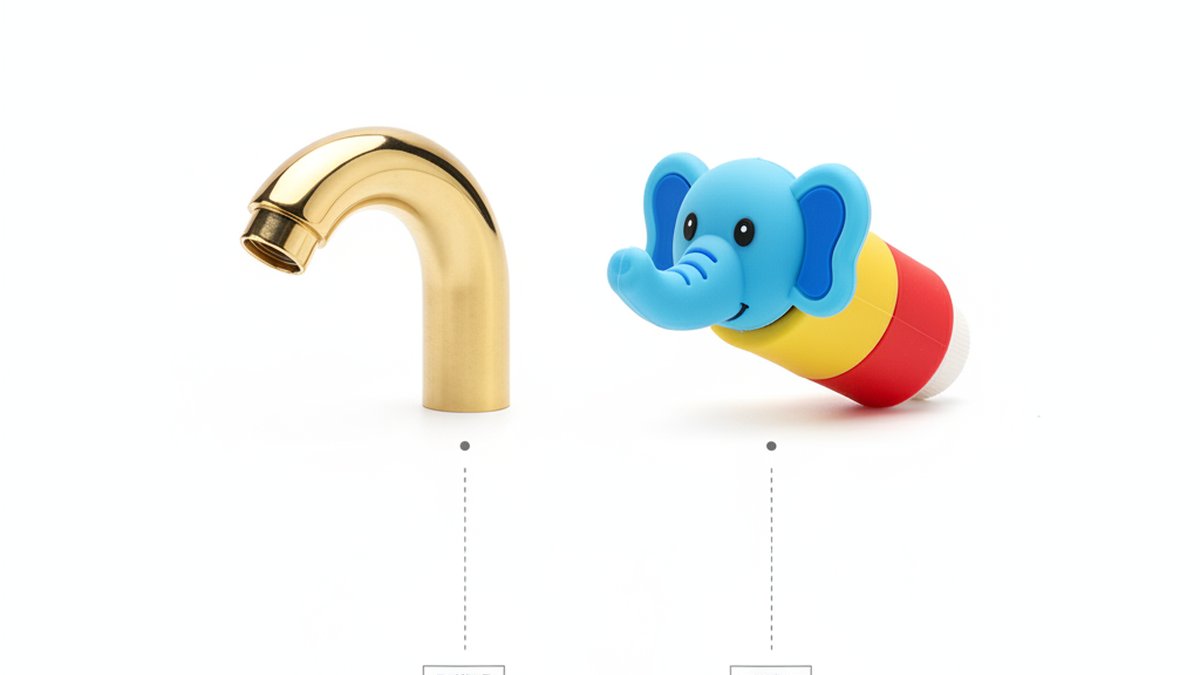
If you’re sourcing, importing, or dropshipping faucet parts, getting the right faucet extender hs code is the difference between a clean customs clearance and a shipment stuck in a bonded warehouse racking up storage fees. The short version: the 6-digit international code is almost always in Chapter 84 under heading 8481 (taps, cocks, valves) when the extender is a metal plumbing component — but a molded plastic or silicone extender for a kid’s bathroom sink is a completely different animal and lands in Chapter 39. Below I’ll walk you through exactly how customs looks at these products, the codes by material and type, and how to avoid the classification mistake that gets importers audited.
What exactly is a “faucet extender,” and why does it change the HS code?
A “faucet extender” is actually three different products wearing the same name, and customs treats each one differently. Before you can pick a code, you have to know which one you’re shipping.
- Metal spout extensions / extension nipples — a short threaded brass or stainless tube that screws onto or between the faucet and the aerator to add length or redirect flow. This is a plumbing part.
- Functioning add-on tap extenders — a device with its own valve, swivel, or on/off control that extends reach, common on utility and laundry sinks. This is an appliance.
- Children’s / silicone faucet extenders — the soft, often cartoon-shaped guide that clips onto a bathroom spout so a toddler can reach the water stream. This is a plastic household article, not a plumbing fitting.
The Harmonized System classifies goods by what they are made of and what they functionally do — not by the marketing name on the box. So a “faucet extender” made of brass that carries pressurized water is classed with taps and valves, while a “faucet extender” made of food-grade silicone that simply channels an existing stream is classed with plastic tableware and kitchen articles. Same shelf label, two different chapters, two different duty rates.
What is an HS code, and how many digits do I actually need?
An HS code is the standardized number customs authorities worldwide use to identify a product; you need the full national-level code (usually 8–10 digits) for your destination, not just the 6-digit root. The first 6 digits are set globally by the World Customs Organization and are the same in every member country. After that, each country adds its own digits.
| System | Region | Digits | Example for a faucet part |
|---|---|---|---|
| HS (WCO root) | International | 6 | 8481.90 |
| HTS | United States | 10 | 8481.90.9040 |
| CN Code | European Union | 8 | 8481.90.00 |
| Commodity Code | United Kingdom | 10 | 8481.90.0000 |
So when a supplier in China hands you “HS code 8481.90,” that’s only the shared root. Your U.S. customs broker still needs the full 10-digit HTS line to file entry, and that last stretch of digits is exactly where duty rates and extra tariffs (like U.S. Section 301 duties on many China-origin goods) get applied. Treating the 6-digit code as “done” is the single most common importer error I see.
Which HS code fits my faucet extender by material and type?
Here’s the direct answer: match your extender to its material and function first, then read off the code below. A metal, pressure-carrying part goes in 8481; a plastic/silicone stream guide goes in 3924.
| Product type | Material | Likely 6-digit HS | Why |
|---|---|---|---|
| Brass spout extension / extension nipple | Brass | 8481.90 | Part of a tap/valve, not a complete appliance |
| Extender with built-in valve, swivel, or on/off | Metal | 8481.80 | A functioning tap appliance in its own right |
| Aerator-equipped extension | Brass + mesh | 8481.90 | Treated as a part/fitting of a tap |
| Children’s faucet extender (stream guide) | Silicone / plastic | 3924.90 | Household plastic article, no flow control |
| Decorative plastic extender guide | ABS / PP plastic | 3924.90 or 3926.90 | Plastic article of general use |
| Rubber/elastomer flexible extender | Vulcanized rubber | 4016.99 | Other article of vulcanized rubber |
A quick rule of thumb I give wholesale buyers: if water flows through it under pressure and it threads into the plumbing, it’s probably 8481. If it just hangs on the spout and redirects an already-open stream, and it’s plastic or silicone, it’s probably 3924. This is the same logic that decides whether a faucet adapter for a hose or filter is classed as a metal tap part versus a plastic accessory — material and function drive the code every time.
Is a faucet extender classified as a “part” or a “complete appliance”?
It depends on whether it can control water on its own. If your extender has a valve, lever, or shut-off, it’s a complete appliance and belongs in 8481.80 (hand-operated taps). If it’s just a tube, coupler, or extension that relies entirely on the faucet it attaches to, customs treats it as a part under 8481.90. This distinction matters because in many tariff schedules parts and complete appliances carry different duty rates, and misdeclaring a simple extension nipple as a complete tap can inflate your landed cost unnecessarily — or worse, understate duty and trigger a penalty.
What HS code do Chinese suppliers usually put on faucet extenders?
Chinese manufacturers most often declare brass faucet parts under 8481.90.00 and complete faucets under 8481.80.00 on the export side, but you should never copy that number onto your import entry without checking it against your own country’s tariff. The export code your factory uses is built for Chinese customs outbound statistics — it’s a valid 6-digit root, but the 8th–10th digits that determine your duty are set by your import country.
This is also where country-of-origin rules bite. A faucet extender assembled in China from Chinese brass is China-origin, and for U.S. importers that currently means Section 301 tariffs may stack on top of the base HTS duty. Shifting final assembly or substantial transformation to another country can change origin, but that’s a determination you make with a customs attorney, not something you can wish into existence by relabeling a box. If your sourcing involves compliance-sensitive plumbing goods, it pays to understand parallel standards like lead-content limits too — the same diligence that goes into a lead-free kitchen faucet setup applies to the small brass parts that touch drinking water.
What duty rate should I expect on HS 8481 faucet parts?
Base duty on brass tap parts under 8481.90 is often modest — in the U.S. it has historically sat around 2–3% general rate, and 0% under several free-trade agreements — but the headline number is rarely what you actually pay. Add any applicable Section 301 tariff for China-origin goods (which has ranged from 7.5% to 25% on affected lines), merchandise processing fees, and freight, and your real landed duty can be several times the base rate. Always price your product against the full stack, not the base tariff line alone.
How do I confirm the correct faucet extender HS code so customs won’t reject it?
The reliable path is to document the product’s material and function, then get the classification confirmed in writing before you ship a large order. Guessing works until the day it doesn’t — and the day it doesn’t usually involves a detained container and a demand for back-duty. Here’s the process I walk clients through:
- Write down the exact material (brass, stainless, zinc alloy, silicone, ABS) and weight — composition is the first thing a customs officer checks.
- Define the function in one sentence: does it control water flow, or only extend/redirect an existing stream?
- Pull the destination country’s tariff schedule (U.S. HTS, EU TARIC, UK Trade Tariff) and find the full national code, not just the 6-digit root.
- Request a binding ruling if the value is high or you ship repeatedly. In the U.S., CBP issues binding rulings that lock in your classification and protect you from reclassification penalties.
- Have your customs broker review the commercial invoice before the first shipment, so the declared code, description, and value all line up.
One more practical tip: make sure your invoice description matches the code. If you declare 8481.90 (“parts of taps”) but the invoice says “complete faucet set,” you’ve created a contradiction that invites inspection. The description, the HS code, and the physical goods all have to tell the same story. This same attention to the fine print is what separates a smooth order from a returns headache — the same way picking the correct bathroom faucet supply line size up front saves a second trip to the store.
Do faucet extenders ever get classified as plumbing fittings instead of valves?
Occasionally, yes — and this trips up importers. A plain extension coupler with no valve function and no aerator can sometimes be argued into heading 7412 (brass pipe fittings) rather than 8481 (parts of taps). The deciding factor is whether the item is recognizably a part of a tap or just a generic pipe connector. In practice, extenders marketed and designed specifically for faucets almost always stay in 8481.90, but if yours is a simple threaded brass nipple with no faucet-specific features, flag it to your broker — the fittings heading can carry a different duty. If your product is really a connector-style component, the logic overlaps heavily with how a commercial sink faucet connector gets classified.
What happens if I use the wrong HS code on a faucet extender?
Using the wrong code doesn’t just risk a delay — it can mean back-duty, penalties, and a flag on your importer record. Customs authorities can reclassify your goods at entry or during a post-entry audit going back years. If the correct code carried a higher duty than the one you declared, you owe the difference plus interest, and willful or repeated misclassification can escalate to fines that dwarf the duty itself.
The flip side is just as costly in a quieter way: if you over-declare — say, classifying a simple plastic kids’ extender as a complete metal tap — you may be paying more duty than you owe on every single shipment, quietly eroding your margin. Accurate classification is as much a profit-protection exercise as a compliance one. For an e-commerce brand moving thousands of small parts, a half-point of duty difference compounds fast.
Author note & why you can trust this guidance
This guide was written by the wigafaucet product and sourcing team, who classify and import faucets, aerators, extensions, and bathroom fixtures on a weekly basis and work directly with licensed customs brokers on tariff lines in the 8481 and 3924 families. wigafaucet (wigafaucet.com) is a dedicated faucet and bathroom fixture brand; our products are built to recognized plumbing standards — including lead-content limits for drinking-water contact parts and pressure-rating tests on valve components — and our fixtures ship with a manufacturer warranty. Classification guidance here reflects how customs generally treats these goods, but it is general information, not legal advice: for a shipment of real value, confirm your exact code with a licensed broker or a binding customs ruling.
FAQ
What is the HS code for a faucet extender?
The 6-digit HS root is most commonly 8481.90 for a metal faucet extension treated as a part of a tap, or 8481.80 if the extender is a complete appliance with its own flow control. A plastic or silicone children’s faucet extender is usually 3924.90 instead. Always add your country’s national digits (e.g., 8481.90.9040 in the U.S.).
Is a children’s silicone faucet extender the same HS code as a brass one?
No. A soft silicone or plastic kids’ extender that only redirects an already-flowing stream is a household plastic article, typically 3924.90, and sits in Chapter 39. A brass extender that threads into the plumbing and carries pressurized water is a tap part under 8481.90 in Chapter 84. Same product name, different chapter, different duty.
Can I just use the HS code my supplier gives me?
Use it as a starting point, not the final answer. Your supplier’s export code is a valid 6-digit root, but your import country adds its own digits that determine duty. Confirm the full national code with your customs broker, and make sure the invoice description matches it before you ship.
Does the faucet extender HS code affect how much duty I pay?
Yes, significantly. The full national code sets the base duty rate and determines whether extra tariffs apply — for example, U.S. Section 301 duties on China-origin goods can add 7.5%–25% on top of the base rate for affected 8481 lines. Two plausible-looking codes can carry very different landed costs.
How do I get a guaranteed-correct HS code for my faucet extender?
Request a binding ruling from your country’s customs authority (CBP in the U.S.). You submit the product’s material, function, and specs, and they issue a written classification you can rely on. It protects you from reclassification penalties and is worth the effort for any repeat or high-value import.