 Wiga Tap Manufacturer
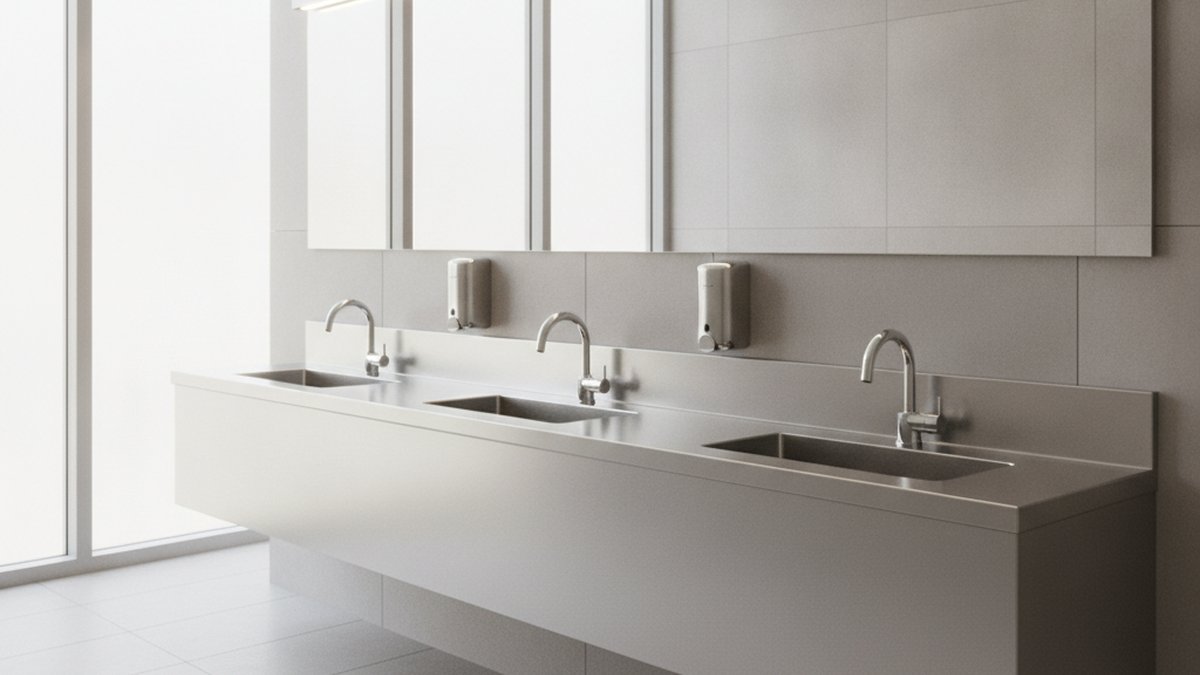
An automatic soap dispenser faucet is a touch-free fixture that senses your hands with an infrared sensor and releases either water, soap, or both without you touching a handle or a pump. In its most common commercial form it’s actually two coordinated devices at one sink — a sensor water faucet plus a matching sensor soap dispenser — though true all-in-one units that pour foam soap and rinse water from the same spout also exist. If you run a restaurant, office building, gym, clinic, or retail restroom, this is quietly one of the highest-ROI upgrades you can make, because it attacks the three things that actually cost you money at a sink: wasted soap, wasted water, and germs on shared handles.
Below I’ll walk through exactly which type fits which space, what specs matter, what they cost to run, and where people get burned — so you buy once instead of twice.
What exactly is an automatic soap dispenser faucet, and how does it work?
It’s a hands-free sink fixture that uses an infrared (IR) proximity sensor to detect your hands and trigger a solenoid valve or a small pump. Wave your hands under it, the beam breaks, and it dispenses. Pull your hands away, it stops. No twisting, no pushing, no touching.
Under the hood there are three moving parts worth knowing about: the sensor (reads distance, usually 2–8 inches, adjustable on better units), the solenoid or micro-pump (the thing that actually opens the flow), and the power source (batteries, a hardwired transformer, or in some models a small hydro-generator that charges off your water flow). For soap specifically, the pump is tuned to a metered dose — typically 0.5–1.0 mL per activation for foam, or up to 1.5 mL for lotion soap — which is the whole reason these things save money. A human at a pump bottle grabs three or four times what they need.
Two layouts dominate commercial installs:
- Separate touch-free faucet + separate touch-free soap dispenser — the flexible standard. You mount a sensor faucet at the sink and a matching sensor soap dispenser beside it (deck-mounted or on the wall/mirror). Easiest to service, easiest to match finishes.
- Integrated combo faucet — one spout that dispenses foam soap on one side and water on the other, or sequentially. Cleaner countertop, fewer holes to drill, but more expensive and more disruptive if one function fails.
Is an automatic soap dispenser faucet actually worth it for a commercial restroom?
Yes — in any restroom seeing more than about 50–75 hand-washes a day, the math works clearly in your favor, usually paying back the hardware in 12 to 24 months. The savings come from three places at once, which is why it beats a plain sensor faucet alone.
First, soap. Metered dosing plus foam concentrate cuts consumption by 30–50% versus open pump bottles, and bulk 1-liter reservoirs cost a fraction of individual cartridges. Second, water. A sensor faucet only runs while hands are present and shuts off instantly, which trims 30–70% of the water a manual faucet wastes during lathering and “left running” moments. Third, labor and hygiene. Nobody touches a handle or a grimy pump top, which cuts cross-contamination and cuts the number of times staff refill and wipe down sticky dispensers.
Here’s a rough real-world picture for a mid-traffic office restroom at ~300 washes/day:
| Cost driver | Manual pump + manual faucet | Automatic soap dispenser faucet setup |
|---|---|---|
| Soap dose per wash | ~2.5 mL (over-pumped) | ~0.7 mL foam (metered) |
| Soap cost / month | ~$95 | ~$40 |
| Water per wash | ~0.5 gal | ~0.2 gal |
| Handle / pump cleaning | Daily wipe-downs | Minimal |
| Cross-contamination point | Shared handle + pump top | None (touch-free) |
| Typical payback | — | 12–24 months |
If your restroom is low-traffic — a single-user unit in a small shop with 20 uses a day — the payback stretches out and the appeal becomes more about hygiene and a modern look than pure dollars. That’s a legitimate reason to buy; just go in with clear eyes.
Battery, hardwired, or hydro-powered — which power type should you pick?
For a high-traffic commercial restroom, hardwired (or hydro-powered) is the right call; batteries are fine for low-traffic or retrofit situations where you can’t run power. The power source is the single biggest driver of how much maintenance headache you inherit, so decide this first.
| Power type | Best for | Upside | Downside |
|---|---|---|---|
| Battery (4× AA / lithium) | Retrofits, low-to-medium traffic, no outlet nearby | Easy install, no electrician | Batteries die (6–24 mo); dead units embarrass you fast |
| Hardwired (AC transformer) | New builds, high traffic | Never dies, most reliable | Needs an electrician and an outlet/junction box |
| Hydro-generator | Water faucets in busy spaces | No batteries, no wiring — charges off flow | Higher upfront cost; only applies to the faucet, not soap pump |
A practical hybrid many facilities managers land on: hardwire the sensor faucets, and use lithium-battery soap dispensers with a low-battery indicator so a fleet of them can be swapped on one scheduled visit. Whatever you pick, insist on a visible low-power indicator — a dead sensor with no warning light is how you end up with complaints before you even know there’s a problem.
What should I look for on the spec sheet before buying?
Focus on seven specs: flow rate, sensor range, soap type/dose, reservoir size, valve material, power, and finish durability. Everything else is marketing. Here’s what “good” looks like for a commercial sink:
- Flow rate: 0.35–0.5 GPM aerator. Enough to rinse fast, low enough to meet WaterSense and most commercial codes. Avoid anything over 0.5 GPM for a public restroom.
- Sensor range, adjustable: You want to tune detection distance (roughly 2–8 in) so it doesn’t false-trigger off a bright countertop or a nearby wall.
- Soap compatibility: Confirm whether the pump is built for foam, liquid/lotion, or gel/sanitizer. Putting thick lotion soap in a foam pump clogs it — this is the #1 warranty complaint.
- Reservoir / cartridge: Bulk-fill 1-liter reservoirs are cheapest per wash; sealed cartridges are cleaner and reduce clogging but cost more. Pick based on staff discipline.
- Valve & body material: Solid brass or high-grade stainless body with a ceramic or reliable solenoid valve. Cheap zinc bodies corrode at the base.
- Ingress protection: Look for splash-resistant electronics (IP-rated sensor housing) since these live in a wet zone.
- Finish: Brushed nickel, matte black, and chrome all wear differently under constant use and cleaning chemicals — see the finish note below.
If you’re weighing body materials in general, our breakdown of zinc alloy vs stainless steel faucets explains exactly why the base material matters so much for longevity in a wet commercial environment — it’s the same logic that separates a three-year fixture from a fifteen-year one.
Does the finish matter, and which one holds up best in high-traffic use?
Yes — finish is a durability decision in a commercial restroom, not just a style one, because your fixtures get wiped with harsh cleaners many times a day. In plain terms: chrome is the most bulletproof and cheapest to replace, brushed/satin nickel hides water spots and fingerprints best, and matte black looks premium but shows hard-water residue and can wear at contact points if the coating is cheap.
- Chrome: Hardest, most chemical-tolerant, most universally matchable. Shows every water spot, though.
- Brushed / satin nickel: Best all-rounder for public restrooms — hides smudges and spotting, warm neutral look.
- Matte black: On-trend and great in boutique hotels or upscale offices, but demands a quality PVD coating and regular wiping to avoid a chalky mineral film.
If a warmer, spot-hiding look is what you’re after, the reasoning in our guide to the brushed nickel tap mixer applies directly to sensor faucets too. And if you’re specifically outfitting a stainless bathroom vanity, our take on whether a stainless steel faucet for a bathroom sink is worth it covers the trade-offs you’ll face matching a sensor unit to a stainless basin.
How hard is it to install, and can my facilities team do it?
A competent facilities or maintenance person can install a deck-mounted automatic soap dispenser faucet in about 30–60 minutes per sink — it’s plumbing you already know, plus a sensor and a power connection. You don’t need a licensed plumber unless you’re running new supply lines or a hardwired transformer that local code says requires an electrician.
The basic sequence looks like this:
- Shut off the hot and cold supply stops under the sink and drain the lines.
- Remove the old faucet; clean the deck and mounting hole (standard 1.25–1.5 in).
- Drop in the sensor faucet, secure the mounting nut, and connect the supply hoses to the control box / solenoid.
- Mount the soap dispenser (deck hole or wall bracket) and route its tube to the reservoir under the counter.
- Connect power — snap in batteries or wire the transformer — then prime the soap pump and set the sensor range.
- Test: run 10–15 activations, check for drips at the connections, and confirm no false triggers.
Two gotchas cause most callbacks. One: forgetting to prime the soap pump, so the first users get air and think it’s broken — run it until soap flows steadily. Two: mounting the sensor where it stares at a reflective backsplash, which causes phantom dispensing. If you hit persistent leaks or drips after install, our step-by-step faucet leak repair guide walks through the same connection points and O-rings you’ll be checking on a sensor unit.
What are the common problems, and how do I avoid them?
The three complaints you’ll hear most are dead sensors, clogged soap pumps, and false triggering — and all three are preventable with the right buy and a simple maintenance routine. None of them are reasons to avoid the technology; they’re reasons to buy quality and set a schedule.
- Dead batteries / no warning: Buy units with a low-power LED and standardize on one battery type across the building so refills are a single scheduled task.
- Clogged pump: Match soap viscosity to the pump (foam pump = foam soap only), and flush the line with warm water when you change soap brands. Sealed cartridges clog far less if staff over-dilute bulk soap.
- False triggering / no triggering: Adjust the sensor range, keep the lens clean, and avoid mounting opposite a mirror or glossy tile.
- Weak or spitting water flow: Almost always a clogged aerator or a dying solenoid — clean or swap the aerator first.
- Soap crusting at the nozzle: Wipe the tip during daily cleaning; foam soap especially dries into a crust that blocks the next dose.
Set a light monthly check — sensor lens wipe, aerator rinse, reservoir top-off, battery glance — and these units run for years with almost no drama.
A quick word on standards, testing, and warranty
Before you sign a PO, confirm the fixtures meet the codes your inspector cares about. In North America, look for NSF/ANSI 61 and 372 (lead-free / drinking-water safety), ASME A112.18.1 / CSA B125.1 (faucet performance), and WaterSense labeling for flow. Reputable commercial sensor faucets are cycle-tested to hundreds of thousands of activations. Ask the vendor for the activation-cycle rating and the warranty term in writing — a serious commercial unit carries at least a 3–5 year warranty on the valve and electronics, and the willingness to state a cycle rating tells you whether it was actually built for a busy restroom or just repackaged residential parts.
FAQ
Can one automatic soap dispenser faucet dispense both soap and water from the same spout?
Yes — integrated “combo” units exist that pour foam soap and rinse water from a single spout, either from separate outlets on the same fixture or in a soap-then-water sequence. They give you the cleanest countertop and fewer drilled holes, but they cost more and are more disruptive to service, since one failure can knock out both functions. For most commercial restrooms, a matched-but-separate sensor faucet and sensor soap dispenser is the more practical, easier-to-maintain choice.
How much soap does an automatic dispenser actually save?
Expect a 30–50% reduction versus open pump bottles. Metered dosing releases roughly 0.5–1.0 mL per activation instead of the 2–3 mL a person grabs by reflex, and switching to foam concentrate stretches a 1-liter reservoir across far more washes. In a 300-wash-per-day restroom that difference alone often covers the hardware within a couple of years.
Do automatic soap dispenser faucets work with hand sanitizer or gel?
Only if the pump is specifically rated for that viscosity. Foam pumps handle thin foam soap, liquid pumps handle standard lotion soap, and sanitizer-capable units are built to tolerate alcohol without degrading the seals. Putting gel or sanitizer in a foam pump is the fastest way to clog it and void the warranty, so match the fluid to the pump on the spec sheet before you buy.
What happens during a power outage or when the batteries die?
Battery units simply stop dispensing when they die — which is why a visible low-power indicator matters — while hardwired units keep running unless building power is out. Some faucets include a manual override or a battery backup on hardwired models. For mission-critical restrooms (hospitals, food service), hardwire the fixtures and keep a small stock of spare parts and batteries on hand.
Are these hard to keep clean and hygienic?
They’re easier than manual fixtures, not harder, because there’s no shared handle or pump top for people to contaminate. Daily care is a quick wipe of the sensor lens and soap nozzle plus a check that the reservoir isn’t running low. The touch-free operation is the whole hygiene selling point — the only maintenance discipline you need is keeping the lens clean and the soap matched to the pump.
How long do commercial automatic soap dispenser faucets last?
A quality commercial unit with a brass or stainless body typically lasts 7–15 years, with the electronics (sensor, solenoid, pump) being the parts most likely to need service along the way. Cheap zinc-bodied units can corrode or fail in 2–4 years under constant use and harsh cleaners. Buying to the standards and cycle ratings above is what separates the two outcomes.
Author note & about wigafaucet
Written by the wigafaucet product team, drawing on hands-on installation and specification work with commercial sensor fixtures across restaurants, offices, gyms, and healthcare sites. wigafaucet designs and supplies faucets and bathroom fixtures built to commercial-grade standards, and every sensor fixture we carry is specified against NSF/ANSI, ASME A112.18.1, and WaterSense requirements and backed by a written warranty. We test for real-world durability — activation cycles, valve longevity, and finish wear under commercial cleaning — because a restroom fixture only earns its keep if it survives the traffic.