 Wiga Tap Manufacturer
If you’re trying to find the best bath tap brands UK buyers actually trust — not just the ones with the biggest ad budgets — the honest answer is that a handful of names consistently deliver: Grohe and Hansgrohe at the premium end, Bristan, Vado and Methven in the sensible middle, and Hudson Reed, Crosswater and BagnoDesign when looks matter most. But the “best” brand for *you* depends less on the badge and more on three practical things: your home’s water pressure, the way your bath is drilled, and whether the tap uses quality ceramic-disc cartridges. Get those right and almost any reputable brand will serve you for a decade.
Below, we’ll answer the real questions people ask before spending £80–£400 on bath taps — the ones that come up in showroom conversations, on Reddit’s UK DIY threads, and in “People Also Ask” — and give you a comparison table you can actually shop from.
Which bath tap brands are the most reliable in the UK?
For sheer reliability, Grohe and Hansgrohe lead — both use their own ceramic-disc cartridges, offer long guarantees (Grohe backs many ranges for up to 5 years, Hansgrohe up to 5 as well), and hold up under the UK’s mix of hard water and variable pressure. Just behind them, Bristan and Vado give you 90% of that dependability for noticeably less money, which is why plumbers fit so many of them.
Reliability in a bath tap really comes down to one hidden part: the cartridge (or, on traditional twin taps, the ceramic-disc valve). This is the component that opens and closes the water. Cheap taps use rubber-washer or low-grade cartridges that wear and drip within a year or two. The better UK brands use hard-wearing ceramic discs rated for tens of thousands of open/close cycles. If you’ve ever wondered why a bargain tap starts dripping so fast, the cartridge is almost always the culprit — the same logic applies to basin and kitchen taps, which is why a good-quality single-handle cartridge is worth paying for.
Here’s the ranking most UK fitters would roughly agree on:
- Premium (£150–£400+): Grohe, Hansgrohe, Crosswater, BagnoDesign, Perrin & Rowe (traditional/heritage).
- Mid-range value (£80–£180): Bristan, Vado, Methven (formerly Deva/Damixa in some ranges), Roper Rhodes.
- Style-led / e-commerce (£50–£160): Hudson Reed, Nuie, JTP, Milano (BestHeating), and direct brands like wigafaucet.
- Budget (£25–£70): supermarket and unbranded taps — fine for a rental or short-term fix, but expect shorter life.
Deck-mounted, wall-mounted, or freestanding — which bath tap type do I actually need?
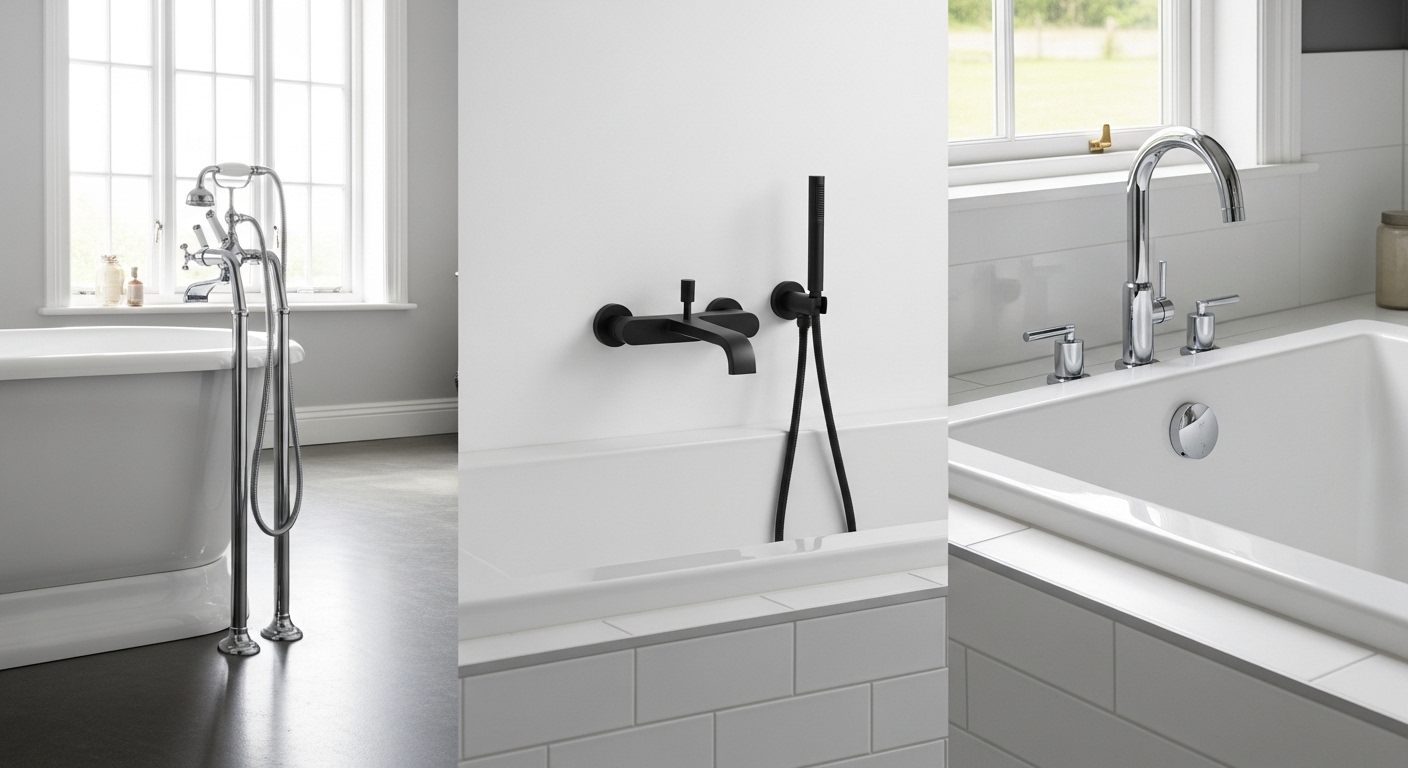
Match the tap to how your bath is drilled and where the pipes run: deck-mounted taps sit on the bath’s tap ledge (the most common UK setup), wall-mounted mixers come out of the wall behind the bath (great for a clean, minimalist look), and freestanding floor-standing taps rise from the floor next to a roll-top or freestanding tub. You can’t freely swap between them — the plumbing is roughed in differently — so decide this before you shop.
A quick way to know what you have:
- Look at the bath rim. Two holes = you need pillar taps or a two-hole deck mixer. One hole = a monobloc single-lever mixer. No holes = you’re going wall- or floor-mounted.
- Check the gap between holes. Standard UK bath tap-hole centres are around 180mm; make sure the mixer’s spread matches.
- Confirm your bath’s ledge thickness. Freestanding acrylic baths sometimes need longer tap tails and special fixings.
If you’re going for the increasingly popular freestanding look with a handheld, it’s worth reading up on the best matte black tub faucet with a hand shower for a freestanding bathtub before committing — the valve and hose routing differ from a plain filler.
What’s the best bath tap brand for low water pressure homes?
For low-pressure, gravity-fed systems (a cold tank in the loft and a hot cylinder in the airing cupboard — common in older UK homes), choose taps specifically rated to work from as little as 0.1–0.2 bar. Bristan and Methven both publish clear minimum-pressure ratings and make dedicated low-pressure bath fillers; Grohe and Hansgrohe also list bar ratings on every product. Avoid any tap that doesn’t state a minimum pressure.
This is the single most common bath tap mistake in the UK. People buy a sleek high-flow mixer designed for a mains-pressure combi boiler, fit it to a gravity system, and end up with a sad trickle. Before you buy, find out which system you have:
| Your hot water system | Typical pressure | What to look for in a bath tap |
|---|---|---|
| Gravity-fed (tank + cylinder) | 0.1–0.5 bar | Low-pressure rated filler; larger bore; avoid restrictive aerators |
| Combi boiler (mains) | 1.0–3.0 bar | Standard high-flow mixers; almost anything works |
| Unvented cylinder (mains) | 2.0–3.5 bar | Standard or high-flow; great for fast bath fills |
| Pumped / power shower system | 1.5–4.0 bar | Check max pressure rating; most premium taps fine |
Bath taps are also rated by flow rate, and a decent filler should deliver a strong fill so you’re not waiting 15 minutes. If your existing tap is weak, it isn’t always the brand — sometimes it’s a partially blocked isolation valve or a clogged aerator, the same root causes behind low flow out of a kitchen faucet. Rule those out before you blame the tap.
How much should I spend on bath taps in the UK?
Plan on £80–£180 for a quality mid-range bath mixer that will genuinely last 10+ years — that’s the value sweet spot from brands like Bristan and Vado. Below about £40 you’re gambling on the cartridge; above £250 you’re mostly paying for premium finishes, brand heritage, and design details rather than better core reliability.
Here’s roughly what your money buys:
| Budget | What you get | Best-fit brands | Realistic lifespan |
|---|---|---|---|
| £25–£50 | Basic chrome mixer, rubber/low-grade cartridge, thin plating | Unbranded, supermarket | 1–4 years |
| £60–£120 | Solid brass body, ceramic-disc cartridge, decent chrome | Bristan, Hudson Reed, Nuie, wigafaucet | 8–12 years |
| £120–£220 | Heavier brass, premium finish options, longer guarantee | Vado, Methven, Roper Rhodes, Crosswater | 12–20 years |
| £220–£400+ | Best cartridges, PVD finishes, design-led, top guarantees | Grohe, Hansgrohe, Perrin & Rowe, BagnoDesign | 20+ years |
One thing worth internalizing: the cheapest tap is rarely the cheapest over time. A £30 mixer that drips, corrodes, and needs a plumber to swap it in year two costs far more than a £90 tap that just works. Fitters see this constantly — it’s exactly the point made in this candid piece on why you should never buy cheap bathroom fixtures. Buy once, cry once.
What finish should I choose, and will it survive UK hard water?
Chrome is the safest, most durable, and easiest-to-clean bath tap finish for UK homes, and it hides limescale better than most. Brushed nickel and matte black look fantastic and are increasingly popular, but they show water spots and limescale more readily — so in a hard-water area (much of the South and East of England), factor in gentle regular wiping and avoid abrasive or acidic descalers that strip the coating.
A quick finish guide for UK bathrooms:
- Polished chrome: most durable, budget-friendly, hides scale well. The default for good reason.
- Brushed/satin nickel: warm, soft look; disguises fingerprints but shows scale rings.
- Matte black: striking and modern; needs gentle care, no abrasive cleaners, and pairs beautifully with a freestanding bath.
- Brushed brass / gold: premium look; make sure it’s a PVD-coated finish (Grohe, Crosswater, Hansgrohe) so it won’t tarnish.
- Traditional gold/nickel on lever taps: best for period bathrooms and roll-top baths.
In hard-water regions, limescale is the real enemy of any bath fixture — it clogs aerators, stiffens diverters, and dulls finishes. If your bath tap has a diverter for a shower attachment, keeping it clean matters even more; it’s worth understanding what separates a quality tub spout with diverter from a flimsy one before you buy, since that’s the part most likely to seize up.
Grohe vs Bristan vs Hudson Reed: which is the best value bath tap brand?
For pure value, Bristan is the smart pick — genuine brass bodies, ceramic-disc cartridges, and readily available UK spares at a fair price. Grohe is worth the premium if you want the best cartridges and finishes and plan to stay in the home long-term. Hudson Reed (and similar e-commerce brands) win on style-per-pound if you’re renovating on a budget and want an on-trend look without premium spend.
| Brand | Typical price (bath mixer) | Strength | Best for |
|---|---|---|---|
| Grohe | £180–£350 | Cartridges, finishes, guarantee | Long-term homeowners who want “fit and forget” |
| Hansgrohe | £170–£340 | Engineering, design, EcoSmart flow | Design-conscious buyers on mains pressure |
| Bristan | £70–£150 | Value, spares availability, low-pressure options | Most UK homes — the sensible default |
| Vado | £110–£220 | Solid build, good mid-premium finishes | Buyers wanting a step up without Grohe money |
| Hudson Reed / Nuie | £50–£140 | Style, price, choice | Budget renovations and rentals |
| Crosswater | £150–£300 | Design-led ranges, finishes | Statement bathrooms |
If you’re the kind of buyer who researches brand reputation before committing, you’ll notice the same debate plays out with basin and kitchen taps too. The reasoning we use to weigh Moen vs Kohler bathroom faucets — cartridge quality, spares, guarantee, finish durability — is exactly the framework to apply to UK bath tap brands. The badge matters less than those four fundamentals.
How do I make sure my bath taps last 15+ years?
Buy a tap with a ceramic-disc cartridge and a real guarantee, fit isolation valves on both supplies, and descale the aerator a couple of times a year — do those three things and a mid-range bath tap will outlive most of your bathroom. Most premature failures come from limescale and from cheap internal parts, not from normal use.
A few practical longevity habits:
- Fit isolation (service) valves under the bath when installing. They let you shut off one tap to service it without draining the whole house — and make future cartridge swaps a five-minute job.
- Wipe finishes with a damp cloth after baths in hard-water areas; skip acidic and abrasive cleaners on nickel, black, and brass.
- Descale the aerator/spout by unscrewing it and soaking in warm white-vinegar solution 2–3 times a year to keep flow strong.
- Keep the guarantee paperwork and note the model. UK brands like Bristan, Vado, Grohe and Hansgrohe sell replacement cartridges — a £10 part often revives a “dead” tap.
Author note & how we assess brands: This guide was written by the wigafaucet product team, who design, pressure-test, and quality-check faucets and bath fixtures for a living. Our assessment weighs cartridge cycle testing, finish salt-spray/PVD durability, minimum-pressure ratings, spares availability in the UK, and guarantee terms — not marketing. We reference recognized standards buyers should look for on any UK bath tap: WRAS approval (Water Regulations Advisory Scheme) confirming the tap is safe for UK drinking-water systems, plus EN 200 / EN 817 European standards for sanitary tapware performance and endurance. Where we name prices and lifespans, they reflect typical UK retail ranges as of 2026 and real-world fitting experience, and we recommend confirming the current guarantee (often 5+ years on premium ranges) directly with the manufacturer before purchase.
FAQ
What is the most reliable bath tap brand in the UK?
Grohe and Hansgrohe are the most reliable premium brands thanks to their own high-cycle ceramic cartridges and long guarantees, while Bristan is the most reliable value choice — solid brass, ceramic discs, and easy-to-find UK spares. For most homes, Bristan offers the best reliability-per-pound; for a fit-and-forget premium tap, Grohe is worth the extra.
Are expensive bath taps actually worth it?
Sometimes. Above roughly £250 you’re mostly paying for premium finishes (PVD brass, matte black), brand heritage, and design details rather than dramatically better reliability. A well-made £90–£150 tap from Bristan or Vado will last a decade-plus. Spend up if you want a specific designer finish or plan to stay in the home 15+ years; otherwise mid-range is the value sweet spot.
What bath taps work best with low water pressure?
Choose taps specifically rated for low pressure — down to 0.1–0.2 bar — which Bristan and Methven make in dedicated ranges, and which Grohe and Hansgrohe clearly label with a minimum bar rating. If you have a gravity-fed tank-and-cylinder system, never buy a high-flow mains-pressure mixer without checking its minimum-pressure spec, or you’ll get a trickle.
Can I fit bath taps myself or do I need a plumber?
Swapping like-for-like deck-mounted bath taps is a doable DIY job if you can access the tap tails, isolate the supplies, and connect flexi hoses — most confident DIYers manage it in an afternoon. Wall-mounted and freestanding floor-mounted taps involve altering pipework behind walls or under floors and are best left to a plumber. Always fit isolation valves so future maintenance is simple.
What’s the difference between a bath filler, a bath mixer, and bath pillar taps?
Pillar taps are two separate taps (one hot, one cold) with individual spouts — traditional and simple. A bath mixer blends hot and cold through a single spout with either two handles or one lever. A bath filler is a mixer focused purely on filling (no shower function), while a bath/shower mixer adds a diverter and handheld shower. Pick based on your bath’s tap holes and whether you want a shower attachment.
Is WRAS approval important when buying UK bath taps?
Yes — WRAS approval means the tap meets UK Water Regulations and won’t contaminate or risk your drinking-water supply, and it signals the manufacturer has met material and construction standards. Reputable brands like Grohe, Hansgrohe, Bristan and Vado carry it as standard. It’s a quick, meaningful quality filter, so check for WRAS (and EN 200/EN 817 conformity) before you buy.