 Wiga Tap Manufacturer
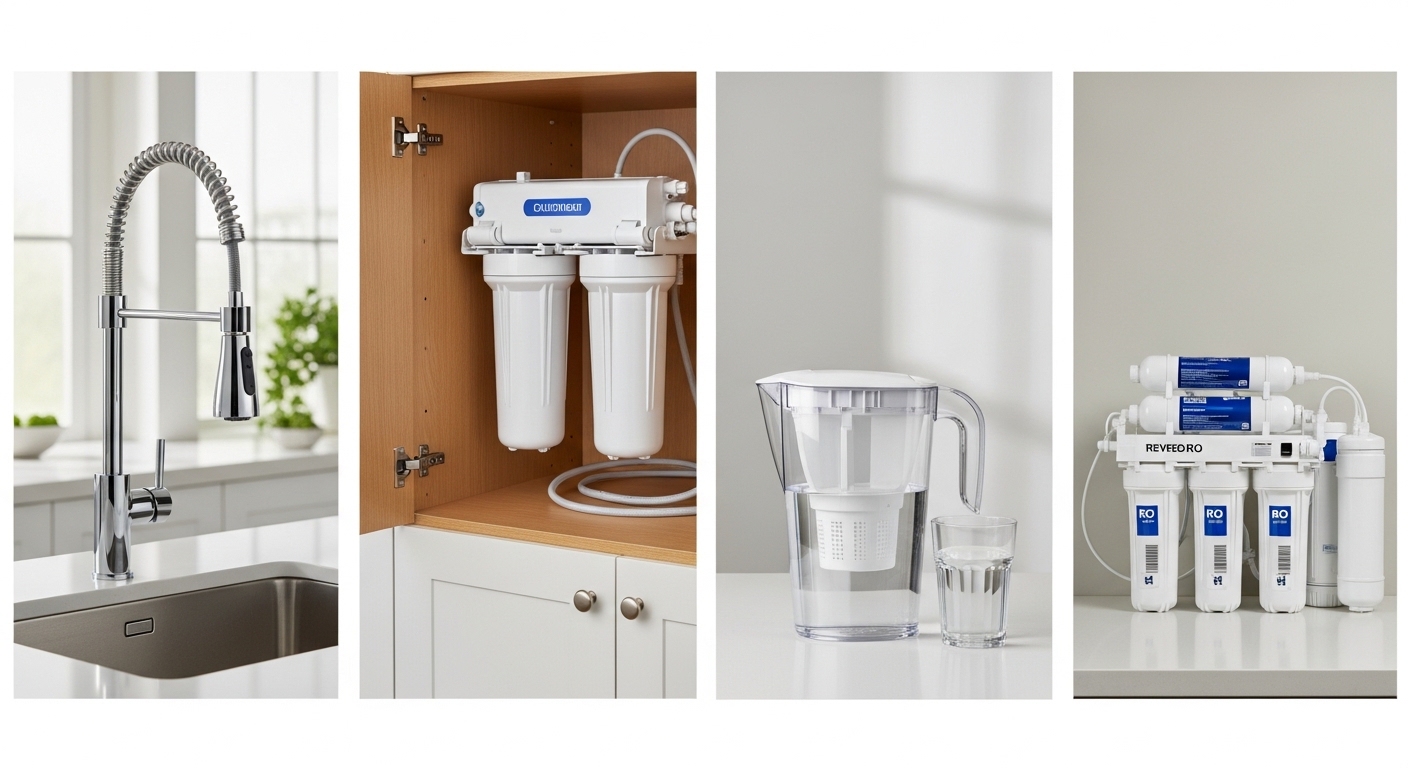
If you’ve been asking “tap water filter which one is right for my sink?”, the honest answer is: it depends on three things — what your water actually contains, how your faucet is threaded, and where you have room to put the filter. There’s no single “best” filter for everyone, but there is a best filter for your situation, and this guide walks you through picking it without overspending or buying something that won’t even attach to your tap.
At wigafaucet we sell and service faucets every day, so we look at this from the fixture side, not just the marketing side. A filter is only as good as the connection between it and your faucet — and that’s exactly where most people get tripped up.
Which type of tap water filter is best for most homes?
For most homes, a carbon block filter — either faucet-mounted or under-sink — is the best choice because it removes the contaminants people care about most (chlorine, taste, odor, lead in certified models) at a reasonable cost and flow rate. Reverse osmosis goes further but costs more and wastes water; pitchers are cheapest but slow and low-capacity.
Here’s the plain-language breakdown of the main types so you can match one to your life:
- Faucet-mounted filter — screws onto your faucet’s aerator threads. Cheap ($25–$60), renter-friendly, easy to install in five minutes. Lower flow and you swap cartridges every 2–3 months.
- Under-sink filter — plumbs into your cold line and often feeds a dedicated spout or your main faucet. Higher flow, cartridges last 6–12 months, and it’s hidden. Needs a little plumbing.
- Countertop / pitcher filter — no plumbing at all. Cheapest entry point, but you refill by hand and capacity is small. Fine for one or two people who mostly want better-tasting drinking water.
- Reverse osmosis (RO) — the most thorough for dissolved solids, fluoride, nitrates, and more. Best water quality, but it’s pricier, takes cabinet space, and sends 2–4 gallons to drain per gallon filtered.
If you’re overwhelmed, the shortcut is this: renters and quick fixes go faucet-mount; homeowners who want set-and-forget go under-sink; anyone battling really bad water (or wanting fluoride removed) goes RO.
How do I know which contaminants I actually need to filter out?
Get a water test before you buy anything — that single step decides which filter type and certification you need. If you’re on city water, your utility publishes an annual Consumer Confidence Report (CCR) for free; if you’re on a well, buy a certified lab test kit. Don’t pick a filter based on taste alone, because the most dangerous stuff (lead, arsenic, nitrates) is invisible and tasteless.
Once you have results, match them to a filter certified for those specific reductions. This is where certifications matter more than marketing:
- NSF/ANSI 42 — aesthetic: chlorine taste and odor. Almost every carbon filter hits this.
- NSF/ANSI 53 — health: lead, cysts, VOCs, some heavy metals. This is the one to look for if lead is your concern.
- NSF/ANSI 58 — reverse osmosis: dissolved solids, fluoride, nitrates, arsenic.
- NSF/ANSI 401 — “emerging contaminants”: certain pharmaceuticals and pesticides.
A filter that says “reduces up to 99% of contaminants” but lists no NSF certification is telling you almost nothing. When you’re comparing tap water filter models, the certification number is the honest spec — it means an independent lab verified the claim, not the manufacturer.
Will a tap water filter even fit my faucet? (The part people miss)
A faucet-mounted filter only fits faucets with standard external or internal aerator threads — and a lot of modern pull-down, spray, and touchless faucets don’t have them. Before you buy a faucet-mount filter, unscrew your aerator and check the threading; if your faucet won’t accept a filter, go under-sink instead.
This is the single most common return we see. Someone buys a faucet-mounted filter, gets it home, and their sleek pull-down sprayer has no threads a filter can grab. The aerator is where the filter connects, so knowing your aerator size and thread type is everything. If you’re unsure what you’re looking at, our guide on what a faucet aerator gauge is and how to use one to find the right size walks you through measuring it in a couple of minutes.
Under-sink and RO systems sidestep the fit problem entirely because they tap into your cold water supply line rather than your faucet’s nose — but that means you need the right supply connections. If you’re plumbing a system in and aren’t sure how the fittings line up, our explainer on the faucet hook-up adapter and which one you actually need covers the connectors so you don’t end up with a leak under the cabinet.
Does a tap water filter reduce my water flow or pressure?
Yes — every filter reduces flow somewhat because water has to push through a dense media, and faucet-mounted filters cut it the most (often down to around 0.5 GPM). Under-sink and RO-tank systems keep flow more comfortable because the media is larger or water is stored in a pressure tank. If your water already trickles, add a filter with your eyes open.
A faucet-mount filter’s low flow is usually fine for filling a glass or pot but can feel sluggish for rinsing dishes. If your faucet is already weak before any filter, don’t blame the filter first — track down the real cause. We cover the usual culprits in our piece on why there’s low flow out of a kitchen faucet and how to fix it, which is worth reading before you add anything that restricts flow further.
A quick reality check on flow by type:
| Filter type | Typical flow rate | Cartridge life | Upfront cost | Best for |
|---|---|---|---|---|
| Faucet-mounted carbon | 0.5 GPM | 2–3 months (~100 gal) | $25–$60 | Renters, quick upgrades |
| Under-sink carbon block | 0.75–2 GPM | 6–12 months | $80–$250 | Homeowners, set-and-forget |
| Countertop / pitcher | Slow (batch) | 1–2 months | $20–$45 | 1–2 people, drinking water only |
| Reverse osmosis | Tank-fed, ~0.5 GPM at spout | Membrane 2–3 yrs; pre/post 6–12 mo | $180–$500 | Bad water, fluoride/arsenic removal |
Faucet-mounted vs under-sink: which should I actually buy?
Buy a faucet-mounted filter if you rent, want the cheapest certified option, and your faucet has standard aerator threads. Buy an under-sink filter if you own your home, want higher flow and cartridges that last 6–12 months, and don’t mind 30–60 minutes of light plumbing. Under-sink costs more upfront but usually costs less per gallon over a few years.
Think of it as a trade between convenience now and value later. Faucet-mount wins on install time and price, but you’ll be swapping small cartridges often and living with reduced flow at the tap. Under-sink wins on flow, cartridge longevity, and keeping your counter clear — the filter lives in the cabinet — at the price of a slightly involved setup and a higher sticker.
One thing people forget: an under-sink or RO system often comes with its own dedicated drinking-water faucet, which is a small fixture you mount in a spare sink hole or a drilled hole in the counter. That’s a quality decision too — a cheap dedicated faucet with a plastic cartridge will drip within a year. The same things that separate a good main faucet from a bad one apply here, and our breakdown of what actually makes the best kitchen faucet quality and how to spot it before you buy is a good lens for judging any fixture, including a filter spout.
How much does a tap water filter really cost per year?
Expect $60–$150 per year in cartridges for most faucet-mounted and under-sink filters, and $100–$200 per year for reverse osmosis once you factor in pre-filters, post-filters, and the membrane amortized over its life. The upfront unit price is the small number; cartridges are where the real long-run cost lives, so compare cost-per-gallon, not just the box price.
A simple way to compare honestly:
- Find the cartridge’s rated capacity in gallons (on the box or spec sheet).
- Divide the cartridge price by that capacity to get cost per gallon.
- Multiply by your household’s yearly filtered-water use (a family of four drinking and cooking runs roughly 500–1,000 gallons/year).
Do this and a “cheap” faucet-mount filter with a 100-gallon cartridge can quietly cost more per gallon than a pricier under-sink unit with a 1,000-gallon cartridge. Cheap upfront isn’t the same as cheap to run.
Do I need reverse osmosis, or is that overkill?
You need reverse osmosis if your test shows high total dissolved solids, fluoride, nitrates, arsenic, or per-fluorinated compounds that carbon filters don’t reliably remove. For typical city water where the main complaints are chlorine taste, odor, and possibly lead, a good NSF 53–certified carbon block is enough and RO would be overkill.
RO’s downsides are real: it takes up cabinet space, it produces some wastewater, and it strips beneficial minerals along with the bad stuff (many people add a remineralizing post-filter to fix the flat taste). So don’t jump to RO because it sounds like “the best” — jump to it because your water test says you need what only RO removes. Match the tool to the problem.
Quick recommendation by situation
Here’s the “just tell me which one” version:
- Renter, city water, want better taste fast: NSF 42/53 faucet-mounted filter, assuming standard aerator threads.
- Homeowner, city water, lead concern: NSF 53 under-sink carbon block with a dedicated spout.
- Well water or high dissolved solids / fluoride: NSF 58 reverse osmosis with sediment pre-filter.
- One or two people, minimal use, no plumbing: Certified pitcher or countertop filter.
FAQ
Which tap water filter removes lead?
Look for one certified to NSF/ANSI 53 for lead reduction — that’s the specific standard that verifies lead removal. Many carbon block faucet-mount and under-sink filters carry it, as do reverse osmosis systems. A generic carbon filter with only NSF 42 (taste/odor) does not guarantee lead removal, so check the label for “53” and the word “lead.”
Do faucet water filters fit any faucet?
No. Faucet-mounted filters only fit faucets with standard aerator threads, and many pull-down sprayers, touchless, and specialty faucets lack compatible threading. Unscrew your aerator and check before buying; if it won’t fit, choose an under-sink or countertop system that connects to the water line instead of the faucet nose.
How often should I change my tap water filter cartridge?
Faucet-mounted cartridges typically last 2–3 months or about 100 gallons, under-sink carbon blocks last 6–12 months, and RO membranes last 2–3 years with pre/post filters changed every 6–12 months. Change on schedule even if flow seems fine — a spent carbon filter can stop protecting you well before you’d notice a taste change.
Does a water filter lower my water pressure at the faucet?
It reduces flow rather than system pressure — water has to pass through dense media, so you’ll see a lower GPM, most noticeably on faucet-mounted filters (around 0.5 GPM). Under-sink and tank-fed RO systems feel less restrictive. If your faucet was already weak, filter or not, the underlying cause is usually a clogged aerator or supply issue, not the filter itself.
Is under-sink or faucet-mounted better for renters?
Faucet-mounted is usually better for renters because it installs in minutes with no plumbing, leaves no permanent changes, and comes off when you move. Under-sink filters give higher flow and longer cartridge life but involve tapping the cold supply line, which many landlords would rather you not do without permission.
Can I use a tap water filter with a pull-down or spray faucet?
Usually not with a faucet-mounted filter, because pull-down and spray heads rarely have the standard external threads a filter clamps onto. Your better path is an under-sink filter feeding either your existing faucet or a separate dedicated drinking-water faucet — that way you keep your sprayer and still get filtered water.
A note on how we tested and who we are
Author: This guide was written by the wigafaucet product team, drawing on hands-on installation and service of kitchen and bathroom fixtures and the filters that attach to them. About wigafaucet: We’re a faucet and bathroom fixtures retailer at wigafaucet.com; because we handle faucet threading, aerators, and supply connections daily, we focus on the fit-and-flow side of filtration that pure filter brands tend to skip. Standards & warranty: Throughout this article we point you to independent NSF/ANSI certifications (42, 53, 58, 401) rather than marketing claims, and we recommend registering any filter you buy so its manufacturer warranty — typically 1–2 years on housings and hardware — stays valid. Always confirm a filter’s certification listing and warranty terms before purchase for your specific water conditions.