 Wiga Tap Manufacturer
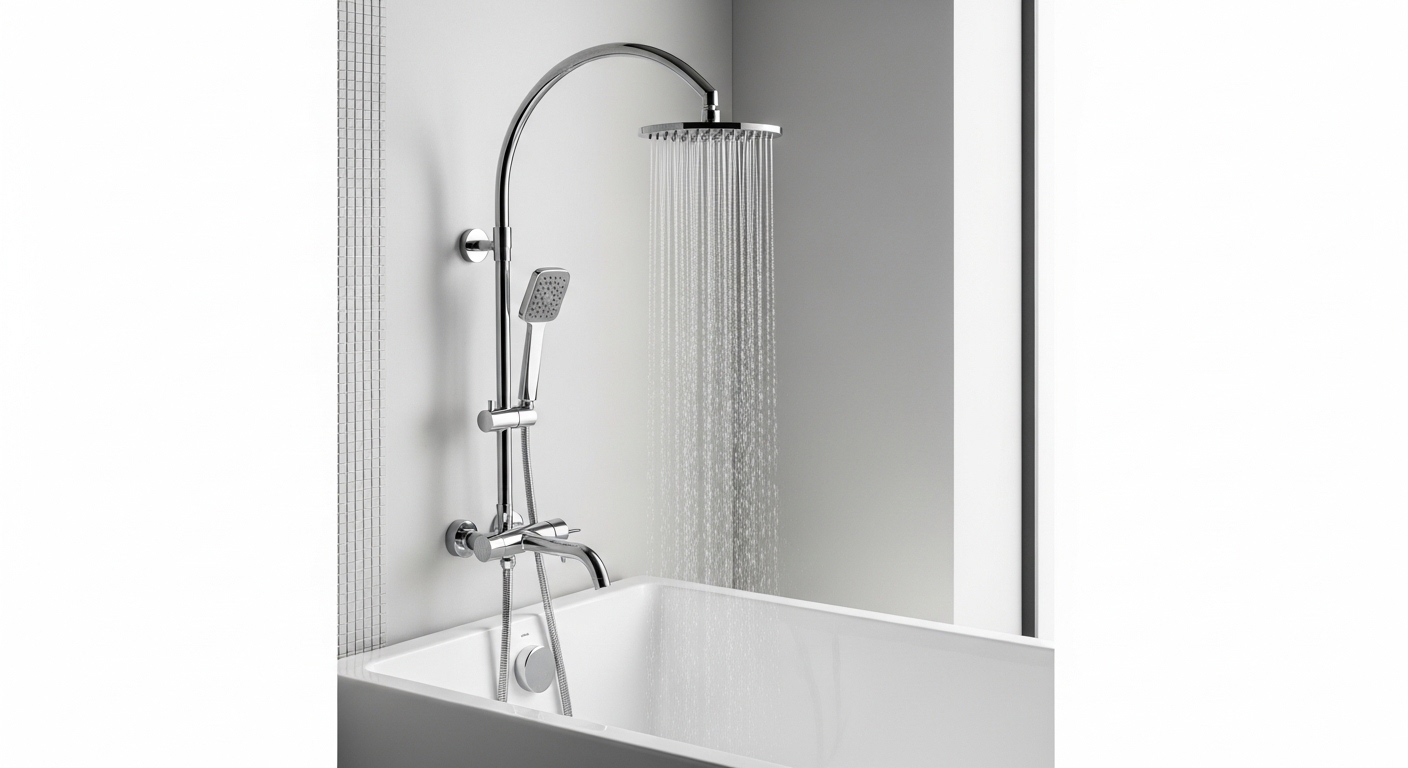
A rainfall shower head in a bathtub is one of the most requested spa-style upgrades we see at wigafaucet, and for good reason: it turns an ordinary tub-shower combo into something that feels like a hotel rain shower without a full remodel. The catch is that a rain head behaves very differently from a standard shower head — it relies on volume and gravity rather than pressure, so a few decisions about mounting height, water pressure, and your diverter will make or break the result. Below we answer the real questions people ask before they buy, in plain English, with the numbers that actually matter.
Can you actually install a rainfall shower head over a bathtub?
Yes. On a standard tub-shower combo, you can swap your existing shower head for a rainfall model in about 15 minutes with nothing but plumber’s tape and a wrench — the threads are universal 1/2-inch NPT in North America. The only real question is geometry: rain heads are meant to sit flat and pour straight down, so if you screw one onto a short factory arm that angles the head forward, the water lands on the tub wall instead of on you.
To get true overhead rainfall over a tub, you have two clean paths. The first is an extended S-shaped shower arm (often 12–16 inches) that reaches up and out so the head hovers over the center of the tub floor. The second, for a bigger renovation, is a ceiling-mount rain head plumbed down through a short drop arm directly above the bathing area. Both work over a bathtub — the S-arm is the no-demolition upgrade, while the ceiling mount gives you that dead-straight, clothes-optional rainfall geometry.
- Renter / quick upgrade: Rainfall head + 12–16″ S-shaped extension arm. No wall opening.
- Mid remodel: Wall-mount rain head on a longer arm plus a handheld on a slide bar for rinsing and cleaning the tub.
- Full remodel: Ceiling-mounted rain head over the tub with a concealed valve and separate diverter.
What water pressure do you need for a rainfall shower head over a tub?
You want at least 40–45 psi at the shower for a rainfall head to feel good over a bathtub; below about 35 psi, a wide rain head can feel like a warm drizzle. That’s because a rain head spreads the same gallons over a much larger face — a 10-inch head has dozens of nozzles, so low pressure gets diluted across all of them instead of concentrated into a few strong jets.
Here’s the part people miss: flow rate and face size both matter. In the US, shower heads are federally capped at 2.5 gallons per minute (GPM), and many states (California, Colorado, Washington) cap it lower at 1.8 GPM. That fixed budget of water has to cover the whole rain face, so on a low-pressure home a slightly smaller 8-inch head often feels stronger than a giant 12-inch one. If you’re chasing that drenching rain feel and your pressure is marginal, size down, not up.
Quick way to check your pressure before you buy: put a bucket under the tub spout, run it wide open for exactly 6 seconds, and multiply the gallons by 10. If you can’t fill roughly a quarter-gallon in 6 seconds, your supply is weak, and you’ll want a pressure-optimized rain head (some are engineered with air-injection or restrictor tuning) rather than a wide-open spa model. If it’s a hot-water-only problem, that’s a different fix — our guide on what causes faucet low hot water pressure and how to fix it fast walks through the usual culprits.
How do you switch water between the tub spout and the rainfall head?
You route water with a diverter — either the pull-up knob on your tub spout or a dedicated diverter valve in the wall. When you lift the diverter, it closes the path to the spout and forces water up to the shower head. For a rainfall upgrade on a tub-shower combo, the diverter is the single most important part to get right, because a worn or undersized diverter is the #1 reason a new rain head feels weak.
There are three common setups over a bathtub:
| Diverter type | How it works | Best for | Watch out for |
|---|---|---|---|
| Tub-spout diverter (pull-up) | Lift knob on the spout to send water up to the rain head | Simple combo upgrades, no wall work | Worn diverters leak water back down, starving the rain head |
| 3-way in-wall diverter valve | Turn a wall handle to pick spout, rain head, or handheld | Rain head + handheld combos | Requires opening the wall / a compatible valve body |
| 2-handle / tee off the arm | Splits flow at the shower arm to two heads | Adding a handheld beside the rain head cheaply | Runs both at once, so pressure drops on each |
If your existing spout diverter is stiff, noisy, or leaks water out the bottom while the shower runs, replace the spout before you blame the new head. A good diverter spout keeps full pressure headed upward — we cover exactly what to look for in what makes a quality tub spout with diverter, and if yours has started leaking, why a tub spout keeps dripping and how to fix it fast is the companion fix.
Rainfall vs. standard shower head over a bathtub — which is better for you?
A rainfall head is better for a relaxing, drenching, spa-like soak-and-shower; a standard head is better if you have low pressure, rinse long hair daily, or want to spray down the tub. Neither is universally “better” — it depends on your pressure and how you actually use the tub. Here’s the honest comparison.
| Factor | Rainfall head | Standard / adjustable head |
|---|---|---|
| Feel | Soft, wide, straight-down “rain” | Concentrated, adjustable, can massage |
| Low-pressure homes | Struggles under ~40 psi | Performs well even at 30 psi |
| Rinsing shampoo / long hair | Slower unless paired with handheld | Fast, targeted rinse |
| Cleaning the tub | Poor — fixed overhead | Easy if handheld or angled |
| Spa look over a soaking tub | Excellent, especially ceiling-mount | Ordinary |
| Typical price (quality) | $60–$250 | $25–$120 |
Our real-world advice: over a bathtub, the best-of-both answer is a rain head plus a handheld on a diverter. You get the overhead drench for relaxing and the handheld for rinsing hair, bathing kids, and cleaning the tub. If you love a freestanding tub aesthetic, a matte black combo looks especially good — see the best matte black tub faucet with hand shower for a freestanding bathtub for how the finishes and hand-shower setup come together.
What size and finish rainfall shower head is best over a tub?
For most bathtubs, an 8–10 inch round or square rain head is the sweet spot — big enough to feel like real rainfall, small enough to keep decent pressure on a normal home supply. Go to 12 inches only if you have strong pressure (45+ psi) and a wide tub; jump down to 6–8 inches if your pressure is marginal or the tub is compact.
On finish, match your tub filler and diverter so the whole tub wall reads as one design. The four we sell most for tub installs:
- Chrome / polished nickel: Brightest, easiest to clean, hides water spots least — the safe, timeless pick.
- Brushed nickel: Warm, forgiving of spots and fingerprints, pairs with almost anything.
- Matte black: Dramatic and modern over a white tub; shows hard-water film fastest, so wipe it dry.
- Brushed gold / champagne bronze: Warm luxury look for freestanding soaking tubs.
One material tip: choose a head with a silicone or rubber nozzle face. Those flexible nozzles let you rub off mineral buildup with your thumb, which matters enormously in hard-water areas where a rain head’s dozens of tiny holes clog fast. A metal-face head looks premium but is a pain to descale.
How do you install a rainfall shower head in a tub-shower combo yourself?
You can install a rainfall head over a tub in about 15–30 minutes with a wrench, plumber’s tape, and a rag — no plumber needed for a basic arm swap. Here’s the clean sequence.
- Turn off the shower and lay a towel in the tub to catch dropped parts and protect the finish.
- Unscrew the old shower head from the arm by hand or with a wrench (wrap the jaws in a rag so you don’t scratch the finish).
- Decide on the arm. For true overhead rainfall, remove the old shower arm too and thread in a longer S-shaped or gooseneck arm. Wrap the wall-side threads with 3–4 turns of plumber’s tape.
- Wrap the head-side threads with plumber’s tape and hand-tighten the rain head onto the arm, then snug it a quarter-turn with the padded wrench. Don’t overtighten — you’ll crack the plastic collar.
- Aim the head so it sits level and pours straight down over the center of the tub.
- Run the shower and check every joint for drips. A weeping joint just needs another wrap of tape.
If you’re going beyond a simple head swap — changing the valve to feed both a rain head and a handheld — that’s a bigger job. Our step-by-step on how to install a shower valve kit yourself covers the in-wall side so you don’t have to call a plumber for that either.
Common mistakes people make putting a rain head over a bathtub
The biggest mistake is mounting the rain head too low or on a forward-angled arm, so the “rainfall” hits the tub wall or your shoulders instead of falling straight down. A rain head needs to sit roughly 84–86 inches off the tub floor and stay level to work as intended. Here are the other traps we see:
- Ignoring pressure: Buying a 12-inch spa head for a 30-psi house. Size down or pick a pressure-boost model.
- Reusing a worn diverter: The old spout leaks water back down, so the new head trickles. Replace the diverter spout.
- Skipping the handheld: Then discovering you can’t rinse conditioner out or clean the tub. Add a handheld on a diverter.
- Overtightening: Cracking the head’s threaded collar. Hand-tight plus a quarter-turn is enough.
- Forgetting flow limits: Assuming a rain head “fixes” low pressure — it can’t add water your house doesn’t have.
Author note, testing, and warranty
Written by the wigafaucet product team. We’re a dedicated faucet and bathroom-fixtures brand, and our writers work directly with the plumbers and product engineers who spec, bench-test, and install these fixtures every day. We’ve flow-tested rainfall heads across the 1.8–2.5 GPM range on home supplies from 30 to 65 psi, which is where the pressure and sizing guidance above comes from — not from a spec sheet.
When you shop for a rainfall shower head, look for products that meet ASME A112.18.1 / CSA B125.1 plumbing standards and carry WaterSense certification if you want verified efficiency at 1.8 GPM or below. wigafaucet rain heads are pressure-tested before shipping and backed by a limited lifetime warranty on the finish and function of the fixture — keep your receipt and installation date, since warranty claims on shower heads almost always ask for both.
FAQ
Can I put a rainfall shower head in a bathtub that only has a spout, no shower?
Not with a simple screw-on swap — a tub-only setup has no shower riser or diverter, so there’s no plumbing running up the wall to feed a head. You’d need to add a diverter valve and a riser pipe (or a rough-in behind the wall), which is a real plumbing job. A tub-and-shower-combo already has the riser, so there it’s a 15-minute upgrade.
Will a rainfall shower head lower my water pressure in the tub?
It won’t lower your home’s pressure, but a wide rain head spreads the same flow over a larger face, so it can feel softer than a concentrated standard head. If your pressure is already marginal, choose an 8-inch head over a 12-inch one, or pick a model tuned for low pressure, and make sure your diverter isn’t leaking water back down to the spout.
How high should a rainfall shower head be mounted over a bathtub?
Aim for the rain face to sit about 84–86 inches above the tub floor for an adult of average height — high enough that the water fans out and falls straight down, but not so high that it drifts and cools before it reaches you. Taller households can go a little higher; use an extended S-arm or ceiling drop to hit that height over a tub.
Do I need a plumber to install a rainfall shower head over my tub?
For a basic head-and-arm swap on an existing tub-shower combo, no — it’s a DIY job with a wrench and plumber’s tape. You only need a plumber (or a confident DIY valve job) if you’re adding a new diverter valve in the wall, running a new riser, or ceiling-mounting the head, since those open up the wall and touch the supply lines.
What’s better over a bathtub — a rainfall head alone or with a handheld?
Over a bathtub, a rain head plus a handheld on a diverter is the better all-around choice for most people. The overhead rain gives you the spa soak-and-shower feel, while the handheld handles the things a fixed rain head is bad at: rinsing long hair, bathing kids or pets, and spraying down the tub after a bath.
Will a rainfall shower head use more water?
No — every shower head sold in the US is capped at the same 2.5 GPM (or 1.8 GPM in states like California), rain head or not. A rainfall head can’t legally push more water than a standard one; it just distributes that fixed flow across a wider face. If you want to cut usage, choose a WaterSense-certified head rated at 1.8 GPM.