 Wiga Tap Manufacturer
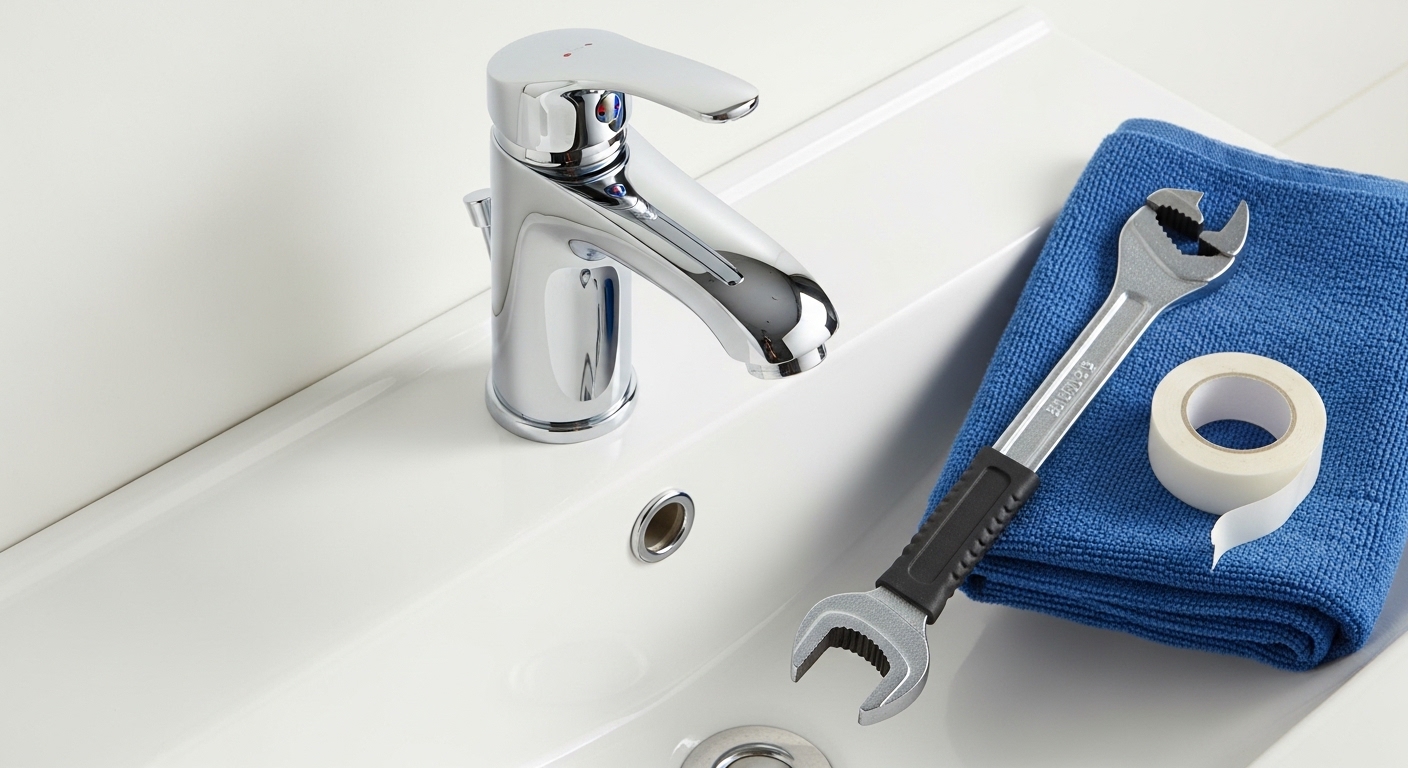
If you’ve ever stared at a dripping spout and Googled how to install bathroom vanity faucet at 9 p.m. on a Sunday, you’re in the right place. This guide is written by a faucet-industry team that ships thousands of fixtures a year, and it walks you through the exact sequence we give our own customers, including the small mistakes (over-tightening plastic nuts, forgetting the rubber gasket orientation, skipping a leak test) that turn a 60-minute job into a flooded cabinet. We’ll cover single-hole, centerset, and widespread vanity faucets, the tools you actually need, the parts you can reuse, and when to stop and call a plumber.
What tools and parts do I actually need before I start?
You need a basin wrench, channel-lock pliers, an adjustable wrench, plumber’s tape (PTFE), a bucket, a flashlight, a microfiber towel, and either two new braided stainless steel supply lines or your existing ones if they’re under five years old and not corroded. That’s roughly $35-$60 in tools if you own nothing, and the supply lines run $8-$15 each. Don’t bother with putty for most modern faucets — almost every faucet shipped after 2020 uses a foam or rubber deck gasket instead.
Here’s the realistic shopping list, organized by whether it’s required or just “nice to have”:
- Required: basin wrench (the long telescoping one with the spring-loaded jaw — there is no substitute when reaching mounting nuts behind a sink), channel-lock pliers, adjustable wrench, PTFE plumber’s tape, flashlight or headlamp, bucket or shallow tray.
- Required if your old supply lines look chalky, kinked, or are older than 5 years: two new 1/2″ FIP x 3/8″ compression braided stainless steel supply lines, usually 16″ or 20″ long.
- Nice to have: small inspection mirror, knee pad, plumber’s silicone grease, painter’s tape (to protect the finish from wrench scratches), a phone tripod so you can record the under-cabinet view and not have to keep crawling back in.
- Probably don’t need: plumber’s putty (most modern faucets ship with a gasket), Teflon paste (tape is fine for the supply line FIP threads), pipe wrench (too aggressive for chrome shut-off valves).
One non-obvious tip: bring the old faucet’s mounting hole spec to the store. A single-hole faucet won’t fit a 4-inch centerset deck plate without an escutcheon, and an 8-inch widespread won’t fit a 4-inch centerset cutout at all. Measure the center-to-center distance between the outermost holes in your sink before you buy anything.
How do I know if I have a single-hole, centerset, or widespread sink?
Count the holes in your sink (or vanity countertop) and measure the distance between them. One hole = single-hole faucet. Three holes with 4 inches center-to-center between the outer two = 4-inch centerset. Three holes with 8-16 inches between the outer two = widespread. This single measurement decides every other choice you make, so do it first.
Here’s a fast comparison of the three layouts you’ll encounter on a residential vanity, with the install difficulty and typical price range from our warehouse data:
| Faucet Layout | Hole Configuration | DIY Install Time | Typical Price (Quality) | Best For |
|---|---|---|---|---|
| Single-hole | 1 hole, 1-3/8″ diameter | 30-60 min | $80-$250 | Small vanities, modern look, easy cleaning |
| 4″ Centerset | 3 holes, 4″ on-center, joined deck | 45-75 min | $70-$200 | Rental properties, traditional bathrooms, easy swaps |
| 8″ Widespread | 3 holes, 8-16″ on-center, separate pieces | 75-120 min | $180-$600 | Master baths, high-end remodels, vessel sinks |
| Wall-mount | 2 holes in the wall, none in sink | 2-4 hours + drywall work | $220-$700 | Vessel sinks, modern designs, custom builds |
| Vessel (tall) | 1 hole, taller spout for above-counter bowls | 30-60 min | $120-$400 | Vessel/above-counter sinks specifically |
If you’re shopping for a widespread setup specifically, our breakdown of what a widespread faucet layout actually is and whether it’s right for your bathroom goes deeper into spacing, valve bodies, and why the install takes longer than centerset.
How to install bathroom vanity faucet step by step (single-hole, the most common)
To install a single-hole bathroom vanity faucet, turn off the water, disconnect the old supplies, unscrew the mounting nut under the sink, lift the old faucet out, drop the new one in with its gasket, tighten the mounting hardware from below, attach the supply lines, and turn the water back on slowly while watching for leaks. The whole thing is six physical steps; the rest is just being careful.
Step 1: Shut off the water and drain the lines (5 minutes)
Close both angle stops (the small oval handles under the sink) clockwise until they stop. Open the existing faucet’s hot and cold handles all the way to drain residual pressure — water will trickle, then stop. If the angle stops won’t turn or they weep when closed, stop here and replace them first. Trying to install a new faucet against a leaking shut-off is the #1 reason a 60-minute job becomes a 4-hour disaster.
Step 2: Disconnect the old faucet (10 minutes)
Put your bucket under the connections. Use the adjustable wrench to loosen the supply line nuts at the angle stops first (they’ll spill a little water — that’s why the bucket is there). Then climb under the sink with your basin wrench and unscrew the mounting nut(s) holding the faucet to the deck. Single-hole faucets typically use one big plastic nut or a horseshoe-shaped metal bracket. Centersets have two brass nuts on the threaded shanks of the hot and cold valves.
Step 3: Clean the deck (5 minutes)
Lift the old faucet out the top. You’ll see a ring of grime, old putty, or hardened silicone around the holes. Scrape it off with a plastic putty knife — never use a metal scraper on porcelain or stone, it scratches and you’ll see it every time you brush your teeth. Wipe the deck dry with the microfiber towel. A clean, dry deck is what makes the new gasket seal properly.
Step 4: Install the new faucet from above (10 minutes)
Most modern vanity faucets come with the supply lines pre-attached. If yours doesn’t, screw them on now while the faucet is on the counter — it’s 10x easier than doing it overhead in the cabinet. Place the rubber or foam gasket around the bottom of the faucet body (flat side up against the faucet, ribbed/sealing side down toward the sink). Feed the supply lines and the threaded mounting shank down through the hole. From below, slide on any included metal washer, then thread on the mounting nut by hand.
Step 5: Tighten the mounting hardware (5 minutes)
Have a helper hold the faucet straight from above, or use one hand to keep it aligned with the backsplash while you tighten from below with the basin wrench. Snug, then quarter-turn — that’s it. Over-tightening plastic mounting nuts cracks them, and over-tightening metal ones can warp thin ceramic sinks. If the faucet still wiggles after a quarter-turn past snug, the gasket isn’t seated correctly. Stop, lift the faucet, and reseat it.
Step 6: Connect the supply lines (10 minutes)
Wrap the male threads on the angle stops with 3-4 turns of PTFE tape, clockwise (so screwing the nut on doesn’t unwind it). Hand-thread each supply line onto the matching stop — hot on the left, cold on the right, viewed facing the sink. Snug with an adjustable wrench, then about a quarter-turn past snug. The compression-style nuts on braided lines don’t need to be cranked down hard; the rubber washer inside does the sealing.
Step 7: Test for leaks (10 minutes — don’t skip)
Open the angle stops slowly, one full turn at a time, while watching the connections under the sink. Open the new faucet’s handle to the middle (warm) position to flush air through the lines — you’ll hear sputtering, then a steady stream. Let it run for two minutes, then close it. Now actually feel every joint with a dry finger or paper towel: the supply-line-to-stop connection, the supply-line-to-faucet connection, and the underside of the faucet body where it meets the gasket. Any moisture = tighten an eighth-turn more and retest. Many small leaks only appear after 15-30 minutes, so check again before you put the cleaning supplies back under the sink.
How is installing a widespread or 4-inch centerset different?
Widespread faucets have three completely separate pieces (two valve bodies plus the spout), connected underneath by flexible hoses or a center tee, which means you do the mounting and connection steps three times instead of once. Centersets are one connected unit like a single-hole, just with two extra threaded shanks for the hot and cold valves. Expect a widespread to take you twice as long the first time, mostly because of the under-deck hose routing.
For widespread specifically, lay all three pieces on a towel in front of you and pre-install the supply hoses to the valve bodies before anything goes through the deck. The valve bodies have arrows or H/C marks — pay attention to those because reversed hot/cold is a 30-minute reinstall to fix. If you’re working with an oil-rubbed bronze finish, our 8-inch widespread oil-rubbed bronze buyer’s guide covers the specific finish-care quirks and which valve bodies hold the finish best after years of cleaner exposure.
How do I install the pop-up drain that came with the faucet?
Almost every vanity faucet ships with a matching pop-up drain assembly, and it has to be installed too — the old drain almost never matches the new faucet’s finish. Disassemble the new drain on the counter, push the threaded body up through the sink’s drain hole from underneath with the rubber gasket on top, thread on the flange (the visible part inside the bowl) with a thin bead of silicone or the included gasket, and tighten the lock nut from below.
Then connect the tailpiece, slide the horizontal pivot rod through the side of the drain body (rubber washer and ball joint inside), and connect it to the vertical lift rod with the spring clip. The trick most first-timers miss: adjust the lift rod’s height before you tighten the spring clip. The stopper should sit flush with the drain opening when the lift rod is fully down, and seal fully when the lift rod is up. Get the geometry right with the clip loose, then tighten the screw.
What if my new faucet leaks after I turn the water on?
Leaks at install time fall into four buckets: (1) supply line connections — quarter-turn tighter, retest; (2) deck gasket — usually a misaligned or pinched gasket, you have to lift the faucet and reseat it; (3) the angle stop itself — replace the stop, not the faucet’s fault; (4) the pop-up drain flange — needs more silicone or a fresh gasket. The fix depends on where the water is actually coming from, which is why you check each joint individually with a dry finger.
The single most common mistake we see in support tickets is mistaking condensation for a leak. If your incoming water is cold and your bathroom is warm and humid, the supply lines and the underside of the faucet body will sweat, and that water will drip into the cabinet exactly like a slow leak. The test: dry everything completely, then wrap a single dry paper towel around the suspect joint. After 20 minutes, if the towel is wet only on the side facing the air it’s condensation. If it’s wet on the side touching the joint, it’s a leak.
When should I stop and call a plumber instead?
Call a plumber if (a) your angle stops won’t fully close or they weep when closed, (b) the supply line stubs coming out of the wall are corroded or use an unusual fitting like flare or sweat copper without a stop, (c) you’re converting hole counts (going from 3-hole to single-hole on a stone counter), or (d) the existing drain trap is a glued PVC mess that needs to be redone. The faucet swap itself is genuinely DIY-friendly, but the plumbing behind the wall is not. A licensed plumber’s hourly rate ($95-$180 in most U.S. markets) is much cheaper than water damage to a vanity, subfloor, or downstairs ceiling.
If you’re handling adjacent projects at the same time — say, a kitchen install or an outdoor faucet — our guides on installing a pot filler above the stove and fixing a jammed outdoor tap or hose bibb cover the rougher plumbing skills that the bathroom vanity install doesn’t require.
What finish and flow rate should I pick for a vanity faucet?
For finishes, brushed nickel and matte black hide water spots best, chrome is the most forgiving on price and easiest to clean, and brushed gold/champagne bronze is on-trend but the most sensitive to acidic cleaners. For flow rate, the U.S. federal max is 1.2 GPM at 60 psi for bathroom faucets (1.5 GPM in some states; 1.0 GPM in California per EPA WaterSense), and frankly a 1.2 GPM faucet is plenty for washing hands. Going lower saves measurable water on a multi-bath household.
A few finish-specific care notes worth knowing before you commit:
- Polished chrome: bulletproof, cheapest, shows water spots fastest. Use any non-abrasive cleaner.
- Brushed/satin nickel: hides spots and fingerprints, pairs with most cabinetry, slight warm tone.
- Matte black: very on-trend, hides spots beautifully, but avoid acidic cleaners (vinegar, lime scale removers) which dull the finish.
- Oil-rubbed bronze: living finish that develops a patina; intentional rubbing wear at handles is part of the look.
- Champagne bronze / brushed gold: warm, luxe, pairs with white and warm wood vanities. PVD-coated versions are far more durable than electroplated.
FAQ
How long does it take to install a bathroom vanity faucet for a first-timer?
Plan on 90-120 minutes for your first install, including a hardware-store run for the one thing you didn’t know you needed. A second install drops to 45-60 minutes because you’ll already own the basin wrench and you’ll know which way the gasket faces.
Do I need plumber’s putty under the new faucet?
Almost never. Modern vanity faucets ship with a foam or rubber deck gasket that seals against the sink — putty would actually prevent the gasket from compressing correctly. The exception is some pop-up drain flanges, where a thin bead of 100% silicone or putty under the flange is recommended; the instructions will say.
Can I reuse my old supply lines to save money?
Only if they’re braided stainless steel, less than 5 years old, with no kinks, bulges, or rust at the fittings, and they’re the right length for the new faucet’s connection location. Braided lines are $8-$15 each — replacing them while the cabinet is already cleared out is cheap insurance against a future failure that floods the vanity.
What size wrench do I need for the mounting nuts?
This is exactly why you buy a basin wrench instead of guessing at sizes. Mounting nuts range from 1″ to 1-3/8″, and they’re located 8-14 inches up inside a dark cabinet where no regular wrench fits. A basin wrench’s spring-loaded jaw self-adjusts to the nut size, and the long handle reaches into the cabinet. A $15-$25 basin wrench is the difference between a smooth install and a frustrating one.
My new faucet is dripping from the spout after install — is it defective?
Probably not. A drip at the spout right after install is usually trapped air or debris in the cartridge from the supply line flush. Run the faucet on full hot and full cold for 60 seconds each to clear it. If it still drips after 24 hours, contact the manufacturer — a quality faucet has a lifetime warranty on the cartridge, and Wigafaucet (and any reputable brand) will ship a replacement free.
Do I have to caulk around the base of the faucet after installing?
No, and you generally shouldn’t. The gasket is what seals the deck. Caulking around the base traps water under the faucet and makes future service much harder. The exception is wall-mounted faucets where the escutcheon meets the wall — a thin bead of clear silicone there prevents splash water from running behind the wall.
Can I install a vanity faucet on a stone (granite, quartz, marble) countertop without cracking it?
Yes, but use the included gaskets and don’t overtighten the mounting nuts. Stone is rigid, so the gasket compression has to come from the rubber/foam, not from crushing the stone. Snug plus a quarter-turn is the rule — if the faucet still moves, something else is wrong (wrong gasket orientation, debris under the deck), and cranking harder will chip the stone.
How often do bathroom vanity faucets need to be replaced?
A quality faucet with a ceramic-disc cartridge and a brass body should last 15-25 years. Cheap zinc-body faucets often start leaking from the spout base or pitting at the finish in 3-7 years. The cartridge is the wear part — many homeowners replace just the cartridge ($15-$40) and get another decade out of the same faucet.
About the author: This guide was written by the Wigafaucet product team, with hands-on review by our in-house plumbing specialist who has 14 years of residential and light-commercial install experience. Wigafaucet has been manufacturing brass-body faucets and bathroom fixtures since 2008, supplying both DIY customers and contractors across North America and Europe. Every faucet we ship is pressure-tested to 1.6 MPa, complies with the U.S. lead-free standard (NSF/ANSI 372, <0.25% lead content by weighted average), and is covered by a limited lifetime warranty on the brass body and ceramic cartridge. For more on choosing the right basin fixture, our basin mixer faucet selection guide and our overview of 3-hole basin mixers are good next reads.