 Wiga Tap Manufacturer
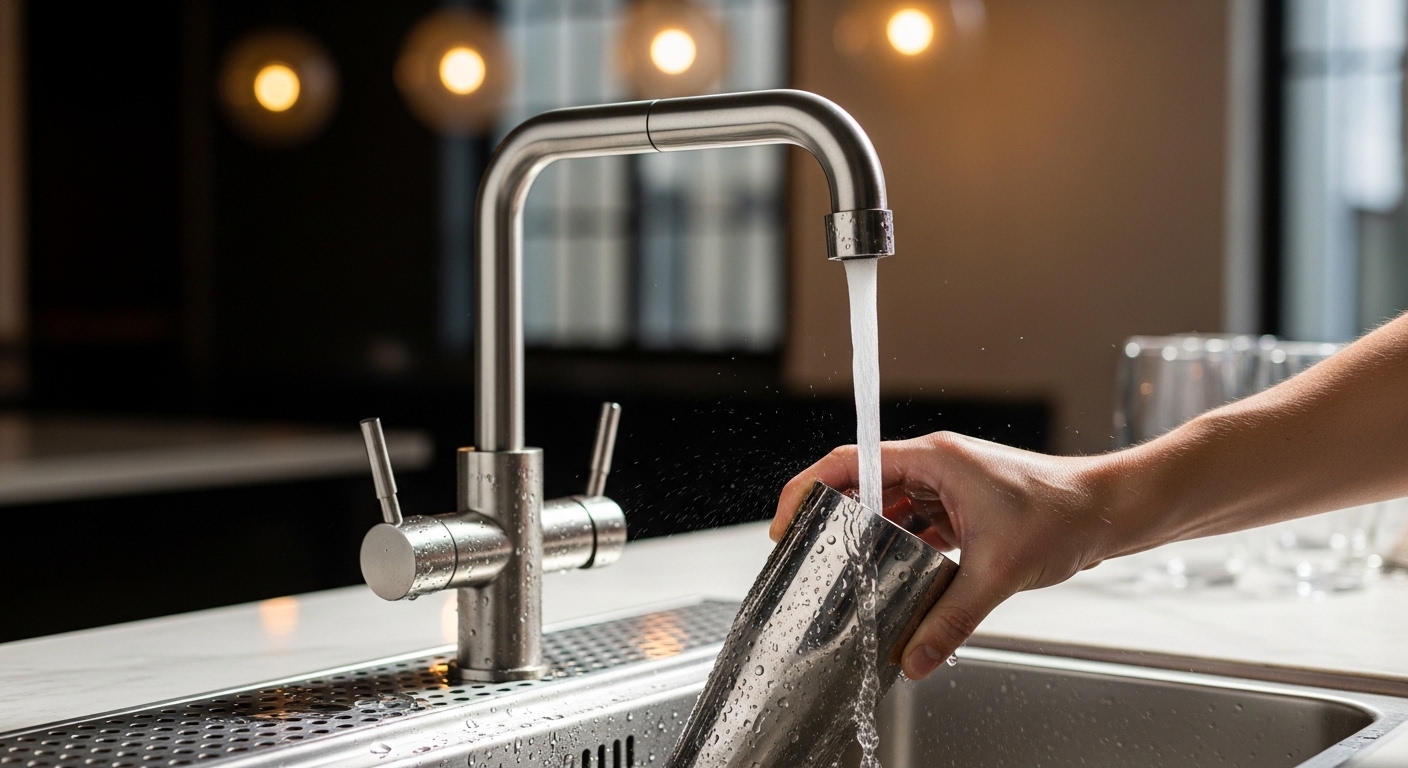
If you run a cocktail bar, a coffee shop with a service well, or a restaurant back-bar station, a bar faucet sprayer is the single fixture that quietly does the most work — rinsing shaker tins, blasting citrus pulp off jiggers, refilling pitchers, and keeping the prep sink usable through a Friday rush. This guide answers the real questions bar owners, GMs, and contractors actually ask before they buy: what it is, what specs matter for commercial volume, how much to budget, what finish survives lime and well drinks, and which mistakes turn a $250 faucet into a $700 repair call six months later.
What exactly is a bar faucet sprayer, and how is it different from a kitchen faucet?
A bar faucet sprayer is a small-footprint, single-hole deck-mounted faucet with either a pull-down spray head or a flexible pre-rinse spring, sized for the 15″x15″ prep sinks you find under a bar. It is shorter, narrower, and usually higher-pressure than a residential kitchen faucet, because it has to clear ice scoops, glass racks, and 28-oz Boston shakers in a tight space — not pots and pans.
The key differences from a standard kitchen faucet come down to four things: footprint, height, flow control, and duty cycle. A bar sprayer typically has a spout reach of 4–7 inches (vs. 8–10 inches on a kitchen unit), a total height under 15 inches so it fits below upper shelving, a momentary trigger or squeeze lever for short bursts of water, and an internal cartridge rated for commercial cycle counts. Confuse the two and you end up with a faucet that either hits the underside of a glass rack every time you raise the handle, or one that fails by month four because the cartridge was built for 4 uses a day, not 400.
Bar faucet sprayer vs. pre-rinse faucet vs. glass washer — which does what?
Quick answer: a bar faucet sprayer is the middle ground. A pre-rinse faucet is the tall, spring-loaded gooseneck you see in restaurant dishpits — too big for most bars. A glass washer is an upward-facing spinning brush head mounted in the sink for inverted glasses. A bar sprayer is a compact pull-down or pull-out faucet that handles general rinsing, refilling, and light pre-rinse duty without dominating the bar top.
- Pre-rinse faucet: 30–44″ tall, 1.15–1.42 GPM spray valve, best for high-volume dish stations.
- Bar faucet sprayer: 8–15″ tall, 1.5–2.2 GPM aerated + spray modes, best for bar prep sinks and coffee service wells.
- Glass washer (rinser): Inverted nozzle for glass interiors only — not a substitute for a faucet, but a great add-on.
- Hand sink faucet: Code-required separate fixture for handwashing; never use the bar sprayer for this.
What specs actually matter when buying a commercial bar faucet sprayer?
For a commercial install, prioritize five specs in this order: cartridge type, body material, flow rate, certifications, and warranty. Everything else — finish, handle shape, LED rings — is downstream of those five. If a vendor cannot tell you the cartridge brand and the cycle rating, do not buy that faucet for commercial use.
Here is what each spec looks like in real numbers for a faucet that will survive a busy bar:
| Spec | Residential minimum | Commercial bar minimum (2026) | Why it matters |
|---|---|---|---|
| Body material | Zinc alloy or plastic | Lead-free solid brass (C46500 or better) | Zinc cracks at thread joints under daily torque |
| Cartridge | Generic ceramic disc | Sedal, Kerox, or Flühs — 500k cycle rating | Drip-free for the life of the lease |
| Flow rate | 1.8 GPM | 1.5 GPM aerated / 2.2 GPM spray | Meets EPA WaterSense + clears a shaker fast |
| Hose | PVC braided | Nylon-braided PEX with brass fittings | Resists kinks and grease saturation |
| Certifications | cUPC | NSF/ANSI 61, NSF/ANSI 372, cUPC, ADA | Required by most US health inspectors |
| Warranty | Lifetime (limited) | 5-year commercial / lifetime drip-free | “Lifetime residential” voids in commercial use |
What flow rate is right for a bar sprayer — and does WaterSense apply?
Aim for 1.5 GPM in aerated stream mode and 2.2 GPM in spray mode at 60 PSI. The 1.5 GPM number is the EPA WaterSense ceiling for lavatory faucets, and while bar sinks are technically classified as kitchen fixtures (max 2.2 GPM federally), most municipalities now treat back-bar fixtures as utility plumbing — meaning the lower the aerated flow, the faster you pass inspection in California, Washington, and Colorado.
How much should a commercial bar faucet sprayer cost in 2026?
Expect to pay $180–$420 for a quality commercial bar faucet sprayer, with the sweet spot at $230–$310. Below $150 you are buying a zinc-bodied residential unit with a private-label sticker; above $500 you are paying for brand name (T&S, Chicago Faucets) or for matching a specific designer finish on a hotel project.
The pricing breaks down by tier, and the right tier depends entirely on your service volume:
- Budget tier ($120–$180): Acceptable for a home bar or a wine bar that pours 30 drinks a night. Brass-plated zinc, generic cartridge.
- Workhorse tier ($230–$310): The right pick for 80% of cocktail bars and coffee shops. Solid brass, branded ceramic cartridge, 5-year commercial warranty.
- Heavy-duty tier ($380–$550): For high-volume bars (200+ covers a night), hotels, and stadium concessions. Pre-rinse spring construction, replaceable spray valve, parts available locally.
- Designer/spec tier ($600+): Brushed gold, matte black PVD, or unlacquered brass for visible front-bar installs where guests see the fixture.
One thing to budget separately: installation. A licensed plumber will charge $180–$350 to swap a deck-mount bar sprayer if the supply lines and shutoffs are already in place. If you need new shutoffs or a new water line run to a back-bar station, plan for $600–$1,200 in plumbing on top of the fixture cost.
Which finish holds up best behind a working bar — chrome, matte black, or brushed gold?
For pure durability against citrus, sanitizer, and hard water, polished chrome wins every time — it is the most acid-resistant finish, the easiest to wipe down with a bar rag, and the cheapest to replace if a glass cracks it. Matte black PVD is a close second if you choose a real physical-vapor-deposition finish (not painted). Brushed gold and unlacquered brass look incredible but require a daily wipe-down with a soft cloth to prevent water spotting from lime-heavy well water.
If your bar uses sour mix, fresh citrus, or any sanitizer with chlorine, avoid oil-rubbed bronze on the bar sprayer specifically — the living finish that looks beautiful on a bathroom faucet patinas unevenly when it gets splashed with lime juice ten times an hour. We cover this trade-off in depth in our companion guide on oil rubbed bronze widespread faucets, where the chemistry is the same but the splash exposure is far lower.
How do I clean a bar faucet sprayer without ruining the finish?
Wipe with a damp microfiber cloth at the end of every shift, then dry. Once a week, use a 50/50 white vinegar and water mix on the aerator and spray head only — never on the body of a PVD or unlacquered finish. Hard-water buildup on the aerator is the #1 cause of “low pressure” complaints at the bar; soak the aerator in vinegar for 20 minutes monthly and the problem disappears. If you cannot unscrew the aerator by hand, our guide to faucet aerator key removal walks through cache and recessed aerator removal without damaging the spout threads.
How do I install a bar faucet sprayer myself, and when should I call a plumber?
You can install a deck-mount bar faucet sprayer yourself in 60–90 minutes if the bar already has a single-hole pre-cut in the sink deck, accessible shutoff valves, and 3/8″ compression supply lines. Call a plumber if any of those three things is missing, or if your local code requires a licensed install for commercial fixtures (most do for permitted bar buildouts).
Here is the realistic process for a DIY swap:
- Shut off both supply valves under the sink and open the existing faucet to relieve pressure.
- Disconnect the existing supply lines with a basin wrench — expect 1–2 cups of trapped water.
- Unscrew the mounting nut from below; lift the old faucet out from above.
- Clean the deck around the mounting hole with a degreaser and inspect for cracks.
- Feed the new faucet’s supply lines and spray hose down through the deck hole.
- Install the rubber gasket and mounting nut from below, hand-tight plus a quarter turn with a basin wrench.
- Connect supply lines (hot on left, cold on right) using new fiber washers.
- Attach the spray-head hose to the quick-connect under the faucet.
- Slowly open shutoffs, check for drips at every joint, and flush the line for 60 seconds before serving.
One commercial-specific warning: bar prep sinks often share a drain line with the ice well, which means hot work on supply lines can stress brittle PVC drain fittings. If your prep sink is older than 2015, check the drain assembly before you start. For a residential-style step-by-step on a similar deck-mount swap, our bathroom vanity faucet install guide shows the same technique in detail, just on a different fixture.
What are the most common bar faucet sprayer problems — and how do I fix them?
The top three failures we see in commercial bar installs are weak spray pressure (clogged aerator or spray head), a leaking spray-head hose at the quick-connect, and a slowly dripping spout (worn cartridge). All three are user-fixable in under 30 minutes if you have the right replacement part on hand.
Why is my bar faucet sprayer pressure suddenly weak?
95% of the time it is mineral buildup in the aerator or spray-head screen, not a pressure problem in the building. Unscrew the aerator, soak in white vinegar for 20 minutes, brush with an old toothbrush, and reinstall. If pressure is still weak, pull the spray-head, unscrew the small screen at the hose connection, and clean that too. Only after both of those should you suspect a partially closed shutoff valve or a kinked supply line.
The spray head won’t retract — what now?
The counterweight on the hose under the deck has either slipped down the hose or come unclipped entirely. Open the cabinet, find the cylindrical weight clipped to the hose loop, slide it back to the lowest point of the hose loop (about 6–8 inches above the floor), and re-clip. If the weight is missing, any plumbing supply house sells universal replacements for under $15.
The faucet drips after I shut it off — is the whole unit dead?
No — it is almost always the ceramic disc cartridge, a $25–$60 part that takes 15 minutes to swap. Note the brand and model number stamped on your faucet body, order the matching cartridge, shut off the supply, pop the handle cap, unscrew the retaining nut, pull the old cartridge straight up, drop the new one in. This is the single biggest reason to buy a faucet with a named-brand cartridge (Sedal, Kerox, Flühs) — replacements are findable for 10+ years, while no-name cartridges go end-of-life in 18 months.
How does a bar faucet sprayer fit into a larger commercial bar build-out?
In a typical 12-foot back bar, you will plan for three plumbed fixtures: a three-compartment sink with a tall pre-rinse faucet, a separate hand sink with its own code-required faucet, and a prep sink with the bar faucet sprayer. The bar sprayer is the one your bartenders actually touch hundreds of times a shift, so it gets the strictest spec, the best finish for visibility, and a position within a comfortable arm’s reach of the ice well.
If you are also speccing the main dish station, our deeper write-up on commercial kitchen faucet sourcing and installation covers pre-rinse faucets, pricing tiers, and local-versus-online buying — and the same logic applies when you are sourcing a bar sprayer as part of a single PO. For larger projects pulling utility water for ice machines or beer glycol systems, our copper utility faucet buyer’s guide explains the commercial-grade fittings you will need upstream of the bar.
FAQ
Is a bar faucet sprayer the same as a prep sink faucet?
Functionally, yes — “bar faucet sprayer” and “prep sink faucet with sprayer” describe the same fixture in 90% of commercial catalogs. The only meaningful distinction is height: a true bar sprayer rarely exceeds 15 inches total height so it fits under standard back-bar shelving, while a generic prep sink faucet can run taller for kitchen prep stations.
Do I need NSF certification on a bar faucet sprayer?
Yes, in every US commercial bar. NSF/ANSI 61 certifies the materials are safe for potable water, and NSF/ANSI 372 confirms lead-free compliance under the federal Safe Drinking Water Act. Most health inspectors will fail an install that lacks visible certification marks on the faucet body or its documentation, even if the product is technically compliant.
Can I use a residential pull-down kitchen faucet at a commercial bar?
You can, but you should not. Residential faucets typically have cartridges rated for 100,000–250,000 cycles; a busy bar will hit that in 18–30 months and the manufacturer’s “lifetime warranty” will be void because the install is commercial. Spend the extra $80–$150 once for a commercial-rated unit.
What’s the best flow rate for a bar faucet sprayer in a high-volume cocktail bar?
1.5 GPM in aerated mode and 2.2 GPM in spray mode at 60 PSI is the sweet spot. Lower flow saves water and meets WaterSense, while the higher spray flow gives bartenders enough force to blast citrus pulp and egg-white residue off shaker tins in one or two seconds rather than five.
How long should a commercial bar faucet sprayer last?
A properly spec’d commercial bar faucet sprayer should run drip-free for 7–10 years with a single cartridge replacement around year 4–5. The faucet body itself (solid brass) effectively never wears out — what fails is the cartridge, the aerator, and the spray-head trigger spring, all of which are replaceable parts under $60 each.
Touchless or manual handle for a bar sprayer — which is better?
Manual, almost always. Touchless sensors work well at handwash sinks but struggle behind a bar where bartenders need precise control over pour volume into pitchers, shakers, and mixing glasses. Save the touchless tech for the hand sink, where it actually improves hygiene and code compliance.
Can a bar faucet sprayer be used outdoors at a pool bar or patio service station?
Only if it is rated for outdoor use — look for stainless steel construction (not chrome-plated brass) and freeze-resistant cartridge ratings. Standard indoor bar sprayers will corrode at the spray-head trigger within one season of UV and humidity exposure. For outdoor utility taps that handle freeze-thaw cycles, see our companion guide on replacing a stuck hose bibb or sillcock.
About the author: This guide was written by the Wigafaucet product team, drawing on 14 years of manufacturing experience supplying bar and restaurant faucets to North American hospitality groups. Every commercial bar faucet sprayer in the Wigafaucet catalog is built with lead-free solid brass bodies, NSF/ANSI 61 and 372 certification, and Sedal or Kerox ceramic disc cartridges tested to 500,000 cycles. Our commercial fixtures carry a 5-year warranty against manufacturing defects and a lifetime drip-free warranty on the cartridge — backed by a US-based parts inventory so replacement cartridges and spray heads ship same-day.