 Wiga Tap Manufacturer
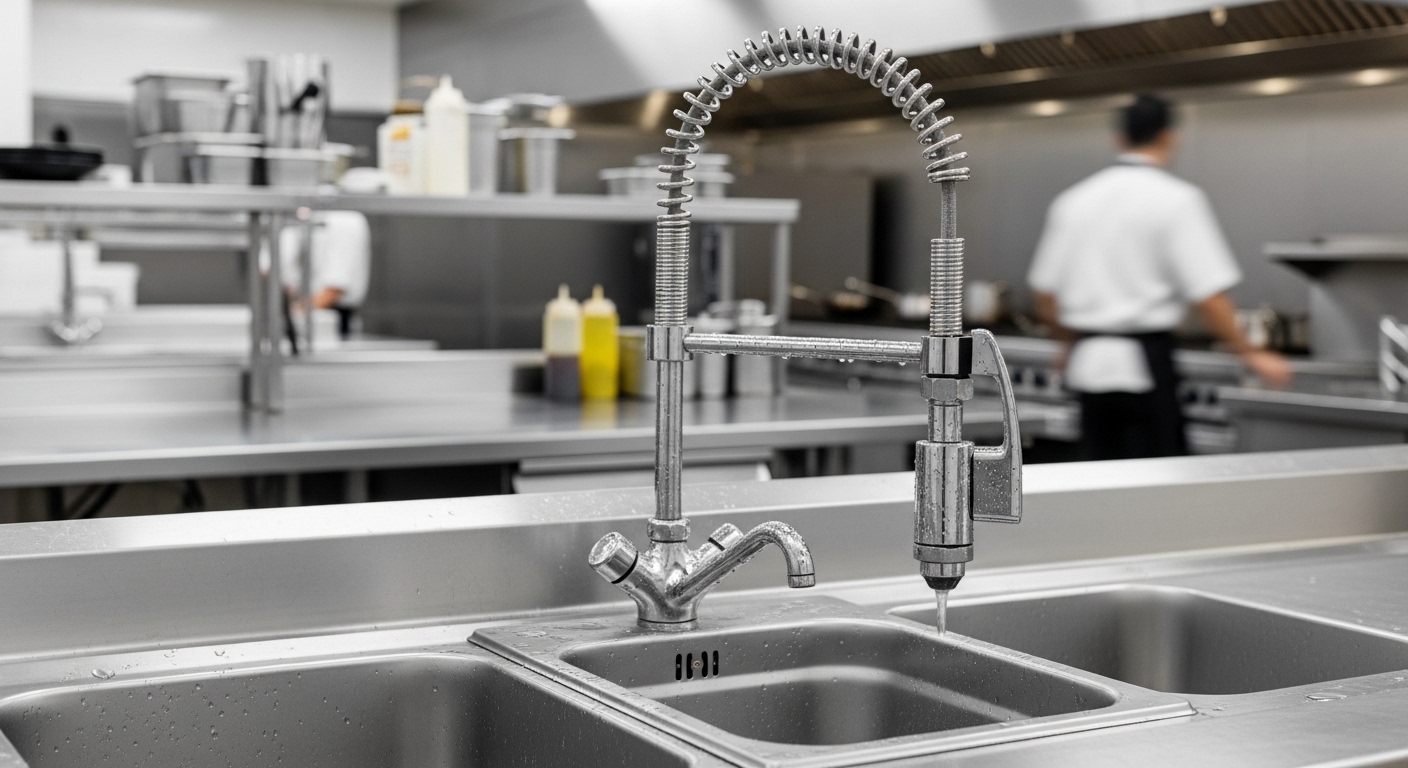
If you’re hunting for a commercial sink faucet for sale, the honest answer is this: the price tag matters far less than three specs — a solid brass body, a ceramic-disc cartridge, and NSF/ANSI certification. Nail those, and a $150 faucet will outlast a pretty $400 one. Miss them, and you’ll be replacing cartridges every few months while a line of tickets backs up. This guide walks you through exactly what to look for, what things actually cost, and where a commercial-grade unit makes sense (and where it’s overkill).
Commercial sink faucets — the tall gooseneck and coiled pre-rinse sprayers you see behind every restaurant line — are built to a different standard than the faucet on your bathroom vanity. They handle 40+ hours of daily use, near-scalding wash water, and grease that would gum up a residential cartridge in a week. Below, we answer the real questions buyers ask before they spend the money.
What is a commercial sink faucet, and how is it different from a regular kitchen faucet?
A commercial sink faucet is a heavy-duty, high-flow fixture built for constant use in restaurants, bars, salons, labs, and workshops — most commonly the “pre-rinse” style with a tall spring-loaded spout and a squeeze-trigger sprayer. The core difference from a home faucet is durability: commercial units use forged brass bodies, industrial ceramic cartridges rated for hundreds of thousands of cycles, and higher flow rates to blast food debris off dishes fast.
A typical residential kitchen faucet is engineered for maybe a few dozen uses a day at 1.5–1.8 gallons per minute (GPM). A commercial pre-rinse unit is engineered for hundreds of uses a day, often runs at 1.15 GPM through a high-pressure spray valve (the low GPM is deliberate — it concentrates pressure), and is designed to be rebuilt rather than thrown away. When a part wears, you replace the cartridge or the spray valve, not the whole faucet.
Here are the traits that separate a true commercial faucet from a “commercial-style” home faucet dressed up to look the part:
- Solid brass body — not zinc alloy or plastic with a metal shell. Brass resists corrosion and handles the constant heat cycling of hot wash water.
- NSF/ANSI 61 and Standard 372 certification — proves the faucet is safe for potable water and lead-free, which health inspectors will check.
- Ceramic-disc cartridge — the drip-proof valve mechanism that survives grit and hard water far better than rubber washers.
- Spring or gooseneck spout with a wide swing — enough reach and height to fill a stockpot or rinse a sheet pan.
- Standard 8-inch (203 mm) center mounting — the near-universal commercial spread, so replacement parts and add-ons fit.
If a faucet is marketed as “commercial” but is made of light zinc, has a pull-down hose instead of a spring sprayer, and carries no NSF mark, it’s a residential faucet with an industrial look. That’s fine for a home kitchen island — it’s not fine behind a working line.
Which type of commercial sink faucet should you buy for your setup?
Match the faucet to your sink and workflow: pre-rinse for dish pits, gooseneck for prep and hand sinks, wall-mount for three-compartment sinks with the plumbing behind the wall, and deck-mount when the faucet mounts on the sink or countertop itself. Buying the wrong mounting style is the single most common — and most expensive — mistake.
Here’s how the main types compare so you can pick before you shop:
| Type | Best for | Typical flow | Price range | Watch out for |
|---|---|---|---|---|
| Pre-rinse (spring spout + sprayer) | Dish stations, high-volume rinsing | 1.15 GPM spray valve | $140–$450 | Needs clearance height (~24–48 in) |
| Gooseneck / rigid spout | Prep sinks, bar sinks, hand sinks | 2.2 GPM | $90–$250 | No sprayer; slower for big pots |
| Wall-mount (8-in center) | 3-compartment sinks, plumbing in wall | 2.2 GPM | $110–$300 | Rough-in spacing must match exactly |
| Deck-mount (single or 4-in) | Bar prep, countertop hand sinks | 1.5–2.2 GPM | $80–$220 | Check hole count on your sink |
| Pre-rinse + add-on faucet | Dish pit that also fills pots | Combined | $180–$500 | More parts to maintain |
One decision drives everything: mounting. Measure the distance between your existing supply lines (center to center) before you buy anything. Commercial wall-mount faucets are almost always 8 inches on center, but adjustable models flex between roughly 7.5 and 8.5 inches. If your setup is a single deck hole, you’re in different territory — and we cover that exact scenario in our guide to the best commercial sink faucet one-hole setup for a busy kitchen, which is worth reading before you commit if your sink only has one punched hole.
How much does a commercial sink faucet cost, and what am I actually paying for?
A quality commercial sink faucet for sale runs $120–$450, and the price difference comes down to body material, cartridge quality, spout reach, and included accessories — not the brand name on the box. Under about $100, you’re usually looking at zinc bodies or thin brass that won’t hold up; above $450, you’re paying for premium finishes or integrated add-on faucets you may not need.
Here’s what your money buys as you move up the price ladder:
- $80–$120: Entry deck-mount gooseneck or basic wall-mount. Fine for a low-traffic bar or hand sink. Look hard at the material spec — some at this tier are zinc.
- $120–$220: The sweet spot for most buyers. Solid brass, ceramic-disc cartridge, NSF certified, real 8-inch center wall-mount or a genuine pre-rinse. This is where durability meets sane pricing.
- $220–$350: Premium pre-rinse units with taller spouts, heavier spring assemblies, better spray valves, and finishes like polished chrome or brushed stainless.
- $350–$500: Pre-rinse plus integrated add-on pot-filler faucet, or specialty finishes. Buy this tier only if you truly need the second spout.
Don’t forget the running cost. A commercial faucet is a rebuildable machine — the cartridge and spray valve are wear parts. A ceramic-disc cartridge for a name-brand commercial unit costs $15–$40; a pre-rinse spray valve costs $20–$60. Budget a cartridge swap once every year or two under heavy use. That’s dramatically cheaper than replacing a sealed residential faucet, which is exactly why commercial kitchens buy this way. If you’ve never swapped one, the process is nearly identical to a home unit — our walkthrough on the single-handle faucet cartridge covers the same steps you’ll use here.
Is a commercial faucet worth it for a home kitchen?
For most home kitchens, a full commercial pre-rinse faucet is overkill — but a commercial-grade solid-brass faucet with a ceramic cartridge is absolutely worth it if you cook seriously or hate replacing faucets. The catch is fit: real commercial units are tall, high-flow, and sometimes exceed residential water-efficiency limits, so check clearance and local codes first.
The genuinely useful part of “commercial” for a home is the build quality: forged brass, ceramic discs, and a spring sprayer that makes rinsing pans effortless. Those translate directly to a home setting. The downsides are practical. A pre-rinse spout can stand 24–48 inches above the sink — that may hit an upper cabinet or a window. And in some U.S. states, faucets are capped at 1.8 GPM for residential installation, while some commercial units flow higher, which can create a code or rebate wrinkle.
If you want that heavy-duty feel without a towering pre-rinse spout, a commercial-style residential faucet is the middle path. Just vet it on the same specs — brass body, ceramic cartridge, real warranty — that you’d demand from a true commercial unit. Our breakdown of what actually signals the best kitchen faucet quality in 2026 shows you how to tell a genuinely well-built faucet from a heavy-looking one before you pay.
What flow rate and water pressure do you need for a commercial sink faucet?
A commercial pre-rinse spray valve should run at 1.15 GPM (the current U.S. federal maximum for pre-rinse valves) and needs 20–60 psi of supply pressure to spray with real force. The low GPM isn’t weak — the spray valve concentrates that water into a tight, high-velocity pattern that strips food off dishes faster than a wide-open home faucet ever could.
Two numbers to know before you buy:
- Flow rate (GPM): Pre-rinse spray valves are federally capped at 1.15 GPM. Gooseneck/fill faucets typically run 2.2 GPM. If a listing claims a much higher pre-rinse spray flow, be skeptical.
- Supply pressure (psi): Commercial faucets want 20–60 psi. Below ~20 psi the spray goes limp; above ~80 psi you risk splashing and premature cartridge wear.
If your new commercial faucet sprays weakly on day one, the problem is almost never the faucet — it’s a clogged spray valve screen, a kinked supply hose, or genuinely low building pressure. That’s the same root-cause checklist we run through in our guide on why there’s low flow out of a kitchen faucet and how to fix it, and it applies directly to commercial units. And if the trigger sprayer starts sticking or the spring feels stiff, mineral buildup in the valve is usually the culprit — the same fix as a sticking faucet sprayer on a home unit: disassemble, descale, re-grease.
What should you check before you click “buy” on a commercial sink faucet?
Before buying, verify five things: mounting type and center spacing, body material, cartridge type, NSF certification, and warranty length. Getting any one wrong means either a faucet that won’t fit or one that won’t last — both send you right back to the checkout.
Run this quick pre-purchase checklist:
- Mounting: Wall-mount or deck-mount? Measure center-to-center on your supply lines (usually 8 inches for commercial wall-mount).
- Material: Confirm “solid brass” in the spec, not “zinc alloy” or “metal construction.”
- Cartridge: Look for ceramic-disc. Ask whether replacement cartridges are sold separately (they should be).
- Certification: NSF/ANSI 61 and 372 for potable-water and lead-free compliance — non-negotiable for any commercial food-service install.
- Warranty: A serious commercial faucet carries at least a limited lifetime warranty on the body and 1–5 years on finish and cartridge.
- Clearance: Measure the height above your sink. Pre-rinse spouts are tall — make sure the spring assembly clears cabinets and shelves.
One more field-tested tip: buy from a seller who stocks the wear parts. A commercial faucet is only “buy it for life” if you can actually get the cartridge and spray valve two years from now. Wigafaucet lists compatible cartridges and spray valves alongside each faucet for exactly this reason.
Who makes a reliable commercial sink faucet, and how do you avoid junk?
Reliable commercial faucets come from makers who publish full specs — material, GPM, certifications, and part numbers — and back the unit with a real warranty. Avoid listings that hide the body material, skip the NSF mark, or don’t sell replacement cartridges; those are the tells of a disposable faucet dressed up in stainless.
You don’t need to memorize brand rankings. Judge the listing itself. A trustworthy commercial faucet page states the exact body material, spray valve GPM, mounting center, and certifications, and it links you to the matching rebuild parts. A junk listing leans on words like “premium,” “heavy-duty,” and “high-end” while quietly omitting the spec that matters. When in doubt, ask the seller two questions: “Is the body solid brass?” and “Can I buy the replacement cartridge?” Hesitation on either is your answer.
Author note & why you can trust this guide
This guide was written by the Wigafaucet product team, who spec, pressure-test, and warranty commercial and residential faucets full-time. We bench-test cartridges for drip resistance across thousands of cycles, verify NSF/ANSI 61 and 372 compliance on our commercial line, and stand behind our faucets with a limited lifetime warranty on the brass body. We recommend on specs we can measure — not marketing language — because the wrong faucet behind a working line costs far more than its price tag.
FAQ
How much is a commercial sink faucet for sale on average?
Most quality commercial sink faucets sell for $120–$450. The $120–$220 range is the sweet spot for a solid-brass, NSF-certified, ceramic-cartridge unit. Below $100 you risk zinc bodies; above $450 you’re usually paying for an integrated add-on pot filler or a premium finish.
Do commercial kitchen faucets require NSF certification?
Yes — for any commercial food-service installation, health inspectors expect NSF/ANSI 61 (potable water safety) and NSF/ANSI 372 (lead-free) compliance. Always confirm the certification is listed before buying. It also signals a genuinely commercial-grade build rather than a residential faucet dressed up to look industrial.
Can I install a commercial faucet on a home sink?
Often yes, but check three things: mounting type (deck vs. wall), the number of holes in your sink, and vertical clearance above the sink, since pre-rinse spouts can stand 24–48 inches tall. Also confirm your local code’s residential flow-rate limit — some areas cap faucets at 1.8 GPM.
What’s the difference between a pre-rinse and a gooseneck commercial faucet?
A pre-rinse faucet has a tall spring spout with a high-pressure squeeze-trigger sprayer, built for blasting food off dishes at a dish station. A gooseneck faucet has a fixed rigid spout with no sprayer, better suited to prep sinks, bar sinks, and hand sinks where you fill and rinse rather than power-spray.
How long should a commercial sink faucet last?
A solid-brass commercial faucet with a ceramic-disc cartridge lasts 10–15 years or more, because it’s designed to be rebuilt rather than replaced. The body outlives everything; you periodically swap the cartridge ($15–$40) and spray valve ($20–$60) as they wear — typically every one to two years under heavy daily use.
What flow rate should a commercial pre-rinse faucet have?
By U.S. federal standard, commercial pre-rinse spray valves are capped at 1.15 GPM. That low number is intentional — the spray valve concentrates the water into a tight, high-velocity pattern that cleans faster than an open faucet. Companion fill/gooseneck faucets typically run at 2.2 GPM.