 Wiga Tap Manufacturer
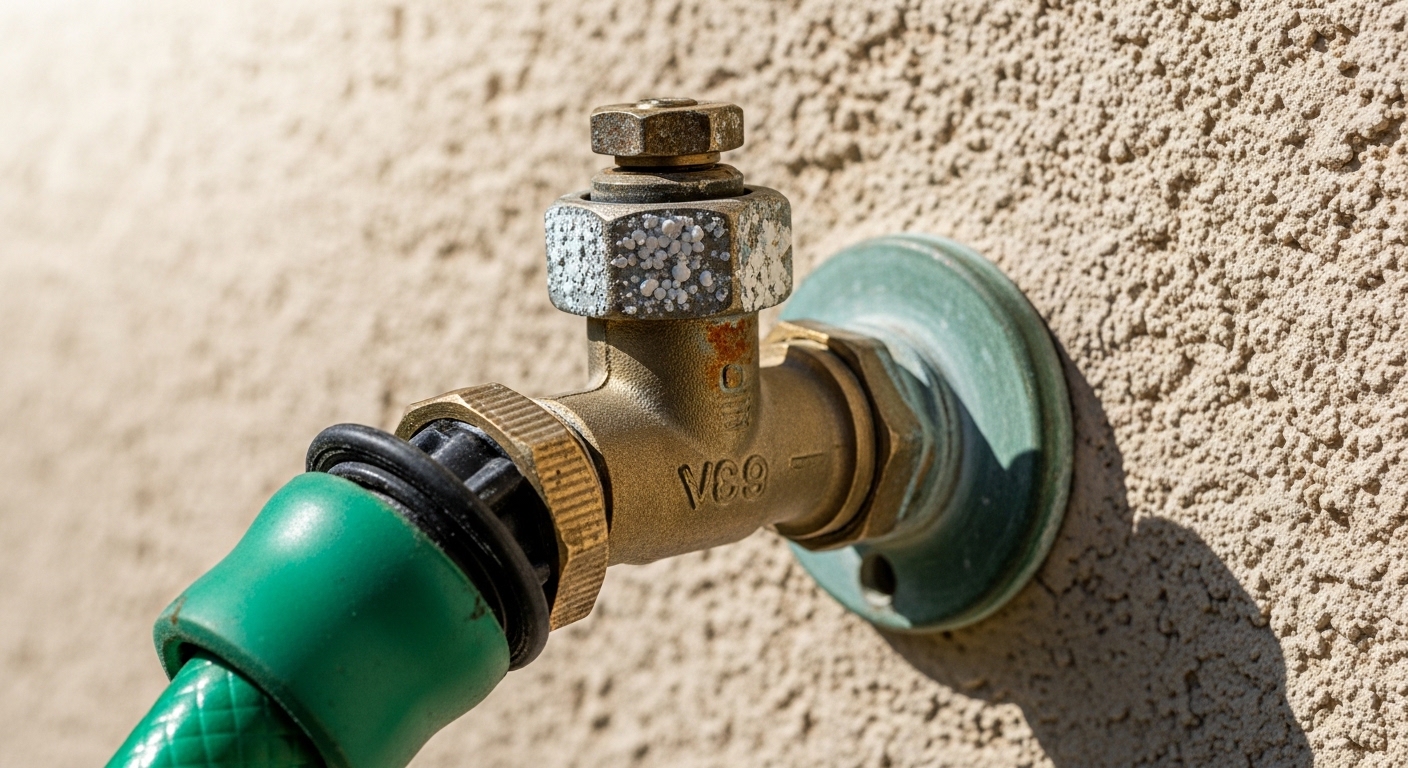
An outdoor tap jammed mid-season is one of the most frustrating plumbing failures a homeowner can face — you turn the handle, nothing moves, and suddenly your garden hose, pressure washer, or drip irrigation system is dead in the water. The good news is that a stuck outdoor faucet is rarely a mystery: it almost always points to a small handful of root causes, and the right replacement spigot can prevent the issue from coming back for a decade or more. This buyer’s guide is built for shoppers actively comparing replacement outdoor taps, hose bibbs, and frost-free sillcocks, with a focus on the build specs that actually matter when you’re standing in front of a seized faucet on the side of your house.
At Wigafaucet, we manufacture lead-free brass outdoor taps, garden hose bibbs, and freeze-resistant sillcocks for residential, light commercial, and landscape contractor use. Every model referenced in this guide is tested to ASME A112.18.1 / CSA B125.1 standards, ships with a limited lifetime warranty on the body and a 10-year warranty on the cartridge or stem assembly, and is shipped from our U.S. distribution warehouses. Use this guide to pinpoint why your tap jammed, then jump straight to the replacement spec section to choose the model that fits your wall thickness, pipe stub-out, and local freeze risk.
Why Your Outdoor Tap Jammed: The 6 Most Common Causes
Before you shop for a replacement, it’s worth understanding why your outdoor tap jammed in the first place — because the failure mode dictates which replacement style you actually need. A spigot that seized from freeze damage needs a frost-free sillcock; one that locked up from limescale needs a ceramic-disc cartridge model. Picking the wrong style is the #1 reason homeowners end up replacing the same outdoor faucet twice in three years.
1. Corroded or Seized Valve Stem
The most common reason an outdoor tap jammed is a corroded brass stem fused to the bonnet threads. Years of humidity, hard water, and dissimilar-metal contact (brass stem against a zinc or pot-metal handle) create galvanic corrosion that essentially welds the stem in place. You’ll feel rock-solid resistance the moment you try to turn the handle — no give, no squeak, just a dead stop.
2. Mineral Scale Lock-Up
If you’re on well water or in a hard-water region (most of the Southwest, Midwest, and Florida), calcium and magnesium deposits build up inside the valve seat and around the stem packing. The deposits act like glue. A tap that worked fine in October can be completely jammed by April after a winter of slow evaporation inside the body.
3. Frozen and Cracked Internal Components
A non-frost-free hose bibb that wasn’t drained before winter will trap water against the closed valve. When that water freezes, it expands and warps the stem, splits the body, or jams the washer against the seat. The tap often “looks” fine from the outside but won’t budge — and when you finally force it, water sprays from a hairline crack inside the wall.
4. Stripped or Swollen Washer
The rubber washer at the end of a compression-style stem can swell, harden, or partially disintegrate. The debris jams between the stem and the seat, making the handle feel locked even though the threads themselves are fine.
5. Over-Tightened Packing Nut
If a previous repair involved cranking down the packing nut to stop a drip, that compression can squeeze the stem so tightly it becomes immovable. This is especially common on inexpensive big-box hose bibbs with soft brass bonnets.
6. Failed Anti-Siphon Vacuum Breaker
Modern outdoor taps include a built-in vacuum breaker (required by code in most U.S. states). When the rubber check disc inside the breaker fails, debris can backflow into the valve body and jam the mechanism. You’ll often see water weeping from the top of the breaker cap when this happens.
Repair vs. Replace: When an Outdoor Tap Jammed Is Beyond Saving
Plumbers will tell you the same thing: once an outdoor tap jammed to the point where the handle won’t turn with reasonable force, you’re better off replacing the whole spigot than fighting the repair. Here’s the practical breakdown.
| Symptom | Repairable? | Recommended Action | Est. Time |
|---|---|---|---|
| Handle turns but tap drips | Yes | Replace washer & packing | 20 min |
| Handle stiff but movable | Sometimes | Penetrating oil + new stem | 45 min |
| Handle completely locked | Rarely | Replace entire hose bibb | 1–2 hrs |
| Visible crack in body | No | Replace immediately | 1–2 hrs |
| Water sprays from wall when opened | No | Replace with frost-free sillcock | 2–3 hrs |
| Vacuum breaker leaking + jammed | Sometimes | Replace breaker cap or whole unit | 30–60 min |
The cost math also favors replacement. A quality lead-free brass hose bibb runs $25–$60, while a contractor service call to repair a seized stem typically starts at $150 and offers no guarantee the corroded threads won’t fail again within a year. If your tap is more than 10 years old, has visible scale, or has been through more than two freeze cycles without proper winterization, replace it.
Types of Outdoor Taps: Choosing the Right Replacement
There are four main categories of outdoor faucet on the market, and the one you choose should reflect your climate, your wall construction, and how the tap will be used (occasional hose duty vs. daily irrigation vs. pressure-washer feed).
Standard Hose Bibb (Compression Valve)
The classic side-of-house spigot. Brass body, compression-style stem with a rubber washer, threaded 3/4″ garden hose outlet. Inexpensive and simple to service, but vulnerable to freezing if you live anywhere north of USDA Zone 8. Best for mild climates, detached garages, and outbuildings where winterization is easy.
Frost-Free Sillcock
A long-stem spigot (typically 6″, 8″, 10″, or 12″ lengths) where the actual valve seat sits inside the heated wall cavity of your home rather than at the exterior face. When you close the handle, residual water drains out via gravity through the spout, so nothing freezes. Essential for any home in Zones 3–7. Wigafaucet’s frost-free sillcocks include a built-in anti-siphon vacuum breaker and a self-draining design rated to -40°F when properly installed at the correct downward pitch.
Ball-Valve Garden Faucet
Instead of a compression washer, a stainless-steel ball with a precision-bored port rotates 90° to open and close the water path. No washer to swell, no stem to corrode in the threaded path. These are the gold standard for hard-water regions because there’s nothing for mineral scale to bind to. Quarter-turn operation also means no over-tightening — and no more jammed handles.
Wall-Hydrant / Commercial Yard Hydrant
For agricultural, light commercial, and landscape contractor use. Heavy-cast bronze body, removable cartridge, and either a frost-free or buried-stem configuration. Wigafaucet’s commercial yard hydrants are rated for 125 PSI continuous service and ship with a stainless steel operating rod that won’t bind even after a decade in the ground.
Brass vs. Bronze vs. Stainless: The Material Question
Once an outdoor tap jammed and you’re shopping for a replacement, the body material is the single biggest factor in how long the new one will last. Don’t be tempted by the $9 zinc-alloy spigots at discount retailers — they’re the primary reason people are back at the hardware store every two years.
| Material | Corrosion Resistance | Freeze Tolerance | Lifespan | Price Range |
|---|---|---|---|---|
| Zinc Alloy / “Pot Metal” | Poor | Cracks easily | 2–4 years | $8–$15 |
| Standard Brass | Good | Moderate | 8–12 years | $20–$40 |
| Lead-Free Brass (C46500) | Excellent | Good with frost-free design | 15–25 years | $30–$70 |
| Cast Bronze | Excellent | Excellent | 25+ years | $50–$120 |
| 304 Stainless Steel | Best-in-class | Excellent | 30+ years | $80–$180 |
For most U.S. homeowners replacing a jammed outdoor tap, a lead-free brass frost-free sillcock or a brass ball-valve garden faucet is the sweet spot — long enough lifespan to “install and forget,” priced reasonably, and compliant with NSF/ANSI 372 lead-free drinking water standards (important if anyone in your household ever fills a glass from the garden hose, which more people do than admit). The same lead-free brass alloys we use across our copper utility faucet and commercial fixture lines are what we specify for our outdoor hardware, and you can read more about how those alloys hold up to long-term exposure in our copper utility faucet buyer’s guide.
Sizing Your Replacement: Stub-Out, Thread, and Wall Thickness
This is where most DIY replacements go sideways. You can’t just grab any hose bibb off the shelf — three measurements determine fit.
- Inlet thread size: Most U.S. residential supply lines terminate in 1/2″ MIP (male iron pipe) or 3/4″ MIP. Check the existing fitting before you buy.
- Connection type: Threaded (MIP/FIP), sweat-solder (for copper supply lines), or PEX crimp. Frost-free sillcocks are commonly available in all three.
- Wall thickness / stem length: For frost-free units, the stem must extend through your exterior wall and at least 1/4″ into the heated interior. Measure from the outer wall surface to the inside surface, add the depth of any siding, and round up. Common lengths: 4″, 6″, 8″, 10″, 12″, 14″.
- Outlet thread: Should be 3/4″ GHT (garden hose thread) — universal across all U.S. garden hoses and most pressure washers.
- Mounting flange: Two screw holes through the flange let you anchor to the wall sheathing for stability. Make sure the new flange aligns with — or is larger than — the existing escutcheon footprint.
If you’re swapping a standard hose bibb for a frost-free sillcock for the first time, you may also need to extend or modify the interior supply line. A SharkBite or PEX transition fitting makes this a 15-minute job for anyone comfortable with basic plumbing tools. Pros performing the swap inside a finished wall sometimes opt to install a dedicated shut-off in the basement or crawlspace just upstream of the sillcock — handy for future service.
Installation Best Practices to Prevent the Next Jam
Replacing the spigot is only half the job. How you install and maintain it determines whether you’ll be back here reading the same guide in five years. A few principles, drawn from our manufacturing QA team’s field reports:
- Use the right thread sealant. PTFE thread tape (3 wraps clockwise) for tapered NPT threads, or a brushable pipe dope rated for potable water. Never both — they interfere with each other.
- Pitch frost-free sillcocks downward. A 1/4″ drop from the interior valve seat to the exterior spout is required for proper drainage. Install level and you’ve defeated the entire frost-free feature.
- Remove garden hoses before the first freeze. Even a frost-free sillcock can’t drain if a connected hose holds water against the spout. This is the #1 cause of “frost-free” sillcock failures.
- Don’t over-torque the handle when closing. Snug is enough. Gorilla-tight is what compresses the washer permanently and starts the jamming cycle all over again.
- Cycle the tap quarterly. Even in off-season, open and close the valve every three months to keep the stem and packing from setting up.
- Inspect the vacuum breaker annually. A $4 replacement cap every 5–7 years is cheap insurance against backflow contamination and internal jamming.
If your jam was caused by mineral scale, also consider installing an inexpensive whole-house sediment filter upstream of the spigot. The same calcium that locks up an outdoor tap is exactly what clogs aerators inside your kitchen and bathroom — and once it’s set up, removal can require a specialized key. Our walkthrough on faucet aerator key removal covers the indoor side of that same hard-water problem in detail.
Wigafaucet Outdoor Tap Lineup: Picking Your Replacement
Our outdoor faucet catalog is organized by climate zone and use case. Here’s the quick-reference matrix.
| Model Series | Best For | Body | Valve Type | Freeze Rating | Warranty |
|---|---|---|---|---|---|
| WG-HB100 | Mild climates, sheds | Lead-free brass | Compression | Above 32°F | 10-year |
| WG-BV200 | Hard-water regions | Lead-free brass | Quarter-turn ball | Above 32°F | Lifetime body |
| WG-FF300 | Zones 3–7 homes | Lead-free brass | Frost-free stem | -40°F installed | Lifetime body |
| WG-CC400 | Light commercial | Cast bronze | Cartridge | -20°F | Lifetime body |
| WG-YH500 | Farm / landscape | Cast bronze + SS rod | Buried-stem hydrant | -40°F | Lifetime |
If your jam happened on a residential side-of-house spigot in the Northeast, Midwest, or Mountain West, the WG-FF300 frost-free sillcock is almost certainly your replacement. If you’re in California, Arizona, or the Gulf Coast and the jam was scale-driven, the WG-BV200 ball-valve garden faucet eliminates the problem at its root. For commercial kitchens or food-service facilities that need an exterior wash-down tap, the WG-CC400 pairs naturally with the same commercial-grade plumbing standards we cover in our commercial kitchen faucet local buyer’s guide.
Indoors, the principles are similar — heavy-duty brass bodies, ceramic-disc or ball-valve internals, and the right finish for the environment. Customers replacing an outdoor tap often take the opportunity to refresh other fixtures at the same time; if a bathroom upgrade is also on the horizon, the same brass-quality logic applies to interior fittings like an 8-inch widespread faucet in oil-rubbed bronze, which uses the same NSF-372-compliant brass alloy we build our outdoor hardware from.
Cost Breakdown: What a Replacement Outdoor Tap Should Cost in 2026
Pricing transparency matters when you’re shopping. Here’s what to budget for a complete replacement, including the spigot, sealant, and any fittings you might need.
| Scenario | Parts Cost | DIY Time | Pro Install Cost |
|---|---|---|---|
| Like-for-like hose bibb swap | $25–$60 | 30–45 min | $150–$225 |
| Standard bibb → frost-free sillcock | $45–$95 | 1.5–2.5 hrs | $275–$450 |
| Adding interior shut-off valve | +$15–$30 | +30 min | +$75–$125 |
| Yard hydrant install (new) | $120–$220 | 4–6 hrs | $500–$900 |
DIY is realistic for anyone comfortable with a pipe wrench, a hacksaw or pipe cutter, and basic soldering or PEX crimping. If the supply line is buried in a finished wall, hidden behind brick veneer, or you’re working with copper sweat connections you’ve never made before, hiring a licensed plumber is money well spent.
FAQ
How do I free an outdoor tap that’s jammed without breaking it?
Start by spraying penetrating oil (PB Blaster or Liquid Wrench) around the packing nut and at the base of the handle. Let it sit 15–30 minutes. Then apply gentle, steady pressure with a strap wrench on the handle — not a pipe wrench, which will crush it. If it still won’t budge after two penetrating-oil cycles, the internal corrosion is beyond repair and you should plan a full replacement. Avoid heat (a torch) on any fitting with plastic vacuum-breaker components inside.
Will a frost-free sillcock prevent my outdoor tap from jamming again?
Mostly yes, when it comes to freeze-induced jams — that’s exactly what it’s designed to prevent. The valve seat lives inside your heated wall, and residual water drains out the spout after closure, so there’s nothing to freeze and warp. It won’t, however, prevent scale-driven jams in hard-water regions; for those, pair the sillcock with a quarter-turn ball-valve model or add a sediment filter upstream.
Can I replace just the stem instead of the whole outdoor tap?
Sometimes, if the body itself is intact and you can extract the old stem. Universal replacement stems are available for common compression-style bibbs, but the threads inside the bonnet are often corroded enough that the new stem binds anyway. For any tap over 10 years old, replacing the whole spigot is faster and gives you a fresh warranty period.
What size wrench do I need to remove a jammed outdoor faucet?
A 14″ pipe wrench gives you enough leverage for most residential hose bibbs (which use a hex flange of 1″ to 1-1/4″). Use a second wrench on the supply pipe inside the wall — if you can access it — to brace against, so you’re not torquing the copper or PEX line itself. For frost-free sillcocks, you’ll be working with the long body shaft, so an adjustable wrench on the exterior flange plus an interior brace is usually enough.
Why does my brand-new outdoor tap jammed again after just one winter?
Two likely causes. First, the new spigot wasn’t a true frost-free design — many big-box “freeze-resistant” labels are marketing, not engineering. Second, even a real frost-free sillcock will fail to drain if it’s installed level (not pitched downward) or if a garden hose was left attached over the winter, trapping water in the spout. Re-check the installation pitch and your winterization habits before assuming the new tap is defective.
Are Wigafaucet outdoor taps lead-free and safe for drinking water?
Yes. Every Wigafaucet outdoor faucet uses C46500 lead-free brass and is certified to NSF/ANSI 372 (the U.S. lead-free standard for potable water plumbing) and ASME A112.18.1 / CSA B125.1 for performance. The integrated vacuum breaker meets ASSE 1011 standards for backflow prevention.
How long should a quality outdoor tap last before it jams?
A properly installed lead-free brass frost-free sillcock should give you 20–25 years of trouble-free service. A cast bronze commercial wall hydrant can last 30+ years. The cheap zinc-alloy spigots sold at deep-discount retailers typically fail within 2–4 seasons, which is why our warranty doesn’t even attempt to compete on price with that segment — it competes on lifespan.
About the Author
This guide was written by the Wigafaucet product editorial team in collaboration with our senior plumbing engineer, who holds a master plumber’s license and has overseen residential and light-commercial fixture testing for over 18 years. All performance and durability claims in this article are based on internal accelerated-life testing at the Wigafaucet engineering lab, third-party certification to ASME A112.18.1 / CSA B125.1, and NSF/ANSI 372 lead-free compliance verification. Wigafaucet has been manufacturing brass and bronze plumbing fixtures since 2008, ships to customers in 40+ countries, and backs every outdoor tap with a limited lifetime warranty on the body and a 10-year warranty on internal components. For installation support, contact our U.S. technical service team Monday through Friday.