 Wiga Tap Manufacturer
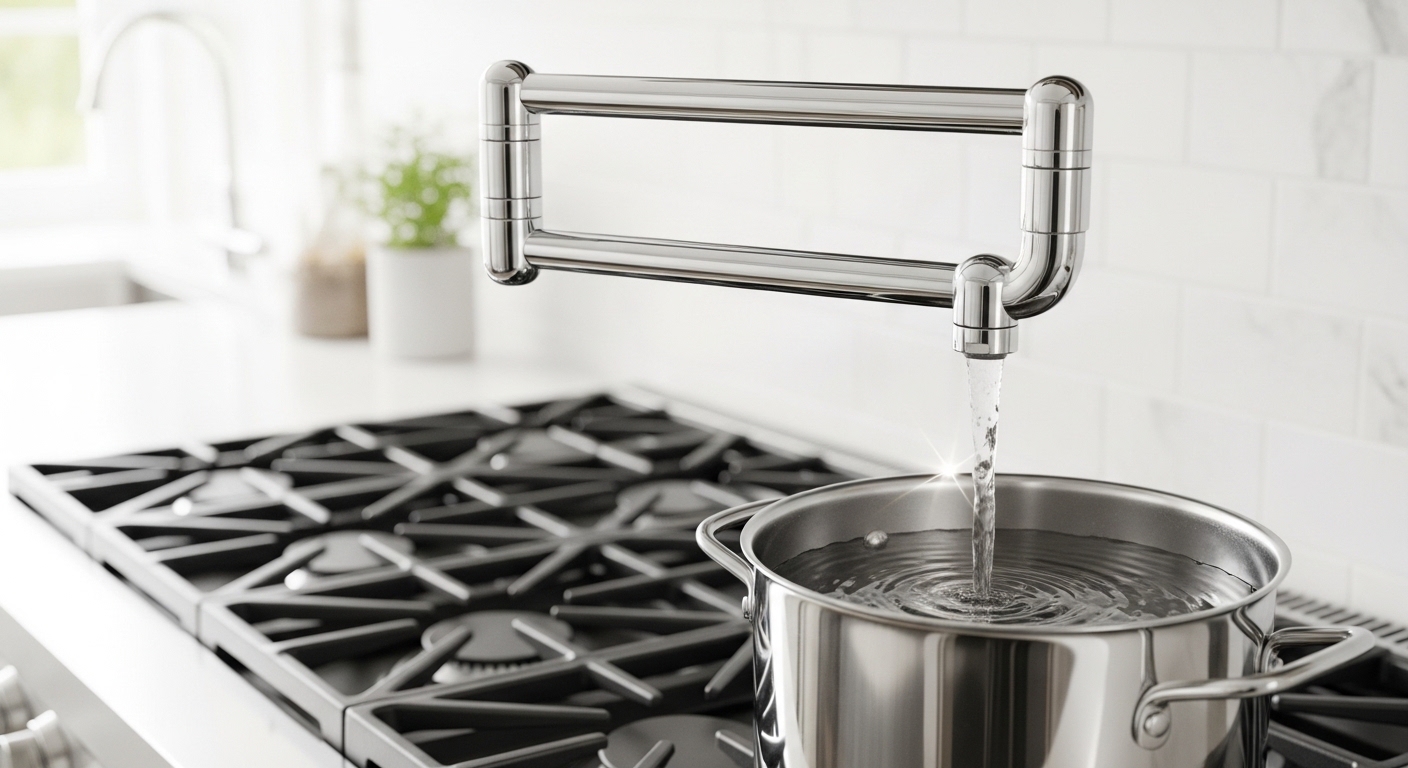
Learning how to install pot filler above stove is one of the most rewarding kitchen upgrades you can tackle as a DIYer. A pot filler — sometimes called a kettle faucet or pasta arm — saves you from lugging heavy stockpots from the sink to the burner, prevents back strain, and gives a serious chef-grade look to any range. At wigafaucet, we’ve shipped tens of thousands of pot fillers into American kitchens, and the questions we hear most often are about the rough-in dimensions, the right water line to tap, and the sequence of mounting steps. This guide answers all of them in plain language.
Why Install a Pot Filler Above Your Stove?
The appeal of a pot filler is purely functional, and yet it transforms how you cook. Boiling pasta water no longer means hoisting eight pounds of liquid across the kitchen. Filling a Dutch oven for stock becomes a one-handed task. For canners, brewers, and weekend stock-makers, the time savings stack up quickly. Beyond convenience, a properly installed pot filler signals real kitchen craftsmanship — it’s the kind of detail people notice the second they walk in.
From a resale standpoint, real estate professionals routinely list pot fillers among the top ten features that wow buyers in mid-range and luxury homes. If you’re already considering a broader range upgrade, pairing your new range with a wall-mounted pot filler is the smartest cosmetic and practical move you can make.
Who Should Tackle This Project?
If you’re comfortable cutting drywall, sweating copper or crimping PEX, and using basic measuring tools, this is a confident weekend project. If your kitchen sits on a concrete slab, you’ll need to fish supply lines through an upper cavity rather than from below — still doable, but plan for extra time. When the wall behind your range backs onto an exterior wall in a cold climate, you’ll want to insulate the supply line carefully to prevent freezing.
Tools and Materials You’ll Need Before You Start
Gathering everything before you cut the wall is the single biggest time-saver. Nothing slows a project like a trip to the hardware store with the water shut off.
- Wall-mount pot filler faucet (1/2-inch NPT inlet is standard)
- 1/2-inch copper pipe, PEX-A, or PEX-B tubing — at least 10 feet
- 1/2-inch female-threaded copper or brass drop-ear elbow (the mounting anchor)
- PTFE plumber’s tape (white, not yellow gas tape)
- Pipe-joint compound rated for potable water
- Stud finder, level, and tape measure
- Drywall saw, oscillating multi-tool, or rotary cutter
- Soldering torch with lead-free solder and flux, OR a PEX crimping tool with rings
- Quarter-turn ball shut-off valve (highly recommended for service access)
- Pipe insulation sleeves if the line passes through an exterior wall
- Mounting hardware kit (usually included with the faucet)
Choosing the Right Pot Filler for Your Range
Not every pot filler is built equally. Cheaper models use plastic cartridges, while premium versions — like those built to wigafaucet’s spec — use ceramic disc valves rated for 500,000 open/close cycles. Look for solid brass construction, double-jointed arm geometry (so the spout folds flat against the backsplash when not in use), and an ADA-compliant lever handle near the spout for tabletop operation. Our complete guide to pot filler faucets breaks down the construction differences in detail.
Pot Filler Types: A Quick Comparison
Before you cut any drywall, you need to know which mounting style fits your kitchen. Each has trade-offs in cost, install complexity, and reach.
| Pot Filler Type | Mounting | Typical Reach | Install Difficulty | Best For |
|---|---|---|---|---|
| Wall-mount double-jointed | Behind range, drop-ear elbow | 20-24 inches | Moderate | Slide-in & freestanding ranges |
| Wall-mount single-joint | Behind range, drop-ear elbow | 14-18 inches | Easy | Narrow 30-inch ranges |
| Deck-mount (countertop) | Counter beside cooktop | 16-20 inches | Hard (requires counter hole) | Island cooktops |
| Folding/retractable | Wall, with self-storing arm | 18-22 inches | Moderate | Small kitchens, tight backsplashes |
| Pro/commercial style | Wall, exposed plumbing | 22-26 inches | Moderate | Restaurant-style ranges 48″+ |
The double-jointed wall-mount is the most popular residential choice, and it’s the model we’ll focus on for the rest of this tutorial. If you’re outfitting a true pro kitchen, the principles transfer directly — just account for a longer arm reach. You can read more about heavier-duty options in our commercial kitchen faucet overview.
Step-by-Step: How to Install a Pot Filler Above Stove
Below is the exact sequence we recommend. Follow it in order — skipping ahead, especially the dry-fit step, is the most common cause of leaks. The complete process for how to install pot filler above stove takes most homeowners three to five hours.
Step 1: Shut Off the Water and Plan the Route
Turn off the main cold-water supply at the meter or the kitchen-branch shut-off. Open the lowest faucet in the house to drain residual pressure. Decide where the new line will branch off — the most common tap point is the cold supply under the kitchen sink. Plan the shortest, most direct path from that tap point up the wall and across to the stud bay directly behind your range.
Pro tip from our install team: avoid running supply lines through joist bays that contain electrical romex above a fluorescent fixture. Heat and chafing are real long-term failure points.
Step 2: Mark Your Pot Filler Height and Location
Use a level to mark the centerline of the burners on the wall behind your range. The pot filler spout should sit 18 to 22 inches above the cooktop surface — high enough that a tall stockpot clears the burner, low enough that water doesn’t splash. Mark the drop-ear elbow location on the wall, centered left-to-right above the largest burner you’ll routinely use.
Locate the studs with a stud finder. The drop-ear elbow must be anchored to a stud or to solid backing — never to drywall alone. If your target spot lands between studs, you’ll need to add a 2×6 cross-block between the studs to mount against.
Step 3: Cut the Access Openings
Cut a 4-inch by 4-inch inspection hole at your drop-ear elbow location. Cut a second access hole near your tap point under the sink. If you need to run the line horizontally through stud bays, drill 3/4-inch holes through the studs at a consistent height — keep the holes at least 1.25 inches back from the front face of the stud to satisfy code and to keep nail plates compliant when you close everything back up.
Step 4: Run the Supply Line
Run your 1/2-inch copper or PEX from the tap point to the drop-ear elbow location. If you’re working in copper, dry-fit every joint, then sweat the connections with lead-free solder and flux. If you’re using PEX-A or PEX-B, crimp each connection with the appropriate ring tool and verify with a go/no-go gauge.
Install a quarter-turn ball shut-off valve immediately downstream of your tap point. This single component saves enormous trouble down the road — it lets you service the pot filler without killing water to the rest of the house.
Step 5: Secure the Drop-Ear Elbow
The drop-ear elbow is the structural anchor for your faucet. Screw it through its mounting ears into the stud or backing block using stainless or brass screws. The threaded face of the elbow must sit flush with the finished surface of the wall — measure your tile or backsplash thickness and shim accordingly. If the elbow sits too deep, the faucet will pull on its threads under load; if it sits too proud, the escutcheon won’t seat properly.
Step 6: Pressure Test Before You Close the Wall
This is the step DIYers skip and regret. Cap the drop-ear elbow with a 1/2-inch brass plug, turn the water back on, and let the line hold pressure for at least 30 minutes. Inspect every joint with a dry paper towel. A leak the size of a pinhead inside a wall behind a stove is a disaster — find it now.
Step 7: Mount the Pot Filler
Patch and finish the wall, then mount the faucet. Wrap the male threads on the faucet body with three to four wraps of PTFE tape in the direction of tightening. Thread the faucet into the drop-ear elbow by hand until snug, then use a wide-jaw wrench to bring it to the final clocking — usually one to two more turns until the spout points straight out and level. Do not over-tighten; brass threads will gall.
Slide the escutcheon plate against the wall and tighten its set screw. Open the shut-off valve slowly, then open the pot filler valves one at a time. Run water for two full minutes and check for any drip at the wall joint.
Common Mistakes to Avoid
- Tapping into the hot supply. Pot fillers are cold-water-only. Hot water in a pot filler is wasteful and risks scalding.
- Mounting too low. A spout less than 18 inches above the burner gets in the way of large pots and absorbs splatter.
- Skipping the shut-off valve. Without one, any future service means killing water to the whole house.
- Using yellow gas tape on water threads. Yellow PTFE is for gas; white PTFE is for water. They’re not interchangeable.
- Mounting to drywall only. The faucet’s leverage will pull screws right out of unbacked drywall within months.
- Forgetting to insulate. If the supply line passes through an exterior wall in a cold climate, it must be sleeved or it will freeze.
Maintenance and Long-Term Care
A quality pot filler installed correctly will run for decades with almost no attention. Once a year, close both valves, unscrew the aerator at the spout tip, and rinse out any mineral buildup. Every five years or so, exercise the shut-off valve under the sink to keep it from seizing. If you ever notice a slow drip from a valve handle, the cartridge can typically be replaced in under fifteen minutes — most manufacturers, including wigafaucet, ship replacement cartridges free under warranty for the life of the original purchaser.
Finish Care by Material
Polished chrome wipes clean with a microfiber cloth. Brushed nickel and stainless tolerate mild dish soap. Matte black and oil-rubbed bronze finishes need to be kept away from acidic cleaners (vinegar, lemon juice, glass cleaners with ammonia) or the topcoat can dull. Never use abrasive scrubbing pads on any finish. The same care principles apply to most kitchen plumbing — for a broader look at finish choices, our complete kitchen faucet primer is a useful companion read.
When to Call a Plumber Instead
Honest assessment: not every kitchen is a good DIY candidate. Call a licensed plumber if your home was built before 1965 and still has galvanized steel supply lines, if your range backs onto an exterior brick or masonry wall, if your kitchen sits on a concrete slab without a usable ceiling cavity above, or if your local code requires permitted work for any new fixture rough-in. The cost of a plumber for this job typically runs $300 to $650 in the U.S. — well worth it for peace of mind in the difficult cases.
About wigafaucet and Our Testing Standards
Every pot filler we ship is built in an ISO 9001-certified factory and pressure-tested to 1.5 times its rated working pressure before it leaves the line. Our valves are independently certified to NSF/ANSI 61 and 372 for low-lead potable water contact, and our finishes pass 200-hour salt-spray testing per ASTM B117. We back every faucet with a limited lifetime warranty on the body and finish, and a five-year warranty on the ceramic cartridge. If you ever have a problem, our U.S.-based support team can usually ship a replacement part within 48 hours.
Author note: This guide was written by the wigafaucet technical content team in consultation with our in-house installation specialists, several of whom hold master plumber licenses in California and Texas. Installation specifics may vary by local plumbing code — when in doubt, consult your municipal plumbing inspector or a licensed pro.
FAQ
How high above the stove should a pot filler be installed?
The spout should sit 18 to 22 inches above the cooktop surface. This range clears a tall stockpot while keeping the faucet close enough that water doesn’t splash on hot burners. Measure from the burner grate, not from the countertop next to the range.
Does a pot filler need hot and cold water lines?
No. A pot filler runs cold water only. Connecting hot water is unnecessary, wastes energy, and creates a scald hazard. Always tap into a cold supply line, typically the cold feed under the kitchen sink.
Can I install a pot filler on an exterior wall?
Yes, but the supply line must be insulated with foam sleeves and ideally kept toward the interior side of the wall cavity. In cold climates (Zone 6 and colder), many installers add heat tape or rerun the line through an interior wall to be safe.
Do I need a permit to install a pot filler?
It depends on your municipality. Many jurisdictions require a plumbing permit any time a new fixture is added to the potable supply system. Check with your local building department before you start — permit fees are typically modest, and unpermitted work can cause issues at resale.
What size water line do I need for a pot filler?
A 1/2-inch supply line is standard and matches the faucet’s NPT inlet. Anything smaller will throttle flow and slow your fill times noticeably. Use 1/2-inch copper Type L, PEX-A, or PEX-B — all three are equally acceptable when installed to manufacturer spec.
Can a pot filler be installed during a kitchen remodel after the drywall is up?
Yes. Retrofit pot filler installs are common and follow the same steps outlined above — you simply cut a small inspection hole, run the line through stud bays, mount the drop-ear elbow, and patch the wall. The job is cleaner when done during open-wall construction, but a skilled retrofit is barely distinguishable when finished.
Will a pot filler increase my home’s value?
Real estate professionals consistently rank pot fillers among the top kitchen features buyers in the $400K+ market notice and remember. While individual ROI varies, a quality pot filler installed cleanly is widely viewed as a value-add rather than a personal-preference quirk.