 Wiga Tap Manufacturer
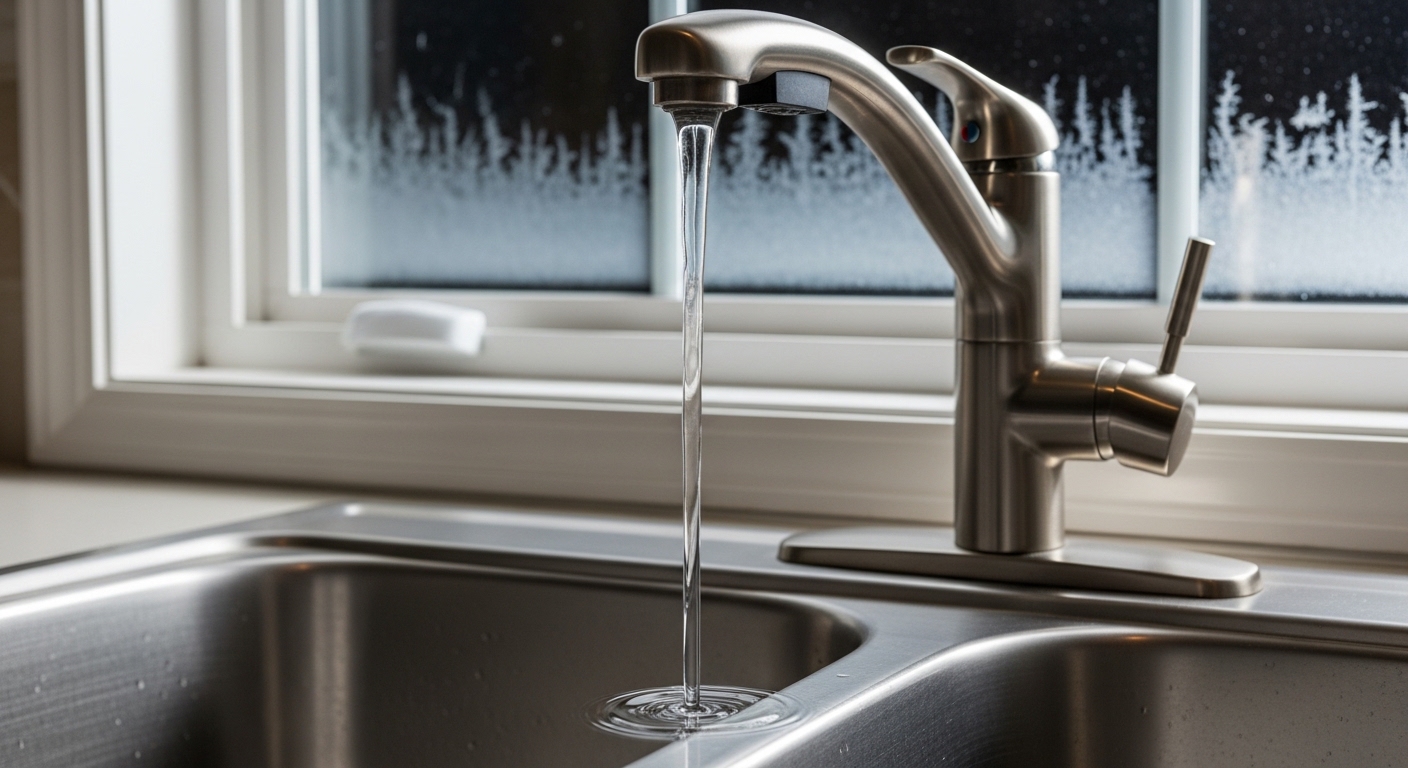
Leaving a dripping faucet to prevent freezing pipes is one of the cheapest, most effective things you can do during a hard freeze, and it’s a repair-and-prevention trick that plumbers genuinely use on the coldest nights of the year. But “just leave it dripping” gets repeated so loosely that people either waste hundreds of gallons or drip the wrong faucet and still wake up to a burst line. Below, we’ll walk through exactly which faucets to open, how much they should drip, why it works at the physics level, and what to do if a pipe has already started to freeze.
This guide is written for homeowners and renters who want a clear, do-it-tonight answer — not a science lecture. We’ll keep it concrete: temperatures, drip rates, and the specific spots in your house that freeze first.
Why does a dripping faucet actually stop pipes from freezing?
A drip works for two reasons, and the second one matters more than most people realize. First, moving water freezes more slowly than still water, so a constant trickle keeps the water in the pipe from locking up into a solid plug. Second — and this is the real lifesaver — an open faucet relieves pressure inside the pipe.
Here’s the part people miss: pipes rarely burst at the spot where the ice forms. When water freezes, it expands and pushes the remaining liquid water down the line toward the closed faucet. With nowhere to go, that trapped water builds enormous pressure between the ice blockage and the closed tap — and that pressure is what splits copper, PEX, or PVC. Cracking the faucet open gives that pressure an escape route. Even if a little ice forms, the pipe survives.
So when you leave a faucet dripping, you’re not just slowing the freeze — you’re making sure that if ice does form, it can’t turn your pipe into a pressurized bomb.
- Moving water: A trickle keeps water circulating so it can’t fully solidify.
- Pressure relief: The open tap prevents the pressure buildup that causes 90% of burst-pipe damage.
- Cheap insurance: A slow drip overnight uses a few gallons — a burst pipe can cause thousands of dollars in water damage.
At what temperature should I start dripping my faucets?
Start dripping when the outdoor temperature is forecast to drop below 20°F (-6°C), especially overnight. That 20°F mark is the widely cited “pipe-freeze threshold” for unprotected pipes, though pipes in exposed areas — attics, crawl spaces, exterior walls, an unheated garage — can freeze closer to 32°F if there’s wind chill or poor insulation.
The risk isn’t just about how cold it gets, but how long it stays cold. A quick dip to 18°F for an hour at midday is far less dangerous than a sustained 15°F overnight low for 8+ hours. Use this rough scale:
| Overnight Low | Pipe Risk Level | Recommended Action |
|---|---|---|
| Above 32°F (0°C) | Low | No dripping needed for most homes |
| 20–32°F (-6 to 0°C) | Moderate | Drip exposed/exterior-wall faucets only |
| 10–20°F (-12 to -6°C) | High | Drip all vulnerable faucets, open cabinet doors |
| Below 10°F (-12°C) | Severe | Drip multiple faucets hot + cold, keep heat ≥55°F, consider shutting off/draining exterior lines |
If you live somewhere that almost never freezes — much of the South or the Pacific coast — your pipes are usually the least insulated and the most likely to burst, because builders didn’t plan for cold. Take a borderline 25°F forecast seriously in those regions.
Which faucets should I drip — all of them, or just one?
Drip the faucet that is farthest along the supply line from where water enters your home, plus any faucet served by pipes that run through unheated or exterior spaces. You usually do not need to drip every faucet in the house — just the vulnerable ones.
The goal is to keep water moving through the most exposed runs of pipe. Prioritize like this:
- Faucets on exterior walls — kitchen sinks and bathroom vanities mounted against an outside wall are top priority.
- The faucet farthest from your main shutoff — dripping it pulls water through the longest stretch of pipe.
- Faucets above or near unheated spaces — anything over a garage, crawl space, or unheated basement.
- Outdoor/utility faucets — these should ideally be shut off and drained for winter, not dripped. If you’ve got a stuck or seized exterior tap, our guide on what to do when your outdoor tap is jammed walks through freeing and replacing a sillcock before the freeze hits.
Always drip both the hot and cold handles. Hot water lines freeze too — sometimes faster, because hot water can supercool — and your water heater’s supply line is just as vulnerable as the cold side. On a single-handle faucet, set the lever to the center so both lines flow.
How much should the faucet drip — a slow drip or a steady stream?
Aim for a slow, steady trickle about the width of a pencil lead — roughly 5 drips per second, not a single drip every few seconds. A too-slow drip can still let water sit and freeze; a wide-open faucet just wastes water and money.
A useful mental picture: if you held a measuring cup under the stream, it should take a couple of minutes to fill. Over a full night, a proper trickle uses only a few gallons — far less than people fear, and a rounding error compared to the cost of water-damage remediation.
| Drip Setting | What It Looks Like | Effective? |
|---|---|---|
| Single drop every few seconds | Occasional plink in the sink | No — water still sits and can freeze |
| Steady trickle (~5 drips/sec, pencil-lead width) | Continuous thin stream | Yes — recommended |
| Pencil-thick stream or wider | Obvious running water | Overkill — wastes water, raises bill |
One quiet culprit that ruins a good drip: a clogged aerator. If your faucet’s aerator is caked with mineral scale, it can throttle that careful trickle down to nothing — or spray it sideways. If yours is stuck or recessed, our guide to faucet aerator key removal shows how to pull and clean it without scratching the finish, so your drip flows the way you set it.
What else should I do besides dripping during a hard freeze?
Dripping is your front line, but it works best stacked with a few other simple moves. The biggest one: open the cabinet doors under sinks on exterior walls so your home’s warm air can reach the pipes — closed cabinets trap cold against the plumbing.
- Open under-sink cabinet doors on exterior walls to let warm room air circulate around the supply lines.
- Keep your thermostat at a constant temperature day and night — don’t drop it at bedtime during a freeze. A steady 60–68°F costs less than a burst pipe.
- Never let the house fall below 55°F, even if you travel. If you leave town, shut off the main and drain the lines instead.
- Insulate exposed pipes with foam pipe sleeves or heat tape in crawl spaces, garages, and attics.
- Disconnect garden hoses and shut off/drain outdoor faucets before the first freeze.
- Seal drafts near plumbing — a small gap in an exterior wall can blast freezing air directly onto a pipe.
Think of the drip as the last resort that protects you when insulation and heat aren’t quite enough. On the very coldest nights, do all of it together.
My faucet is dripping but no water comes out — is the pipe already frozen?
If you open a faucet during a freeze and only a trickle or nothing comes out, a pipe is likely already starting to freeze — act immediately, because a frozen pipe is hours away from bursting. Leave that faucet open so melting ice and pressure have somewhere to escape, then warm the frozen section.
Here’s how to thaw it safely:
- Keep the faucet open. Running water — even a trickle — helps melt the ice and signals when flow returns.
- Find the frozen section. It’s usually along an exterior wall or in an unheated space. Look for frost on the pipe or a section that’s noticeably colder.
- Apply gentle heat. Use a hair dryer, a heating pad, towels soaked in hot water, or a space heater kept a safe distance away. Start near the faucet and work back toward the cold spot.
- Never use an open flame. Blowtorches and propane heaters can crack the pipe, scald you, or start a fire.
- If you can’t reach it or flow doesn’t return, call a plumber. A hidden frozen pipe inside a wall needs a pro before it splits.
If you find water is already escaping somewhere, or you hear it running inside a wall, shut off your main water valve right away and then call for help. Knowing where your main shutoff is — and that it turns freely — is something to check before winter, not during an emergency.
Does dripping waste a lot of water or money?
No — a proper overnight drip uses only a few gallons and costs pennies, which is nothing compared to the average burst-pipe insurance claim that runs into the thousands. The fear of a “huge water bill” from dripping is mostly a myth when you keep the stream to a pencil-lead trickle.
To put it in perspective: a slow trickle might use 3–5 gallons over a long winter night. Even if you drip three faucets through a week-long cold snap, you’re looking at a few dollars at most on your water bill. A single burst pipe, by contrast, can dump hundreds of gallons per hour into your walls and floors, with cleanup and repair costs that dwarf a season of careful dripping.
If you want to genuinely minimize waste, place a clean basin or bucket under the dripping faucet overnight and reuse the collected water for plants, cleaning, or flushing. It’s a small thing, but it turns “wasted” water into something useful.
A quick note on faucet condition and freeze protection
One thing worth flagging from a repair standpoint: an old, worn faucet cartridge can make dripping less effective. If your faucet won’t hold a steady low trickle — it either shuts off completely or runs full blast — the cartridge or washer is likely worn and due for service. A faucet that drips on its own when fully closed (the year-round kind of drip) is also wasting water and signaling worn internals. Either way, a healthy faucet gives you the precise control you need on a freezing night, so a faucet that’s already misbehaving is worth fixing before winter.
FAQ
Should I drip hot water, cold water, or both to prevent frozen pipes?
Drip both. Hot water lines freeze just as readily as cold ones — and the supply line feeding your water heater is often in a vulnerable spot. On a two-handle faucet, crack both handles to a trickle. On a single-handle faucet, set the lever to the middle so it pulls from both the hot and cold lines.
How many faucets do I need to leave dripping overnight?
Usually just the vulnerable ones — faucets on exterior walls, the one farthest from your main shutoff, and any served by pipes in unheated spaces. In a typical home that’s one to three faucets. During an extreme freeze (below 10°F), dripping more faucets adds a safety margin, but you rarely need every tap in the house running.
Will a dripping faucet definitely stop my pipes from bursting?
It dramatically reduces the risk but isn’t a 100% guarantee in extreme cold or with poorly insulated pipes. Dripping is most powerful when combined with steady indoor heat (never below 55°F), open under-sink cabinets, and pipe insulation. Think of the drip as your most important single move, not your only one.
Is it safe to leave a faucet dripping all night while I sleep?
Yes, as long as the drain is clear so the sink doesn’t overflow, and the drip is a slow trickle rather than a heavy stream. Make sure nothing is blocking the drain, and if your sink has a stopper, leave it open. The small amount of water used overnight is well within any plumbing system’s capacity.
What temperature is too cold for pipes even with the faucet dripping?
There’s no hard cutoff, but below about 0°F (-18°C) — or with strong wind on uninsulated exterior pipes — dripping alone may not be enough. At those extremes, combine dripping with pipe insulation or heat tape, keep cabinet doors open, maintain steady heat, and consider shutting off and draining the most exposed lines if you’ll be away.
Should I drip outdoor and garden faucets too?
No — outdoor faucets should be shut off at their interior valve and drained for the winter, not left dripping. A dripping exterior faucet in freezing air can ice over and crack the sillcock. If your outdoor tap is already seized or leaking, address it before the freeze; a frozen, stuck hose bibb is a common cause of winter water damage.
About the author: This guide was written by the wigafaucet product and service team, drawing on hands-on plumbing-fixture experience and questions we hear every winter from homeowners across cold-climate regions. We test faucet cartridges, aerators, and valves for flow control and cold-weather durability, and we manufacture fixtures to recognized sanitaryware standards. wigafaucet faucets are backed by a manufacturer’s warranty on cartridges and finishes — because a faucet that gives you precise, reliable flow control is exactly what you want on the coldest night of the year. For installation and repair help, explore the rest of our guides at wigafaucet.com.