 Wiga Tap Manufacturer
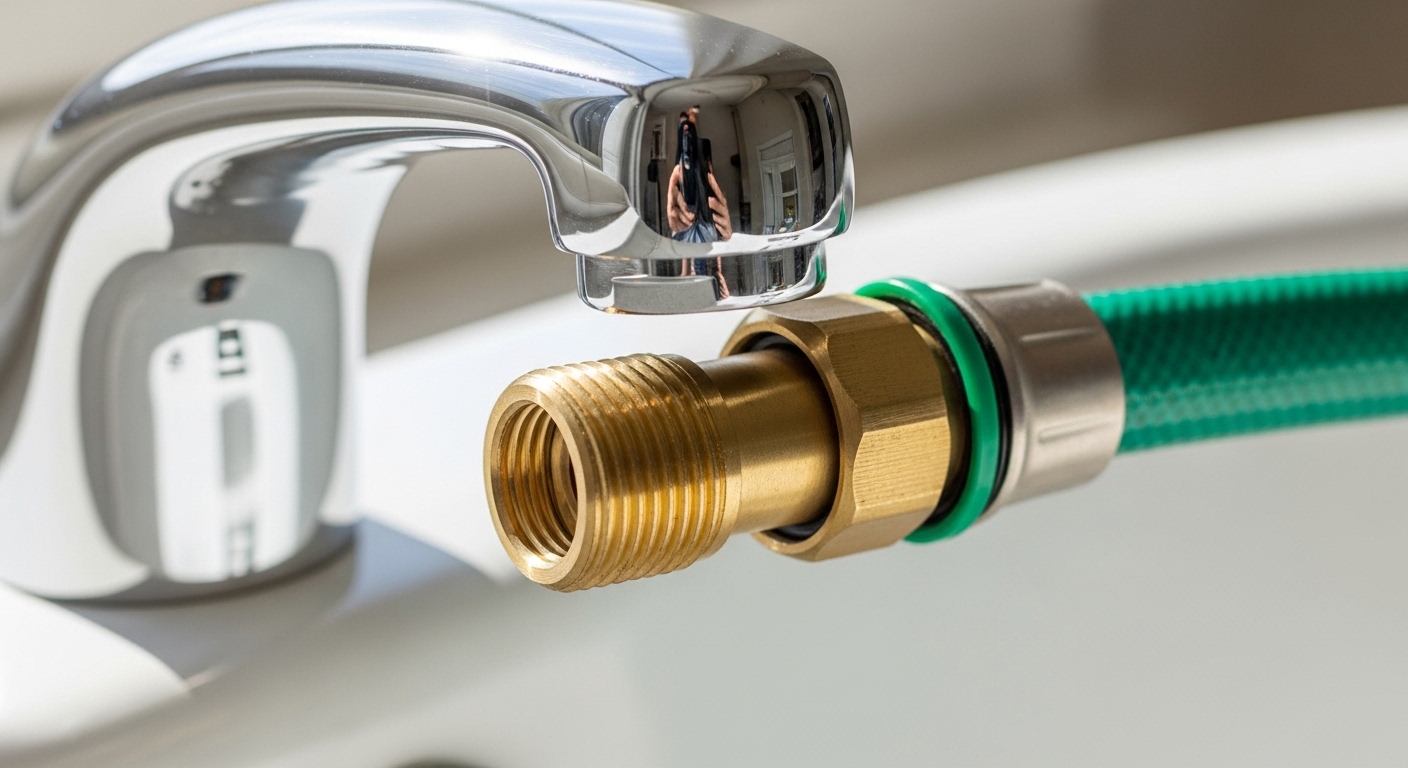
If you’ve ever needed to fill a kiddie pool, wash a dog, run water to a garden that has no outdoor spigot, or drain a portable dishwasher through your bathroom, you’ve probably searched for a tub spout to garden hose adapter and found a confusing pile of parts that may or may not fit. The frustrating truth is that there is no single universal adapter, because tub spouts aren’t standardized the way a garden hose is. But the good news: once you identify your spout type, picking the right adapter takes about two minutes, and most cost under $15. This guide walks you through exactly what to buy, how to fit it without leaks, and when to skip the adapter entirely.
What exactly is a tub spout to garden hose adapter, and how does it work?
It’s a small fitting that converts your bathtub faucet’s outlet into a standard 3/4″ GHT (garden hose thread) connection. On one end it grips or screws onto your tub spout; on the other end it has the male 3/4″-11.5 NH thread that every garden hose, sprayer, and pool hose in North America screws onto.
Here’s why it’s needed. A garden hose uses a coarse, standardized thread called GHT (garden hose thread, sometimes written NH or NHR), which is 3/4 inch nominal at 11.5 threads per inch. A tub spout, on the other hand, was never designed to accept a hose. Some spouts have a small internal or external thread meant for a slip-fit diverter or an aerator; many have nothing but a smooth chrome opening. The adapter bridges that gap so household water can flow into a hose.
Once connected, you simply turn on the tub faucet, run it to the temperature you want (a real advantage over a cold-only outdoor spigot), and water flows through the hose. Flow rate through a tub spout is generous — often 4–6 gallons per minute — so you’ll fill a pool or bucket faster than from a typical hose bibb.
Why can’t I just screw a hose straight onto the spout?
Because tub spout openings almost never match garden hose thread. A garden hose is 3/4″ GHT; a tub spout end is usually either a smooth bore, a 1/2″ NPT (national pipe thread, on rear-threaded spouts), or a slip-fit for a 1/2″ copper stub-out. None of those mate with a hose. Even when a spout has a threaded tip for an aerator, that thread is typically a fine 15/16″-27 or 55/64″-27 aerator thread — completely different pitch from a hose. The adapter exists precisely to translate between those mismatched threads.
How do I know which adapter fits my specific tub spout?
Look at the end of your spout first — that single detail decides everything. There are three common scenarios, and each has a matching adapter style.
- Smooth, unthreaded spout tip (most common): Use a slip-on rubber adapter. It’s a tapered rubber sleeve with a hose-thread collar; you push it over the spout and tighten a hose clamp or built-in ring. This is the “works on almost anything” option.
- Spout with external aerator threads at the tip: Use a threaded aerator-to-hose adapter. It screws onto the aerator threads and presents a 3/4″ GHT male end. Cleaner and more leak-proof than rubber, but only if your spout is actually threaded.
- Handheld shower / diverter spout: Sometimes easiest to skip the spout and adapt at the shower arm or handheld hose instead, using a shower-arm-to-GHT adapter.
To identify yours, unscrew any aerator or tip cap and look for threads. If you see fine internal or external threads, you likely have an aerator-threaded spout. If it’s smooth metal with no threads, you need the rubber slip-on type. When in doubt, the rubber slip-on adapter is the safe default because it doesn’t depend on threads at all.
What size threads does a garden hose actually use?
A standard U.S. garden hose uses 3/4″-11.5 NH (also called GHT or NHR) — that’s 3/4 inch nominal diameter at 11.5 threads per inch, and it’s the same on every hose, sprinkler, and pool pump in the country. Any adapter you buy for hose duty must present this thread on the hose side. If you’re outside North America, hoses commonly use a snap-fit “Hozelock”-style quick connector instead, so you’d want an adapter with a threaded male tip and then a snap connector on top.
Which type of tub spout to garden hose adapter should I buy?
For most people, a brass or stainless slip-on adapter with a stainless hose clamp is the best all-around choice — it fits unthreaded spouts, resists corrosion, and holds pressure without popping off. Buy plastic only for very light, occasional use. Here’s how the common options stack up.
| Adapter Type | Fits Which Spout | Leak Resistance | Typical Price | Best For |
|---|---|---|---|---|
| Rubber slip-on (with clamp) | Smooth / unthreaded spouts | Good if clamped tight | $8–$14 | Most tubs, quick jobs |
| Threaded brass aerator adapter | Spouts with aerator threads | Excellent | $10–$18 | Frequent use, permanent-ish |
| Push-on soft PVC cone | Smooth spouts, low pressure | Fair | $5–$9 | One-off, indoor draining |
| Shower-arm GHT adapter | Handheld/diverter setups | Excellent | $12–$20 | When the spout won’t cooperate |
| Faucet-thread universal kit | Multiple thread sizes bundled | Good | $14–$22 | Not sure of your spout type |
Notice that material matters as much as style. A solid brass or 304 stainless adapter shrugs off the mineral scaling that plagues hard-water homes, while cheap zinc or plastic threads strip and crack after a season. If you’ve ever fought a corroded, seized outdoor fitting, you already know the pain — our guide on an jammed outdoor tap and how to replace a stuck hose bibb shows exactly why metal quality decides whether a fitting lasts one summer or ten.
How do I install a tub spout to garden hose adapter without leaks?
The whole job takes under five minutes and needs no tools beyond a screwdriver or pliers for the clamp. The key to a leak-free seal is a clean, dry spout and even pressure on the seal — not brute force.
- Shut off and clean the spout end. Wipe the tip dry and remove any old aerator or mineral crust so the seal has a clean surface. A quick soak in vinegar clears scale.
- For a slip-on adapter: push the rubber cone firmly over the spout until it bottoms out, then tighten the hose clamp or compression ring evenly. Don’t over-crank — you want the rubber to bulge slightly, not tear.
- For a threaded adapter: wrap the spout’s threads with 2–3 turns of PTFE (plumber’s) tape, then hand-tighten the adapter and give it a quarter-turn with pliers. Snug, not gorilla-tight.
- Attach the hose to the 3/4″ GHT end, making sure the hose washer is seated inside the coupling.
- Test at low flow first. Crack the faucet open gently and watch the joint. If you see weeping, tighten the clamp another turn or add tape. Then open fully.
One pro tip: run the water and let the hose fill before opening the faucet all the way. A sudden blast of 60 psi against a rubber slip-on is the number-one reason cheap adapters blow off. Ease into the pressure and the seal settles in.
Do I need plumber’s tape or a rubber washer?
You need one or the other depending on the joint: PTFE tape seals threaded metal-to-metal connections, and a rubber washer seals the flat face where the garden hose meets the adapter. Threaded brass adapter onto the spout? Use tape. Hose onto the adapter’s GHT end? That relies on the flat rubber washer inside the hose coupling — check it’s there and not flattened. Slip-on rubber adapters usually need neither because the rubber itself is the seal, though a smear of silicone plumber’s grease helps it slide on and grip.
Is it safe to run drinking water and hot water through a tub spout adapter?
For non-drinking uses like filling a pool, washing a car, or watering plants, any adapter is fine. But if you’ll drink from the hose or the water contacts food, use a lead-free brass or stainless adapter and a potable-rated (white or blue “drinking water safe”) hose — a standard green garden hose can leach plasticizers and is not certified for drinking.
Temperature is the other consideration. One of the best reasons to use a tub spout instead of an outdoor spigot is that you can run warm water — great for a warmer dog bath or dissolving pool chemicals. Just confirm your adapter and hose are rated for hot water. Most rubber and brass adapters handle 140°F easily, but thin PVC cones can soften and slip under hot water. Look for adapters that reference a temperature rating and materials that meet plumbing standards such as ASME A112.18.1 / NSF/ANSI 61 for potable contact. Reputable fixtures — including the tub and bath hardware we build — are tested to those benchmarks and backed by warranty, which is exactly the assurance a $3 no-name cone can’t give you.
If your bathroom setup is a freestanding tub or a floor-mounted filler, the spout geometry can be trickier to adapt; our overview of a free standing bath mixer explains the spout shapes you’re working with so you can pick an adapter that actually clears the tub deck.
When should I skip the adapter and use something else instead?
Skip the tub-spout adapter if you need water frequently, at high pressure, or for long runs — in those cases a proper outdoor spigot, laundry-sink connection, or utility faucet is more reliable and won’t tie up your bathroom. A tub adapter is a brilliant quick fix, but it’s a stopgap, not infrastructure.
- You fill pools or water gardens every week: installing an outdoor hose bibb or frost-free sillcock pays off fast and frees your tub.
- You need it in a garage, basement, or laundry room: a utility or laundry faucet with a built-in hose thread is purpose-built for exactly this.
- Your spout has a diverter or is deep-set in a tile surround: the adapter may not seat properly; a shower-arm adapter or a dedicated tap is cleaner.
- You’re on a well or low-pressure system: the tub’s flow may actually be better than an outdoor line, so an adapter can be the smart choice — the opposite of the rule.
For a garage or workshop, a rugged threaded faucet designed to take a hose all day is worth the small upgrade — see our copper utility faucet buyer’s guide for models with built-in 3/4″ hose threads that skip the adapter entirely. And if scale or a stuck aerator is making your spout hard to work with, the techniques in our faucet aerator removal guide help you clean the spout tip so any adapter seals better.
Will an adapter reduce my water pressure or flow?
A properly sized 3/4″ adapter causes almost no flow loss — the small restriction is at the spout’s own aerator or the hose diameter, not the adapter. If flow feels weak, the culprit is usually a clogged aerator screen, a kinked hose, or a narrow 1/2″ hose rather than the fitting itself. Remove and clean the aerator, use a full 3/4″ hose, and you’ll get the tub’s full 4–6 GPM. Adapters that step down to a smaller thread (say for a specialty sprayer) will naturally choke flow, so match diameters end to end for maximum pressure.
FAQ
Does a tub spout to garden hose adapter fit all bathtub faucets?
No single adapter fits every faucet, but between the rubber slip-on style (for smooth spouts) and the threaded brass style (for aerator-threaded spouts), you can adapt roughly 95% of standard residential tub spouts. Identify your spout tip first, and if you’re unsure, buy a universal kit that includes multiple sizes.
Can I leave the adapter on my tub spout permanently?
You can, but it’s not ideal. A threaded brass adapter left on won’t hurt anything, though it looks bulky and can trap water and scale. Rubber slip-on adapters should be removed after each use — leaving them on can trap moisture against the finish and, over time, promote mineral buildup or corrosion at the spout tip.
Why does my adapter keep leaking where it meets the spout?
Nine times out of ten it’s an uneven seal or wrong adapter type. If a threaded adapter leaks, add 2–3 wraps of PTFE tape and re-tighten. If a slip-on leaks, the spout is probably too small or too large for the rubber — size down or up, tighten the clamp evenly, and start the water slowly so pressure doesn’t blow the seal.
Can I connect a garden hose to a bathroom sink or shower instead of the tub?
Yes. A bathroom or kitchen sink faucet accepts a threaded aerator-to-hose adapter (the aerator unscrews and the adapter takes its place), and a shower arm accepts a shower-arm-to-GHT adapter. The tub spout is popular mainly because of its high flow, but a sink adapter is often the tidiest indoor option for filling buckets or running a portable appliance.
Is it safe to fill a kiddie pool or pet bath from my tub with an adapter?
Absolutely — that’s the single most common use. Use a clean, drinking-water-safe hose if kids or pets will drink from it, run warm water for comfort, and choose a lead-free brass or stainless adapter. Just don’t leave the faucet running unattended, since a tub’s flow rate fills containers quickly and can overflow before you expect it.
Author note: This guide was written by the WigaFaucet product team, which has spent over a decade designing, bench-testing, and installing tub spouts, diverters, and hose-connection hardware. We pressure-test our fittings to plumbing-industry standards (ASME A112.18.1 / NSF/ANSI 61 for potable-water contact) and back our fixtures with a limited lifetime warranty on finish and function — so the advice here comes from parts we actually stand behind, not spec sheets we skimmed.