 Wiga Tap Manufacturer
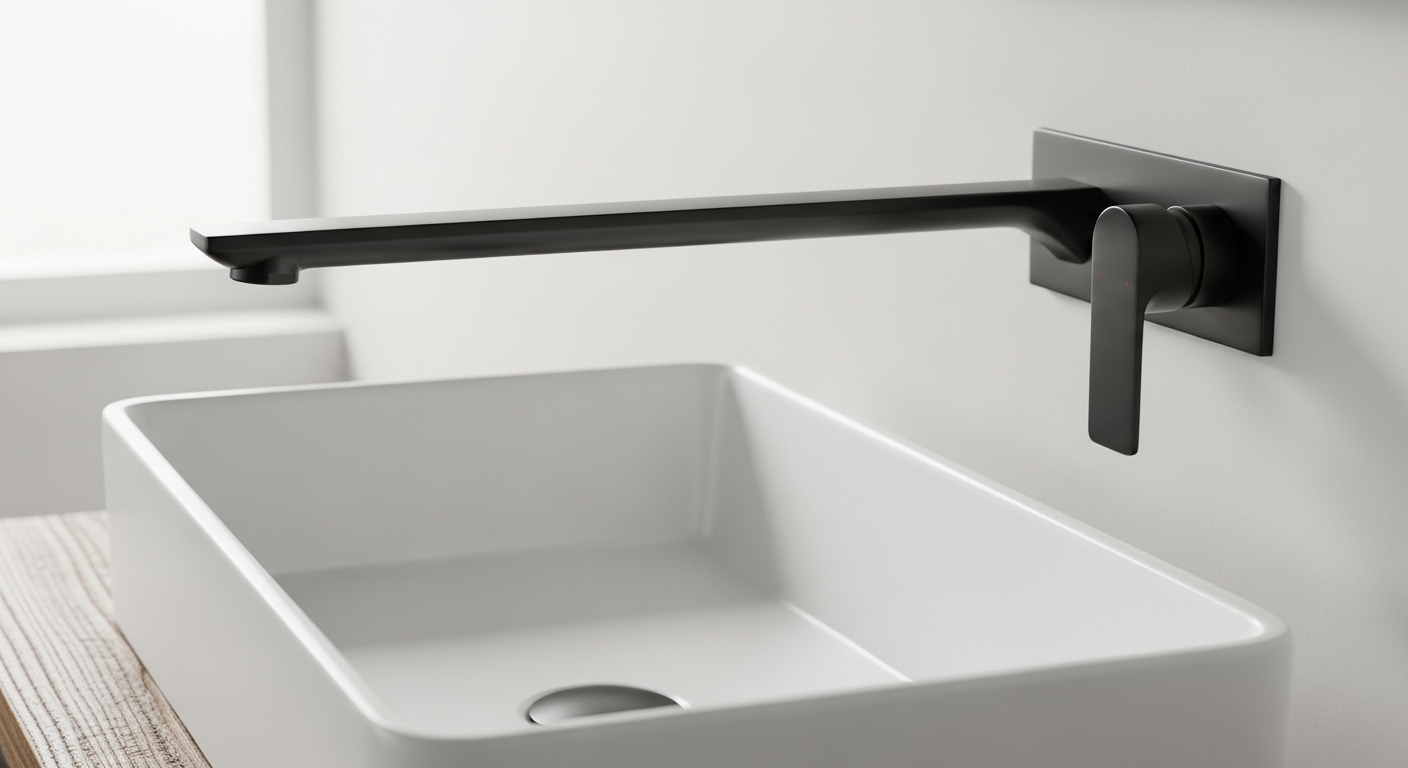
A wall mount faucet mixer is a single-body tap that blends hot and cold water through one cartridge and mounts to the wall above the sink or tub instead of through holes drilled in the countertop or basin. “Mixer” simply means it combines hot and cold into one controlled stream (as opposed to two separate pillar taps), and “wall mount” means the supply and the body live behind the wall, so all you see is the spout and one or two handles projecting out. It’s the look you’ve seen in boutique hotels and modern vessel-sink bathrooms — and increasingly over freestanding tubs and farmhouse kitchen sinks.
This guide answers the questions people actually ask before buying one: whether it fits their sink, what it costs, how hard it is to install, and where it goes wrong. I’ll keep it concrete — real measurements, real trade-offs — so you can decide before you spend a dollar.
What exactly is a wall mount faucet mixer, and how is it different from a deck-mounted one?
The difference is where the plumbing lives. A wall mount faucet mixer hides the valve body and supply lines inside the wall, so only the spout and handle(s) are exposed; a deck-mounted mixer sits on the countertop or sink rim with its valve under the basin. That single distinction drives everything else — installation difficulty, the look, and how easy it is to clean.
Because nothing sits on the deck, you get a completely clear counter or sink rim. No grime ring around the base, no caulk line to scrub, no holes to seal. For people with stone vessel sinks or a long trough that two people share, that clean surface is the whole point. The trade-off is that the rough-in valve must be set inside the wall before you tile or finish, at exactly the right height and depth. Get the depth wrong and the trim won’t sit flush; get the height wrong and the spout splashes or doesn’t clear the basin.
Wall mount mixers come in two control styles: single-lever (one handle controls both flow and temperature through a ceramic-disc cartridge) and two-handle widespread (separate hot and cold cross or lever handles flanking a center spout). If you like the symmetrical, traditional spread of separate handles, that’s closer in spirit to a widespread faucet layout — just rotated up onto the wall instead of drilled into the deck.
Does a wall mount faucet mixer fit my vessel sink or freestanding tub?
It fits if your spout reach and mounting height clear the basin or tub rim with a few inches of room to spare — that’s the single most important measurement. For a vessel sink, you want the spout to reach roughly to the center of the bowl and sit high enough that your hands fit underneath, typically with the spout outlet 4–6 inches above the rim.
Vessel sinks are the classic use case because they sit on top of the counter, often 5–6 inches tall, so a standard deck faucet would be awkwardly short. A wall mount mixer mounted above the bowl solves that elegantly. The math you need:
- Spout reach: measure from the wall to the center of the basin. Your faucet’s reach should land water in the middle third of the bowl, not the front edge (splashing) or back wall (weak rinse). Most wall spouts reach 6–9 inches.
- Mounting height: bowl rim height plus 4–6 inches of clearance to the spout outlet. For a 6-inch vessel on a 34-inch counter, that’s roughly a finished spout height of 44–46 inches off the floor.
- Outlet drop: water exits below the spout, so add an inch or two of “fall” so the stream clears the rim cleanly.
For a freestanding tub, the same logic applies but the numbers are bigger, and you’ll often want a higher-flow spout (a tub filler moves far more water than a basin tap). If a tub is your project, a dedicated free standing bath mixer built for fill rate and reach is usually the better-matched product than a slim basin-style wall mixer.
How much does a wall mount faucet mixer cost, and what do you get at each price?
Expect $80 to $400 for the trim you see, with most solid mid-range options landing at $120–$250. The price gap is mostly about valve quality, finish durability, and whether the body is solid brass or a lighter zinc alloy. Here’s how the tiers actually break down.
| Price tier | Body & cartridge | Finish | Best for |
|---|---|---|---|
| $80–$130 (budget) | Zinc-alloy or thin brass body, generic ceramic cartridge | Chrome or basic black, prone to spotting | Rentals, guest baths, light use |
| $130–$250 (mid-range) | Solid brass body, name-brand ceramic-disc cartridge rated ~500k cycles | Brushed nickel, matte black, brushed gold (PVD) | Daily-use primary bathroom or kitchen |
| $250–$400 (premium) | Heavy forged brass, sealed cartridge, higher flow control | Living/PVD finishes with strong warranty coverage | Vessel sinks, design-forward builds, tub fillers |
One thing buyers miss: with wall mount fixtures, the rough-in valve (the in-wall part) is sometimes sold separately from the trim. Always confirm whether your purchase includes the valve body or just the visible spout and handle. Buying trim only and discovering you need a $60–$120 rough-in kit afterward is a common, avoidable surprise.
Is a wall mount faucet mixer hard to install yourself?
It’s harder than a deck faucet, but doable for a confident DIYer during a renovation — the catch is timing, not skill. The in-wall valve has to be roughed in before the wall is closed and tiled, so this is a project you plan into a remodel, not a Saturday swap. Retrofitting onto a finished wall means opening drywall or tile, which moves it firmly into “hire a plumber” territory for most people.
If the wall is open and you’re comfortable with basic plumbing, the sequence looks like this:
- Set the rough-in valve at the correct height and depth, secured to blocking between studs. Depth is critical — the manufacturer specifies a finished-wall range; tile thickness counts.
- Connect hot and cold supply lines to the valve inlets and run a capped outlet up to the spout location. Pressure-test before closing the wall — leaks behind tile are miserable to fix.
- Close, waterproof, and tile the wall, leaving the valve stem and spout stub accessible.
- Install the trim: spout, handle, and escutcheon plates over the finished surface, then seal the spout penetration.
- Test for leaks at full pressure and check the temperature mix and shut-off.
Sizing your supply lines correctly matters more here because they’re buried — if you’re unsure what diameter and length you need, our plain-English guide to faucet supply line dimensions walks through it before you commit anything to the wall. And if you’re weighing this against a simpler deck-mounted project, comparing it to a standard deck-mounted basin mixer is a fair sanity check — many people decide the easier install is worth giving up the floating-spout look.
Single-lever or two-handle: which wall mount mixer should I pick?
Pick a single-lever mixer for everyday convenience and easier cleaning; pick two handles for a symmetrical, traditional look and precise hot/cold control. Both “mix” the water — the difference is ergonomics and style, not function.
A single lever lets you set temperature and flow with one hand (or a wrist, or an elbow when your hands are messy), which is why kitchens and busy family bathrooms lean that way. Fewer parts on the wall also means fewer seams to wipe down. Two-handle widespread versions give you that classic spread and let you nudge hot and cold independently — some people simply prefer the feel and the look, especially in a more traditional or spa-style bathroom. If you’re drawn to the three-piece spread but undecided about going on the wall versus the deck, the trade-offs in our guide to 3-hole basin mixers apply almost directly.
What finish holds up best, and how do you keep it looking new?
For longevity, choose a PVD-coated finish (brushed nickel, brushed gold, or matte black done right) over cheap electroplated chrome — PVD is bonded at a molecular level and resists scratching, tarnish, and the hard-water spotting that wrecks budget finishes. On a wall mount mixer this matters extra, because the exposed trim is the only part you see and it’s right at eye level.
Care is simple and the same across finishes: wipe with a soft damp cloth, dry it, and skip anything abrasive or acidic. A few specifics worth knowing:
- Matte black hides water spots well but shows soap film — a weekly wipe keeps it even.
- Brushed nickel and brushed gold are the most forgiving day to day; fingerprints barely show.
- Polished chrome looks crisp but reveals every droplet, so it needs the most attention in a hard-water home.
- Never use bleach, vinegar, or scouring pads — they strip protective coatings and void most finish warranties.
In hard-water regions, the aerator (the screen at the spout tip) will scale up over months and weaken the stream. That’s normal and easy to clean or swap; it’s the aerator, not the faucet, that’s clogging.
What are the real downsides nobody mentions before buying?
The honest drawbacks: it can’t be added to a finished wall without demolition, the spout height and reach are fixed once it’s set so mistakes are permanent, and servicing the in-wall valve is more involved than a deck faucet. None of these are deal-breakers — but you should know them going in.
Because the valve is buried, choose a model with a serviceable cartridge accessible from the front (most quality brands design it this way) so a future repair doesn’t mean opening the wall. Also plan for splash: a wall spout pours from above, so too much height or flow over a shallow basin throws water onto the counter. Matching spout height to bowl depth, as covered earlier, prevents that. Finally, on the wall the trim is permanently on display — which is exactly why spending a little more on a durable finish pays off here more than almost anywhere else in the bath.
Buyer’s checklist: how to choose the right one in five minutes
Run through these before you buy a wall mount faucet mixer and you’ll avoid the three most common returns (wrong reach, missing valve, finish you hate in person):
- Measure spout reach against your basin center — aim for the middle third of the bowl.
- Set mounting height at rim height plus 4–6 inches of clearance.
- Confirm the rough-in valve is included, or budget for it separately.
- Match the finish to your hardware and pick PVD for daily-use baths.
- Check the warranty on both the cartridge and the finish before checkout.
FAQ
Can I replace a deck-mounted faucet with a wall mount faucet mixer without remodeling?
Usually no. The supply lines and valve have to run inside the wall, so converting from deck to wall mount means opening the wall, rerouting plumbing, and patching and refinishing. If your wall is already open during a renovation, it’s straightforward; otherwise, plan on a plumber and drywall/tile work. The deck holes left behind in your old counter or sink will also need to be covered or the surface replaced.
What height should a wall mount bathroom faucet be installed at?
Set the spout outlet about 4–6 inches above the basin rim so your hands fit underneath and the stream lands in the bowl, not on the rim. For a typical 6-inch vessel sink on a 34-inch vanity, that puts the finished spout around 44–46 inches off the floor. Always defer to your specific faucet’s spec sheet, since reach and outlet drop vary by model.
Do wall mount mixers leak more than deck-mounted faucets?
Not inherently — a quality wall mixer with a ceramic-disc cartridge is just as reliable. The risk is that any leak happens behind the wall, where it’s harder to spot and costlier to fix. That’s why pressure-testing every connection before you close the wall, and choosing a front-serviceable cartridge, matters so much on this type of faucet.
Are wall mount faucet mixers good for kitchen sinks too?
Yes, especially over farmhouse/apron sinks and pot-filler-style setups where a clear, easy-to-wipe wall and no deck clutter are advantages. For a kitchen you’ll want a higher-flow spout and enough reach to cover a deep single bowl. If you do a lot of pot-filling, a wall-mounted swing spout pairs naturally with that workflow — many kitchen mixer styles are built for exactly this kind of reach and flow.
How long does a wall mount faucet mixer last?
A solid-brass body with a name-brand ceramic-disc cartridge typically lasts 10–15+ years, and the cartridge itself is rated for around 500,000 open/close cycles. The finish often outlives the cartridge. When flow weakens or it drips, the usual fix is a new cartridge or a cleaned aerator — not a whole new faucet — which is why front-serviceable models are worth seeking out.
The bottom line
A wall mount faucet mixer is the right call when you want a clean floating-spout look over a vessel sink, trough, or freestanding tub, and you’re planning the plumbing during a renovation rather than retrofitting. Buy solid brass with a PVD finish and a serviceable cartridge, confirm the rough-in valve is included, and nail your reach-and-height measurements before anything goes into the wall. Do that, and you get one of the easiest-to-clean, best-looking fixtures in the room for a decade or more.
Author note: This guide was written by the wigafaucet fixtures team, drawing on years of manufacturing and testing wall-mounted and deck-mounted mixers for residential and light-commercial use. As a dedicated faucet and bathroom-fixture manufacturer, wigafaucet builds and pressure-tests its mixers to ceramic-disc cartridge cycle standards and backs them with a finish-and-cartridge warranty, so the picks and measurements here reflect hands-on product experience, not generic copy.