 Wiga Tap Manufacturer
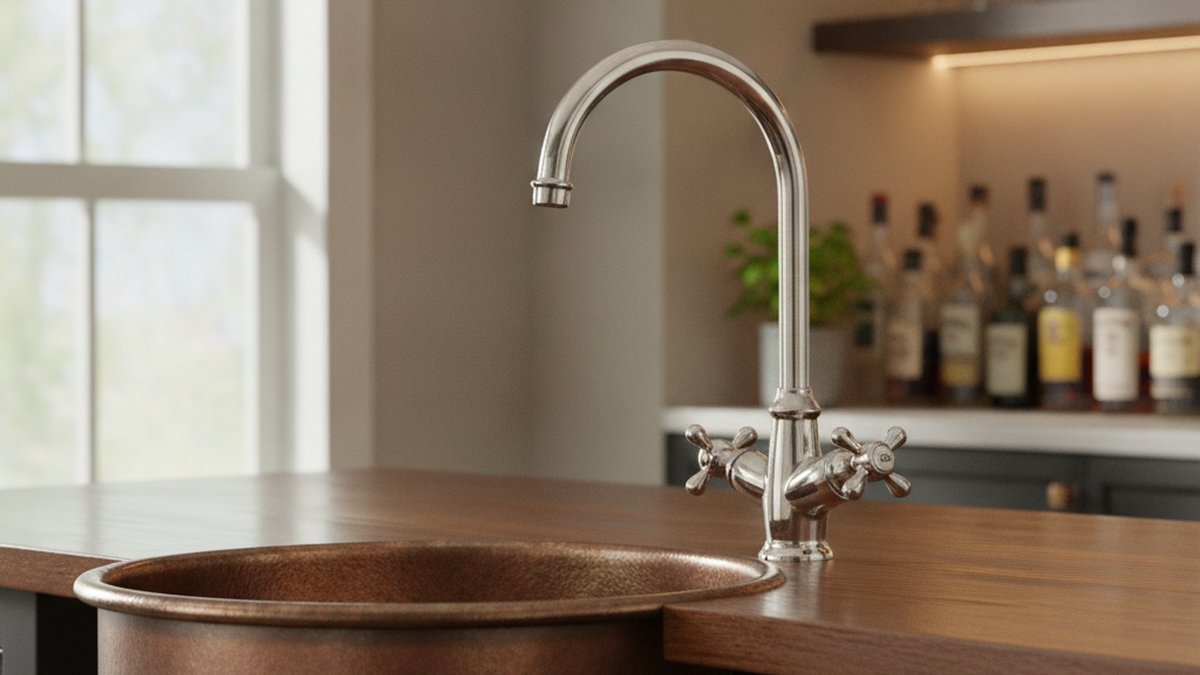
A bar faucet vintage style is a single-hole or 3-hole faucet, sized for a small secondary sink — a wet bar, butler’s pantry, or prep sink — dressed in classic details like cross handles, a gooseneck or hook-shaped spout, and a heritage finish. In plain terms: it’s a scaled-down kitchen faucet with old-world looks. The “vintage” part is about the design language (exposed bridge bodies, telephone-style spouts, porcelain lever inserts, brushed or antique metals), not the internals — a good one still uses a modern ceramic-disc cartridge so it doesn’t drip like a genuine 1920s faucet would.
Below I’ll walk through who actually needs one, how to size it to your sink, which finishes age well, what separates a $60 lookalike from a $200 faucet that lasts a decade, and the exact specs to check before you click “add to cart.”
What exactly makes a bar faucet “vintage,” and how is it different from a regular kitchen faucet?
A bar faucet is vintage when its styling copies pre-1950s faucet design and its scale is built for a bar or prep sink rather than a main kitchen sink. Three things define it: size, silhouette, and finish.
Size. Bar faucets are short. Most stand 8–12 inches tall with a spout reach of 4–7 inches — deliberately small so they clear the low cabinets and tight countertops of a wet bar. A standard kitchen faucet is often 15–18 inches tall with an 8–10 inch reach, which would overwhelm a 15-inch bar sink and splash straight out of a shallow bowl.
Silhouette. Vintage bar faucets lean on a handful of recognizable shapes: the bridge faucet (two vertical columns joined by a horizontal bar, mimicking early plumbing), the gooseneck/hook spout, and the “telephone” or column spout. Handles are cross handles (four-spoke wheels) or porcelain-tipped levers, often with a hot/cold ceramic or enamel button.
Finish. This is where “vintage” really lives. Living finishes — unlacquered brass, aged/antique brass, oil-rubbed bronze, polished nickel — develop a patina over time, which is exactly the look people want. If you love that copper-and-brass warmth, our breakdown of whether a white kitchen sink with a copper faucet looks timeless or dated is a useful companion read, because the same patina logic applies to bar faucets.
Do I actually need a bar faucet, or can I just use a small kitchen faucet?
You need a dedicated bar faucet when your secondary sink is small (roughly 9–15 inches) and sits in a low-clearance spot like a bar cabinet, island prep station, or butler’s pantry. A full-size kitchen faucet will physically work, but it’ll look oversized, splash in the shallow bowl, and may not fit under an upper cabinet or window.
Here’s the honest rule of thumb: match the faucet to the sink’s job.
- Wet bar / cocktail station: a vintage bar faucet is ideal. You’re rinsing glasses, filling shakers, adding water to drinks. A compact gooseneck with a lever is perfect.
- Prep sink on an island: a bar faucet works, but consider spout height — you want enough clearance to rinse produce, so look at the taller 11–12 inch models.
- Filling large pots regularly: a bar faucet is the wrong tool. Look at a taller high-arc faucet, or if it’s a dedicated cooking zone, a pot filler faucet with a sprayer mounted at the range makes far more sense.
If your bar sink is already plumbed for a specific hole configuration, that decides a lot for you — a single-hole deck can’t take a 3-hole bridge faucet without a deck plate or new drilling.
What are the different types of vintage bar faucets, and which one fits my sink?
The main types are single-hole lever faucets, 3-hole bridge faucets, and 3-hole widespread/8-inch center faucets. Which one fits depends entirely on how many holes your sink or countertop already has.
| Type | Holes needed | Vintage look | Best for | Typical price (2026) |
|---|---|---|---|---|
| Single-hole lever | 1 | Moderate — clean gooseneck, single lever | Modern-farmhouse bars, tight decks, easy install | $70–$160 |
| 3-hole bridge faucet | 2 (bridge) or 3 | Strongest — exposed horizontal bridge, cross handles | Classic/heritage bars, farmhouse and cottage kitchens | $150–$400+ |
| Widespread / 8″ center 3-hole | 3 | Strong — separate hot/cold cross handles | Larger prep areas, traditional bathrooms doubling as bars | $120–$300 |
| Wall-mount vintage | Wall rough-in | Very strong — pot-filler/farmhouse vibe | Farmhouse sinks, backsplash-mounted bars | $130–$350 |
Before you buy, count the holes in your sink and measure the spread between them. A standard bar sink is usually a single center hole; drop-in and undermount bar sinks sometimes come pre-drilled for 4-inch centerset. If you’re switching from a 3-hole setup to a single-hole faucet, most faucets include a matching escutcheon (deck plate) to cover the extra holes — confirm it’s in the box.
Which vintage finish holds up best — brass, oil-rubbed bronze, or polished nickel?
For a bar faucet you use daily, polished nickel and PVD-coated brass hold up best; unlacquered brass and oil-rubbed bronze look the most authentically vintage but change over time, which you have to actually want. It comes down to whether you like a “living finish” that patinas, or a stable finish that stays put.
- Unlacquered (raw) brass: the most genuine vintage look. It starts bright gold and tarnishes to a warm, mottled patina within months. Wonderful if you love the aged look; frustrating if you expected it to stay shiny. You can polish it back with Bar Keepers Friend anytime.
- Aged / antique brass (PVD): gives you the warm vintage tone but locked in with a physical-vapor-deposition coating, so it resists tarnish and scratches. My top pick for most people who want the look without the upkeep.
- Oil-rubbed bronze: dark, near-black with copper highlights on the high points. Very forgiving of water spots and fingerprints. Note that true living ORB will lighten on handles and spout tips where hands rub it — that wear is part of the charm.
- Polished nickel: warmer and softer than chrome, with a slight golden cast. Extremely durable, easy to clean, and reads “1920s hotel bathroom” — a great vintage-adjacent choice that won’t change.
- Brushed nickel: the most low-maintenance of all — hides spots and fingerprints. It’s more transitional than strictly vintage, but it plays nicely in mixed-metal rooms. If that’s your lean, our guide to whether a brushed nickel tap mixer is the right choice covers the trade-offs in detail.
One practical tip: whatever finish you choose, try to match (or intentionally contrast) your bar’s cabinet hardware and light fixtures, not your kitchen’s main faucet. A bar is its own little room — mixing a polished nickel bar faucet with brass drawer pulls can look deliberate and expensive when done on purpose.
How much should I spend, and what separates a cheap vintage bar faucet from a good one?
Spend $120–$220 for a bar faucet you’ll keep for a decade; below about $70 you’re usually buying zinc-alloy internals and a printed finish that will pit and drip within a couple of years. The price gap almost always comes down to four things: body material, cartridge, finish quality, and warranty.
- Body material. Solid brass is the standard for a faucet that lasts. Cheaper faucets use zinc alloy (sometimes marketed as “metal”), which is more brittle and corrodes faster at threaded joints. Weight is a decent gut-check — a solid-brass bar faucet feels noticeably heavier. If you want the full breakdown, our zinc alloy vs stainless steel faucet comparison explains exactly where each material fails.
- Cartridge. This is the part that controls water and eventually wears out. A ceramic-disc cartridge is the gold standard — it’s what keeps a faucet drip-free for years. Avoid rubber-washer/compression valves in a “vintage” faucet unless you genuinely want period-correct maintenance.
- Finish process. PVD and electroplated finishes far outlast painted or powder-coated ones. Ask (or read the spec sheet) whether the finish is PVD — it resists scratching and tarnish dramatically better.
- Warranty and standards. A faucet backed by a lifetime finish-and-function warranty, and certified to NSF/ANSI 61 and 372 (lead-free) plus cUPC, tells you it was actually tested. More on that below.
If your bar doubles as a spot where people fill water glasses to drink, lead-free certification matters more than you’d think. Our explainer on what a lead-free faucet kitchen setup requires applies directly to bar faucets used for drinking water.
How do I install a vintage bar faucet myself without calling a plumber?
You can install most single-hole vintage bar faucets in about 45–60 minutes with basin wrench, plumber’s tape, and adjustable pliers — the process is the same as any deck-mount faucet, just smaller. Here’s the short version.
- Shut off the water at the under-sink stop valves and open the old faucet to release pressure.
- Disconnect and remove the old faucet. Loosen the supply lines and the mounting nut underneath (a basin wrench earns its keep here).
- Clean the deck so the new faucet’s gasket seats flat. Old silicone and grime cause leaks.
- Drop the new faucet in through the hole, seat the gasket/deck plate, and tighten the mounting nut from below. Don’t overtighten a brass base.
- Connect supply lines to the stop valves — wrap the threads with plumber’s tape, and hand-tighten plus a quarter turn. Hot on the left, cold on the right.
- Turn water back on slowly, remove the aerator, and run water 30 seconds to flush debris, then reinstall the aerator and check every joint for drips.
Bridge and wall-mount vintage faucets are a step up in difficulty because the connections are exposed and the spread has to be exact — if you’re moving from a single hole to a wall rough-in, that’s plumber territory. And if you ever notice a leak later at the connections, the fix is usually a fresh wrap of tape or a new gasket; our step-by-step guide on why a faucet leaks from the flexible hose walks through the exact same connections.
What size bar faucet should I get for a small under-cabinet bar sink?
For a bar sink tucked under an upper cabinet, measure your clearance first and pick a faucet 2–3 inches shorter than that gap; for most under-cabinet bars that means an 8–11 inch overall height with a low-arc or gooseneck spout. The classic mistake is buying a beautiful tall bridge faucet that then won’t clear the cabinet above the sink.
Three measurements decide the fit:
- Height clearance: distance from the sink deck to the bottom of the upper cabinet. Leave room to lift a glass or bottle out.
- Spout reach: the horizontal distance from the faucet base to where water lands. You want it landing in the center of the drain, not the back wall of the bowl (splash) or the front edge (drips on the counter).
- Bowl depth: shallow bar bowls (4–6 inches) splash more, so a lower spout and an aerated stream help.
If clearance is really tight — like a bar built against a backsplash or window — a short-reach wall-mount faucet solves the height problem entirely. Our guide to the short spout reach wall mount faucet covers when that’s the smart move.
Vintage bar faucet vs. a modern wet bar faucet — which should I actually buy?
Buy the vintage bar faucet if your bar’s design is traditional, farmhouse, cottage, or classic, and you want warmth and character; buy a modern wet bar faucet if your space is contemporary and you prioritize easy cleaning and a lower price. Function is nearly identical — this is mostly a style and finish decision.
A few honest trade-offs: vintage cross handles look gorgeous but require two hands and are a little slower than a single lever. Living finishes need occasional buffing (or you learn to love the patina). And genuinely vintage silhouettes cost more because they use more brass and more machining. If you want to see how a mainstream brand handles the wet-bar niche, compare against our roundup of which wet bar faucet Kohler model to buy — it’s a useful benchmark for both price and features.
FAQ
Is a bar faucet the same size as a bathroom faucet?
Close, but not identical. Bar faucets and bathroom faucets are both compact, and many manufacturers use the same body for both. The difference is the aerator: bar faucets are meant for a kitchen-style prep sink and often ship with a higher flow rate (around 1.5–1.8 GPM) and a swiveling spout, while bathroom faucets are capped at 1.2 GPM and usually don’t swivel. Check the flow rate and spout swivel before assuming they’re interchangeable.
Do vintage bar faucets drip more than modern ones?
No — as long as you buy one with a ceramic-disc cartridge. The vintage look is purely cosmetic; the valve inside is modern. Only true reproduction faucets with rubber compression washers drip the way old faucets did, and those are rare. If a vintage-style faucet you’re eyeing lists “washer” or “compression” valves, expect more maintenance.
Will unlacquered brass on a bar faucet turn green or look dirty?
It develops a warm brown-gold patina, not green corrosion — verdigris (the green) mostly happens outdoors or with constant moisture and neglect. Indoors on a bar faucet, unlacquered brass darkens evenly and looks intentionally aged. If you ever want it bright again, a quick polish with Bar Keepers Friend or a brass cleaner restores the shine in minutes.
Can I put a vintage bar faucet on a kitchen sink?
You can, but only on a small or secondary kitchen sink. On a full-size main sink, a bar faucet’s short height and reach make washing pots awkward and cause splashing in a deep bowl. If you love the vintage look for a main kitchen, choose a full-size vintage-style bridge or gooseneck kitchen faucet instead — same aesthetic, correct scale.
What’s the best vintage bar faucet finish for a household with hard water?
Brushed nickel and oil-rubbed bronze hide hard-water spots best because their matte or dark surfaces disguise mineral film. Polished finishes (nickel, chrome, brass) show spots more, so you’ll wipe them more often. Regardless of finish, an aerator that unscrews easily makes descaling simple — mineral buildup in the aerator, not the faucet body, is the usual hard-water headache.
How long should a good vintage bar faucet last?
A solid-brass vintage bar faucet with a ceramic-disc cartridge should last 10–15 years or more, with the cartridge being the only serviceable wear part — and it’s typically a $10–$25 replacement. That’s why body material and cartridge type matter far more than looks when you’re comparing two similar faucets at different prices.
Author note & why you can trust this guide
This guide was written by the wigafaucet product team, drawing on hands-on installation and bench testing of hundreds of bar, kitchen, and bathroom faucets. wigafaucet designs and sells faucets and bathroom fixtures direct to homeowners, and every faucet we recommend is built with a solid-brass body and a ceramic-disc cartridge, certified to NSF/ANSI 61 and 372 (lead-free) and cUPC standards, and backed by a limited lifetime warranty on finish and function. We test flow rate, cartridge cycle life, and finish durability in-house before a product earns a spot in our catalog — so the specs in this article reflect what we actually measure, not marketing copy.