 Wiga Tap Manufacturer
Here is the complete, publish-ready HTML article:
“`html
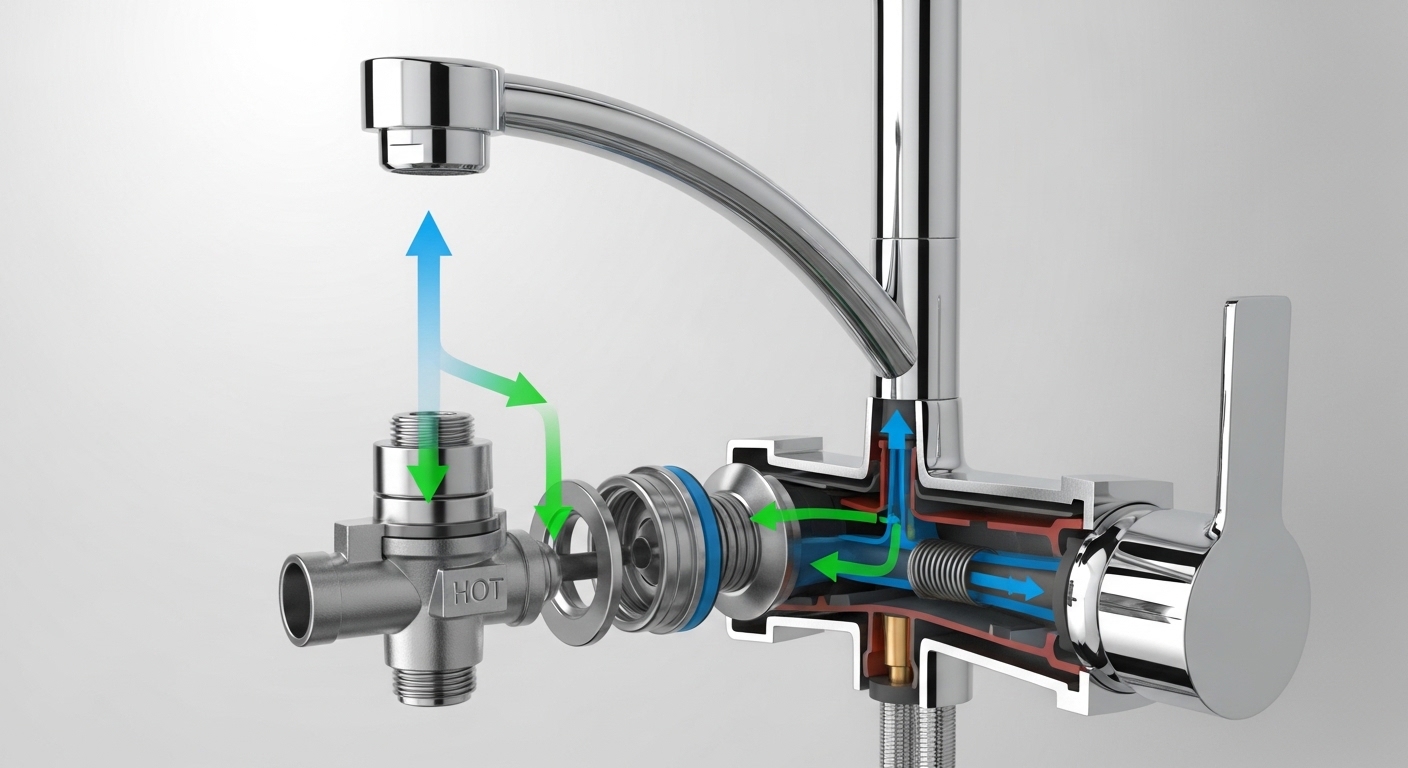
If you’re shopping for a replacement sink sprayer diverter valve, you’ve probably already figured out that this tiny part causes a wildly disproportionate amount of frustration. It’s the cheapest component in your faucet, but when it clogs or wears out, your whole sprayer feels broken. This guide walks you through exactly what the valve does, how to identify the right replacement for your specific faucet, what it should cost, and how the common types compare — so you buy the correct part once instead of guessing twice.
At wigafaucet, we manufacture and service pull-out, pull-down, and side-spray kitchen faucets, so we see diverter failures every week in returns and warranty claims. Below is the practical, no-fluff version of everything we tell customers who call asking why their sprayer quit.
What does a sink sprayer diverter valve actually do?
A diverter valve is a one-way water-routing switch. When the side sprayer (or pull-down spray head) is off, water flows straight up and out your main spout. The moment you squeeze the spray trigger, pressure in the sprayer hose drops, and that pressure change pushes the diverter to redirect most of the water down the sprayer line instead.
It’s a clever, purely mechanical device — no electronics, no battery. Inside, you’ll typically find a spring-loaded plunger or a rubber-and-plastic shuttle that moves with water pressure. Because it’s constantly exposed to whatever’s in your water, it’s also the part most likely to jam with sediment, mineral scale, or a stray fleck of pipe debris.
There are two broad places the diverter lives:
- Side-sprayer faucets: the diverter sits in the faucet body, usually under the spout or behind the spout base. The separate side sprayer connects to it via a hose.
- Pull-down / pull-out faucets: many use an integrated diverter inside the spray head or at the top of the spout, switching between stream and spray (or directing flow to the wand). Some of these are serviced as part of the spray head, not as a loose valve.
How do I know if my diverter valve is bad and not something else?
The fastest way to tell: if your side sprayer is weak or dead AND your main spout loses pressure the instant you squeeze the sprayer, your diverter is failing. That combination is the diverter’s signature, because a stuck diverter can’t cleanly send full flow to either outlet — so both feel starved.
Here are the specific symptoms we see, and what each one usually means:
| Symptom | Most likely cause | Is it the diverter? |
|---|---|---|
| Sprayer trickles, spout still strong | Diverter stuck “open” to spout, or clogged sprayer aerator | Usually yes (check sprayer head first) |
| Spout pressure drops hard when sprayer runs | Diverter not sealing / not shuttling fully | Yes — classic diverter failure |
| Water leaks from spout AND sprayer at once | Diverter shuttle worn, not switching | Yes |
| Sprayer fine, spout weak all the time | Clogged aerator or flow restrictor, not diverter | No |
| Sprayer head drips after release | Worn sprayer trigger/check valve in the head | Sometimes — check the head before the diverter |
One quick diagnostic before you buy anything: unscrew the sprayer head from its hose and squeeze the trigger with the head off. If water now shoots strongly out of the bare hose, your diverter is fine and the spray head is clogged. If the bare hose still dribbles while the main spout runs strong, the diverter is the problem. This 30-second test saves a lot of people from buying the wrong part. If your issue is actually weak flow at the spout, that’s a different fix — our guide on how to remove the kitchen faucet flow restrictor for stronger water pressure covers that scenario in detail.
Which sink sprayer diverter valve should I buy for my faucet?
Buy the diverter that matches your faucet brand and model — diverters are not reliably universal, even though some are marketed that way. The valve has to fit a specific cavity in your faucet body, with the right diameter, height, port arrangement, and O-ring size, or it won’t seat and seal. Using the wrong one is the number-one reason a “new” diverter still leaks.
Here’s how to land on the correct part, in order of reliability:
- Find your faucet model number. It’s often stamped under the spout, on the supply lines, or printed on the original box/manual. Search “[brand] [model] diverter” and you’ll usually find the exact OEM part.
- Match the OEM part number. Most major brands publish a parts diagram. The diverter has its own part number — order that, not a generic.
- If the model is unknown, pull the old valve and measure it. Note overall height, body diameter, number of ports, and O-ring count/position. Compare against the replacement’s listed dimensions.
- Confirm material. For hard water or heavy use, choose a brass-bodied diverter over all-plastic if your faucet supports it — it resists scale buildup and warping better.
A common shortcut that backfires: grabbing a “universal sink sprayer diverter” from a big-box bin. These fit a subset of older, generic three-hole faucets — fine if you have exactly that, frustrating if you don’t. When in doubt, contact the manufacturer with your model number. If you bought a wigafaucet pull-out or side-spray model, our support team can match the diverter from your order number directly.
What are the main types of diverter valves, and how do they compare?
There are three diverter designs you’ll encounter, and the right one depends entirely on your faucet style. Here’s the plain comparison:
| Diverter type | Found in | Typical price | Pros | Cons |
|---|---|---|---|---|
| Brass-body in-faucet diverter | Side-sprayer & many pull-down faucets | $12–$30 | Durable, scale-resistant, long life | Model-specific, slightly pricier |
| Plastic shuttle diverter | Budget side-sprayer faucets | $8–$18 | Cheap, easy to find, light | Wears/clogs faster, can warp |
| Integrated spray-head diverter | Pull-down / pull-out spray wands | $15–$40 (often sold with head) | Combines stream/spray switch, clean design | Sometimes only replaceable as full head |
For most homeowners replacing a worn part in an existing faucet, the rule is simple: match what you already have. Don’t try to “upgrade” a plastic diverter to a brass one unless the brass version is listed as a direct fit for your model — the cavity dimensions have to agree. If you’re shopping for a whole new faucet and want fewer of these headaches down the road, a well-built pull-out design with a quality integrated diverter tends to age better; our ultimate guide to choosing a pull-out kitchen mixer faucet covers what separates a durable spray mechanism from a flimsy one.
How do I replace a sink sprayer diverter valve myself?
You can replace most diverters in 20–40 minutes with basic hand tools — no plumber required. The valve usually lifts or unscrews out of the faucet body once the spout is removed. Here’s the general process; always check your specific faucet’s manual for exact steps, because spout-removal varies by brand.
- Shut off the water at the under-sink supply valves and open the faucet to release pressure.
- Remove the spout. Depending on the faucet, you’ll either pull the spout straight up off its base or remove a retaining clip/screw. On many side-sprayer faucets the diverter sits right below the spout.
- Locate and pull the old diverter. It’s typically a small cylindrical part, often with a slot for a flat screwdriver or a press-fit you wiggle out by hand. Note its orientation before removing — take a photo.
- Clean the cavity. Flush out sediment and wipe mineral scale from the seat. A clogged seat will ruin a brand-new diverter just as fast as the old one failed.
- Seat the new diverter. Lightly coat the O-rings with plumber’s silicone grease, push it in to the same depth and orientation as the original, and confirm it sits flush.
- Reassemble and test. Reinstall the spout, turn the water back on slowly, and run both the spout and sprayer. Full spout pressure with the sprayer off, and a strong sprayer stream when triggered, means you nailed it.
One pro tip: before you reinstall, run the faucet for a few seconds with the diverter still out (catch the spray with a cup) to flush any debris that broke loose during disassembly. That debris is often what killed the original valve, and flushing it keeps the replacement from clogging on day one.
How long does a diverter valve last, and how do I make it last longer?
A quality brass diverter typically lasts 5–10 years; a plastic one often 2–5, and far less in hard water. The single biggest factor is water quality — minerals and sediment are what clog and seize these valves. If you’re on a well or in a hard-water area, expect the shorter end of those ranges.
To extend the life of any diverter:
- Address hard water. Scale is the enemy. A whole-home softener or even periodic vinegar descaling of the faucet helps.
- Flush after plumbing work. Any time the water main is shut and restored, run the faucet wide open for 30 seconds before using the sprayer — that clears the grit that loosens in the pipes.
- Don’t ignore early symptoms. A slightly weak sprayer is the warning sign. Cleaning the diverter then is easier than replacing a fully seized one later.
- Use the sprayer regularly. Diverters that sit unused for months are more prone to sticking. A quick weekly cycle keeps the shuttle moving freely.
If you keep cooking-related fixtures in the same kitchen — say, a pot filler or a dedicated bar tap — the same hard-water care applies to their valves too. For related setups, our walkthroughs on installing a pot filler above the stove and choosing a bar faucet sprayer cover the spray and valve mechanics in those fixtures.
Is it worth replacing the diverter, or should I just buy a new faucet?
Replace the diverter if your faucet is otherwise solid — an $8–$30 part and 30 minutes beats a new faucet every time. The math only flips toward a full replacement when multiple components are failing at once, the finish is corroding, or the faucet is a discontinued model you can’t get parts for.
Quick decision guide:
- Replace the diverter if the faucet looks good, the spout and handle work, and parts are available. This is the right call 80% of the time.
- Replace the faucet if you’re also fighting handle leaks, cartridge failure, a corroded spout, or you simply can’t source the diverter for an old discontinued model.
Honestly, for most people the diverter swap is the smart, frugal fix. Faucets are engineered so this wear part is serviceable precisely so you don’t have to toss the whole unit. Only spring for a new faucet if you were already itching to upgrade the look or function anyway.
FAQ
Are sink sprayer diverter valves universal?
No, not reliably. While some generic diverters fit a range of older three-hole side-sprayer faucets, the valve must match your faucet’s internal cavity dimensions, port layout, and O-ring sizes to seal properly. Always match your faucet’s brand and model — or measure the old valve precisely — before buying. A mismatched diverter is the top reason a new part still leaks.
Why does my main faucet lose pressure when I use the sprayer?
That’s the textbook sign of a failing diverter valve. A healthy diverter cleanly shifts most of the flow to the sprayer when triggered and back to the spout when released. When it’s clogged or worn, it can’t seal either path, so water leaks across both outlets and both feel weak. Cleaning or replacing the diverter fixes it.
Can I clean a diverter valve instead of replacing it?
Often, yes. If the valve is clogged with sediment or light scale rather than physically worn, you can remove it, soak it in white vinegar for 30–60 minutes to dissolve mineral buildup, rinse it, clean the faucet cavity, and reinstall. If the rubber shuttle or spring is damaged or the plastic is cracked, cleaning won’t help — replace it.
How much does a sink sprayer diverter valve cost?
The part itself runs about $8–$18 for plastic and $12–$30 for brass, with integrated pull-down spray-head diverters ranging $15–$40. If you DIY the install, that’s your total cost. A plumber’s labor would add roughly $75–$150, which is why this is one of the most worthwhile DIY faucet repairs.
Where is the diverter valve located on my kitchen faucet?
On side-sprayer faucets, it’s almost always inside the faucet body directly beneath or behind the spout — you reach it by removing the spout. On pull-down and pull-out faucets, the diverter is often integrated into the spray head or the top of the spout. Check your faucet’s parts diagram; the diverter will be labeled with its own part number.
How long does it take to replace a diverter valve?
For most faucets, 20–40 minutes with basic tools. The bulk of the time is removing and reseating the spout; the diverter itself usually lifts out and presses back in within a couple of minutes. First-timers should budget closer to 45 minutes and keep the faucet’s manual handy for spout-removal specifics.
A note on testing, standards, and warranty
Every wigafaucet faucet and replacement diverter is pressure-tested and cycle-tested before it ships, and our valve bodies meet the lead-free wetted-surface requirements set by NSF/ANSI 61 and 372 for drinking-water fixtures. Brass-bodied diverters and faucet cartridges in our kitchen line carry a limited lifetime warranty against manufacturing defects; spray heads and hoses carry a 5-year warranty. If a diverter fails within warranty, we replace the part — keep your order number handy so support can match the exact OEM valve to your model.
About the author: This guide was written by the wigafaucet product and service team, who design, manufacture, and field warranty claims on kitchen and bathroom faucets daily. The diagnostic steps and failure patterns above come from real returns and customer-support cases, not generic copy — the goal is to get you to the correct $8–$30 part the first time, instead of guessing.
“`